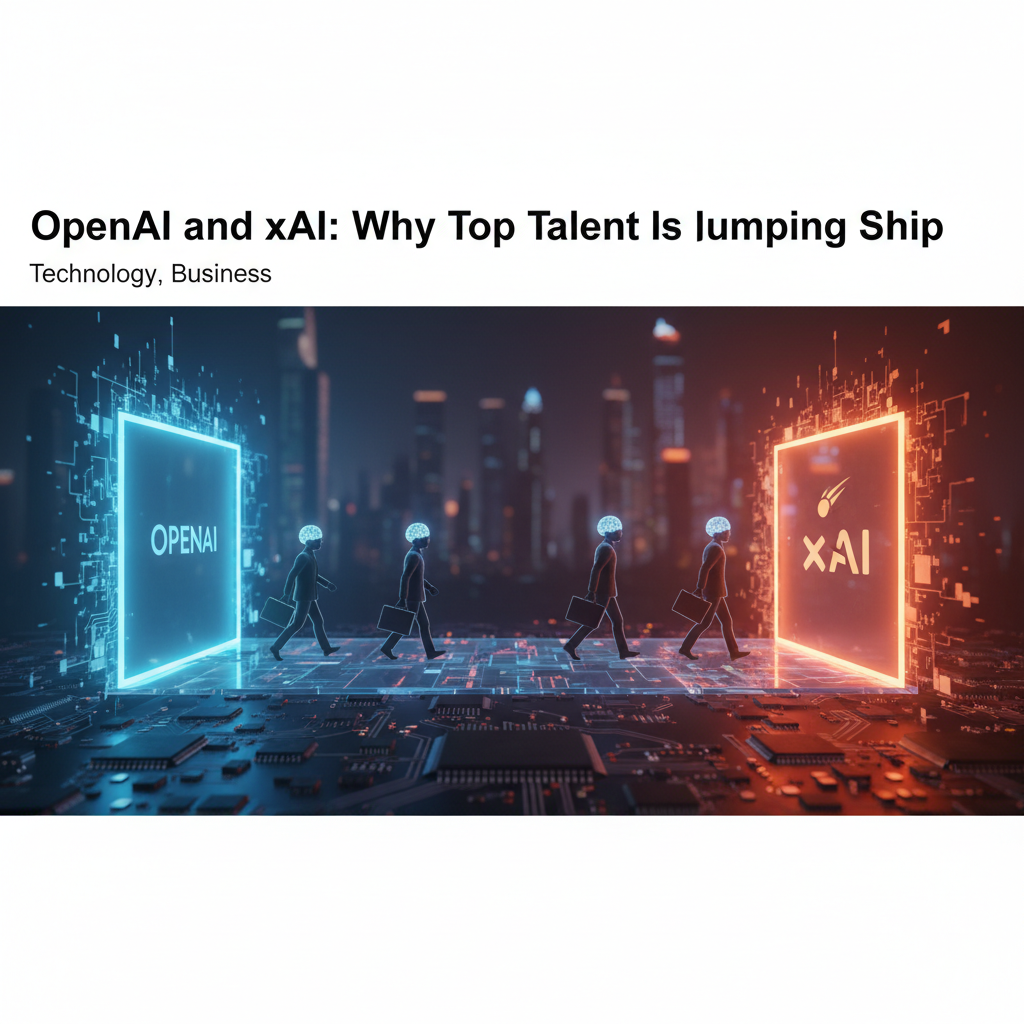
The news has been trickling in, a steady drip at first, then a cascade. Over the past few weeks, a significant number of people have walked away from both OpenAI and Elon Musk’s xAI. Half of xAI’s founding team has departed, some by choice, others through “restructuring” — a word that, in this context, feels like a euphemism.
At OpenAI, it’s a similar story. The mission alignment team, once seen as core to the company’s values, has been disbanded. Adding to the unease is the firing of a policy executive who reportedly voiced opposition to the company’s “adult mode” feature. It all adds up to a picture of instability, a talent exodus that’s causing ripples throughout the tech world.
What’s driving this sudden shift? It’s complicated, of course. But the common thread seems to be a mismatch between the promises of AI and the realities of its development. The pressure to generate returns, to push the boundaries of what’s possible, is clashing with the ethical considerations and the long-term vision. Or maybe, the vision isn’t as clear as it once seemed.
As per reports, the situation at xAI is particularly striking because the company is relatively young, and the founding team is usually the bedrock. That’s why, when half of those key people leave, it sends a clear signal. It speaks volumes about the internal dynamics, the direction of the company, and the weight of the expectations.
One might wonder what the next steps are, where the talent is going, and what the financial implications are. The tech industry, it seems, is always in flux.
The departures are happening against a backdrop of increasing scrutiny of AI companies. Regulatory bodies are starting to take a closer look, and investors are demanding more transparency. According to a recent report from the Brookings Institution, the lack of clear ethical guidelines is a major concern. The report also highlights a growing divide between those who are building AI and those who are setting the rules.
And it’s not just about the internal dynamics. The broader economic climate plays a role, too. The market is cooling down, and funding is becoming harder to secure. That puts pressure on companies to deliver results, which can lead to difficult decisions.
The impact is being felt. In March, for instance, OpenAI was valued at over $80 billion, but the recent departures and the changing market conditions are clouding the picture. One analyst, speaking on the condition of anonymity, said that the company’s valuation is now being reevaluated, with some expecting a potential drop of as much as 15%.
The challenge, as many in the industry see it, is how to balance innovation with responsibility. It’s a question that’s now being asked, with increasing urgency.
It’s a tough environment, a lot of uncertainty. The room felt tense — still does, in a way.
Leave a Reply