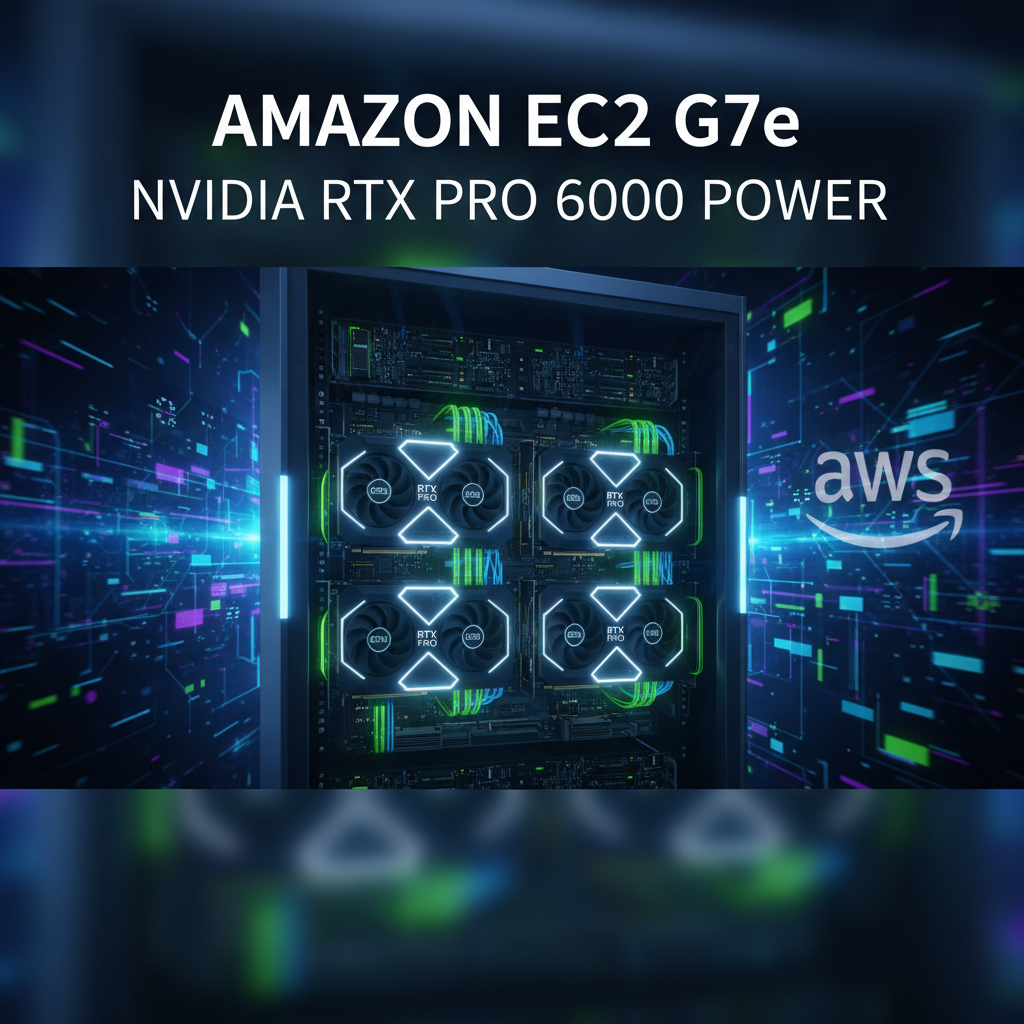
The hum of the servers is a constant, a low thrum that vibrates through the floor of the AWS data center. It’s a sound engineers know well, a symphony of silicon and electricity. Today, that symphony has a new movement: the arrival of Amazon EC2 G7e instances, powered by NVIDIA’s RTX PRO 6000 Blackwell Server Edition GPUs. This is, at least according to AWS, a significant leap forward.
These new instances, announced in a recent blog post, are designed to boost performance for generative AI inference workloads and graphics applications. The key selling point? Up to 2.3 times the inference performance compared to previous generations, which, depending on the application, could mean a huge difference in cost and efficiency. It seems like a direct response to the increasing demand for AI-powered applications across various industries.
“The market is clearly shifting,” explained tech analyst, Sarah Chen, during a recent briefing. “Companies are looking for ways to run these complex models without breaking the bank. The G7e instances, with the Blackwell GPUs, are positioned to address that need.” Chen also noted that the move is a direct challenge to competitors.
The Blackwell architecture itself is a significant upgrade. NVIDIA has been working on this for years, and the Server Edition of the RTX PRO 6000 is built for the demanding workloads of the cloud. The focus is on delivering high performance at a manageable cost, important in a market where every watt and every dollar counts. This is something that could be very attractive for startups and established players alike.
Earlier this year, analysts at Deutsche Bank projected that the AI inference market would reach $100 billion by 2026. The introduction of more powerful and efficient instances like the G7e, suggests AWS is positioning itself to capture a significant portion of that growth. The supply chain, of course, remains a factor. The availability of advanced GPUs is still a concern, with manufacturing constraints at places like TSMC and potential export controls adding complexity.
The announcement also highlights the ongoing competition in the cloud computing space. Other providers are also racing to provide the best and most cost-effective solutions for AI and graphics workloads. For the engineers on the ground, it’s a constant race to optimize performance, manage power consumption, and ensure that the infrastructure can handle the ever-increasing demands of AI. This is probably why the air in the data center always feels so charged.
By evening, the initial excitement has died down, replaced by a quiet focus. The engineers are running tests, tweaking configurations, and monitoring performance metrics. The new instances are live, and the clock is ticking. The market is waiting, and AWS is ready.
Leave a Reply