Category: Artificial Intelligence

  • AI Security: VCs Invest in a Shadowy World

    AI Security: VCs Invest in a Shadowy World

    AI Security: Why VCs Are Pouring Money into a Shadowy World

    The rapid advancement of artificial intelligence has opened a Pandora’s Box of possibilities. While we celebrate the potential of AI, a less discussed aspect has emerged: the growing need for robust AI security. This is not just a niche concern; it’s a critical area drawing significant investment from venture capitalists (VCs). The rise of “rogue agents” and “shadow AI” has created a landscape where the stakes are higher than ever, and companies are scrambling to catch up. As of January 19, 2026, the urgency of this situation is clear, with a substantial financial backing to secure the future of AI.

    The Threats: Rogue Agents and Shadow AI

    So, what exactly are VCs betting on? The answer lies in the increasingly complex threats within the AI ecosystem. “Rogue agents” refer to AI systems or employees who misuse AI tools or act outside of established security protocols. These agents can be internal, where employees use unapproved tools, or external, where attackers exploit vulnerabilities. This can lead to data breaches, intellectual property theft, or even manipulation of AI systems for malicious purposes. The term “shadow AI” refers to AI systems that operate outside of an organization’s control. These may be unapproved AI tools used by employees or AI models developed and deployed without proper oversight. This lack of visibility creates significant security risks, leaving organizations vulnerable to attacks and compliance violations.

    Witness AI: A Frontrunner in the AI Security Race

    One company that is addressing this critical need is Witness AI. This startup is at the forefront of developing solutions to combat the challenges posed by rogue agents and shadow AI. They are leveraging advanced technologies to detect employee use of unapproved tools. By blocking attacks and ensuring compliance, Witness AI is helping organizations regain control over their AI environments. This proactive approach is exactly what VCs are looking for: solutions that anticipate and mitigate risks before they can cause significant damage. Witness AI’s approach is a prime example of the innovative solutions that are attracting significant investment in the AI security space.

    Why VCs Are Investing Now

    The surge in VC investment in AI security is not arbitrary. Several factors are driving this trend:

    • The Expanding Attack Surface: As AI becomes more integrated into business operations, the potential attack surface expands exponentially. Every new AI tool, every new application, and every new employee using these technologies creates new vulnerabilities.
    • The Increasing Sophistication of Attacks: Cybercriminals are constantly evolving their tactics, and AI is becoming a tool in their arsenal. AI-powered attacks are more difficult to detect and defend against, necessitating more advanced security solutions.
    • The Need for Compliance: Regulatory bodies worldwide are beginning to establish guidelines and standards for AI usage. Companies must ensure their AI systems comply with these regulations, or they face significant penalties.

    These factors combine to create a perfect storm, making AI security a top priority for businesses. VCs understand this and are positioning themselves to capitalize on the growing demand for effective security solutions.

    The Future of AI Security

    The AI security landscape is constantly evolving, and the challenges are complex. However, the investment from VCs indicates a strong belief in the potential for innovative solutions. Companies like Witness AI are leading the charge, developing technologies to detect and prevent misuse of AI tools, and ensure compliance. As AI continues to transform industries, the need for robust security measures will only intensify. This makes AI security not just a trend, but a fundamental pillar of the future. The ability to secure AI systems will determine the extent to which we can leverage its transformative potential. Therefore, the focus on AI security is not just about protecting technology; it is about protecting the future.

    Source: TechCrunch

  • Biotics AI Ultrasound Software Approved by FDA

    Biotics AI Ultrasound Software Approved by FDA

    Biotics AI’s Fetal Ultrasound Software Receives FDA Approval

    In a significant stride for artificial intelligence in healthcare, Biotics AI, the champion of TechCrunch Disrupt Battlefield 2023, announced on Monday that it has obtained FDA clearance for its AI software. This innovative software is designed to assist in the detection of fetal abnormalities within ultrasound images. This milestone highlights the growing integration of AI in medical technology and its potential to revolutionize healthcare practices.

    A Breakthrough in AI-Powered Healthcare

    The FDA’s approval of Biotics AI’s software represents a pivotal moment in the application of AI within the healthcare sector. This AI-powered tool utilizes advanced algorithms to analyze ultrasound images, thereby aiding in the identification of potential fetal abnormalities. The software’s capabilities offer the promise of enhanced diagnostic accuracy and potentially earlier intervention in the care of expectant mothers.

    The core of this innovation lies in the use of AI to interpret complex medical imagery. The AI software is trained on extensive datasets of ultrasound images, allowing it to recognize patterns and anomalies that might be challenging for even experienced medical professionals to detect. This technology has the potential to improve the overall quality of care in prenatal diagnostics.

    The Journey from Battlefield to the FDA

    Biotics AI’s journey to FDA clearance began with their success at TechCrunch Disrupt Battlefield 2023. This victory provided a platform for the company to showcase its cutting-edge technology and its potential impact on healthcare. The FDA approval validates the software’s effectiveness and safety, which is a crucial step for any medical technology.

    The fact that Biotics AI secured FDA clearance demonstrates the company’s commitment to rigorous testing and adherence to regulatory standards. This achievement is a testament to the hard work and dedication of the team at Biotics AI and their vision for the future of healthcare.

    Implications for the Future of Ultrasound Imaging

    The FDA approval of Biotics AI’s software has wide-ranging implications for the future of ultrasound imaging and healthcare innovation. The use of AI in this field has the potential to improve diagnostic accuracy, reduce the risk of missed diagnoses, and ultimately improve patient outcomes.

    AI-driven tools can also help streamline the workflow for healthcare providers, allowing them to focus more on patient care. The integration of AI in ultrasound imaging could also lead to more accessible and affordable healthcare, particularly in underserved communities. This technology could also facilitate remote diagnostics and consultation, further expanding access to quality healthcare services.

    The approval of Biotics AI’s software is a clear indication of a growing trend in the healthcare industry towards AI-assisted diagnostics. As AI technology continues to advance, we can anticipate more innovative solutions that will enhance healthcare delivery and improve patient outcomes.

    Source: TechCrunch

  • Symbolic.ai & News Corp Partner to Revolutionize Journalism with AI

    Symbolic.ai & News Corp Partner to Revolutionize Journalism with AI

    Symbolic.ai and News Corp Forge Partnership to Transform Journalism with AI

    In a move that underscores the growing influence of artificial intelligence in the media landscape, the AI journalism startup Symbolic.ai announced on January 15, 2026, a significant deal with Rupert Murdoch’s News Corp. This partnership promises to reshape editorial workflows and research methodologies, marking a pivotal moment in the evolution of journalism.

    The Partnership: A New Era for Editorial Efficiency

    The core of this collaboration lies in Symbolic.ai’s AI platform, which is designed to streamline and optimize various editorial processes. The primary aim is to enhance the efficiency of news gathering, content creation, and research. By integrating AI into these areas, News Corp seeks to refine its operations and improve the speed and depth of its reporting. This strategic move aligns with the broader industry trend of adopting AI to enhance productivity and gain a competitive edge.

    News Corp, under the guidance of Rupert Murdoch, has consistently been at the forefront of media innovation. This partnership with Symbolic.ai demonstrates a continued commitment to leveraging cutting-edge technology to stay ahead in a rapidly changing media environment. The deal underscores the importance of adapting to new technological advancements to maintain relevance and efficiency.

    How AI is Transforming Editorial Processes and Research

    Symbolic.ai’s AI platform is expected to bring about significant changes in how News Corp conducts its editorial and research activities. The platform’s capabilities include automated content analysis, data-driven insights, and the potential for personalized content recommendations. These features can assist journalists and researchers by providing quick access to relevant information, identifying emerging trends, and supporting the creation of more engaging content.

    By optimizing editorial processes, the AI platform can help newsrooms allocate resources more effectively. This could lead to a reduction in repetitive tasks, allowing journalists to focus on more complex investigations and in-depth reporting. In terms of research, AI can assist in analyzing vast datasets, identifying patterns, and extracting valuable insights that might otherwise be missed.

    Strategic Implications and Future Outlook

    The partnership between Symbolic.ai and News Corp has significant strategic implications for both parties. For Symbolic.ai, this deal represents a major validation of its technology and a significant opportunity to expand its market presence. Collaborating with a media giant like News Corp provides a platform to refine its AI solutions and demonstrate their practical value in a real-world setting.

    For News Corp, this partnership is a strategic move to enhance its editorial capabilities and improve its operational efficiency. It reflects a proactive approach to the evolving media landscape, where technology plays an increasingly critical role. As the integration of AI becomes more widespread, News Corp is positioning itself to be at the forefront of these advancements, ensuring it remains competitive and responsive to the changing needs of its audience.

    The deal between Symbolic.ai and News Corp is a clear indication of how artificial intelligence is shaping the future of journalism. By optimizing editorial processes and research, this partnership sets a new standard for media organizations looking to leverage technology to enhance their operations. This collaboration will likely serve as a model for future partnerships between AI startups and media companies, paving the way for further innovation in the industry.

    Source: TechCrunch

  • Symbolic.ai & News Corp Partner to Revolutionize Journalism with AI

    Symbolic.ai & News Corp Partner to Revolutionize Journalism with AI

    Symbolic.ai and News Corp Forge Partnership to Transform Journalism with AI

    In a move that underscores the growing influence of artificial intelligence in the media landscape, the AI journalism startup, Symbolic.ai, announced a significant deal with Rupert Murdoch’s News Corp on January 15, 2026. This partnership signals a strategic shift, as News Corp aims to integrate AI to optimize its editorial processes and research capabilities. This collaboration highlights the potential of AI to reshape traditional media workflows.

    The Partnership: A Deep Dive

    The core of this partnership centers on Symbolic.ai’s AI platform, which promises to revolutionize editorial and research functions. The

  • Skild AI’s $14B Valuation: The Robotics Revolution

    Skild AI’s $14B Valuation: The Robotics Revolution

    The hum of the servers was almost a constant presence in the Skild AI lab. Engineers, mostly hunched over monitors, were running simulations, tweaking algorithms. It was mid-January, and the air buzzed with a different kind of energy: the news of the SoftBank-led funding round had just broken. A $1.4 billion injection, rocketing the company’s valuation to a staggering $14 billion.

    It’s a figure that, for a company specializing in general-purpose robotic software, is raising eyebrows across the industry. Skild AI is, in a way, betting on a future where robots aren’t just confined to factories but are integrated into every aspect of life. As one analyst from Ark Invest, as per reports, put it, “They’re not just building software; they’re building the operating system for the next industrial revolution.”

    The core of Skild AI’s business is its software platform, designed to enable robots to perform a wide range of tasks. This requires sophisticated AI, capable of handling everything from object recognition and manipulation to navigation and decision-making. The funding, according to company statements, will be used to accelerate the development of this platform, expand its engineering team, and, of course, secure more manufacturing capacity.

    The market context is crucial here. Demand for robotics solutions is soaring. Labor shortages, particularly in developed economies, are pushing companies to automate. At the same time, the cost of robotics hardware and software is decreasing, making automation more accessible. And, you know, the rise of AI is making robots smarter.

    The company is targeting the M300 release by late 2026, which is expected to offer significant improvements in processing speed and energy efficiency. That’s the plan, at least. But supply chain constraints remain a serious challenge. The availability of advanced chips and other components is still a concern, particularly with the ongoing US export controls on critical technologies. And maybe that’s how the supply shock reads from here.

    Meanwhile, the competition is fierce. Companies like Boston Dynamics and Agility Robotics have already made significant strides in the field. But Skild AI’s focus on general-purpose software could give it an edge. It’s a bet on adaptability, on creating a platform that can be easily customized for different applications.

    Earlier today, a spokesperson for SoftBank confirmed their commitment, highlighting Skild AI’s “visionary approach” and “potential for massive growth”. The deal, apparently, also includes provisions for further investment rounds, suggesting that SoftBank is in it for the long haul. The goal, it seems, is to capture a significant share of a market that’s only going to get bigger. Or so they hope.

    By evening, the lab was still humming, the engineers still coding. The $14 billion valuation was a validation of their work. But the real test, of course, lies in the future: in the robots they build, and the world they help create.

  • Skild AI Valuation Soars to $14B After SoftBank Funding

    Skild AI Valuation Soars to $14B After SoftBank Funding

    The hum of the server room always felt the same. But today, something was different. A quiet buzz of excitement, a few more Slack pings than usual, and the low thrum of the cooling fans seemed to vibrate with a new energy. This morning’s news: Skild AI, the robotics software maker, had just hit a $14 billion valuation. The announcement followed a $1.4 billion funding round led by SoftBank, as reported on January 14, 2026.

    It’s a significant moment for the robotics sector, especially considering the broader economic climate. “This investment reflects a growing confidence in the potential of general-purpose robotic software,” noted analyst Maria Chen of Arkham Capital. She added that the valuation “is a bold statement about the future of automation.”

    The company, Skild AI, is positioning itself at the forefront of this future, building software designed to control robots across a wide range of applications. This approach contrasts with the more specialized software that has dominated the market until now. They aim to provide a versatile platform, capable of adapting to diverse tasks and environments. This flexibility could be key to unlocking new efficiencies in manufacturing, logistics, and beyond. This is what the investment community is betting on.

    The funding round, led by SoftBank, is a clear signal of market confidence. It also highlights the strategic importance of the robotics sector. SoftBank’s involvement often signals a long-term vision and a willingness to invest in disruptive technologies. It seems like they see the potential for Skild AI to become a major player in the rapidly evolving robotics landscape. The company’s roadmap includes ambitious plans for expanding its software capabilities and scaling its operations, according to sources familiar with the matter.

    Earlier today, engineers were huddled around monitors, running simulations. The air crackled with the quiet tension of a team under pressure. One engineer, Sarah Lee, mentioned the challenges of optimizing algorithms for different hardware configurations. “We’re constantly pushing the limits of what’s possible,” she said, her voice barely audible above the whirring fans. “It’s about making the software adaptable, regardless of the underlying hardware.”

    The valuation, of course, is a snapshot in time. But it’s a powerful one. It reflects the convergence of several trends: the increasing demand for automation, the advancements in AI, and the growing availability of capital. It’s also a reminder that the robotics revolution is well underway.

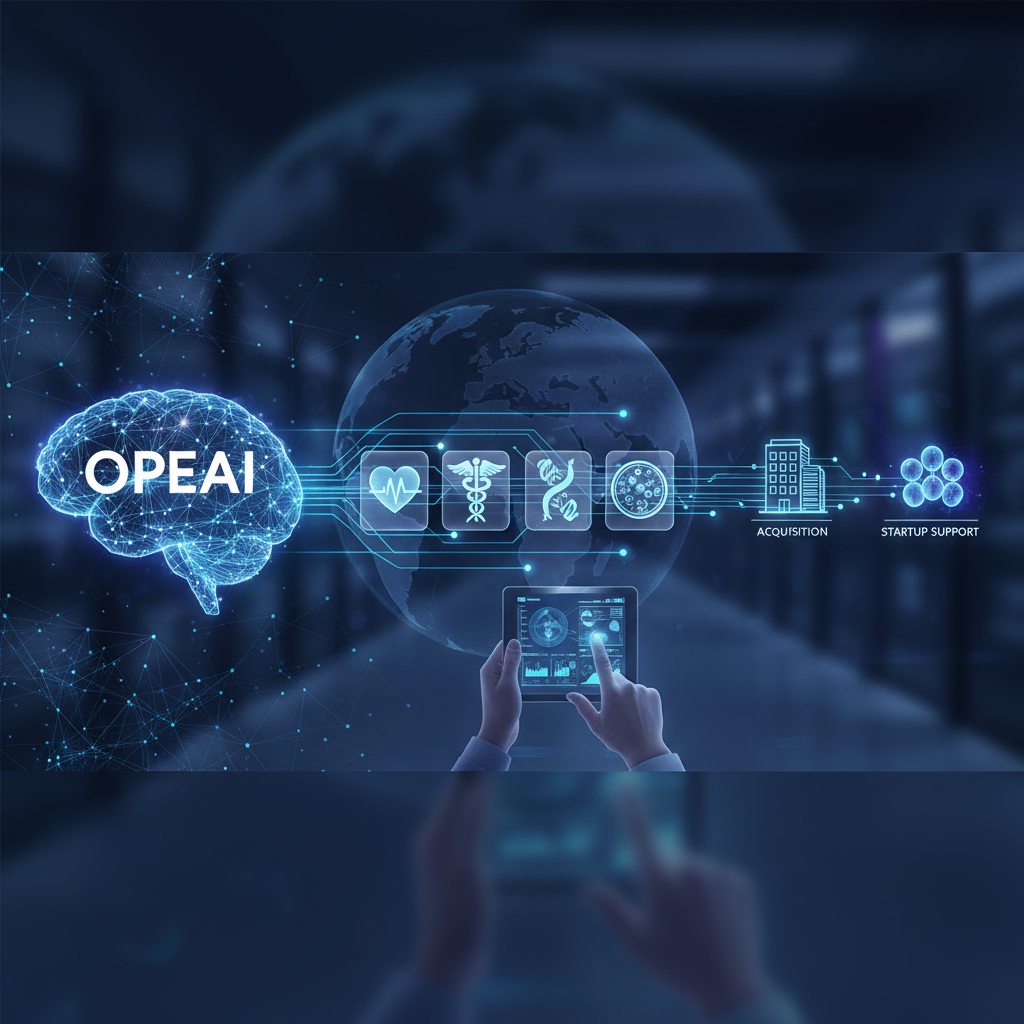
  • OpenAI’s Healthcare Push: Acquisitions & AI Drug Discovery

    OpenAI’s Healthcare Push: Acquisitions & AI Drug Discovery

    OpenAI Expands Its Reach: Healthcare Acquisitions and AI Drug Discovery Support

    The tech world is abuzz with OpenAI’s latest strategic maneuvers, signaling a strong push into the healthcare sector. The company, known for its groundbreaking work in artificial intelligence, is making waves not only through internal developments but also through strategic acquisitions and investments. This article delves into the details of these recent activities, highlighting their potential impact on the future of AI in healthcare.

    OpenAI Acquires Torch: A Leap into Health Records

    In a move that underscores its commitment to healthcare innovation, OpenAI has acquired Torch, an AI health records startup. The acquisition, reportedly for $100 million, aims to integrate Torch’s technology into OpenAI’s new ChatGPT Health platform. According to co-founder Ilya Abyzov, this integration will bring sophisticated AI capabilities to health record management, potentially streamlining processes and improving patient care.

    This acquisition marks a significant step for OpenAI in expanding its footprint within the healthcare industry. By incorporating Torch’s expertise, OpenAI aims to leverage AI to unlock new efficiencies and insights within health records. This could lead to more personalized treatment plans and enhanced patient outcomes. The move also signals a broader trend of tech companies recognizing the massive potential of AI in transforming healthcare delivery.

    Converge Bio Secures Funding: Advancing AI in Drug Discovery

    In related news, the AI drug discovery startup, Converge Bio, has successfully raised $25 million in a Series A funding round. This round was led by Bessemer Venture Partners, with additional backing from key figures at Meta, OpenAI, and Wiz. This investment underscores the growing confidence in AI’s capacity to revolutionize the drug discovery process. Converge Bio is at the forefront of this revolution, using AI to accelerate the identification and development of new therapeutics.

    The funding will allow Converge Bio to further develop its AI-driven platform for drug discovery. This platform promises to reduce the time and cost associated with bringing new drugs to market. The involvement of prominent investors from the tech sector highlights the convergence of AI and biotechnology, creating a powerful synergy capable of addressing some of the most pressing healthcare challenges. The investment is a testament to the potential of AI to accelerate the development of life-saving medications.

    The Convergence of AI and Healthcare: A Promising Future

    The recent activities of OpenAI and Converge Bio reflect a broader trend: the increasing integration of artificial intelligence into the healthcare ecosystem. These developments are not isolated incidents but rather part of a larger movement that seeks to leverage AI to improve patient outcomes, streamline processes, and drive innovation within the industry. From health records management to drug discovery, AI is poised to transform healthcare in profound ways.

    As OpenAI and Converge Bio continue to advance their respective missions, it is clear that the future of healthcare will be significantly shaped by AI. The strategic acquisitions and investments discussed in this article represent just the beginning of what promises to be an exciting and transformative journey.

    Conclusion: A New Era for AI in Healthcare

    OpenAI’s acquisition of Torch and the funding round for Converge Bio mark pivotal moments in the evolution of AI in healthcare. These initiatives demonstrate a clear commitment to leveraging AI’s potential to improve patient care, accelerate drug discovery, and drive innovation across the healthcare landscape. As AI continues to evolve, its impact on healthcare will undoubtedly grow, ushering in a new era of possibilities and advancements.

    Source: TechCrunch article, “OpenAI Buys Tiny Health Records Startup Torch for Reportedly $100M,” published on January 12, 2026.

  • OpenAI’s Healthcare Leap: Acquisition & Startup Support

    OpenAI’s Healthcare Leap: Acquisition & Startup Support

    OpenAI Makes a Major Healthcare Push with Acquisition and Startup Support

    The tech world is abuzz with OpenAI’s latest strategic moves, signaling a strong foray into the healthcare sector. On January 12, 2026, OpenAI, led by co-founder Ilya Abyzov, acquired the AI health records startup Torch for a reported $100 million. Simultaneously, OpenAI is backing AI drug discovery efforts through its support of Converge Bio, a startup that recently secured a $25 million Series A funding round.

    OpenAI’s Acquisition of Torch: A Strategic Move

    The acquisition of Torch, an AI health records startup, represents a significant step for OpenAI. According to Ilya Abyzov, the plan is to integrate Torch’s technology into OpenAI’s new ChatGPT Health. This integration suggests a focus on leveraging AI to improve healthcare data management and potentially enhance patient care. This acquisition is part of OpenAI’s broader strategy to expand its influence and capabilities within the healthcare industry. The financial investment and technological integration point towards a long-term commitment to this sector.

    Converge Bio Secures Funding: Advancing AI in Drug Discovery

    In a related development, the AI drug discovery startup Converge Bio has raised $25 million in a Series A funding round. This round was led by Bessemer Venture Partners and included backing from executives at Meta, OpenAI, and Wiz. This infusion of capital will likely accelerate Converge Bio’s research and development efforts, potentially leading to breakthroughs in the pharmaceutical industry. The support from prominent figures and organizations highlights the growing importance of AI in revolutionizing drug discovery processes.

    The involvement of OpenAI in Converge Bio’s funding is particularly noteworthy. It underscores OpenAI’s commitment not only to healthcare data but also to the broader application of AI in the medical field. By supporting drug discovery, OpenAI is positioning itself to contribute to advancements that could impact global health.

    The Broader Implications for Artificial Intelligence in Healthcare

    These developments highlight the increasing role of artificial intelligence in healthcare. OpenAI’s strategic moves suggest a future where AI plays a central role in both data management and drug discovery. The integration of AI in healthcare has the potential to improve efficiency, reduce costs, and ultimately, enhance patient outcomes. The investments in Torch and Converge Bio are indicative of a larger trend, with significant implications for the future of medicine.

    The acquisition and funding initiatives demonstrate OpenAI’s vision for the future of healthcare. By combining AI expertise with healthcare data and drug discovery, OpenAI is poised to make a substantial impact on the industry. The success of these ventures could set a precedent for other tech companies seeking to enter the healthcare market. The strategic decisions made by OpenAI are likely to influence the direction of AI’s role in healthcare for years to come.

  • BigQuery AI: Forecasting & Data Insights for Business Success

    BigQuery’s AI-Powered Future: Data Insights and Forecasting

    The data landscape is undergoing a significant transformation, with Artificial Intelligence (AI) becoming increasingly integrated into data analysis. BigQuery is at the forefront of this evolution, offering powerful new tools for forecasting and data insights. These advancements, built upon the Model Context Protocol (MCP) and Agent Development Kit (ADK), are set to reshape how businesses analyze data and make predictions.

    Unlocking the Power of Agentic AI

    This shift is driven by the growing need for sophisticated data analysis and predictive capabilities. Agentic AI, which enables AI agents to interact with external services and data sources, is central to this change. BigQuery’s MCP, an open standard designed for agent-tool integration, streamlines this process. The ADK provides the necessary tools to build and deploy these AI agents, making it easier to integrate AI into daily operations. Businesses are seeking AI agents that can handle complex data and deliver accurate predictions, and that’s where BigQuery excels.

    Key Tools: Ask Data Insights and BigQuery Forecast

    Two new tools are central to this transformation: “Ask Data Insights” and “BigQuery Forecast.” “Ask Data Insights” allows users to interact with their BigQuery data using natural language. Imagine asking your data questions in plain English without needing specialized data science skills. This feature, powered by the Conversational Analytics API, retrieves relevant context, formulates queries, and summarizes the answers. The entire process is transparent, with a detailed, step-by-step log. For business users, this represents a major leap forward in data accessibility.

    Additionally, “BigQuery Forecast” simplifies time-series forecasting using BigQuery ML’s AI.FORECAST function, based on the TimesFM model. Users simply define the data, the prediction target, and the time horizon, and the agent generates predictions. This is invaluable for forecasting trends such as sales figures, website traffic, and inventory levels. This allows businesses to anticipate future trends, rather than simply reacting to them after the fact.

    Gaining a Competitive Edge with BigQuery

    BigQuery’s new tools strengthen its position in the data analytics market. By offering built-in forecasting and conversational analytics, it simplifies the process of building sophisticated applications, attracting a wider audience. This empowers more people to harness the power of data, regardless of their technical expertise.

    The Data-Driven Future

    The future looks bright for these tools, with more advanced features, expanded data source support, and improved prediction accuracy expected. The strategic guidance for businesses is clear: adopt these tools and integrate them into your data strategies. By leveraging the power of AI for data analysis and forecasting, you can gain a significant competitive advantage and build a truly data-driven future.

  • Claude Sonnet 4.5 on Vertex AI: A Comprehensive Analysis

    Claude Sonnet 4.5 on Vertex AI: A Deep Dive into Anthropic’s Latest LLM

    The Dawn of a New Era: Claude Sonnet 4.5 on Vertex AI

    Anthropic’s Claude Sonnet 4.5 has arrived, ushering in a new era of capabilities for large language models (LLMs). This release, now integrated with Google Cloud’s Vertex AI, marks a significant advancement for developers and businesses leveraging AI. This analysis explores the key features, performance enhancements, and strategic implications of Claude Sonnet 4.5, drawing from Anthropic’s official announcement and related research.

    Market Dynamics: The AI Arms Race

    The AI model market is fiercely competitive. Companies like Anthropic, OpenAI, and Google are in a race to develop more powerful and versatile LLMs. Each new release aims to surpass its predecessors, driving rapid innovation. Integrating these models with cloud platforms like Vertex AI is crucial, providing developers with the necessary infrastructure and tools to build and deploy AI-powered applications at scale. The availability of Claude Sonnet 4.5 on Vertex AI positions Google Cloud as a key player in this evolving landscape.

    Unveiling the Power of Claude Sonnet 4.5

    Claude Sonnet 4.5 distinguishes itself through several key improvements, according to Anthropic. The model is positioned as the “best coding model in the world,” excelling at building complex agents and utilizing computers effectively. It also demonstrates significant gains in reasoning and mathematical abilities. These enhancements are particularly relevant in today’s digital landscape, where coding proficiency and the ability to solve complex problems are essential for productivity.

    Anthropic has introduced several product suite advancements alongside Claude Sonnet 4.5, including checkpoints in Claude Code to save progress, a refreshed terminal interface, a native VS Code extension, a new context editing feature, and a memory tool for the Claude API. Furthermore, code execution and file creation capabilities are now directly integrated into the Claude apps. The Claude for Chrome extension is also available to Max users who were on the waitlist last month (Source: Introducing Claude Sonnet 4.5 \ Anthropic).

    Performance Benchmarks: A Detailed Look

    A compelling aspect of Claude Sonnet 4.5 is its performance, as measured by various benchmarks. On the SWE-bench Verified evaluation, which assesses real-world software coding abilities, Sonnet 4.5 achieved a score of 77.2% using a simple scaffold with two tools—bash and file editing via string replacements. With additional complexity and parallel test-time compute, the score increases to 82.0% (Source: Introducing Claude Sonnet 4.5 \ Anthropic). This demonstrates a significant improvement over previous models, highlighting the model’s ability to tackle complex coding tasks.

    The model also showcases improved capabilities on a broad range of evaluations, including reasoning and math. Experts in finance, law, medicine, and STEM found Sonnet 4.5 demonstrates dramatically better domain-specific knowledge and reasoning compared to older models, including Opus 4.1 (Source: Introducing Claude Sonnet 4.5 \ Anthropic).

    Expert Perspectives and Industry Analysis

    Industry experts and early adopters have shared positive feedback on Claude Sonnet 4.5. Cursor noted that they are “seeing state-of-the-art coding performance from Claude Sonnet 4.5, with significant improvements on longer horizon tasks.” GitHub Copilot observed “significant improvements in multi-step reasoning and code comprehension,” enabling their agentic experiences to handle complex tasks better. These testimonials underscore the model’s potential to transform software development workflows.

    Competitive Landscape and Market Positioning

    The LLM market is crowded, but Claude Sonnet 4.5 is positioned to compete effectively. Its strengths in coding, computer use, reasoning, and mathematical capabilities differentiate it. Availability on Vertex AI provides a strategic advantage, allowing developers to easily integrate the model into their workflows. Furthermore, Anthropic’s focus on alignment and safety is also a key differentiator, emphasizing their commitment to responsible AI development.

    Emerging Trends and Future Developments

    The future of LLMs likely involves further improvements in performance, safety, and alignment. As models become more capable, the need for robust safeguards will increase. Anthropic’s focus on these areas positions it well for long-term success. The integration of models with platforms like Vertex AI will enable increasingly sophisticated AI-powered applications across various industries.

    Strategic Implications and Business Impact

    The launch of Claude Sonnet 4.5 has significant strategic implications for businesses. Companies can leverage the model’s capabilities to improve software development, automate tasks, and gain deeper insights from data. The model’s performance in complex, long-context tasks offers new opportunities for innovation and efficiency gains across sectors, including finance, legal, and engineering.

    Future Outlook and Strategic Guidance

    For businesses, the key takeaway is to explore the potential of Claude Sonnet 4.5 on Vertex AI. Consider the following:

    • Explore Coding and Agentic Applications: Leverage Sonnet 4.5 for complex coding tasks and agent-based workflows.
    • Focus on Long-Context Tasks: Utilize the model’s ability to handle long-context documents for tasks like legal analysis and financial modeling.
    • Prioritize Alignment and Safety: Benefit from Anthropic’s focus on responsible AI development and safety measures.

    By embracing Claude Sonnet 4.5, businesses can unlock new levels of productivity, innovation, and efficiency. The future of AI is here, and its integration with platforms like Vertex AI makes it accessible and powerful.

    Market Overview

    The market landscape for Claude Sonnet 4.5 on Vertex AI presents various opportunities and challenges. Current market conditions suggest a dynamic environment with evolving competitive dynamics.

    Future Outlook

    The future outlook for Claude Sonnet 4.5 on Vertex AI indicates continued development and market expansion, driven by technological and market forces.

    Conclusion

    The research indicates significant opportunities in Claude Sonnet 4.5 on Vertex AI, with careful consideration of the identified risk factors.