
CloudTalk

Category: Business

  • Mercor’s Valuation Hits $10B with $350M Series C Funding

    Mercor’s Valuation Hits $10B with $350M Series C Funding

    Mercor’s Valuation Skyrockets to $10 Billion with $350M Series C Investment

    In a significant development for the artificial intelligence (AI) sector, Mercor, a company focused on connecting AI labs with domain experts, is poised to raise $350 million in a Series C funding round. This investment will value Mercor at a remarkable $10 billion, marking a substantial increase from its previous valuation. The news, reported on October 27, 2025, underscores the growing confidence in Mercor’s mission and its pivotal role in the advancement of AI.

    The Significance of Mercor’s Valuation

    The $10 billion valuation reflects the immense potential investors see in Mercor’s approach to training foundational AI models. Mercor bridges the gap between cutting-edge AI labs and seasoned domain experts, creating a collaborative environment that accelerates the development and refinement of sophisticated AI systems. This unique positioning has made the company a key player in the rapidly expanding AI landscape.

    Why is this valuation so significant? It demonstrates the market’s belief in Mercor’s ability to not only innovate but also to execute its vision. The large funding round will allow Mercor to further expand its operations, invest in new technologies, and attract top talent. This, in turn, will enable the company to maintain its competitive edge and continue to drive advancements in the field of AI.

    How Mercor Operates: Connecting AI Labs and Domain Experts

    How does Mercor achieve its success? The company’s core strategy revolves around creating a synergistic relationship between AI labs and domain experts. These domain experts provide invaluable real-world knowledge and insights, which are crucial for training more effective and applicable AI models. By connecting these two critical components, Mercor ensures that the AI models it helps develop are not only technically sound but also practically relevant.

    This approach allows for the creation of more robust and reliable AI models, capable of handling complex real-world challenges. This is a crucial differentiation, as many AI labs struggle to translate theoretical advancements into practical solutions. By focusing on practical application, Mercor is able to offer a unique value proposition, making it an attractive investment opportunity.

    The Role of Series C Funding

    The Series C funding round will be instrumental in fueling Mercor’s future growth. The $350 million investment will provide the company with the resources needed to scale its operations, expand its team, and explore new opportunities within the AI sector. This funding will likely be used to expand the company’s infrastructure, invest in research and development, and potentially acquire other companies to further strengthen its position in the market.

    This investment validates the hard work and innovation of the Mercor team. It will allow Mercor to continue its mission of connecting AI labs with domain experts, leading to the creation of even more advanced and impactful AI models. The future looks bright for Mercor, and this Series C funding round is a significant step towards achieving its long-term goals.

    Implications for the AI Industry

    Mercor‘s success has broader implications for the AI industry as a whole. Its model of collaboration and practical application serves as an example of how innovation can be accelerated. This model highlights the importance of bridging the gap between theoretical research and practical implementation. The industry can learn a lot from Mercor’s approach.

    The surge in Mercor’s valuation also signals a growing investor interest in the AI sector. As more companies like Mercor demonstrate the potential for real-world impact, the AI industry will likely continue to attract significant investment. This will drive further innovation and lead to even more transformative advancements in the years to come.

    Conclusion

    Mercor’s impressive $10 billion valuation, supported by a $350 million Series C funding round, reflects the company’s strong position in the AI market. By connecting AI labs with domain experts, Mercor is fostering a collaborative environment that accelerates the development of advanced AI models. This investment will enable Mercor to expand its operations and continue to drive innovation within the AI industry, paving the way for a future where AI plays an even more significant role in our lives.

    This news is a clear indication that the AI field is rapidly evolving and that companies like Mercor are at the forefront of this revolution. With its innovative approach and strong financial backing, Mercor is well-positioned to remain a leader in the AI sector for years to come.

    Sources:

  • Plex Coffee: AI-Powered Customer Service with ChatGPT

    Plex Coffee: AI-Powered Customer Service with ChatGPT

    Plex Coffee: Fast Service and Personal Connections with ChatGPT Business

    In today’s fast-paced business environment, companies are constantly seeking innovative ways to improve customer service, optimize operational efficiency, and maintain a personal touch. Plex Coffee, a forward-thinking establishment, is achieving these goals by integrating ChatGPT Business into its operations. This strategic move allows Plex Coffee to provide fast service while preserving personal connections, ultimately supporting its expansion goals.

    The Power of Centralized Knowledge

    One of the primary ways Plex Coffee utilizes ChatGPT Business is to centralize knowledge. Previously, staff members relied on various sources of information, which could lead to inconsistencies and inefficiencies. Now, ChatGPT Business serves as a comprehensive knowledge base, ensuring that all employees have access to the same accurate and up-to-date information. This centralized approach streamlines operations and improves the overall customer experience.

    By leveraging AI, Plex Coffee can quickly answer customer questions about products, services, and policies. This immediate access to information not only saves time but also enhances customer satisfaction. The ability to quickly resolve inquiries and provide accurate information is a key differentiator in the competitive coffee shop market.

    Faster Staff Training with AI

    Plex Coffee has also found ChatGPT Business to be invaluable for staff training. The platform provides a dynamic and interactive training environment, allowing new employees to quickly learn about products, procedures, and customer service protocols. This accelerated training process reduces onboarding time and ensures that all staff members are well-equipped to provide excellent service from day one.

    How does this work? ChatGPT Business can simulate customer interactions, allowing trainees to practice handling various scenarios. It provides immediate feedback and guidance, helping staff members develop the skills and confidence they need to succeed. The result is a more knowledgeable and capable workforce, which contributes to improved customer satisfaction and operational efficiency.

    Preserving Personal Connections

    While technology plays a crucial role, Plex Coffee understands the importance of maintaining personal connections with its customers. ChatGPT Business is implemented in a way that enhances, rather than replaces, human interaction. By automating routine tasks and providing quick access to information, the technology frees up staff members to focus on building relationships with customers.

    Staff can spend more time engaging in friendly conversations, remembering regular customers’ orders, and creating a welcoming atmosphere. This balance of technology and human interaction allows Plex Coffee to deliver fast service while fostering a sense of community. The why behind this approach is clear: to ensure customer loyalty and satisfaction, which ultimately supports the company’s expansion plans.

    Expanding with the Help of AI

    Why is Plex Coffee implementing these changes? The ultimate goal is to expand. By optimizing operations, improving customer service, and streamlining staff training, Plex Coffee is creating a scalable business model. The efficiency gains provided by ChatGPT Business allow the company to manage more locations and serve more customers without sacrificing quality or personal touch.

    This approach highlights how businesses can successfully integrate AI to drive growth. By focusing on customer needs and employee empowerment, Plex Coffee is setting a new standard for the coffee shop industry.

    Conclusion

    Plex Coffee’s strategic use of ChatGPT Business demonstrates how technology can be leveraged to achieve multiple business objectives. By prioritizing fast service, personal connections, and efficient operations, Plex Coffee is well-positioned for continued success and expansion. This innovative approach offers valuable insights for other businesses looking to enhance their customer service and streamline their operations.

    The integration of ChatGPT Business has allowed Plex Coffee to improve its customer service and streamline its operations. This approach showcases how businesses can successfully use AI to drive growth and maintain a personal touch.

    Sources

    This article is based on information from the following source:

  • SonicWall VPN Breach: Immediate Action Required for Businesses

    SonicWall Under Fire: Immediate Action Required After Widespread Data Breach

    A significant cybersecurity threat is targeting businesses using SonicWall VPN devices, with over 100 accounts already compromised. This escalating data breach demands immediate attention and action to protect your organization from potentially devastating consequences. The attacks, which began in early October 2024, highlight the evolving sophistication of cyber threats and the critical need for robust security measures.

    Understanding the Breach: How the Attacks Are Unfolding

    The attacks leverage valid credentials, making detection a significant challenge. Instead of brute-force attempts, threat actors are using stolen or compromised usernames and passwords to gain access. According to security firm Huntress, the attacks originate from a specific IP address: 202.155.8[.]73. Initial intrusions involve rapid authentication attempts across compromised devices. Some attackers quickly disconnect after successful login, while others engage in network scanning, attempting to access local Windows accounts. This suggests a broader goal: identifying and targeting high-value assets and deploying additional malware, which could lead to data theft, ransomware attacks, and significant financial losses.

    “The use of valid credentials is a game-changer,” explains cybersecurity analyst, Sarah Chen. “It means attackers are exploiting vulnerabilities outside of simple password guessing. It shows a level of sophistication that businesses must prepare for.”

    The Credential Conundrum: A Sign of Broader Compromises

    The use of valid credentials suggests the initial compromise occurred through phishing scams, malware infections, or other data breaches. This highlights the importance of robust password management practices, including regularly changing passwords and employing multi-factor authentication (MFA).

    Market Dynamics and the Challenge for SonicWall

    The cybersecurity landscape is increasingly complex. The rise of remote work, cloud computing, and the Internet of Things (IoT) is expanding the attack surface, making VPNs attractive targets for cybercriminals. SonicWall, a leading network security provider, is facing a significant challenge. This incident could erode customer trust and negatively impact its market position, potentially creating opportunities for competitors like Cisco, Palo Alto Networks, and Fortinet. This breach underscores the ongoing cybersecurity battle and the need for vigilance from both vendors and users.

    What You Must Do Now: Immediate Steps to Protect Your Business

    This is not a time for panic, but for immediate action. If your organization uses SonicWall SSL VPN devices, take the following steps immediately:

    • Reset Credentials: Change all passwords associated with your SonicWall VPN and enforce multi-factor authentication (MFA) on all accounts.
    • Restrict Access: Limit remote access to only what is absolutely necessary for business operations. Review access controls to minimize potential damage.
    • Monitor Actively: Enhance monitoring and logging systems to detect and respond to suspicious activity. Look for unusual login attempts, failed login attempts, and unusual network traffic.
    • Security Awareness Training: Train all employees about phishing, social engineering, and other common attack vectors. Educate your team on how to identify and report suspicious emails and activity.

    Implementing these steps is crucial to protect your organization from data breaches, financial losses, reputational damage, and legal liabilities. Failure to act quickly could have severe consequences.

    Looking Ahead: Strengthening Your Cybersecurity Posture

    The future of cybersecurity demands a proactive and layered approach. Focus on robust credential management practices, network segmentation to limit the impact of breaches, and a well-defined incident response plan that can be quickly activated in the event of a security incident. Stay informed about emerging threats, regularly review and update your security policies, and continuously improve your overall security posture.

    For more information and best practices, please consult resources from the Cybersecurity and Infrastructure Security Agency (CISA) and other reputable cybersecurity organizations.

  • Claude Sonnet 4.5 on Vertex AI: A Comprehensive Analysis

    Claude Sonnet 4.5 on Vertex AI: A Deep Dive into Anthropic’s Latest LLM

    The Dawn of a New Era: Claude Sonnet 4.5 on Vertex AI

    Anthropic’s Claude Sonnet 4.5 has arrived, ushering in a new era of capabilities for large language models (LLMs). This release, now integrated with Google Cloud’s Vertex AI, marks a significant advancement for developers and businesses leveraging AI. This analysis explores the key features, performance enhancements, and strategic implications of Claude Sonnet 4.5, drawing from Anthropic’s official announcement and related research.

    Market Dynamics: The AI Arms Race

    The AI model market is fiercely competitive. Companies like Anthropic, OpenAI, and Google are in a race to develop more powerful and versatile LLMs. Each new release aims to surpass its predecessors, driving rapid innovation. Integrating these models with cloud platforms like Vertex AI is crucial, providing developers with the necessary infrastructure and tools to build and deploy AI-powered applications at scale. The availability of Claude Sonnet 4.5 on Vertex AI positions Google Cloud as a key player in this evolving landscape.

    Unveiling the Power of Claude Sonnet 4.5

    Claude Sonnet 4.5 distinguishes itself through several key improvements, according to Anthropic. The model is positioned as the “best coding model in the world,” excelling at building complex agents and utilizing computers effectively. It also demonstrates significant gains in reasoning and mathematical abilities. These enhancements are particularly relevant in today’s digital landscape, where coding proficiency and the ability to solve complex problems are essential for productivity.

    Anthropic has introduced several product suite advancements alongside Claude Sonnet 4.5, including checkpoints in Claude Code to save progress, a refreshed terminal interface, a native VS Code extension, a new context editing feature, and a memory tool for the Claude API. Furthermore, code execution and file creation capabilities are now directly integrated into the Claude apps. The Claude for Chrome extension is also available to Max users who were on the waitlist last month (Source: Introducing Claude Sonnet 4.5 \ Anthropic).

    Performance Benchmarks: A Detailed Look

    A compelling aspect of Claude Sonnet 4.5 is its performance, as measured by various benchmarks. On the SWE-bench Verified evaluation, which assesses real-world software coding abilities, Sonnet 4.5 achieved a score of 77.2% using a simple scaffold with two tools—bash and file editing via string replacements. With additional complexity and parallel test-time compute, the score increases to 82.0% (Source: Introducing Claude Sonnet 4.5 \ Anthropic). This demonstrates a significant improvement over previous models, highlighting the model’s ability to tackle complex coding tasks.

    The model also showcases improved capabilities on a broad range of evaluations, including reasoning and math. Experts in finance, law, medicine, and STEM found Sonnet 4.5 demonstrates dramatically better domain-specific knowledge and reasoning compared to older models, including Opus 4.1 (Source: Introducing Claude Sonnet 4.5 \ Anthropic).

    Expert Perspectives and Industry Analysis

    Industry experts and early adopters have shared positive feedback on Claude Sonnet 4.5. Cursor noted that they are “seeing state-of-the-art coding performance from Claude Sonnet 4.5, with significant improvements on longer horizon tasks.” GitHub Copilot observed “significant improvements in multi-step reasoning and code comprehension,” enabling their agentic experiences to handle complex tasks better. These testimonials underscore the model’s potential to transform software development workflows.

    Competitive Landscape and Market Positioning

    The LLM market is crowded, but Claude Sonnet 4.5 is positioned to compete effectively. Its strengths in coding, computer use, reasoning, and mathematical capabilities differentiate it. Availability on Vertex AI provides a strategic advantage, allowing developers to easily integrate the model into their workflows. Furthermore, Anthropic’s focus on alignment and safety is also a key differentiator, emphasizing their commitment to responsible AI development.

    Emerging Trends and Future Developments

    The future of LLMs likely involves further improvements in performance, safety, and alignment. As models become more capable, the need for robust safeguards will increase. Anthropic’s focus on these areas positions it well for long-term success. The integration of models with platforms like Vertex AI will enable increasingly sophisticated AI-powered applications across various industries.

    Strategic Implications and Business Impact

    The launch of Claude Sonnet 4.5 has significant strategic implications for businesses. Companies can leverage the model’s capabilities to improve software development, automate tasks, and gain deeper insights from data. The model’s performance in complex, long-context tasks offers new opportunities for innovation and efficiency gains across sectors, including finance, legal, and engineering.

    Future Outlook and Strategic Guidance

    For businesses, the key takeaway is to explore the potential of Claude Sonnet 4.5 on Vertex AI. Consider the following:

    • Explore Coding and Agentic Applications: Leverage Sonnet 4.5 for complex coding tasks and agent-based workflows.
    • Focus on Long-Context Tasks: Utilize the model’s ability to handle long-context documents for tasks like legal analysis and financial modeling.
    • Prioritize Alignment and Safety: Benefit from Anthropic’s focus on responsible AI development and safety measures.

    By embracing Claude Sonnet 4.5, businesses can unlock new levels of productivity, innovation, and efficiency. The future of AI is here, and its integration with platforms like Vertex AI makes it accessible and powerful.

    Market Overview

    The market landscape for Claude Sonnet 4.5 on Vertex AI presents various opportunities and challenges. Current market conditions suggest a dynamic environment with evolving competitive dynamics.

    Future Outlook

    The future outlook for Claude Sonnet 4.5 on Vertex AI indicates continued development and market expansion, driven by technological and market forces.

    Conclusion

    The research indicates significant opportunities in Claude Sonnet 4.5 on Vertex AI, with careful consideration of the identified risk factors.

  • Salesforce ForcedLeak: AI Security Wake-Up Call & CRM Data Risk

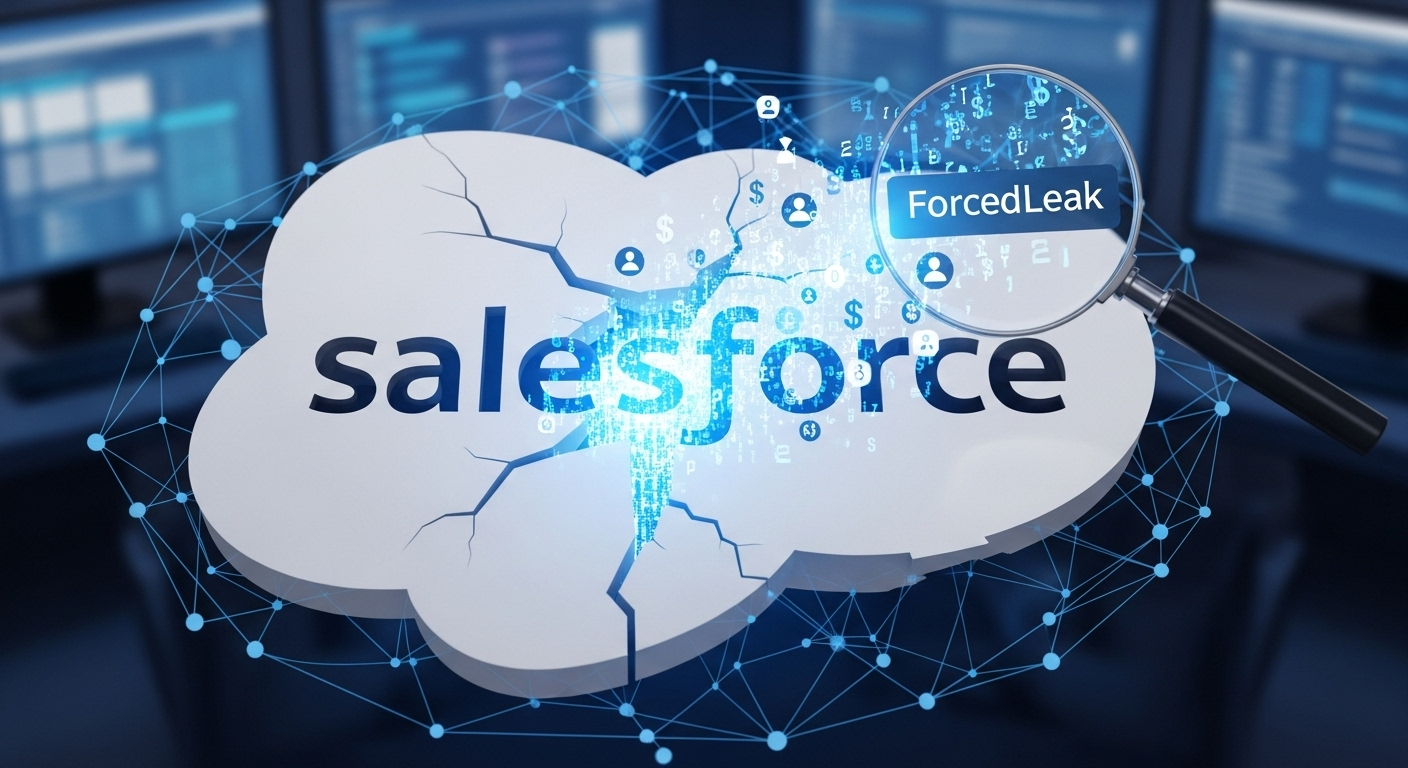
    Salesforce, a leading provider of CRM solutions, recently addressed a critical vulnerability dubbed “ForcedLeak.” This wasn’t a minor issue; it exposed sensitive customer relationship management (CRM) data to potential theft, serving as a stark reminder of the evolving cybersecurity landscape in our AI-driven world. This incident demands attention. As someone with experience in cybersecurity, I can confirm this is a significant event.

    ForcedLeak: A Deep Dive

    The ForcedLeak vulnerability targeted Salesforce’s Agentforce platform. Agentforce is designed to build AI agents that integrate with various Salesforce functions, automating tasks and improving efficiency. The attack leveraged a technique called indirect prompt injection. In essence, attackers could insert malicious instructions within the “Description” field of a Web-to-Lead form. When an employee processed the lead, the Agentforce executed these hidden commands, potentially leading to data leakage.

    Here’s a breakdown of the attack process:

    1. Malicious Input: An attacker submits a Web-to-Lead form with a compromised “Description.”
    2. AI Query: An internal employee processes the lead.
    3. Agentforce Execution: Agentforce executes both legitimate and malicious instructions.
    4. CRM Query: The system queries the CRM for sensitive lead information.
    5. Data Exfiltration: The stolen data is transmitted to an attacker-controlled domain.

    What made this particularly concerning was the attacker’s ability to direct the stolen data to an expired Salesforce-related domain they controlled. According to The Hacker News, the domain could be acquired for as little as $5. This low barrier to entry highlights the potential for widespread damage if the vulnerability had gone unaddressed.

    AI and the Expanding Attack Surface

    The ForcedLeak incident is a critical lesson, extending beyond just Salesforce. It underscores how AI agents are creating a fundamentally different attack surface for businesses. As Sasi Levi, a security research lead at Noma, aptly noted, “This vulnerability demonstrates how AI agents present a fundamentally different and expanded attack surface compared to traditional prompt-response systems.” As AI becomes more deeply integrated into daily business operations, the need for proactive security measures will only intensify.

    Protecting Your Data: Proactive Steps

    Salesforce responded decisively by re-securing the expired domain and enforcing a URL allowlist. However, businesses must adopt additional proactive measures to mitigate risks:

    • Audit existing lead data: Scrutinize submissions for any suspicious activity.
    • Implement strict input validation: Never trust data from untrusted sources.
    • Sanitize data from untrusted sources: Thoroughly clean any potentially compromised data.

    The Future of AI Security

    The ForcedLeak incident serves as a critical reminder of the importance of proactively addressing AI-specific vulnerabilities. Continuous monitoring, rigorous testing, and a proactive security posture are essential. We must prioritize security in our AI implementations, using trusted sources, input validation, and output filtering. This is a learning experience that requires constant vigilance, adaptation, and continuous learning. Let’s ensure this incident is not forgotten, shaping a more secure future for AI.

  • Cloud Licensing: One Year Later, Businesses Still Face Financial Penalties

    One year after the tech world first took note, the debate surrounding Microsoft’s cloud licensing practices continues to evolve. Specifically, the practices’ impact on businesses utilizing Windows Server software on competing cloud platforms, such as Google Cloud, remains a central concern. What began with Google Cloud’s complaint to the European Commission has broadened into a critical examination of fair competition in the cloud computing market.

    The Financial Implications of Microsoft Cloud Licensing

    Restrictive cloud licensing terms, particularly those associated with Microsoft cloud licensing and Azure licensing, demonstrably harm businesses. The most significant impact is often financial. Organizations that migrate their legacy workloads to rival cloud providers may face substantial price markups. These penalties can reach as high as 400%, potentially influencing business decisions regardless of their strategic value.

    The U.K.’s Competition and Markets Authority (CMA) found that even a modest 5% increase in cloud pricing, due to a lack of competition, costs U.K. cloud customers £500 million annually. In the European Union, restrictive practices translate to a billion-Euro tax on businesses. Furthermore, government agencies in the United States overspend by $750 million each year due to these competitive limitations. These figures are not merely abstract data points; they represent concrete financial burdens affecting businesses of all sizes.

    Regulatory Scrutiny Intensifies

    Regulatory bodies worldwide are actively investigating these practices. The CMA’s findings underscore the harm caused to customers, the stifling of competition, and the hindrance to economic growth and innovation. This is not a localized issue; it’s a global challenge. The Draghi report further emphasized the potential existential threat posed by a lack of competition in the digital market.

    What Businesses Need to Know

    The stakes are high for businesses navigating this complex environment. Vendor lock-in is a tangible risk. Making informed decisions requires a thorough understanding of licensing terms and potential penalties associated with Microsoft cloud licensing and Azure licensing. Businesses must actively monitor regulatory developments and advocate for fair competition to ensure they can choose the best cloud solutions for their specific needs.

    As Google Cloud aptly stated, “Restrictive cloud licensing practices harm businesses and undermine European competitiveness.” This isn’t a minor issue; it directly impacts your bottom line, your innovation capabilities, and your future growth prospects. As the debate continues, regulatory bodies must take decisive action to establish a level playing field, allowing for the next century of technological innovation and economic progress.

  • Data Scientists: Architecting the Intelligent Future with AI

    The New Data Scientist: Architecting the Future of Business

    The world of data science is undergoing a fundamental transformation. No longer confined to simply analyzing data, the field is evolving towards the design and construction of sophisticated, intelligent systems. This shift demands a new breed of data scientist – the “agentic architect” – whose expertise will shape the future of businesses across all industries.

    From Analyst to Architect: Building Intelligent Systems

    Traditional data scientists excelled at data analysis: cleaning, uncovering patterns, and building predictive models. These skills remain valuable, but the agentic architect goes further. They design and build entire systems capable of learning, adapting, and making decisions autonomously. Think of recommendation engines that personalize your online experience, fraud detection systems that proactively protect your finances, or self-driving cars navigating complex environments. These are examples of the intelligent systems the new data scientist is creating.

    The “agentic architect” brings together a diverse skillset, including machine learning, cloud computing, and software engineering. This requires a deep understanding of software architecture principles, as highlighted in the paper “Foundations and Tools for End-User Architecting” (http://arxiv.org/abs/1210.4981v1). The research emphasizes the importance of tools that empower users to build complex systems, underscoring the need for data scientists to master these architectural fundamentals.

    Market Trends: Deep Reinforcement Learning and Agentic AI

    One rapidly growing trend is Deep Reinforcement Learning (DRL). A study titled “Architecting and Visualizing Deep Reinforcement Learning Models” (http://arxiv.org/abs/2112.01451v1) provides valuable insights into the potential of DRL-driven models. The researchers created a new game environment, addressed data challenges, and developed a real-time network visualization, demonstrating the power of DRL to create intuitive AI systems. This points towards a future where we can interact with AI in a more natural and engaging way.

    Looking ahead, “agentic AI” is predicted to be a significant trend, particularly in 2025. This means data scientists will be focused on building AI systems that can independently solve complex problems, requiring even more advanced architectural skills. This will push the boundaries of what AI can achieve.

    Essential Skills for the Agentic Architect

    To thrive in this evolving landscape, the agentic architect must possess a robust and diverse skillset:

    • Advanced Programming: Proficiency in languages like Python and R, coupled with a strong foundation in software engineering principles.
    • Machine Learning Expertise: In-depth knowledge of algorithms, model evaluation, and the ability to apply these skills to build intelligent systems.
    • Cloud Computing: Experience with cloud platforms like AWS, Google Cloud, or Azure to deploy and scale AI solutions.
    • Data Engineering: Skills in data warehousing, ETL processes, and data pipeline management.
    • System Design: The ability to design complex, scalable, and efficient systems, considering factors like performance, security, and maintainability.
    • Domain Expertise: A deep understanding of the specific industry or application the AI system will serve.

    The Business Impact: Unlocking Competitive Advantage

    Businesses that embrace the agentic architect will gain a significant competitive edge, realizing benefits such as:

    • Faster Innovation: Develop AI solutions that automate tasks and accelerate decision-making processes.
    • Enhanced Efficiency: Automate processes to reduce operational costs and improve resource allocation.
    • Better Decision-Making: Leverage AI-driven insights to make more informed, data-backed decisions in real-time.
    • Competitive Edge: Stay ahead of the curve by adopting cutting-edge AI technologies and building innovative solutions.

    In conclusion, the new data scientist is an architect. They are the builders and visionaries, shaping the next generation of intelligent systems and fundamentally changing how businesses operate and how we interact with the world.

  • Deutsche Bank’s AI Revolution: DB Lumina Reshapes Financial Research

    Deutsche Bank’s AI Transformation: Revolutionizing Financial Research with DB Lumina

    The financial world is undergoing a profound transformation, driven by an explosion of data and the need for rapid, insightful decision-making. Deutsche Bank is at the forefront of this shift, investing heavily in artificial intelligence to gain a competitive edge. At the heart of this strategy is DB Lumina, a cutting-edge research agent designed to reshape how the bank analyzes data and delivers critical insights. This isn’t merely about adopting new technology; it’s a strategic imperative with significant implications for Deutsche Bank and the broader financial landscape.

    Navigating the Data Deluge: How AI Provides a Competitive Advantage

    The financial industry is grappling with an unprecedented data deluge. Analyzing vast datasets quickly and accurately is paramount. Traditional research methods often struggle to keep pace with the sheer volume and complexity of modern financial information, from market trends and economic indicators to company performance and risk assessments. As a result, analysts may spend more time collecting and organizing data than interpreting it.

    This is where AI-powered tools like DB Lumina become essential. Lumina analyzes enormous datasets, identifying patterns, correlations, and anomalies that might be missed by human analysts. For example, DB Lumina can analyze news articles, social media feeds, and regulatory filings in real-time, flagging potential risks or opportunities. By automating these time-consuming tasks, DB Lumina frees up analysts to focus on strategic thinking, client engagement, and higher-value activities.

    The competitive advantage is multi-faceted. DB Lumina enables more efficient research, leading to faster insights and quicker responses to market changes. This can mean better investment decisions, more accurate risk assessments, and enhanced client service. According to a Deutsche Bank spokesperson, “DB Lumina allows us to turn raw data into actionable intelligence, empowering our analysts to make smarter, more informed decisions.” This ultimately translates to a more robust and profitable business. The YouTube video titled “Deutsche Bank uses Gemini to revolutionize financial services” highlights some of these benefits.

    Inside DB Lumina: Efficiency, Accuracy, and Client Focus

    Developed using Google Cloud’s Gemini and Vertex AI, DB Lumina is designed to automate time-consuming tasks and streamline workflows, boosting efficiency. This enables analysts to concentrate on higher-value activities like strategic thinking and client engagement. DB Lumina offers increased accuracy and delivers improved insights to stakeholders, contributing to more informed decision-making. The platform also prioritizes client data privacy, adhering to strict security and compliance protocols, a crucial consideration in today’s regulatory environment.

    Consider this example: DB Lumina might identify a previously unnoticed correlation between a specific geopolitical event and the performance of a particular sector. By analyzing vast quantities of data, it can offer insights that would take human analysts far longer to uncover. This level of detailed, accurate information allows the bank to make smarter trades and more informed investment decisions.

    The Future is AI-Powered Financial Research

    The integration of AI in finance is not merely a trend; it’s the future. As AI technology continues to evolve, we can expect even more sophisticated tools to emerge, capable of predicting market trends with greater accuracy and providing deeper insights into complex financial instruments. Deutsche Bank’s implementation of DB Lumina underscores its commitment to this future, positioning the bank to adapt and thrive in the evolving landscape.

    To maximize the benefits of AI-powered research, Deutsche Bank should focus on several key areas: investing in and retaining AI talent, maintaining a robust and scalable data infrastructure, prioritizing data privacy and security, and actively seeking user feedback to continuously refine and improve the platform. It’s an ongoing process, but the rewards – enhanced efficiency, deeper insights, and a stronger competitive position – are well worth the effort. By embracing AI, Deutsche Bank is not just improving its internal operations; it’s redefining the future of financial research.

  • Google Cloud: Real-World Impact and Business Benefits

    Is your business ready for the future? Google Cloud is transforming how organizations operate, providing the power and flexibility to tackle complex challenges and drive innovation. But what does this mean for your business right now?

    Unlocking Business Value: Google Cloud in Today’s Market

    The cloud computing landscape is rapidly evolving, and Google Cloud stands out as a leader. By focusing on open-source technologies, powerful hardware like Cloud TPUs (Tensor Processing Units), and advanced data analytics and machine learning capabilities, Google Cloud offers a distinct advantage over its competitors.

    Real-World Impact: Applications Across Industries

    Let’s explore some concrete examples. Consider the field of astrophysics. Researchers are using Google Cloud to perform complex simulations, as highlighted in the study, “Application of Google Cloud Platform in Astrophysics.” They’re deploying scientific software as microservices using Google Compute Engine and Docker. This approach provides significant cost savings compared to traditional on-site infrastructure, as the study details.

    The benefits extend to machine learning, too. A paper on “Automatic Full Compilation of Julia Programs and ML Models to Cloud TPUs” showcases the power of Cloud TPUs. Researchers compiled machine learning models, achieving dramatic speed improvements. For example, the VGG19 forward pass, processing a batch of 100 images, took just 0.23 seconds on a TPU, compared to 52.4 seconds on a CPU. This represents a performance leap of more than 227 times!

    The Strategic Advantage: What It Means for Your Business

    These examples illustrate the strategic implications for your organization. Google Cloud’s ability to handle intensive workloads translates into faster research and development cycles, significant cost savings, and substantial performance improvements. These advantages are critical for businesses that need to analyze large datasets, innovate quickly, and stay ahead of the competition.

    Actionable Steps: Implementing Google Cloud Strategies

    • Leverage TPUs: Explore how to accelerate your machine learning workloads with the processing power of Cloud TPUs.
    • Embrace Open Source: Utilize the wide range of open-source technologies and frameworks supported by Google Cloud, such as Kubernetes and TensorFlow.
    • Focus on Data Analytics: Implement Google Cloud’s data analytics tools, like BigQuery, to gain valuable insights and make data-driven decisions.
    • Experiment with New Services: Stay at the forefront of innovation by exploring new Google Cloud features and services as they become available.

    The future of Google Cloud is bright, with a strong focus on AI, data analytics, and scientific computing. By embracing these strategies, your business can thrive in today’s fast-paced environment.

  • AI & Transportation: Solving the Distribution Shift Problem

    Smart transportation promises a revolution: AI-powered systems optimizing traffic, managing fleets, and ultimately, making our commutes seamless. However, a significant challenge threatens to derail this vision: the distribution shift problem, a critical hurdle that could lead to AI failures with potentially serious consequences.

    What is the Distribution Shift Problem?

    Imagine training a sophisticated AI to control traffic signals. You feed it data about typical rush hour patterns, accident locations, and even the weather. The AI learns, making intelligent decisions, and everything runs smoothly. But what happens when unforeseen circumstances arise? A sudden snowstorm, an unexpected downtown concert, or even subtle shifts in commuter behavior can all throw a wrench in the works. The data the AI encounters in these situations differs from the data it was trained on. This is the core of the distribution shift problem: the data the AI sees in the real world no longer perfectly matches its training data, leading to potential performance issues.

    This issue is highlighted in the research paper, “The Distribution Shift Problem in Transportation Networks using Reinforcement Learning and AI.” The study reveals that dynamic data distribution within transportation networks can cause suboptimal performance and reliability problems for AI systems.

    Market Dynamics and the Push for Smart Solutions

    The market for smart transportation is booming. Urbanization, the rise of electric vehicles, and the urgent need for more efficient and sustainable systems are fueling unprecedented demand. This presents immense opportunities for AI-driven solutions. However, increased growth brings increased scrutiny. The reliability of these AI systems is paramount. If a traffic management system falters due to a data shift, the repercussions could be severe: traffic bottlenecks, accidents, and widespread commuter frustration.

    Finding Solutions: Meta Reinforcement Learning and Digital Twins

    Researchers are actively developing solutions to address the distribution shift problem. One promising approach is Meta Reinforcement Learning (Meta RL). The goal is to create AI agents that can rapidly adapt to new environments and data distributions, essentially teaching these systems to learn on the fly. Think of it like teaching a dog to learn new tricks and respond to changing environments quickly.

    The research indicates that while MetaLight can achieve reasonably good results under certain conditions, its performance can be inconsistent. Error rates can reach up to 22%, highlighting that Meta RL schemes often lack sufficient robustness. Therefore, more research is critical to achieve truly reliable systems. Furthermore, integrating real-world data and simulations is essential. This includes using digital twins—realistic, data-rich virtual environments—to enable safer and more cost-effective training. Digital twins will also facilitate the continuous learning, rapid prototyping, and optimization of RL algorithms, ultimately enhancing their performance and applicability in real-world transportation systems.

    The Road Ahead

    The future of AI in transportation is undoubtedly bright, but we cannot ignore the distribution shift problem. Overcoming this challenge is crucial for the success of smart transportation solutions. The focus should be on developing more robust RL algorithms, exploring Meta RL techniques, and integrating real-world data and simulations, particularly digital twins. By prioritizing these areas, companies can position themselves for success in this rapidly evolving market, ultimately delivering safer, more efficient, and sustainable transportation systems for everyone.