
CloudTalk

Category: Cloud Computing

  • AI Security Innovations on Google Cloud: Partner-Built Analysis

    AI Security Innovations on Google Cloud: Partner-Built Analysis

    Partner-Built AI Security Innovations on Google Cloud: An Analysis of the Evolving Threat Landscape

    ## The Future of Cloud Security: AI Innovations on Google Cloud

    The cloud computing landscape is in constant flux, presenting both unprecedented opportunities and formidable security challenges. As organizations increasingly migrate their data and operations to the cloud, the need for robust and intelligent security measures becomes ever more critical. This report analyzes the current state of cloud security, focusing on the rise of AI-powered solutions developed by Google Cloud partners and the strategic implications for businesses.

    ### The Genesis of Cloud Computing and Its Security Imperatives

    Cloud computing has rapidly transformed the technological landscape, from government agencies to leading tech companies. Its widespread adoption stems from its ability to streamline data storage, processing, and utilization. However, this expansive adoption also introduces new attack surfaces and security threats. As a research paper published on arXiv, “Emerging Cloud Computing Security Threats” (http://arxiv.org/abs/1512.01701v1), highlights, cloud computing offers a novel approach to data management, underscoring the need for continuous innovation in cloud security to protect sensitive information and ensure business continuity. This evolution necessitates a proactive approach to security, focusing on innovative solutions to safeguard data and infrastructure.

    ### Market Dynamics: The AI Shadow War and the Rise of Edge Computing

    The architecture of AI is at the heart of a competitive battleground: centralized, cloud-based models (Software-as-a-Service, or SaaS) versus decentralized edge AI, which involves local processing on consumer devices. A recent paper, “The AI Shadow War: SaaS vs. Edge Computing Architectures” (http://arxiv.org/abs/2507.11545v1), analyzes this competition across computational capability, energy efficiency, and data privacy, revealing a shift toward decentralized solutions. Edge AI is rapidly gaining ground, with the market projected to grow from $9 billion in 2025 to $49.6 billion by 2030, representing a 38.5% Compound Annual Growth Rate (CAGR). This growth is fueled by increasing demands for privacy and real-time analytics. Key applications like personalized education, healthcare monitoring, autonomous transport, and smart infrastructure rely on the ultra-low latency offered by edge AI, typically 5-10ms, compared to the 100-500ms latency of cloud-based systems.

    ### Key Findings: Edge AI’s Efficiency and Data Sovereignty Advantages

    The “AI Shadow War” paper underscores edge AI’s significant advantages. One crucial aspect is energy efficiency; modern ARM processors consume a mere 100 microwatts for inference, compared to 1 watt for equivalent cloud processing, representing a 10,000x efficiency advantage. Furthermore, edge AI enhances data sovereignty by processing data locally, eliminating single points of failure inherent in centralized architectures. This promotes democratization through affordable hardware, enables offline functionality, and reduces environmental impact by minimizing data transmission costs. These findings underscore the importance of considering hybrid architectures that leverage the strengths of both cloud and edge computing for optimal security and performance.

    ### Industry Analysis: The Strategic Importance of AI-Driven Security

    The convergence of cloud computing and AI is fundamentally reshaping the cybersecurity landscape. The ability to leverage AI for threat detection, vulnerability assessment, and automated incident response is becoming a critical differentiator. As the volume and sophistication of cyber threats increase, organizations must adopt intelligent security solutions to stay ahead. This involves not only the implementation of advanced technologies but also strategic partnerships with providers who offer AI-powered security innovations.

    ### Competitive Landscape and Market Positioning

    Google Cloud, alongside its partners, is strategically positioned to capitalize on the growing demand for AI-driven security solutions. By offering a robust platform for building and deploying AI models, Google Cloud empowers partners to develop innovative security products. The ability to integrate these solutions seamlessly with existing cloud infrastructure provides a significant competitive advantage. As the “AI Shadow War” unfolds, Google Cloud’s focus on hybrid cloud and edge computing solutions will be crucial in maintaining its market position. The emphasis on data privacy and security, combined with the power of AI, is a compelling value proposition for businesses seeking to protect their digital assets.

    ### Emerging Trends and Future Developments

    The future of cloud security is inextricably linked to advancements in AI and machine learning. We can anticipate the emergence of more sophisticated threat detection models, automated incident response systems, and proactive security measures. The integration of AI into all aspects of the security lifecycle, from threat prevention to incident recovery, will be a key trend. Furthermore, the development of more secure and efficient edge computing architectures will play a vital role in the overall security landscape. The trend towards hybrid cloud and edge computing ecosystems will likely accelerate as organizations seek to balance the benefits of centralization with the advantages of decentralization.

    ### Strategic Implications and Business Impact

    For businesses, the strategic implications of these trends are significant. Organizations must prioritize the adoption of AI-powered security solutions to protect their data and infrastructure. Investing in cloud platforms that offer robust AI capabilities, such as Google Cloud, is crucial. Furthermore, businesses should consider developing or partnering with providers of edge AI solutions to enhance data privacy and reduce latency. The ability to adapt to the evolving threat landscape and leverage AI-driven security will be critical for business success in the years to come. Organizations that embrace these technologies will be better positioned to mitigate risks, improve operational efficiency, and maintain a competitive edge.

    ### Future Outlook and Strategic Guidance

    The future of cloud security is promising, with AI and edge computing poised to play an increasingly prominent role. Businesses should adopt a proactive approach, focusing on the following:

    1. Prioritize AI-Driven Security: Invest in platforms and solutions that leverage AI for threat detection, prevention, and response.

    2. Embrace Hybrid Architectures: Explore hybrid cloud and edge computing models to optimize security, performance, and data privacy.

    3. Foster Strategic Partnerships: Collaborate with security vendors and partners to develop and implement advanced security solutions.

    4. Stay Informed: Continuously monitor emerging threats and technological advancements in the cloud security landscape.

    By taking these steps, organizations can protect their digital assets and thrive in an increasingly complex and dynamic environment.

    Market Overview

    The market for AI-powered security solutions on Google Cloud offers significant opportunities and challenges. Current market conditions suggest a dynamic and competitive environment.

    Future Outlook

    The future of AI security innovations on Google Cloud indicates continued growth and market expansion, driven by technological advancements and evolving market demands.

    Conclusion

    This analysis highlights significant opportunities in the market for AI-powered security solutions on Google Cloud, requiring careful consideration of associated risk factors.

  • Google Cloud’s Rust SDK: Attracting Developers with Performance & Security

    Rust’s Ascent: Google Cloud Embraces a New Era

    Google Cloud is making a strategic move to capture the attention of a growing segment of highly-skilled developers. The launch of its Rust SDK (Software Development Kit) signals a significant shift, aligning with the increasing adoption of the Rust programming language and offering new possibilities for cloud strategy.

    Decoding Google Cloud’s Strategy

    In the fiercely competitive cloud market, differentiation is key. By embracing Rust, Google Cloud aims to attract developers prioritizing performance, security, and efficiency. Rust is particularly well-suited for building robust and efficient applications, especially in resource-constrained environments. This allows businesses to build better applications with lower overhead.

    What the Numbers Reveal

    The Google Cloud Platform Rust Client Libraries, hosted on GitHub (https://github.com/googleapis/google-cloud-rust), provides key insights. With 713 stars and 79 forks, the project demonstrates a dedicated community. The Apache-2.0 license grants developers freedom of use. The impressive 2,148 commits on the main branch, with updates as recent as September 9, 2025, indicates ongoing development and a commitment to providing a current and relevant SDK. The SDK’s support for a Minimum Supported Rust Version (MSRV) of 1.85 shows Google’s commitment to staying current with the evolving Rust ecosystem.

    Key Metrics Breakdown:

    • Stars: 713 – Indicates community interest and popularity.
    • Forks: 79 – Shows developers are actively using and adapting the code.
    • Commits: 2,148 – Highlights the SDK’s active development and ongoing improvements.
    • License: Apache-2.0 – Allows for free and open use, encouraging wider adoption.

    Business Benefits of the Rust SDK

    The integration of Rust into Google Cloud offers significant advantages for businesses. It allows Google Cloud to attract developers already invested in Rust, which can streamline the development process. Companies using the SDK may experience faster development cycles, leading to reduced costs and improved security. Rust’s focus on memory safety and zero-cost abstractions translates to superior resource utilization and increased application efficiency. For example, consider a company developing a real-time data processing pipeline. Rust’s performance capabilities would allow for handling large volumes of data more efficiently, leading to faster processing times and cost savings.

    A Look Ahead: The Future of Google Cloud and Rust

    The future looks promising for the Google Cloud Rust SDK. As Rust adoption continues to rise, Google Cloud’s support positions it as a vital element of the cloud ecosystem. Businesses adopting this SDK stand to gain a strategic advantage, allowing for improved performance, security, and cost efficiency. Continuous monitoring of the SDK’s development and community engagement is recommended to stay ahead of the curve.

  • ADK Hackathon: Google Cloud’s AI Innovation & Multi-Agent Systems

    ADK Hackathon: Google Cloud’s AI Innovation & Multi-Agent Systems

    ADK Hackathon: Driving the Future of Multi-agent Systems

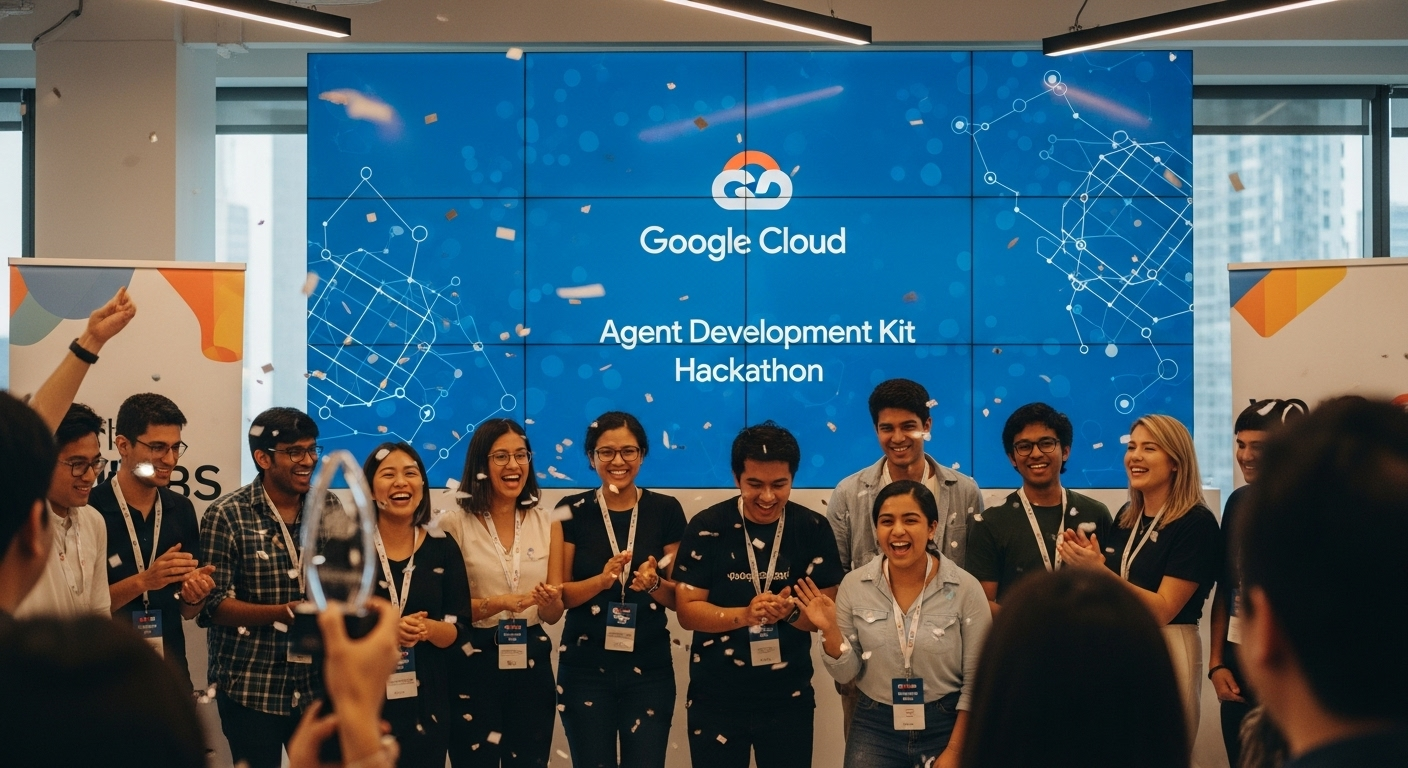
    The Agent Development Kit (ADK) Hackathon, powered by Google Cloud, was more than just a coding competition; it was a powerful demonstration of the potential of multi-agent systems and collaborative AI. With over 10,000 developers participating worldwide, the event showcased innovative applications of these technologies, offering a glimpse into the future. Having witnessed the evolution of the tech landscape over many years, I was genuinely impressed by the achievements of this hackathon.

    Hackathons: Catalysts for Innovation and Skill Development

    Hackathons, such as this ADK event, are becoming increasingly vital for fostering innovation and developing essential skills. They provide a dynamic environment for developers to explore cutting-edge technologies and push the boundaries of what’s possible. These events are not just for students; they are valuable for professionals at all stages of their careers. A study highlighting the benefits of hackathons on software engineering students’ motivation reinforces this point. While the full citation is pending, the firsthand experience of witnessing the energy and enthusiasm at the ADK Hackathon confirms the potential of such hands-on experiences to accelerate learning and drive innovation.

    Key Findings and Winning Solutions in Multi-Agent Systems

    The primary goal of the ADK Hackathon was to build multi-agent AI systems using the ADK and Google Cloud. These systems, which involve multiple AI agents working collaboratively, represent a significant shift in how we approach complex problem-solving. The results of the hackathon were truly impressive, with the judges particularly impressed by the creativity and technical skill on display. Here’s a look at the winning solutions:

    • Grand Prize: SalesShortcut, an AI-powered Sales Development Representative. This system leverages multi-agent collaboration to automate lead generation and sales outreach, streamlining the sales process and improving efficiency.
    • Regional Winners:
      • Nexora-AI (EMEA): This system focused on optimizing supply chains through collaborative AI, demonstrating the power of multi-agent systems in logistics.
      • Edu.AI (Latin America): This solution used AI agents to personalize learning experiences, showcasing the potential of multi-agent systems in education.
      • Energy Agent AI (North America): This system tackled energy management, using AI to optimize energy consumption and promote sustainability.
      • GreenOps (APAC): Focused on automating and optimizing IT operations with AI agents.

    These diverse applications highlight the broad applicability of multi-agent AI, from sales automation to energy management, and demonstrate the transformative potential of these technologies across various sectors.

    The Business Impact of Multi-agent Systems

    The ADK Hackathon underscores the growing importance of multi-agent systems for businesses. Consider SalesShortcut as a prime example. This innovative solution showcases how AI can revolutionize sales processes and lead generation. The success of projects like SalesShortcut demonstrates the power of these tools to drive efficiency and create new opportunities. The use of these systems will only continue to grow in the future, helping businesses transform their work.

    Strategic Implications for Google Cloud and the Future of AI

    From a strategic perspective, the ADK Hackathon is significant for Google Cloud. By fostering innovation and cultivating a strong developer community, Google Cloud strengthens its position as a leader in AI. The success of projects like SalesShortcut provides a roadmap for future innovation. The insights gained and the community developed through hackathons will continue to shape the future of AI, helping build innovative solutions.

    In a world of constant change, hackathons like this ADK event are critical. They provide a vital platform for learning, collaboration, and the development of the next generation of intelligent systems. It’s a space where developers come together to shape the future, and that, to me, is always worth observing. By pushing the boundaries of multi-agent systems and fostering collaboration, this hackathon has set a new standard for AI innovation.