Category: Manufacturing

  • India’s Chemical Sector: Headwinds from China & Global Challenges

    India’s Chemical Sector: Headwinds from China & Global Challenges

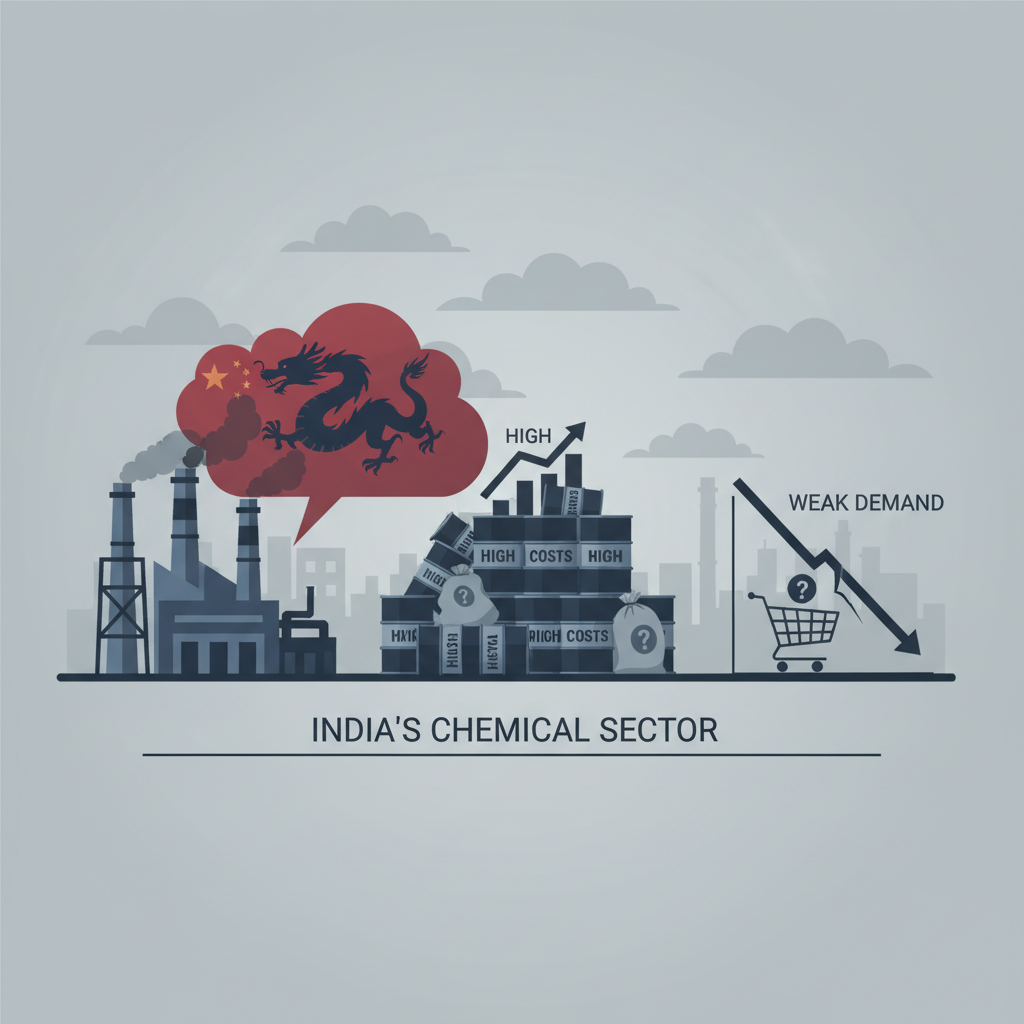
    India’s chemical sector is navigating a complex landscape, facing significant challenges that could hinder its growth. A recent analysis by Nuvama highlights several key risks, including overcapacity in China, elevated crude oil prices, and sluggish global demand. These factors, combined with domestic issues, paint a challenging picture for Indian chemical manufacturers.

    Context: The Indian chemical industry is a crucial component of the country’s manufacturing sector, contributing significantly to GDP and employment. However, it’s heavily reliant on global market dynamics and susceptible to fluctuations in raw material costs and international demand.

    Analysis:

    • China’s Overcapacity: China’s substantial production capacity is creating a supply glut, intensifying competition and potentially depressing prices in the global market. This oversupply puts pressure on Indian manufacturers, who may struggle to compete on cost.
    • High Crude Oil Prices: Crude oil is a critical feedstock for many chemical products. Elevated prices directly increase production costs, squeezing profit margins for Indian companies.
    • Weak Global Demand: Demand from key markets like Europe and the US is currently weak across various sectors. This decline in demand reduces export opportunities for Indian chemical producers and affects overall revenue.
    • Strong Indian Rupee: A strong Indian rupee negatively impacts export earnings, making Indian products more expensive in international markets. This can further erode competitiveness and reduce export volumes.
    • Domestic Challenges: Beyond external factors, the Indian chemical sector grapples with internal hurdles. Delays in environmental approvals and high logistics costs add to the operational burden, hindering competitiveness and increasing expenses.

    Implications: The confluence of these factors could lead to reduced profitability for Indian chemical companies. The sector may experience slower growth, potentially impacting investment and job creation. Companies may need to focus on cost optimization, explore new markets, and strengthen their domestic presence to mitigate these risks. Nuvama’s analysis underscores the need for strategic agility and proactive measures to navigate the current environment.

    What Happens Next: The Indian chemical sector will need to adapt quickly to these challenges. This could involve:

    • Diversifying export markets to reduce reliance on regions with weak demand.
    • Investing in more efficient production processes to lower costs.
    • Seeking government support to streamline environmental approvals and reduce logistics costs.
    • Focusing on specialty chemicals and other high-value products to improve profitability.

    Source: Top ET Manufacturing | Latest Manufacturing News : ETManufacturing.in

  • Tata Steel & Google Cloud: Digital Transformation for Steel Success

    Tata Steel Forges Ahead: A Digital Revolution in Steelmaking

    In an era demanding both sustainability and efficiency, Tata Steel is undergoing a significant transformation, setting a new standard for the global steel industry. Partnering with Google Cloud, the company is leveraging the power of data and digital technologies to optimize operations, reduce downtime, and pave the way for a more sustainable future. This initiative promises to reshape the way steel is made, offering a compelling case study for other heavy industries.

    Why Digital Transformation Matters in Steel

    The steel industry is facing unprecedented pressure. Demand for high-performance, innovative steels is rising, while the need to minimize environmental impact and streamline production processes is more critical than ever. Consider the use of thermally sprayed components, for instance. These components enhance performance but often present complex maintenance challenges. Identifying and addressing potential issues quickly is key. This is where the power of data analytics comes into play.

    “We recognized early on that digital transformation was not just an option, but a necessity for our future competitiveness,” says a Tata Steel spokesperson. “Our collaboration with Google Cloud is enabling us to unlock unprecedented insights into our operations.”

    Data-Driven Insights: The Engine of Change

    At the heart of Tata Steel’s initiative lies a focus on predictive maintenance. Imagine a network of sensors and IoT devices constantly feeding real-time data into the cloud. This data, encompassing factors like temperature, vibration, and energy consumption, is analyzed using advanced machine learning algorithms. This allows Tata Steel to anticipate equipment failures before they occur.

    The early results are promising. Tata Steel has already achieved a 15% reduction in unplanned outages across several key facilities. Furthermore, by using Google Cloud’s machine learning capabilities, the company is optimizing production schedules and resource allocation, resulting in an estimated 5% increase in overall efficiency.

    Concrete Examples: Transforming Steelmaking Processes

    This digital transformation extends beyond predictive maintenance. For example:

    • Blast Furnace Optimization: Real-time monitoring and analysis of blast furnace data allows for adjustments to the process, improving efficiency and reducing emissions.
    • Quality Control: Machine learning algorithms analyze data from various stages of production to identify and address quality issues proactively.
    • Energy Management: Data-driven insights help optimize energy consumption across the plant, contributing to significant cost savings and reduced environmental footprint.

    Sustainability at the Forefront

    Sustainability is a core tenet of Tata Steel’s strategy. By leveraging data-driven insights, the company is actively working to minimize its environmental impact. This includes reducing energy waste, optimizing resource utilization, and lowering emissions. The integration of cloud-based dashboards provides real-time alerts on potential issues, integrating seamlessly with existing systems. This approach is crucial for compliance with increasingly stringent environmental regulations.

    What This Means for the Industry

    Industry experts are closely monitoring Tata Steel’s progress, viewing it as a potential blueprint for other heavy industries. The ability to anticipate and prevent equipment failures translates directly into increased production, reduced costs, and improved safety. The use of a hybrid deep learning model, for example, could soon allow for real-time slag flow monitoring, further improving process efficiency.

    “Tata Steel’s approach highlights the transformative potential of cloud-based technologies in the industrial sector,” says [Quote from Google Cloud representative], “[their] commitment to innovation and sustainability is truly inspiring.”

    The Bottom Line

    While challenges such as data security and integration costs remain, Tata Steel’s unwavering focus on data-driven insights, predictive maintenance, and sustainable practices has positioned them for continued success. By embracing digital transformation, Tata Steel is not just improving its own operations; it is setting a new standard for the future of steelmaking, proving that efficiency, sustainability, and innovation can go hand in hand. This is a smart move, and one that other companies would be wise to emulate.