CloudTalk

Category: Technology

  • OpenAI & xAI: Talent Exodus & AI’s Future

    OpenAI & xAI: Talent Exodus & AI’s Future

    The news has been trickling in, a steady drip at first, then a cascade. Over the past few weeks, a significant number of people have walked away from both OpenAI and Elon Musk’s xAI. Half of xAI’s founding team has departed, some by choice, others through “restructuring” — a word that, in this context, feels like a euphemism.

    At OpenAI, it’s a similar story. The mission alignment team, once seen as core to the company’s values, has been disbanded. Adding to the unease is the firing of a policy executive who reportedly voiced opposition to the company’s “adult mode” feature. It all adds up to a picture of instability, a talent exodus that’s causing ripples throughout the tech world.

    What’s driving this sudden shift? It’s complicated, of course. But the common thread seems to be a mismatch between the promises of AI and the realities of its development. The pressure to generate returns, to push the boundaries of what’s possible, is clashing with the ethical considerations and the long-term vision. Or maybe, the vision isn’t as clear as it once seemed.

    As per reports, the situation at xAI is particularly striking because the company is relatively young, and the founding team is usually the bedrock. That’s why, when half of those key people leave, it sends a clear signal. It speaks volumes about the internal dynamics, the direction of the company, and the weight of the expectations.

    One might wonder what the next steps are, where the talent is going, and what the financial implications are. The tech industry, it seems, is always in flux.

    The departures are happening against a backdrop of increasing scrutiny of AI companies. Regulatory bodies are starting to take a closer look, and investors are demanding more transparency. According to a recent report from the Brookings Institution, the lack of clear ethical guidelines is a major concern. The report also highlights a growing divide between those who are building AI and those who are setting the rules.

    And it’s not just about the internal dynamics. The broader economic climate plays a role, too. The market is cooling down, and funding is becoming harder to secure. That puts pressure on companies to deliver results, which can lead to difficult decisions.

    The impact is being felt. In March, for instance, OpenAI was valued at over $80 billion, but the recent departures and the changing market conditions are clouding the picture. One analyst, speaking on the condition of anonymity, said that the company’s valuation is now being reevaluated, with some expecting a potential drop of as much as 15%.

    The challenge, as many in the industry see it, is how to balance innovation with responsibility. It’s a question that’s now being asked, with increasing urgency.

    It’s a tough environment, a lot of uncertainty. The room felt tense — still does, in a way.

  • AI Burnout & Billion-Dollar Bets: Silicon Valley’s Shifting Sands

    AI Burnout & Billion-Dollar Bets: Silicon Valley’s Shifting Sands

    The air in Silicon Valley feels… tense. Or maybe it’s just the pressure of the numbers. Either way, the past few weeks have been brutal for AI companies. Reports of talent hemorrhaging have become almost commonplace, with xAI, Elon Musk’s AI venture, seeing a significant portion of its founding team depart. Restructuring, they call it. Others simply left.

    OpenAI hasn’t escaped the turmoil either. From what’s being reported, the mission alignment team has been disbanded, and a policy executive, reportedly opposed to the company’s new “adult mode” feature, was let go. The atmosphere, a source told reporters, is one of rapid change, and high stakes. It’s a landscape where billion-dollar bets are made, and where the human cost of progress feels, at times, very real.

    It’s not just the departures. The underlying question is this: can the AI industry sustain its breakneck pace? According to a recent analysis from the Brookings Institution, the sector is currently experiencing a talent shortage. This, they say, is partly due to the intense pressure, long hours, and the ever-present fear of being left behind. Add to that the ethical concerns now swirling around AI’s potential, and you have a recipe for… well, for what we’re seeing now.

    The financial implications are also significant. Investment in AI remains high, but the exodus of key personnel could impact timelines and, crucially, returns. One analyst, speaking on condition of anonymity, suggested the industry is now in a “wait and see” period. The money is there, but the talent, the ability to execute, is becoming increasingly scarce.

    The situation isn’t helped by the broader economic climate. While the stock market has been relatively stable, there are underlying anxieties about inflation and the potential for a recession. These concerns add another layer of uncertainty, making investors more cautious and demanding more immediate results. The pressure is on, and it’s being felt across the board.

    Consider the recent news from OpenAI. The firing of the policy executive, for instance. It sends a message, intentionally or not. That message, some say, is that the company is prioritizing speed and innovation over some other considerations. Or maybe I’m misreading it.

    The details are still emerging, but the core narrative is consistent: a sector in flux, facing challenges from within and without. The future of AI, it seems, is being written in real time, with each departure, each policy shift, each billion-dollar investment, a new line in a story still unfolding. It’s a story with no clear ending.

  • Score Dating App Relaunches: Now Open to Everyone

    Score Dating App Relaunches: Now Open to Everyone

    The hum of servers filled the air, a low thrumming that was almost a physical presence. February 13, 2026. Inside the spartan offices of Score, the dating app that, two years prior, had caused a minor stir, the team prepped for launch. The original concept, as many will recall, was straightforward: a dating app for individuals with a good-to-excellent credit score. Now, the relaunch was targeting a wider audience. The founder, whose name was kept under wraps, was aiming for a fresh start.

    It’s a bold move, considering the initial backlash. Many viewed the credit-based matchmaking as elitist, even a bit tone-deaf. But the founder, according to sources, saw an opportunity, a niche that could be profitably exploited. The goal this time, as per internal documents, was to achieve 1 million users within the first year.

    The technical challenges were, of course, significant. Beyond the usual scaling issues, there were the complexities of integrating a credit-checking system, even if it wasn’t the core focus this time around. That’s probably why the team seemed so focused. One engineer, Sarah Chen, was hunched over a monitor, running diagnostics. The data stream, a blur of numbers and graphs, seemed to be her world at that moment.

    “We’ve stress-tested the servers,” a project manager, whose name I didn’t catch, announced during a brief team huddle. “Everything seems stable, for now.”

    Meanwhile, the market analysts were cautiously optimistic. “The dating app market is always evolving,” stated analyst Michael Davies, from tech analysis firm, “and Score’s relaunch could tap into a new segment. Or maybe it won’t.” He continued, “The key will be user acquisition and retention, especially now that the credit requirement is gone.”

    The app, at least in its new incarnation, is open to anyone. It’s a departure from the original pitch, which, as many critics pointed out, felt a bit out of touch. The idea of linking credit scores to romance, or even compatibility, was, to some, a strange one. Now, the focus is on a broader user base, hoping to capitalize on the initial buzz. It is a pivot, in a way.

    The relaunch is something of a test, a bet on the idea that the underlying technology – the matching algorithms, the user interface – can stand on its own, regardless of the user’s financial profile. It is, perhaps, a more conventional play in the highly competitive world of online dating. The team is betting on a new beginning, a chance to define itself beyond its controversial origins.

  • Score Dating App Relaunches: Now Open to All

    Score Dating App Relaunches: Now Open to All

    The hum of servers filled the air, a constant white noise in the corner of the small San Francisco office. It was February 13, 2026, and the team at Score, the dating app, was huddled around a monitor, watching the final stages of the relaunch. Two years prior, the app had made waves—and quickly disappeared—for its credit-based matchmaking. Now, it was back, with a new strategy.

    Score’s founder, whose name was kept private, had always maintained the app wasn’t about exclusivity, but rather, a way to match people with similar financial responsibility. The initial rollout, however, had been met with criticism. Now, the app would be open to all, with credit scores playing a less prominent role in the algorithm.

    Earlier today, an analyst from Forrester, Sarah Chen, stated, “The dating app market is saturated, and differentiating on credit alone was a risky move. This relaunch, opening up to a wider audience, is probably the right move.”

    The technical challenges were, in a way, immense. The original infrastructure had to be rebuilt to handle a potentially larger user base. The engineering team, led by a quiet, focused lead, spent months optimizing the app’s performance. The database, designed to handle thousands of users, now needed to scale for what they hoped would be millions. It was a race against time, with the pressure mounting as the launch date loomed.

    Meanwhile, the marketing team prepped for the rollout. The initial strategy centered around social media campaigns and partnerships with financial influencers. It was a delicate dance, trying to shake off the previous controversy while simultaneously highlighting the app’s unique selling proposition: matching people based on their financial responsibility, or at least, that’s what it seemed like they were going for.

    By evening, the launch was underway. The servers, though humming, seemed stable. The team exchanged weary smiles. Success, at least for the moment, felt within reach. The founder, watching from a corner, looked on, a mix of relief and anticipation etched on his face. The future of Score, and maybe dating itself, hung in the balance.

  • Glean’s AI Ambition: Owning the AI Layer Inside Companies

    Glean’s AI Ambition: Owning the AI Layer Inside Companies

    The hum of servers is a constant, a low thrum that vibrates through the floor of Glean’s engineering lab. It’s late, probably nearing 10 PM, and a team huddles around a monitor, eyes glued to thermal readings. They’re running tests, tweaking parameters, trying to push the limits of the system. Glean, once known for enterprise search, is now making a play to own the AI layer, that crucial infrastructure inside companies.

    The shift is ambitious, and the stakes are high. As Arvind Jain, the CEO, has stated, the goal is to build an “AI work assistant” that integrates beneath other AI systems. It’s a move that positions Glean to become the central nervous system for how companies use AI, a prospect that has analysts watching closely.

    Earlier this year, the company raised a significant Series D round, signaling investor confidence in this pivot. The funding, totaling $200 million, is earmarked for expanding its AI capabilities and integrating its platform more deeply into enterprise workflows. This, according to sources, is part of a plan to capture a significant portion of the rapidly growing enterprise AI market, which some forecasts predict will reach $50 billion by 2027.

    Meanwhile, the market is a battlefield. Companies like Microsoft and Google are also vying for dominance in the AI space, making it a crowded arena. Glean, however, is betting on its unique approach: to become the underlying layer that connects all other AI tools. This means integrating with everything from customer relationship management (CRM) systems to internal communications platforms, creating a unified AI experience.

    A key element of Glean’s strategy involves partnerships. They’ve been quietly building relationships with other tech firms, aiming to embed their AI capabilities within existing software ecosystems. This approach, as one industry analyst put it, is about “becoming the invisible hand” that powers AI across the enterprise. It’s about being everywhere, yet nowhere at the same time.

    The technical challenges are significant. The team is working to optimize their algorithms for speed and efficiency. They need to ensure seamless integration with various data sources and platforms. The goal, as one engineer explained, is to make the system “fast, reliable, and invisible to the end user.”

    The company is also focused on security and data privacy. With more and more sensitive information being processed by AI systems, Glean must ensure that its platform is secure and compliant with all relevant regulations. This is a critical factor, or maybe that’s how the supply shock reads from here.

    By evening, the thermal tests seemed promising. The team, still weary, began to see the potential of their work. The path to owning the AI layer isn’t easy, but Glean, for once, is ready to fight for it.

  • Upside Robotics: Solar Robots Revolutionize Corn Farming

    Upside Robotics: Solar Robots Revolutionize Corn Farming

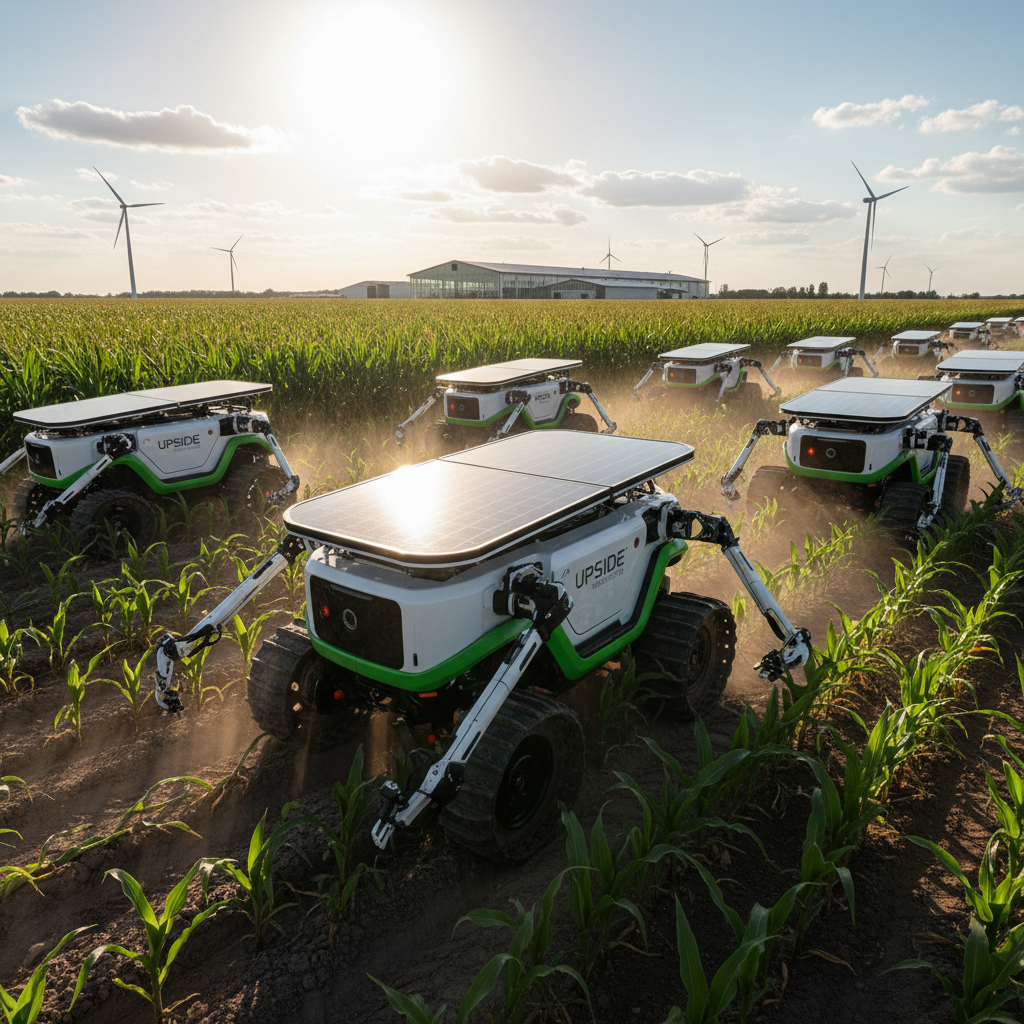
    The hum of the solar panels was almost imperceptible over the whir of the prototype robot as it navigated the cornfield. Earlier this month, Upside Robotics showcased its latest iteration, designed to autonomously manage fertilizer application. The goal? To slash fertilizer use by up to 70%, as per company reports.

    The company, founded in 2024, has been quietly testing its technology across various test farms. The core innovation lies in the robots’ ability to analyze soil conditions and plant health in real-time. This data-driven approach allows for precision fertilizer application, targeting only the areas that need it. It’s a smart system.

    “We’re not just reducing waste; we’re optimizing resource allocation,” explained Dr. Anya Sharma, lead engineer at Upside Robotics, during a recent press briefing. “Our robots use advanced sensors and AI to understand the unique needs of each plant.” This localized approach minimizes environmental impact, reducing runoff and protecting water quality. A win-win, really.

    The market context is significant. Fertilizer prices have been volatile, and the demand for sustainable agricultural practices is growing. Analysts at AgriTech Insights project a 25% increase in demand for precision agriculture technologies over the next five years. Seems like a good time for Upside Robotics.

    The robots themselves are solar-powered, adding another layer of sustainability. They operate independently, requiring minimal human intervention once deployed. This is where it gets interesting: the robots are designed to work in swarms, covering large areas efficiently. Each robot is equipped with a suite of sensors, including hyperspectral cameras and soil nutrient detectors. These sensors feed data to an onboard AI system, which then determines the optimal fertilizer application rate. Or, at least, that’s the current model.

    The implications are far-reaching. Reduced fertilizer use translates to lower input costs for farmers and a smaller carbon footprint. The technology also has the potential to improve crop yields by ensuring plants receive the precise nutrients they need. And, of course, the technology is still developing.

    Still, there are challenges. The initial investment in the robots can be substantial, and the technology requires a reliable internet connection for data transmission. But the potential benefits, both economic and environmental, are compelling. The company is planning a wider rollout in 2027, according to a recent statement.

  • Tech Startups Raise Millions in New Funding Rounds

    Tech Startups Raise Millions in New Funding Rounds

    The hum of servers was a constant backdrop. At Integrate, engineers were huddled around monitors, running diagnostics. It was February 11, 2026, and the team was pushing to meet its Q2 deadline. The goal: to finalize the integration of their project management platform for a key defense contract. They’d just secured $17 million in funding, led by FPV Ventures, and the pressure was on.

    “It’s a vote of confidence, no question,” a senior engineer, Sarah Chen, said, glancing up from her screen. “We’re talking about modernizing how the military manages its projects. It’s a huge undertaking.”

    Meanwhile, in a different corner of the tech world, Complyance was celebrating its $20 million Series A round, led by GV. Their AI-native compliance platform is designed to navigate the complex world of risk and regulation. The market demand is clear. Regulatory scrutiny is increasing across sectors, and the need for sophisticated, automated solutions is growing rapidly.

    And then there’s Apptronik. Their humanoid robot startup, having raised a staggering $935 million, with a recent $520 million extension from investors including Google and Mercedes-Benz, achieving a valuation exceeding $5 billion. They’re not just building robots; they are building the future, or at least, that’s how it seems from here.

    These funding rounds, though diverse in their focus, share a common thread: a bet on innovation. Experts at firms like Deloitte are predicting that AI-driven solutions for compliance will grow by double digits annually over the next five years. This influx of capital allows these companies to accelerate their development, expand their teams, and, ultimately, bring their visions to life. It’s a competitive landscape, for sure.

    The funding landscape, however, isn’t without its challenges. Supply chain disruptions, as seen with the chip shortages of the early 2020s, still linger in some corners. Export controls, particularly those affecting AI and robotics, create hurdles. Companies like Apptronik will likely face scrutiny. Maybe the funding is a reflection of the investor’s belief in the company’s ability to navigate such conditions.

    “These investments are a sign of the times,” a tech analyst from Forrester observed, “Investors are seeking out companies that are not just innovative, but also resilient. Companies that can build, and ship.”

    The tech world, it seems, keeps moving forward.

  • Tech Startups Secure Millions in Funding Amidst Market Shifts

    Tech Startups Secure Millions in Funding Amidst Market Shifts

    The hum of the servers was a constant backdrop in the Integrate offices. It was February 11, 2026, and the team was huddled around a screen, poring over the details of their latest funding round. Integrate, a company focused on modernizing defense project management, had just secured $17 million, led by FPV Ventures. It felt like a significant win, a validation of sorts, in a market that had become increasingly selective.

    Meanwhile, across the country, Complyance was celebrating its own victory. The AI-native compliance platform, designed to tackle risk and compliance management, had closed a $20 million Series A round, spearheaded by GV. The focus was clear: to streamline a sector that was becoming increasingly complex. It was a bet on the future, on the growing need for sophisticated solutions in a world grappling with ever-evolving regulations.

    Apptronik, the humanoid robot startup, was making headlines of a different kind. With a staggering total of $935 million raised, including a recent $520 million Series A extension, the company’s valuation had soared past $5 billion. Investors like Google and Mercedes-Benz were betting big on the future of robotics, a future that, at least for now, seemed to be taking shape in the form of advanced humanoid machines.

    The funding rounds, coming at a time of both excitement and uncertainty, were a clear indication of investor confidence. As one analyst at a recent industry event put it, “These investments reflect a belief in the long-term potential of these technologies.” The shift towards AI-driven solutions and the relentless pursuit of automation seemed to be driving a new wave of investment. Or maybe, that’s just how it seems from here.

    The market is, of course, a complex place. Supply chain issues, export controls, and manufacturing constraints still loom. Still, the infusion of capital into these tech startups signals a willingness to invest in the future. The details of these rounds, the valuations, and the investors, all tell a story of a tech landscape in constant flux.

  • AI Breakthrough: Sequoia-Backed Lab Mimics Human Brain

    AI Breakthrough: Sequoia-Backed Lab Mimics Human Brain

    The fluorescent lights of the Flapping Airplanes lab hummed, reflecting off the server racks. It was a Tuesday, and the air crackled with the low thrum of processing power. The team, led by brothers Ben and Asher Spector, and co-founder Aidan Smith, were huddled around a screen, poring over heat maps. Seems like the kind of place where the future is being built, one algorithm at a time.

    Flapping Airplanes, as the name suggests, aims to take flight in the AI world, and they’ve got the fuel to do it. They just secured a hefty $180 million in seed funding. Google Ventures, Sequoia, and Index Ventures are betting big on their approach: making AI models learn like humans instead of just vacuuming up data from the internet.

    “We’re not just building another language model,” a source close to the project said, “We’re trying to understand how the brain actually works, and then build AI from there.” That’s a bold claim, but in this field, bold claims are kind of the point. The goal? To move beyond the current limitations of AI, which, in their view, is only scratching the surface of what’s possible.

    The core of their work revolves around the idea that the human brain isn’t the limit for AI; it’s the starting point. They’re not just trying to replicate human intelligence, but to surpass it. This means moving beyond the current paradigm of AI, which is largely based on statistical analysis of massive datasets. They’re looking at something… different.

    This shift isn’t just about the algorithms; it’s about the hardware too. The team is probably eyeing the next generation of GPUs, and maybe even custom silicon, to handle the intense computational demands of their brain-inspired models. They’ll need it. The shift towards neuromorphic computing is already underway, but the road is long, and it’s expensive.

    Meanwhile, analysts are watching closely. “This could be a game-changer,” said one analyst from a major financial firm, speaking on condition of anonymity. “If they can pull it off, the implications are huge. We’re talking about a paradigm shift, a move from correlation to understanding.”

    By evening, the lab was still buzzing. The team, fueled by coffee and a shared vision, continued their work. The hum of the servers, the glow of the screens, the quiet determination in their eyes – it all suggested that they were on the cusp of something big. Or maybe just another Tuesday, in the relentless pursuit of the future.

  • AI Lab Secures $180M to Teach Machines Human-Like Thinking

    AI Lab Secures $180M to Teach Machines Human-Like Thinking

    The hum of servers fills the air, a constant white noise in the Flapping Airplanes lab. It’s a sound that’s probably familiar to Ben and Asher Spector and Aidan Smith, the team behind this ambitious new AI venture. The lab, which just secured a substantial $180 million in seed funding, is taking a contrarian approach. They’re not just vacuuming up the internet to train their models.

    Instead, they’re aiming to build AI that learns more like a human brain. Or, at least, that’s the stated goal. It’s a lofty one, and one that many labs have quietly abandoned. But with backing from Google Ventures, Sequoia, and Index, Flapping Airplanes has the resources to try. The funding, announced earlier this week, is a significant vote of confidence in their vision.

    The core idea? That the brain is the “floor, not the ceiling” for AI, as one insider put it. This means moving beyond the current paradigm of training AI on massive datasets scraped from the web. The team believes that true intelligence requires something more akin to the human ability to generalize, to adapt, to learn with limited data. This is where their research diverges from the prevailing trends.

    Earlier today, an analyst at a leading tech research firm, speaking on condition of anonymity, noted that “the investment signals a shift.” They continued, “For a while, it seemed like the focus was solely on scaling up existing models. Now, there’s a renewed interest in fundamental research.”

    The technical challenges are immense. It involves figuring out how to replicate the brain’s neural networks, its ability to process information, and its capacity for learning. The Spector brothers, along with Smith, are betting that a new approach can unlock the next generation of AI capabilities. They are, in a way, betting on a new paradigm. It’s an approach that, if successful, could revolutionize everything from healthcare to robotics.

    This is a bet on the future. A future where AI doesn’t just process data but understands it. A future where machines think more like humans. The next few years will be crucial. With the backing and resources they have, it’s a bet worth watching.