CloudTalk

Category: Technology

  • Intel Partners with Musk’s Terafab Chips Project

    Intel Partners with Musk’s Terafab Chips Project

    Intel has announced its involvement in Elon Musk’s Terafab chips project, a collaboration that seeks to leverage Intel’s extensive experience in semiconductor technology.

    The partnership is expected to provide crucial support to Musk’s latest high-tech endeavor, focusing on the development and production of advanced chips.

    By joining forces, Intel aims to contribute its expertise to the Terafab project, enhancing its capabilities and accelerating its progress in the competitive landscape of chip manufacturing.

  • Google Maps AI: Auto-Generated Photo Captions

    Google Maps AI: Auto-Generated Photo Captions

    Google Maps has integrated AI capabilities, allowing the platform to automatically generate captions for photos and videos shared by users. This new feature leverages the Gemini AI model to create relevant and engaging descriptions.

    When users upload a photo or video to Google Maps, Gemini AI analyzes the content and generates a suggested caption. This aims to streamline the sharing process, making it easier for users to add context to their contributions.

    The AI-generated captions provide a quick way for users to describe their experiences, highlighting key aspects of the location or activity captured in the media. This enhancement promises to improve the overall user experience on Google Maps, fostering a more informative and interactive community.

  • AI Startup Rocket Disrupts Consulting with AI Reports

    AI Startup Rocket Disrupts Consulting with AI Reports

    Rocket, an Indian startup, is developing an AI platform with the goal of disrupting the consulting industry. The company aims to offer McKinsey-style consulting services at a significantly lower cost by combining strategy, product building, and competitive intelligence.

    The new platform seeks to move beyond simple code generation. Instead, it will provide comprehensive reports and insights comparable to those produced by top-tier consulting firms.

    Rocket’s approach leverages AI to analyze data and generate strategic recommendations, potentially making high-level consulting accessible to a broader range of businesses.

    By automating key aspects of the consulting process, Rocket hopes to streamline operations and reduce the overhead typically associated with traditional consulting engagements. This could lead to faster turnaround times and more cost-effective solutions for clients.

    The company’s platform is designed to integrate various functions, offering a holistic approach to business problem-solving. Rocket envisions its AI becoming an indispensable tool for companies seeking to optimize their strategies and gain a competitive edge.

  • Oracle Hires CFO Amidst AI Restructuring, Layoffs

    Oracle Hires CFO Amidst AI Restructuring, Layoffs

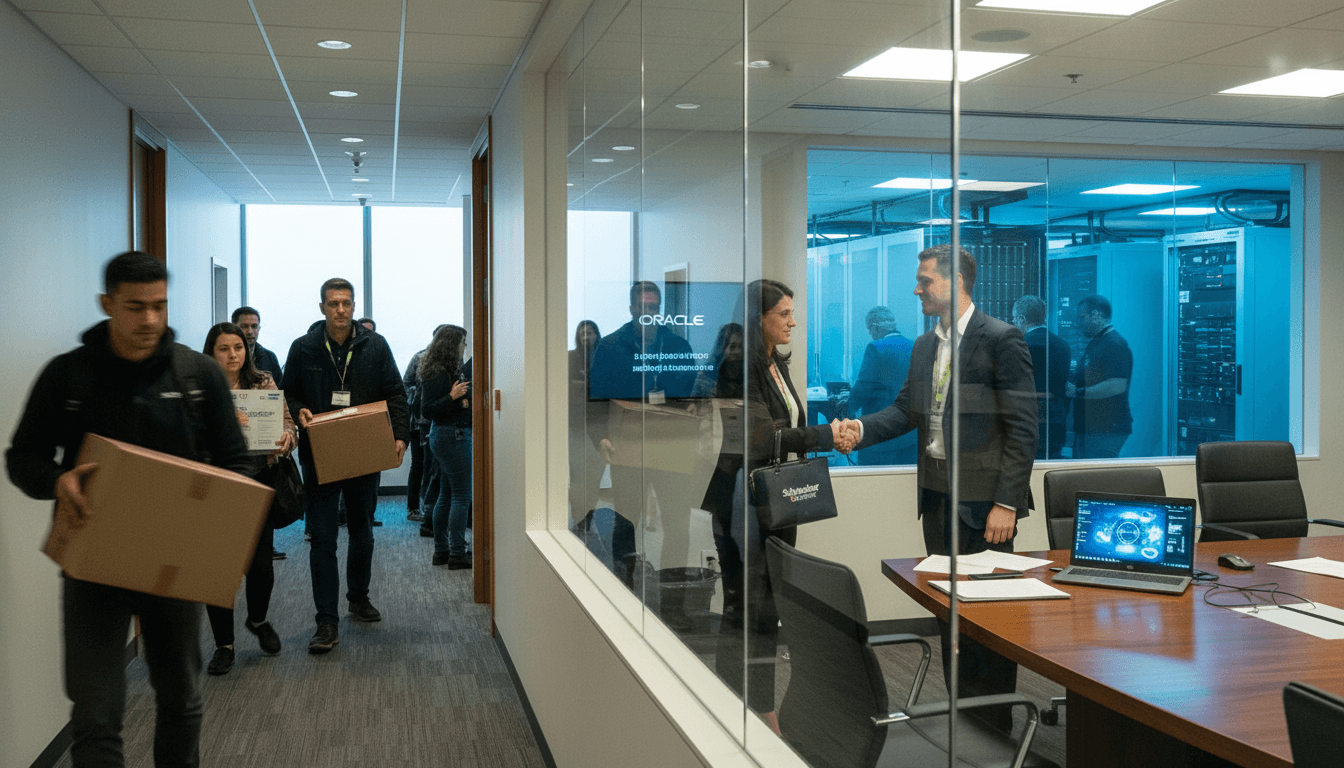
    Oracle has appointed Hilary Maxson as its new Chief Financial Officer, reinstating a role that had been vacant since 2014. Maxson, formerly of Schneider Electric, will receive a $950,000 annual base salary, along with eligibility for a $2.5 million performance-based bonus, according to a regulatory filing.

    This decision arrives amidst reports of significant layoffs at Oracle, potentially affecting thousands of employees, as the company invests heavily in artificial intelligence (AI) infrastructure. A recent 10-K filing indicated Oracle had approximately 162,000 full-time employees as of May 2025.

    Oracle anticipates restructuring costs in fiscal year 2026 could reach $2.1 billion, primarily allocated for employee severance and related expenses. The company’s increased capital expenditure, projected at $50 billion for the current fiscal year, underscores its focus on AI data centers. This figure is more than double the previous year’s spending.

    Despite these investments, Oracle’s stock has experienced volatility, reflecting market concerns about AI’s potential impact on software providers. Shares are up 14% over the last year, but have declined 50% in the last six months and 25% year-to-date.

    Maxson will report to Oracle co-CEO Clay Magouyrk. In a press release, she conveyed her enthusiasm about joining Oracle during this transformative period, expressing her commitment to strategic investments and long-term value creation for both customers and shareholders.

  • AWS DevOps & Security Agents GA: Lifecycle Updates

    AWS DevOps & Security Agents GA: Lifecycle Updates

    AWS has announced the general availability of AWS DevOps Agent and AWS Security Agent, alongside updates to its product lifecycle policies. The announcement, made on April 6, 2026, highlights the company’s continued focus on enhancing cloud operations and security measures.

    AWS DevOps Agent is designed to aid in cloud operations by investigating incidents, reducing resolution times, and proactively preventing issues. According to AWS, customers like United Airlines, Western Governors University, and T-Mobile have already seen benefits, including accelerated incident response and simplified operations. WGU reported resolution times decreasing from hours to minutes, with preview customers noting up to a 75% reduction in mean time to resolution (MTTR) and a three- to five-fold increase in resolution speed.

    AWS Security Agent brings continuous penetration testing into the development lifecycle, functioning as an always-available teammate. LG CNS, HENNGE, and Wayspring are among the early adopters who have reported significant improvements. LG CNS estimates over 50% faster testing at approximately 30% lower costs, with notably fewer false positives.

    Both agents are engineered to function across AWS cloud, multicloud, and on-premises environments.

    In addition to the agent announcements, AWS has updated its AWS Product Lifecycle Changes guidance, offering customers support for migration and alternatives when service or feature availability changes. Updates made on March 31, 2026, include availability change guides for services in maintenance such as AWS App Runner, AWS Audit Manager, AWS CloudTrail – Lake, AWS Glue – Ray jobs, AWS IoT FleetWise, Amazon Application Recovery Controller (ARC) – Readiness Check, Amazon Comprehend, Amazon Rekognition, and Amazon Simple Notification Service (Amazon SNS) – Message Data Protection (MDP).

    AWS also provided availability change guides for services in sunset, including AWS Service Management Connector, Amazon RDS Custom for Oracle, Amazon WorkMail, and Amazon WorkSpaces – Thin Client, as well as services reaching sunset, such as Amazon Chime SDK – Proxy Sessions.

    The company advises customers to consult service documentation or contact AWS Support for specific guidance related to these changes.

    Last week’s launches included Amazon ECS Managed Daemons, the new AWS Sustainability console, Amazon Bedrock AgentCore Evaluations, AWS Transform custom, Amazon CloudWatch OpenTelemetry Container Insights for Amazon EKS, new compute-optimized instance bundles for Amazon Lightsail, and SHA-256 support for Amazon CloudFront signed URLs and cookies.

    Additional updates include resources on architecting for agentic AI development on AWS, optimizing data transfer costs with AWS Network Load Balancer, the AWS World Sports Innovation Cup, techniques to stop AI agent hallucinations, and exploring the global AWS Community through a 3D interactive globe.


  • ChatGPT Integrates DoorDash, Spotify, Uber & More

    ChatGPT Integrates DoorDash, Spotify, Uber & More

    ChatGPT has expanded its capabilities by integrating several popular apps, including Spotify, Canva, Figma, Expedia, DoorDash, and Uber. This update allows users to directly access and utilize these services within the ChatGPT interface, enhancing its functionality.

    Users can now link their accounts from these services to ChatGPT, enabling them to perform tasks such as ordering food through DoorDash, managing travel plans with Expedia, creating designs with Canva and Figma, and controlling music playback with Spotify. The integration with Uber facilitates transportation arrangements directly from within the chat environment.

    This move aims to streamline workflows and provide a more integrated experience for ChatGPT users, allowing them to accomplish a wider range of tasks without switching between multiple applications. The integrations are designed to be intuitive, providing seamless access to essential services.

  • Intel’s AI Chip Packaging Strategy: A Billion-Dollar Bet

    Intel’s AI Chip Packaging Strategy: A Billion-Dollar Bet

    Advanced chip packaging has unexpectedly become a focal point in the rapidly expanding artificial intelligence sector, and Intel is strategically investing in this area.

    The company is dedicating considerable resources to developing cutting-edge packaging technologies, aiming to secure a prominent role in the future of AI hardware.

    This ambitious move reflects Intel’s confidence that advancements in chip packaging will be crucial for meeting the increasing demands of AI applications.

    By focusing on this intricate aspect of chip manufacturing, Intel anticipates generating substantial revenue and solidifying its position in the competitive AI landscape.

  • Meta Pauses Mercor Work After AI Data Breach

    Meta Pauses Mercor Work After AI Data Breach

    Major AI labs are currently investigating a security incident that has impacted Mercor, a leading data vendor in the artificial intelligence sector. The incident raises concerns about the potential exposure of critical data related to how these labs train their AI models.

    As a result of this breach, Meta has decided to pause its ongoing work with Mercor. The investigation aims to determine the full extent of the compromised data and the potential impact on the competitive landscape of AI development.

    The exposed data could potentially reveal proprietary techniques and strategies employed by leading AI labs, giving competitors an unfair advantage. The incident underscores the growing importance of data security in the AI industry and the potential risks associated with entrusting sensitive information to third-party vendors.

  • AI Data Centers Fuel Natural Gas Plant Boom

    AI Data Centers Fuel Natural Gas Plant Boom

    As artificial intelligence development accelerates, major technology companies are making significant investments in natural gas power plants to meet the energy demands of their AI data centers. Meta, Microsoft, and Google are among the firms betting big on this energy infrastructure, raising questions about the environmental implications of powering AI with fossil fuels.

    These companies are building new natural gas plants to ensure a reliable energy supply for their data centers, which are critical for AI operations. The decision to rely on natural gas reflects concerns about the stability and capacity of existing power grids to handle the intensive energy needs of AI technologies.

    However, this strategy carries potential risks. Environmental advocates are raising concerns about the long-term sustainability of relying on natural gas, a fossil fuel that contributes to greenhouse gas emissions. The construction of these plants represents a substantial investment in fossil fuel infrastructure at a time when many are pushing for renewable energy solutions.

    While natural gas may offer a readily available energy source, the tech industry’s reliance on it to power AI could face increasing scrutiny as environmental concerns intensify. The decisions made now regarding energy infrastructure will have long-lasting effects on the environmental footprint of AI and the companies driving its development.

  • Amazon Warehouse vs. Data Center: Public Preference

    Amazon Warehouse vs. Data Center: Public Preference

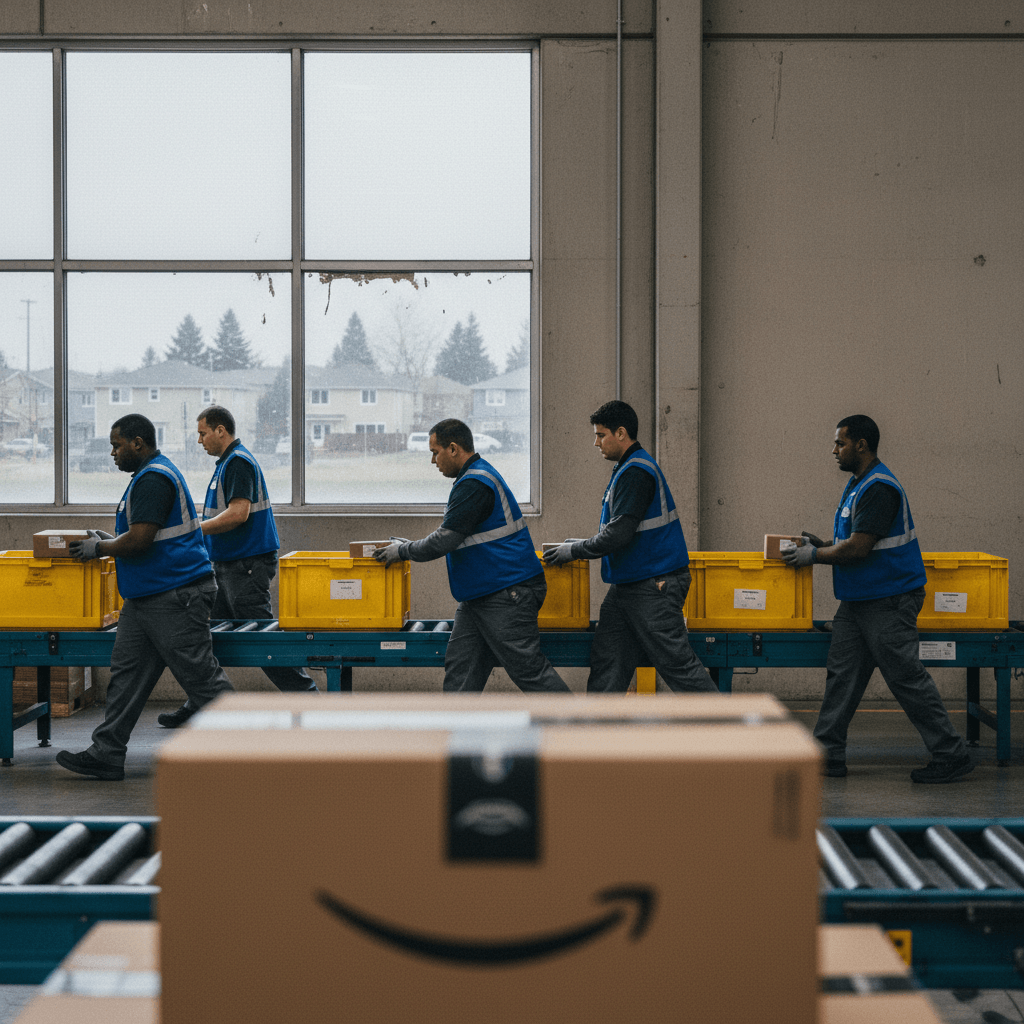
    A new poll reveals that the debate surrounding data centers is ongoing, with public opinion still far from settled. The survey highlights a preference among many individuals for having an Amazon warehouse located near their homes rather than a data center.

    The findings, released on April 3, 2026, by techcrunch.com, suggest that concerns and misconceptions about data centers may be influencing public perception. While data centers are crucial for supporting the digital economy, they often face opposition from local communities due to perceived noise, environmental impact, and aesthetic concerns.

    The poll underscores the challenges faced by companies seeking to build and operate data centers, as they must navigate public sentiment and address community concerns to gain approval for their projects. The preference for an Amazon warehouse, which typically brings jobs and economic activity to an area, indicates that economic benefits may outweigh concerns in the eyes of many residents.

    The results of this poll suggest that further education and community engagement efforts are needed to help the public better understand the role and impact of data centers in today’s world.