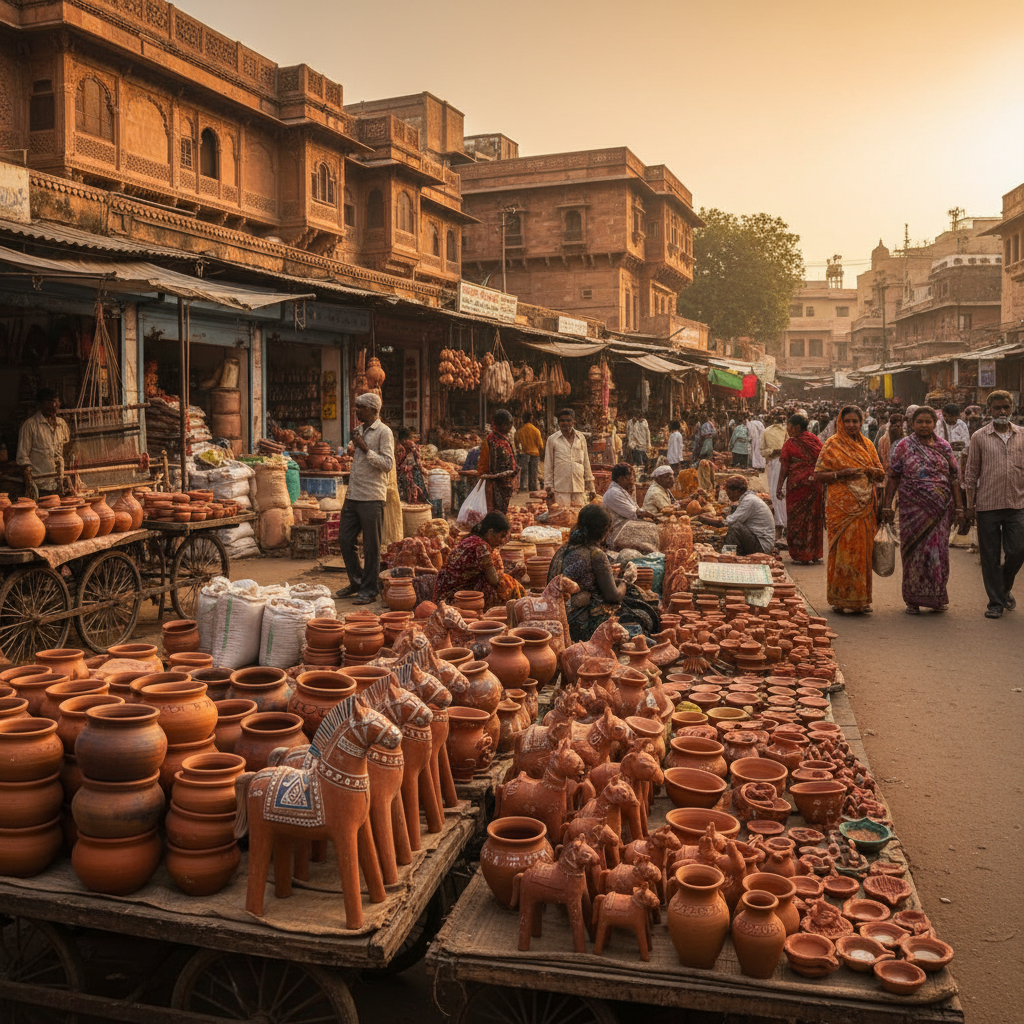
The market felt… cautious, that morning in late January. Or maybe it always feels that way before the quarterly reports drop. Anyway, the chatter around Gorakhpur’s terracotta trade was a low hum, mostly about the usual things: supply chains, seasonal demand, and the ever-present shadow of tax changes.
It’s a story unfolding, really, from the dusty lanes of Aurangabad village to the brightly lit shelves of urban retailers. The terracotta trade, once a cottage industry, is now showing signs of steady growth, propped up by initiatives like the One District One Product (ODOP) scheme. This, as per reports, has been a game-changer.
Hiralal Prajapati, a leading artisan, has seen the shift firsthand. His workshop, a hive of activity, now produces a wider range of products, from traditional figurines to contemporary home decor. The impact of ODOP is clear – providing access to markets, design support, and financial assistance. These are not just words, but actual changes, leading to increased revenue and more jobs in the region. The numbers tell the story: a 20% increase in sales figures over the last year, according to local market analysis.
But the road isn’t paved with terracotta. The artisans face challenges. Rising raw material costs, the need for skilled labor, and the competition from mass-produced goods. Still, the underlying optimism persists. The demand for handcrafted, authentic products is on the rise. And as one analyst from a local business school put it, “The market is favoring stories, and the Gorakhpur terracotta trade has a compelling one to tell.”
The government’s support, coupled with the artisans’ skills, has created a compelling narrative.
The air in the trading room seemed to thicken with each passing hour, the tension a tangible thing. The future of the trade, it seemed, hung in the balance, a complex interplay of local craftsmanship, market forces, and government policies. A story of resilience and adaptation, in a market that never stands still.
Leave a Reply