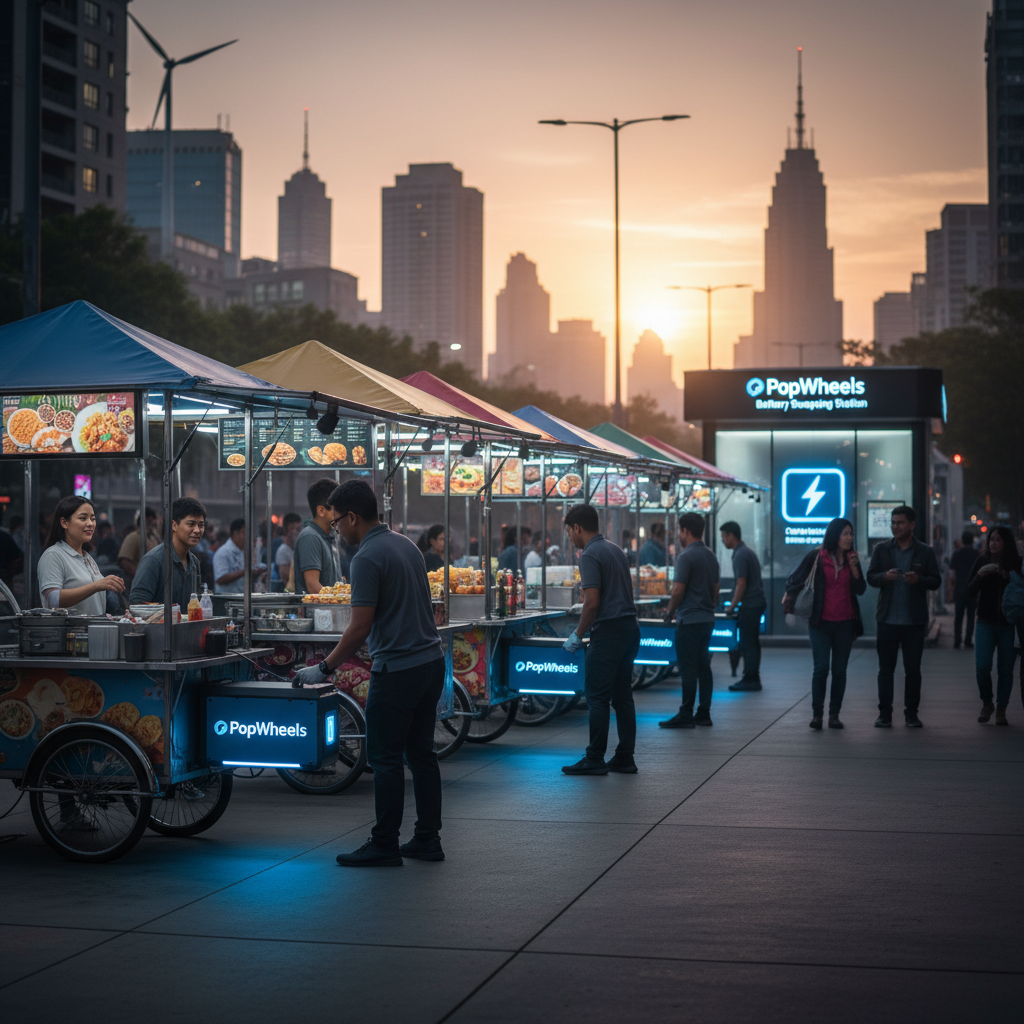
PopWheels Powers Food Carts: Battery Swapping Replaces Generators
In a move that marries technological innovation with environmental consciousness, PopWheels is expanding its battery swapping network to support a new sector: food carts. As reported on January 24, 2026, by TechCrunch, the company realized its existing infrastructure could serve a greater purpose than just providing power to e-bike delivery workers. The decision marks a significant step towards sustainable practices within the mobile food industry, offering a compelling alternative to traditional, and often polluting, generators.
The Problem: Generators and Their Impact
For years, food carts have relied on generators to power their operations. While providing the necessary electricity, these generators come with a host of drawbacks. They are often noisy, disruptive to the surrounding environment, and contribute significantly to air pollution. Moreover, the cost of fuel and maintenance adds up, impacting the profitability of these small businesses. PopWheels recognized these pain points and saw an opportunity to provide a cleaner, more efficient solution.
The Solution: PopWheels’ Battery Swapping Network
PopWheels’ approach centers around its innovative battery swapping network. This system allows food cart operators to quickly exchange depleted e-bike batteries for fully charged ones. This eliminates the need for on-site charging, which can be time-consuming, and removes the reliance on generators. The benefits are multifold: reduced emissions, quieter operations, and lower operational costs. The transition to e-bike batteries offers a win-win scenario for both the food cart owners and the environment.
How it Works
The core of the system involves strategically placed battery swapping stations. Food cart operators can visit these stations to swap their depleted batteries for fully charged ones. The process is quick and easy, minimizing downtime. PopWheels manages the charging and maintenance of the batteries, ensuring a reliable supply of power. This streamlined approach allows food cart owners to focus on what they do best: serving their customers.
The Benefits: Sustainability and Efficiency
The shift from generators to e-bike batteries brings significant advantages. From a sustainability perspective, it reduces carbon emissions and air pollution, contributing to a cleaner urban environment. Economically, it can lower operational costs by reducing fuel expenses and maintenance needs. The switch to e-bike batteries offers a way for food carts to become more eco-friendly and operationally efficient. The “aggressive rollout” planned for this summer indicates a strong commitment from PopWheels to scale up this initiative.
Looking Ahead: The Future of Mobile Food
The expansion of PopWheels’ battery swapping network into the food cart sector represents a forward-thinking approach to sustainable urban development. By providing a practical and cost-effective alternative to generators, PopWheels is not only helping food cart businesses but also contributing to a cleaner, more sustainable future. As the company gears up for its “aggressive rollout” this summer, the impact of this innovative technology will be something to watch. This initiative could set a new standard for mobile food operations, demonstrating how technology can drive both environmental and economic benefits.
Source: TechCrunch
Leave a Reply