Tag: acquisition

  • Mistral AI Acquires Koyeb: Cloud Dominance Strategy

    Mistral AI Acquires Koyeb: Cloud Dominance Strategy

    Mistral AI Acquires Koyeb: A Strategic Move for Cloud Dominance

    In a significant move within the rapidly evolving artificial intelligence sector, Mistral AI has announced its acquisition of Koyeb, a Paris-based startup. This strategic acquisition, unveiled on February 17, 2026, as reported by TechCrunch, marks Mistral AI’s first acquisition and signals a strong commitment to bolstering its cloud ambitions. The deal is poised to reshape how AI applications are deployed and managed, offering Mistral AI a crucial edge in a competitive market.

    The Significance of the Acquisition

    The core of this acquisition lies in Koyeb’s expertise in simplifying AI app deployment at scale. Koyeb has developed a platform that handles the complexities of infrastructure management, allowing developers to focus on building and refining their AI applications. By integrating Koyeb’s technology, Mistral AI aims to streamline the deployment process, making it easier for users to bring their AI projects to fruition. This strategic move is a direct response to the growing demand for efficient, scalable AI solutions.

    The acquisition of Koyeb allows Mistral AI to better support its cloud ambitions. By controlling the infrastructure behind AI app deployment, Mistral AI can offer a more integrated and user-friendly experience. This is particularly crucial as the company looks to expand its services and attract a broader user base. The ability to manage infrastructure efficiently is a key differentiator in the competitive cloud market.

    Key Players and Their Roles

    The acquisition brings together two significant players in the tech world: Mistral AI and Koyeb. Mistral AI, as the acquirer, is now positioned to leverage Koyeb’s innovative deployment solutions. Koyeb, the acquired startup, brings its specialized knowledge of AI app deployment and infrastructure management to the table. This synergy is expected to enhance Mistral AI’s capabilities and accelerate its growth trajectory.

    Strategic Implications and Future Outlook

    The acquisition of Koyeb has several key strategic implications. First, it enables Mistral AI to offer a more comprehensive suite of services. Second, it enhances Mistral AI’s competitive positioning in the cloud market. Third, it facilitates Mistral AI’s ability to support the deployment and scaling of AI applications, which is essential for attracting and retaining users.

    The future outlook for this partnership is promising. By integrating Koyeb’s technology, Mistral AI is poised to streamline the AI deployment process, making it more accessible and efficient for users. This will likely lead to increased adoption of Mistral AI’s platform and further innovation within the AI ecosystem. The acquisition is a testament to Mistral AI’s vision and its commitment to driving advancements in the field of artificial intelligence.

    In Summary

    Mistral AI’s acquisition of Koyeb is a strategic move designed to bolster its cloud ambitions and simplify the deployment of AI applications. This acquisition, which occurred on February 17, 2026, as reported by TechCrunch, allows Mistral AI to offer a more comprehensive suite of services, enhancing its competitive position in the cloud market. With Koyeb’s expertise in AI deployment and infrastructure management, Mistral AI is well-positioned to drive innovation and support the growing needs of the AI community.

    Source: TechCrunch
  • Mistral AI Acquires Koyeb: Cloud Ambitions Soar

    Mistral AI Acquires Koyeb: Cloud Ambitions Soar

    The hum of servers filled the air as the Mistral AI engineering team huddled around a monitor, reviewing thermal tests. It was February 17, 2026, and the air in the Paris office crackled with anticipation. The news had just broken: Mistral AI was acquiring Koyeb, a local startup specializing in simplifying AI app deployment. This move wasn’t just about adding tech; it was about staking a claim in the cloud infrastructure game.

    Koyeb, founded in Paris, offered a platform designed to make deploying AI applications at scale easier. It managed the underlying infrastructure, a crucial element for companies like Mistral AI that are building and deploying complex AI models. “This acquisition is a clear signal,” said Jean-Pierre Dubois, a senior analyst at Forrester. “Mistral is not just about the models; they want to control the full stack, from the algorithms to the cloud.”

    The deal’s implications resonated through the industry. With the acquisition, Mistral AI gains immediate access to Koyeb’s technology and expertise. This is particularly important because the AI race is not just about the models; it is also about the infrastructure that supports them. The ability to deploy models quickly and efficiently can make or break a company’s success. It also allows Mistral AI to better serve its customers, potentially increasing revenue streams. The cloud ambitions are clear.

    The acquisition, though, highlights broader trends. The AI boom is driving intense demand for cloud resources. Companies are scrambling to secure compute power, and cloud providers are racing to meet the demand. This is particularly true in Europe, where there’s a push for technological sovereignty. This means building domestic cloud capabilities and reducing reliance on American providers. It’s a complex dance. Supply-chain issues, especially regarding advanced chips, loom large. The constraints on manufacturing, like those at TSMC, also play a key role in the landscape.

    The acquisition of Koyeb is a step in that direction. The move allows Mistral AI to deploy its own models and offer cloud services to other companies. It’s a strategic move to control their destiny. The financial terms were not disclosed, but the strategic implications are significant. It underscores Mistral AI’s ambition to control more of the AI development stack. The goal is to offer a comprehensive suite of tools and services. With the Koyeb acquisition, Mistral AI is positioning itself to be a key player. It’s a bet on the future of AI infrastructure.

  • Mistral AI Acquires Koyeb: Cloud Deployment Strategy

    Mistral AI Acquires Koyeb: Cloud Deployment Strategy

    Mistral AI Acquires Koyeb: A Strategic Leap into Cloud Deployment

    In a move that signals ambitious growth, Mistral AI has announced its acquisition of Koyeb, a Paris-based startup specializing in simplifying AI app deployment. This strategic acquisition, revealed on February 17, 2026, marks Mistral AI’s first acquisition and underscores the company’s commitment to bolstering its cloud infrastructure and expanding its capabilities in the rapidly evolving AI landscape.

    The Strategic Rationale Behind the Acquisition

    The core motivation behind Mistral AI’s decision to acquire Koyeb is to fortify its cloud ambitions. By bringing Koyeb’s expertise in AI app deployment in-house, Mistral AI aims to streamline the process of deploying AI applications at scale, effectively managing the underlying infrastructure. This strategic move allows Mistral AI to enhance its technological offerings and provide a more seamless experience for users deploying AI solutions.

    Koyeb, known for its innovative approach to simplifying AI app deployment, will play a critical role in this endeavor. The startup’s platform is designed to manage the complexities of cloud infrastructure, allowing developers to focus on building and deploying AI applications without the usual operational overhead. This focus on efficiency and scalability aligns perfectly with Mistral AI’s goals of delivering robust and accessible AI solutions.

    Details of the Acquisition and What It Means

    The acquisition, which occurred on February 17, 2026, is a pivotal step for Mistral AI. The Paris-based startup, Koyeb, brings to the table a wealth of experience in simplifying AI app deployment. This expertise will be crucial as Mistral AI looks to expand its cloud capabilities. The integration of Koyeb’s technology into Mistral AI’s existing infrastructure is expected to create a more efficient and user-friendly environment for developers and end-users alike.

    This acquisition is not just about technology; it’s about strategy. Mistral AI is positioning itself to be a key player in the cloud-based AI solutions market. The acquisition of Koyeb is a clear indication of Mistral AI’s vision for the future, one where AI applications are easily deployable, scalable, and accessible to a wide audience.

    The Broader Implications for the AI and Cloud Sectors

    The acquisition has implications that extend beyond the immediate benefits to Mistral AI and Koyeb. It reflects a broader trend in the AI and cloud sectors, where companies are increasingly focused on vertical integration and end-to-end solutions. By controlling more aspects of the AI application lifecycle, from development to deployment, Mistral AI can offer a more cohesive and efficient service.

    This move is likely to inspire other players in the industry to consider similar strategic acquisitions. As the demand for AI solutions continues to grow, the ability to simplify deployment and manage infrastructure will become increasingly important. The acquisition of Koyeb positions Mistral AI at the forefront of this trend, giving it a competitive advantage in the market.

    In conclusion, Mistral AI’s acquisition of Koyeb is a well-considered move that aligns with its long-term strategy. By incorporating Koyeb’s expertise, Mistral AI is well-placed to achieve its cloud ambitions and solidify its position as a leading innovator in the AI sector.

  • Uber Eats Acquires Getir’s Delivery Arm in Turkey

    Uber Eats Acquires Getir’s Delivery Arm in Turkey

    The numbers were still coming in, but the newsroom chatter had already started. Uber, it seemed, was making a significant move. Word broke on February 9, 2026, that the ride-hailing giant was acquiring the food delivery arm of Turkish firm Getir.

    The initial price tag? $335 million. That’s just for the food delivery business. And then another $100 million for a 15% stake in Getir’s grocery, retail, and water delivery services. It’s a substantial commitment, a clear signal of Uber’s intent to deepen its presence in the Turkish market, and beyond.

    The deal, as per reports, is part of Uber’s strategy to expand its delivery services. The move comes at a time when the delivery market is fiercely competitive, with companies constantly vying for market share. The air in the room, filled with the low hum of analysts, felt charged — a mix of excitement and the quiet tension of watching capital flow.

    “It’s a play for scale,” explained Dr. Elif Yildirim, a market analyst at Istanbul’s Bilgi University, speaking during a hastily-arranged conference call. “Uber is betting on the long game, on the continued growth of online ordering. Or maybe it’s a gamble, even.”

    The deal’s implications are wide-ranging. For Uber, it means a larger footprint in a key market. For Getir, it allows them to refocus resources on their core business, or so it appears. But the real story, as always, lies in the details. The specifics of the deal, the integration process, how it will affect the existing delivery infrastructure. A lot of uncertainty, still.

    The market’s reaction? Mixed, understandably. Initial reports showed a slight dip in Getir’s stock, while Uber’s remained relatively stable. It would take a week or two to see the true impact, as the dust settles, and the analysts finish crunching the numbers. The deal will also need to clear regulatory hurdles, something that always adds a layer of complexity.

    This kind of acquisition speaks to a broader trend — the consolidation of the delivery market, the fight for dominance. It’s a reminder of how quickly these sectors can shift, how much depends on the day-to-day decisions of companies, investors, and consumers. The sound of keystrokes filled the room, the numbers changing with each passing minute.

    And then there’s the question of the Turkish economy itself, the currency fluctuations, the tax implications. All of it matters. It’s all connected, somehow.

  • Apple Acquires Q.AI for $2B: AI Tech Race Heats Up

    Apple Acquires Q.AI for $2B: AI Tech Race Heats Up

    Apple’s $2 Billion AI Bet: Acquiring Q.AI to Lead the Tech Race

    In a move that underscores its commitment to the future, Apple announced on January 29, 2026, the acquisition of Israeli startup Q.AI. The deal, valued at nearly $2 billion, represents Apple’s second-largest acquisition to date, signaling a significant escalation in the ongoing AI race. This strategic investment is a clear indication of Apple’s determination to solidify its position at the forefront of the rapidly evolving artificial intelligence landscape, as reported by TechCrunch.

    Why Q.AI Matters to Apple

    The acquisition of Q.AI is a strategic move, driven by Apple’s desire to advance its capabilities in the complex field of artificial intelligence. Q.AI, an Israeli startup, likely brings with it a wealth of talent and technology that will be instrumental in Apple’s future endeavors. The specific technologies and expertise that Q.AI possesses remain undisclosed in the initial reports. However, the substantial investment suggests that Apple sees significant value in Q.AI’s contributions to the AI domain.

    This is a particularly interesting development when considering the competitive landscape. With other tech giants heavily investing in AI, Apple is making a bold statement. The acquisition is not just about adding another company to its portfolio; it’s about investing in the future of technology and securing a competitive edge. This is a clear demonstration of Apple’s strategy to innovate and lead in the AI revolution.

    The Broader Implications of the Acquisition

    The acquisition has several implications that extend beyond the immediate benefits to Apple. It highlights the growing importance of AI across various industries and the lengths to which companies are willing to go to secure their place in this transformative field. The fact that an Israeli startup was the target also speaks to the global nature of innovation and the strategic value of international partnerships.

    The move also signifies the continued dominance of Apple in the technology market. With the resources and expertise gained through this acquisition, Apple is poised to integrate AI more deeply into its products and services. This could lead to more innovative features, improved user experiences, and enhanced competitiveness in the market.

    What’s Next for Apple and Q.AI?

    The integration of Q.AI into Apple’s operations will be a key focus in the coming months. As Apple incorporates Q.AI’s technology and talent, the industry will be watching closely to see how this translates into new products or enhancements to existing ones. The acquisition is expected to accelerate Apple’s progress in AI, potentially leading to breakthroughs in areas such as machine learning, natural language processing, and computer vision.

    The substantial investment also suggests that Apple is planning for the long term. This strategic move underscores Apple’s commitment to investing in the future, ensuring that it remains at the forefront of technological innovation and competitive in the global market. The AI race is heating up, and Apple has just made a significant move to stay ahead.

    In Conclusion

    Apple’s acquisition of Q.AI is a landmark event in the technology sector, reflecting the growing importance of artificial intelligence and the strategic moves companies are making to dominate this field. With this acquisition, Apple has demonstrated its commitment to innovation, its vision for the future, and its willingness to invest in the technologies that will shape the world. This is not just an acquisition; it’s a statement of intent.

  • Apple Acquires Q.AI for $2B: AI Tech Race Heats Up

    Apple Acquires Q.AI for $2B: AI Tech Race Heats Up

    Apple’s $2 Billion AI Bet: Acquiring Q.AI to Lead the Tech Race

    In a move that underscores the intensifying competition in the artificial intelligence sector, Apple announced on January 29, 2026, its acquisition of the Israeli startup Q.AI. The deal, reportedly valued at nearly $2 billion, marks Apple’s second-largest acquisition to date, signaling a significant investment in its future AI capabilities. This strategic move highlights Apple’s commitment to staying at the forefront of the technological race, particularly in the rapidly evolving field of AI.

    The Significance of the Acquisition

    The acquisition of Q.AI by Apple is more than just a financial transaction; it’s a strategic maneuver designed to bolster Apple’s position in the AI landscape. The ‘what’ of this acquisition centers on the integration of Q.AI’s innovative AI technologies into Apple’s existing ecosystem. This move is a clear indication of Apple’s intent to enhance its product offerings and user experiences through advanced AI functionalities. The ‘why’ behind this acquisition is clear: to advance in the AI race, ensuring Apple remains competitive with other tech giants.

    Q.AI: An Overview

    While specific details about Q.AI’s technologies remain undisclosed, the fact that Apple was willing to invest such a substantial sum suggests the startup possesses cutting-edge AI capabilities. The ‘where’ of this transaction, in Israel, further emphasizes the country’s growing reputation as a hub for technological innovation. This acquisition allows Apple to tap into Israel’s rich talent pool and innovative ecosystem, which is known for its expertise in AI and related fields. The ‘how’ of the acquisition involved a financial investment, with Apple using its vast resources to secure Q.AI’s expertise. The ‘when’ of the acquisition, January 29, 2026, marks a pivotal moment in Apple’s AI strategy.

    The Broader Implications for the Tech Industry

    This acquisition has significant implications for the wider tech industry. It underscores the increasing importance of AI in driving innovation and competition. As major tech companies like Apple invest heavily in AI, smaller startups and established players alike will need to adapt and innovate to stay relevant. The move is likely to fuel further investment and acquisitions in the AI sector, creating a dynamic and fast-paced environment. This event also highlights the global nature of technological advancement, with companies increasingly looking to international markets, such as Israel, for talent and innovation.

    Looking Ahead

    Apple’s acquisition of Q.AI is a bold move that signals its determination to lead in the AI revolution. By integrating Q.AI’s technologies, Apple is poised to enhance its products and services, potentially reshaping the user experience across its entire product line. This acquisition is a clear indication of Apple’s future trajectory, firmly placing AI at the core of its strategy. As the tech landscape continues to evolve, the impact of this acquisition will undoubtedly be felt across the industry, setting the stage for future innovations and strategic moves.

  • General Fusion Secures $1B Funding Through Reverse Merger

    General Fusion Secures $1B Funding Through Reverse Merger

    General Fusion Navigates Funding Challenges with $1B Reverse Merger

    In a move that underscores the volatile nature of the fusion power sector, General Fusion is set to go public via a reverse merger valued at $1 billion. This strategic maneuver, as reported by TechCrunch, will provide the company with over $300 million in capital, a critical infusion following a period of financial strain.

    General Fusion, a key player in the pursuit of fusion energy, has been grappling with the complexities of securing funding. The company’s decision to pursue a reverse merger highlights the hurdles faced in attracting traditional investment, particularly in the capital-intensive field of fusion power. This approach, which involves merging with an existing acquisition company, offers a pathway to public markets, allowing General Fusion to access a broader pool of investors.

    The Mechanics of the Merger

    The reverse merger, a method of going public, is designed to inject much-needed capital into General Fusion. The process bypasses the more traditional and often more arduous initial public offering (IPO) route. This transaction is expected to provide General Fusion with approximately $300 million, a sum intended to fuel its ongoing research and development efforts. The “how” of this is through a merger with an acquisition company.

    Challenges in Securing Funding

    The decision to pursue a reverse merger comes after the company encountered difficulties in raising funds from conventional investors. The “why” behind the reverse merger is to go public and raise money. This is a common challenge within the fusion power industry, where the promise of long-term returns often clashes with the immediate financial demands of research, development, and scaling operations.

    The difficulties General Fusion faced last year in securing investment reflect broader trends within the technology and energy sectors. The fusion power industry, while holding immense potential to reshape the energy landscape, is still in its nascent stages. Investors often approach such ventures with caution, factoring in the high costs, extended timelines, and inherent technological risks associated with fusion research.

    Looking Ahead

    The reverse merger represents a pivotal moment for General Fusion. It offers a chance to secure the financial resources needed to advance its fusion technology. The success of this strategy hinges on the company’s ability to navigate the public market landscape, maintain investor confidence, and ultimately, achieve its long-term goals. The “when” is 2026, when the merger is expected to be finalized.

    The company’s journey underscores the intricate dance between innovation, investment, and market dynamics within the energy sector. As General Fusion embarks on this new chapter, the industry will be closely watching to see if this strategic move will pave the way for a more sustainable and successful future.

    Source: TechCrunch

  • Grubhub Acquires Claim: Restaurant Loyalty Shakeup

    Grubhub Acquires Claim: Restaurant Loyalty Shakeup

    The news hit the wires on January 20, 2026, or so the reports indicated. Grubhub’s parent company, the folks over at Just Eat Takeaway.com, had made a move. They’d acquired Claim, a startup focused on restaurant rewards programs. The deal, still unfolding in terms of its full impact, is designed to give restaurants on the Grubhub platform access to Claim’s customer acquisition and retention tools. And, of course, allow Grubhub diners to earn rewards.

    It’s a strategic play, no doubt about it. The online food delivery sector is a battlefield, and every advantage matters. The acquisition is an attempt, to strengthen Grubhub’s position, to keep diners engaged, and to offer restaurants a more robust suite of services. The terms of the deal weren’t immediately disclosed, but market analysts were already crunching numbers, trying to estimate the long-term implications.

    The move comes at a time of shifting consumer behavior. The pandemic changed everything, of course, and the habits formed then still linger. People are still ordering in. But they’re also, more than ever, looking for value. It’s not just about convenience anymore. It’s about loyalty, about feeling appreciated. Or maybe I’m misreading it.

    A source close to the deal, speaking on condition of anonymity, suggested that the acquisition was driven, in part, by a desire to compete more effectively with DoorDash and Uber Eats, the other major players in the space. “It’s a land grab,” this person said, “a play for market share, pure and simple.”

    The implications are broad. According to a report from the National Restaurant Association, the restaurant industry is expected to generate $1.2 trillion in sales in 2026. A significant chunk of that will flow through online platforms. And the companies that can best capture and retain those customers will be the ones that thrive. It’s about more than just food delivery.

    An analyst from the Urban-Brookings Tax Policy Center noted that such acquisitions often trigger a ripple effect. “Changes in the competitive landscape can lead to adjustments in pricing, marketing strategies, and even the types of restaurants that thrive,” she explained. “It’s a dynamic ecosystem.”

    The deal also presents some interesting questions about data privacy and customer behavior. Claim has built its business on understanding how people interact with restaurant loyalty programs. The integration of that data with Grubhub’s existing customer information could create a powerful – and potentially sensitive – dataset. That’s a lot of information.

    Still, the market reacted positively, at least initially. Shares of Just Eat Takeaway.com saw a modest uptick following the announcement. Investors, it seems, are betting on the company’s ability to navigate the complexities of the food delivery market and to leverage the potential of Claim’s technology. The restaurant industry is always evolving.

    In the end, it’s a story about adaptation, about the constant push and pull of the market. And the ever-present need to stay ahead of the curve.

  • OpenAI’s Healthcare Push: Acquisitions & AI Drug Discovery

    OpenAI’s Healthcare Push: Acquisitions & AI Drug Discovery

    OpenAI Expands Its Reach: Healthcare Acquisitions and AI Drug Discovery Support

    The tech world is abuzz with OpenAI’s latest strategic maneuvers, signaling a strong push into the healthcare sector. The company, known for its groundbreaking work in artificial intelligence, is making waves not only through internal developments but also through strategic acquisitions and investments. This article delves into the details of these recent activities, highlighting their potential impact on the future of AI in healthcare.

    OpenAI Acquires Torch: A Leap into Health Records

    In a move that underscores its commitment to healthcare innovation, OpenAI has acquired Torch, an AI health records startup. The acquisition, reportedly for $100 million, aims to integrate Torch’s technology into OpenAI’s new ChatGPT Health platform. According to co-founder Ilya Abyzov, this integration will bring sophisticated AI capabilities to health record management, potentially streamlining processes and improving patient care.

    This acquisition marks a significant step for OpenAI in expanding its footprint within the healthcare industry. By incorporating Torch’s expertise, OpenAI aims to leverage AI to unlock new efficiencies and insights within health records. This could lead to more personalized treatment plans and enhanced patient outcomes. The move also signals a broader trend of tech companies recognizing the massive potential of AI in transforming healthcare delivery.

    Converge Bio Secures Funding: Advancing AI in Drug Discovery

    In related news, the AI drug discovery startup, Converge Bio, has successfully raised $25 million in a Series A funding round. This round was led by Bessemer Venture Partners, with additional backing from key figures at Meta, OpenAI, and Wiz. This investment underscores the growing confidence in AI’s capacity to revolutionize the drug discovery process. Converge Bio is at the forefront of this revolution, using AI to accelerate the identification and development of new therapeutics.

    The funding will allow Converge Bio to further develop its AI-driven platform for drug discovery. This platform promises to reduce the time and cost associated with bringing new drugs to market. The involvement of prominent investors from the tech sector highlights the convergence of AI and biotechnology, creating a powerful synergy capable of addressing some of the most pressing healthcare challenges. The investment is a testament to the potential of AI to accelerate the development of life-saving medications.

    The Convergence of AI and Healthcare: A Promising Future

    The recent activities of OpenAI and Converge Bio reflect a broader trend: the increasing integration of artificial intelligence into the healthcare ecosystem. These developments are not isolated incidents but rather part of a larger movement that seeks to leverage AI to improve patient outcomes, streamline processes, and drive innovation within the industry. From health records management to drug discovery, AI is poised to transform healthcare in profound ways.

    As OpenAI and Converge Bio continue to advance their respective missions, it is clear that the future of healthcare will be significantly shaped by AI. The strategic acquisitions and investments discussed in this article represent just the beginning of what promises to be an exciting and transformative journey.

    Conclusion: A New Era for AI in Healthcare

    OpenAI’s acquisition of Torch and the funding round for Converge Bio mark pivotal moments in the evolution of AI in healthcare. These initiatives demonstrate a clear commitment to leveraging AI’s potential to improve patient care, accelerate drug discovery, and drive innovation across the healthcare landscape. As AI continues to evolve, its impact on healthcare will undoubtedly grow, ushering in a new era of possibilities and advancements.

    Source: TechCrunch article, “OpenAI Buys Tiny Health Records Startup Torch for Reportedly $100M,” published on January 12, 2026.

  • OpenAI’s Healthcare Leap: Acquisition & Startup Support

    OpenAI’s Healthcare Leap: Acquisition & Startup Support

    OpenAI Makes a Major Healthcare Push with Acquisition and Startup Support

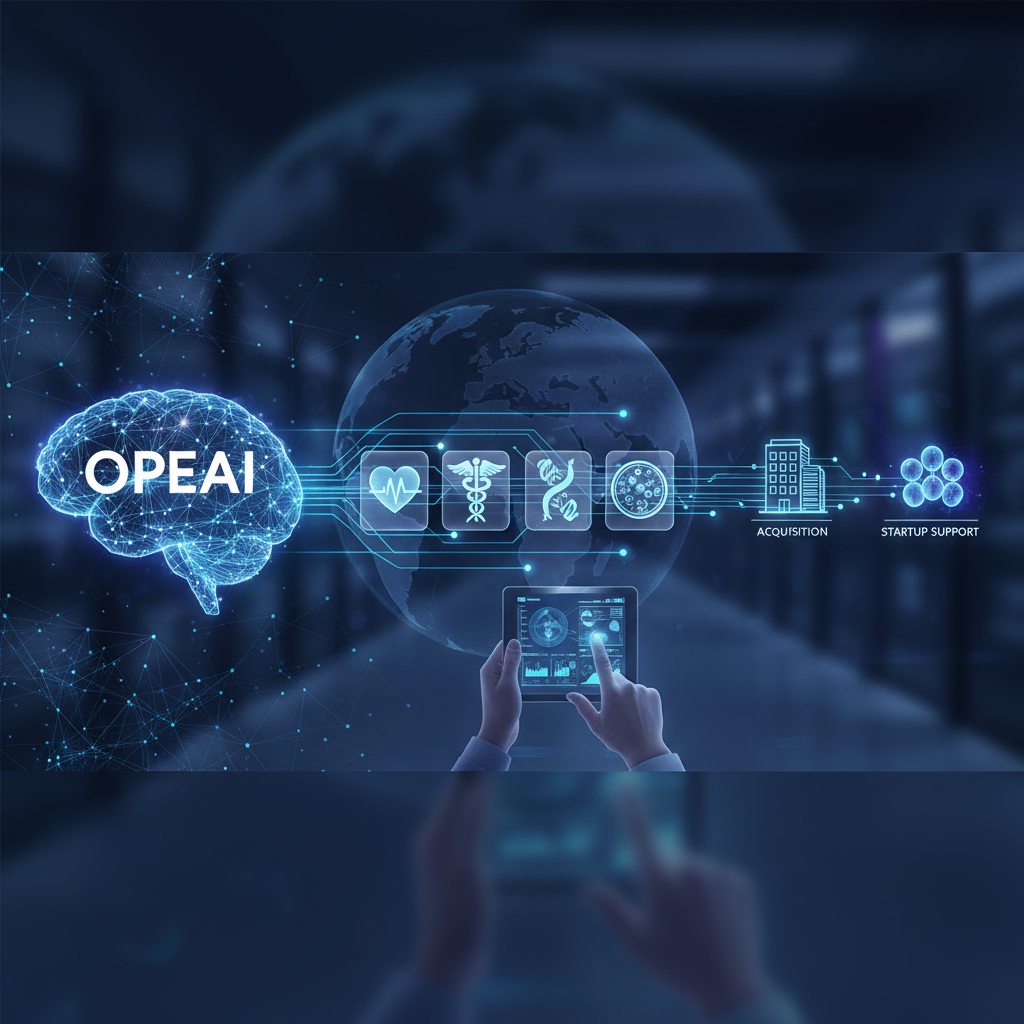
    The tech world is abuzz with OpenAI’s latest strategic moves, signaling a strong foray into the healthcare sector. On January 12, 2026, OpenAI, led by co-founder Ilya Abyzov, acquired the AI health records startup Torch for a reported $100 million. Simultaneously, OpenAI is backing AI drug discovery efforts through its support of Converge Bio, a startup that recently secured a $25 million Series A funding round.

    OpenAI’s Acquisition of Torch: A Strategic Move

    The acquisition of Torch, an AI health records startup, represents a significant step for OpenAI. According to Ilya Abyzov, the plan is to integrate Torch’s technology into OpenAI’s new ChatGPT Health. This integration suggests a focus on leveraging AI to improve healthcare data management and potentially enhance patient care. This acquisition is part of OpenAI’s broader strategy to expand its influence and capabilities within the healthcare industry. The financial investment and technological integration point towards a long-term commitment to this sector.

    Converge Bio Secures Funding: Advancing AI in Drug Discovery

    In a related development, the AI drug discovery startup Converge Bio has raised $25 million in a Series A funding round. This round was led by Bessemer Venture Partners and included backing from executives at Meta, OpenAI, and Wiz. This infusion of capital will likely accelerate Converge Bio’s research and development efforts, potentially leading to breakthroughs in the pharmaceutical industry. The support from prominent figures and organizations highlights the growing importance of AI in revolutionizing drug discovery processes.

    The involvement of OpenAI in Converge Bio’s funding is particularly noteworthy. It underscores OpenAI’s commitment not only to healthcare data but also to the broader application of AI in the medical field. By supporting drug discovery, OpenAI is positioning itself to contribute to advancements that could impact global health.

    The Broader Implications for Artificial Intelligence in Healthcare

    These developments highlight the increasing role of artificial intelligence in healthcare. OpenAI’s strategic moves suggest a future where AI plays a central role in both data management and drug discovery. The integration of AI in healthcare has the potential to improve efficiency, reduce costs, and ultimately, enhance patient outcomes. The investments in Torch and Converge Bio are indicative of a larger trend, with significant implications for the future of medicine.

    The acquisition and funding initiatives demonstrate OpenAI’s vision for the future of healthcare. By combining AI expertise with healthcare data and drug discovery, OpenAI is poised to make a substantial impact on the industry. The success of these ventures could set a precedent for other tech companies seeking to enter the healthcare market. The strategic decisions made by OpenAI are likely to influence the direction of AI’s role in healthcare for years to come.