
CloudTalk

Tag: ARR

  • Runpod’s $120M ARR: From Reddit Post to AI Cloud Success

    Runpod’s $120M ARR: From Reddit Post to AI Cloud Success

    From Reddit to $120M ARR: The Runpod AI Cloud Startup Success Story

    The tech world is full of tales of overnight success, but few are as intriguing as that of Runpod, an AI cloud startup that has reached a staggering $120 million in Annual Recurring Revenue (ARR). What makes this story particularly captivating? It all began with a simple Reddit post. This article delves into Runpod’s remarkable journey, examining the key factors that propelled them from a humble online presence to a major player in the competitive AI cloud market.

    The Genesis: A Reddit Post and the Power of Timing

    The story of Runpod is a testament to the power of a solid idea, well-executed, and perfectly timed. While the exact details of the initial Reddit post remain a part of their origin story, the core message was clear: Runpod offered a unique solution for AI cloud computing. This early move was a calculated risk that paid off handsomely. The founders recognized a growing need in the market and capitalized on it with impressive speed and efficiency. The timing was crucial, as the AI boom was just beginning to gather momentum, creating a surge in demand for accessible and affordable cloud computing resources.

    Building It Well: The Runpod Approach

    Runpod’s success wasn’t solely dependent on luck; it was also the result of a well-crafted product and a strategic approach. The company focused on providing a user-friendly platform that catered to the needs of AI developers and researchers. This meant offering competitive pricing, robust infrastructure, and a commitment to customer support. By building a platform that was both powerful and accessible, Runpod managed to attract a wide range of users, from individual developers to large enterprises.

    The company’s ability to adapt and innovate also played a significant role. As the AI landscape evolved, Runpod consistently updated its offerings to meet the changing needs of its users. This included adding new features, optimizing performance, and expanding its infrastructure. This proactive approach helped Runpod maintain its competitive edge and solidify its position in the market.

    Key Factors in Runpod’s Rapid Growth

    Several factors contributed to Runpod’s rapid ascent. First, the growing demand for AI cloud computing services created a favorable market environment. Second, Runpod’s focus on user experience and affordability made it an attractive option for a wide range of users. Third, the company’s ability to adapt and innovate ensured that it remained competitive in a rapidly evolving market.

    Furthermore, Runpod’s early embrace of the Reddit community proved to be a smart move. By engaging with potential users on the platform, Runpod was able to gather valuable feedback and build a loyal following. This early engagement helped the company refine its product and build a strong brand identity.

    The Future of Runpod and the AI Cloud Market

    Runpod’s story is an inspiring example of how a well-executed idea can achieve remarkable success. As the AI cloud market continues to grow, Runpod is well-positioned to remain a major player. The company’s commitment to innovation, user experience, and affordability will likely be key to its continued growth and success. Runpod’s journey is a valuable case study for other startups, demonstrating the importance of building a solid product, understanding the market, and capitalizing on opportunities when they arise.

    In conclusion, Runpod’s journey from a Reddit post to a $120 million ARR company is a testament to the power of innovation, strategic execution, and a bit of good timing. The company’s story serves as an inspiration for aspiring entrepreneurs and a reminder that even the most ambitious goals can be achieved with dedication and a clear vision. Runpod’s success underscores the dynamic nature of the tech industry, where innovative ideas and effective execution can lead to rapid growth and market dominance.
  • Gamma’s $2.1B Valuation: Is PowerPoint Doomed?

    Gamma’s $2.1B Valuation: Is PowerPoint Doomed?

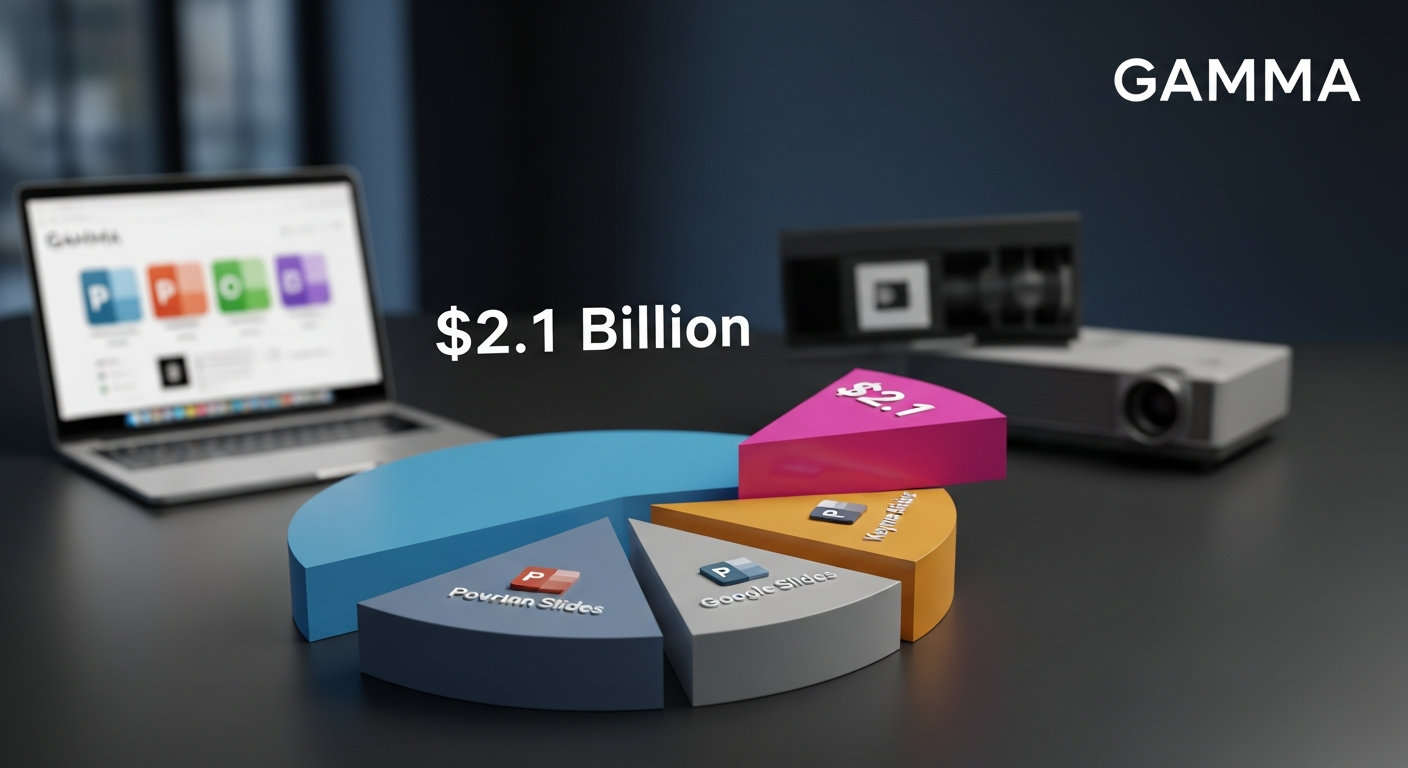
    So, this is interesting, isn’t it? I was just reading about Gamma, the AI presentation tool that’s kind of being touted as a PowerPoint-killer. And it turns out, they’ve just hit a $2.1 billion valuation. That’s… a lot.

    Grant Lee, the co-founder and CEO, says they’ve also reached $100 million in ARR – annual recurring revenue. Which, if true, means they’re growing, and growing fast. The whole thing makes you wonder, is this the future of presentations? Is PowerPoint, this thing we’ve all grown up with, on its way out?

    Gamma, from what I understand, uses AI to help you create presentations. You feed it your content, and it spits out something visually appealing. It’s designed to be quick and easy, which, let’s be honest, is what a lot of us are looking for when we’re staring down the barrel of a presentation deadline.

    Notably, the technology category is seeing a lot of these kinds of startups. AI is, well, everywhere. And it makes sense that it would find its way into something like presentations. It’s a task that can be tedious, time-consuming. Anything that promises to make it easier is going to get a look.

    I mean, PowerPoint has been the default for so long. It’s what we all know. But it’s also… a bit clunky, isn’t it? A bit dated. It’s easy to see how something that’s built from the ground up with AI in mind could offer a real advantage. The ease of use is a big selling point, I’d imagine.

    And the numbers? $2.1 billion is serious money. It’s a sign that investors are seeing something here, that they believe in the potential of Gamma and its AI-powered approach. The $100 million ARR is another key data point. It suggests that people are actually using the product, and that they’re willing to pay for it.

    This is all happening in 2025, according to the TechCrunch report. So it’s not like this is some far-off future. It’s happening now. The startup world moves fast, and it looks like Gamma is leading the charge.

    I can’t help but wonder what this means for the future of work, too. Will presentations become easier, more streamlined? Will we all be using AI to create our slides in the coming years? It’s a bit of a shift, and it’s always interesting to see how technology changes the way we do things.

    Anyway, it’s just a thought. For now, it seems like Gamma is making a splash. And PowerPoint? Well, we’ll see.

  • Gamma’s $2.1B Valuation: Is PowerPoint Doomed?

    Gamma’s $2.1B Valuation: Is PowerPoint Doomed?

    It’s a funny thing, seeing the tech world move at warp speed. You blink, and suddenly there’s a new contender, ready to shake things up. This time, it’s Gamma, the AI-powered presentation tool, making some serious waves.

    Notably, Gamma’s co-founder and CEO, Grant Lee, just announced some pretty impressive numbers. We’re talking about a $2.1 billion valuation and a cool $100 million in annual recurring revenue. That’s not chump change, right? It’s the kind of figures that make you sit up and take notice, especially in the competitive world of tech startups.

    And, you know, the whole thing got me thinking: could this be the beginning of the end for PowerPoint? I mean, PowerPoint has been the presentation software of choice for, well, pretty much everyone for decades. It’s in the DNA of business presentations, academic lectures, you name it.

    But Gamma? It’s different. It’s built on AI, designed to make creating presentations faster and, maybe, a little less painful. The whole pitch is about streamlining the process, making it easier to whip up something visually appealing without spending hours wrestling with design.

    The AI Factor

    The rise of AI has changed the landscape for all sorts of things, and the presentation game is no exception. It’s not just about automating the creation process. It’s also about changing the way we think about presentations.

    It seems like Gamma has tapped into something. People are looking for ways to work smarter, not harder. They want tools that can help them communicate their ideas effectively without getting bogged down in the technicalities of design. It’s a compelling vision, for sure.

    Back in the day, creating a decent presentation meant hours of work. You’d be fiddling with layouts, choosing fonts, and trying to make sure everything looked polished. But with AI, a lot of that heavy lifting can be automated. You feed the system your content, and it generates a presentation. That’s the promise, anyway.

    Is PowerPoint Doomed?

    Now, I’m not saying PowerPoint is going to disappear overnight. It’s a behemoth, deeply entrenched in the way we work. But the fact that Gamma has reached such a high valuation, so quickly, it does make you wonder. It shows there’s a real appetite for something new, something different.

    And let’s be honest, PowerPoint can be… well, it can be a bit clunky sometimes. The interface isn’t always the most intuitive. It’s a tool that’s been around for a long time, and it shows. So, there’s a definite opening for a competitor that can offer a more modern, streamlined experience.

    Still, it’s a long shot, right? Taking on Microsoft is no small feat. But Gamma has momentum. They’re growing fast, and they’ve got some serious financial backing. The $100 million ARR is particularly telling. It shows that people are actually using the product and, presumably, finding value in it.

    What’s Next?

    So, what’s next for Gamma? That’s the big question. They’ve got the valuation, they’ve got the revenue, and they’ve got the buzz. The next step will be to keep growing, keep innovating, and keep chipping away at PowerPoint’s dominance.

    For now, it’s a fascinating story to watch unfold. It’s a reminder that the tech world is always changing, always evolving. And that the tools we use to communicate, to share ideas, are constantly being reimagined.

    You could say it’s a David versus Goliath story, but with a twist. It’s AI versus… well, you know.