CloudTalk

Tag: Artificial Intelligence

  • InfiniMind: AI Transforms Video Archives into Business Intelligence

    InfiniMind: AI Transforms Video Archives into Business Intelligence

    The hum of servers filled the air, a constant white noise in the InfiniMind office. It was early February, 2026, and the team, a mix of former Google Japan engineers and fresh hires, were huddled around monitors, reviewing the latest thermal tests. They were pushing the limits, trying to get more processing power out of the new generation of GPUs.

    InfiniMind, founded by ex-Googlers, is tackling a massive problem: the untapped potential of video data. Companies are drowning in video archives, but extracting actionable insights has been a monumental task. The team is building enterprise AI to make those video archives searchable and useful, turning them into a source of business intelligence.

    Earlier that morning, a conference call with a potential client had been punctuated by long silences. The client, a large retail chain, was eager to use InfiniMind’s AI to analyze security footage, customer behavior, and inventory management. But the scale of the video data was daunting, and the client was cautious. They were, understandably, wary of another over-promised AI solution.

    “It’s a tough sell,” one of the engineers, whose name tag read ‘Kenji,’ muttered, adjusting his glasses. “We’re promising a lot.”

    The core of InfiniMind’s solution lies in its ability to process vast amounts of video data using a combination of advanced AI models. These models, trained on custom datasets, can identify objects, track movements, and understand context within the video. The goal is to provide businesses with a powerful search tool that allows them to quickly find specific events or patterns within their video archives. It is like having a super-powered search engine, but for video.

    As per reports, the market for video analytics is expected to reach $20 billion by 2028, according to a recent report by Gartner. This growth is driven by the increasing availability of video data and the growing demand for AI-powered solutions that can extract valuable insights from this data. The founders are betting that their experience at Google, combined with a deep understanding of the Japanese market, will give them a competitive edge. They are focusing on the enterprise market, targeting companies with large video archives and a need for advanced analytics.

    Meanwhile, the team was also navigating the complexities of the supply chain. The demand for advanced GPUs, essential for running their AI models, was intense. They were competing with companies all over the world. Export controls from the US and the domestic procurement policies in China added another layer of complexity. SMIC, the leading Chinese chip manufacturer, was still a few generations behind TSMC in terms of cutting-edge chip production, which added another wrinkle.

    “We’re looking at a 2027 roadmap for the M300 chips,” said a company spokesperson, “but the supply chain is, well, it’s still a work in progress.”

    The pressure was on. The team knew they were building something significant, something that could revolutionize how businesses use video data. It’s a high-stakes game. But they also knew that success hinged on more than just the technology — also on the ability to navigate the complexities of the market, the supply chain, and the ever-evolving landscape of AI.

  • Gather AI Secures $40M to Revolutionize Warehouse Operations

    Gather AI Secures $40M to Revolutionize Warehouse Operations

    Gather AI Lands $40M Investment to Transform Warehouse Operations

    In a significant boost for the burgeoning field of warehouse automation, Gather AI, the developer of innovative drone-based systems, has secured a substantial $40 million in funding. This investment, led by Smith Point Capital, the firm founded by former Salesforce CEO Keith Block, underscores the growing interest and confidence in AI-driven solutions for improving operational efficiencies within warehouses. The announcement, made on February 9, 2026, marks a pivotal moment for the company, setting the stage for accelerated growth and further development of its cutting-edge technology.

    The Innovative Approach of Gather AI

    Gather AI distinguishes itself through its unique approach to warehouse management. Unlike conventional systems that merely scan, Gather AI’s warehouse AI system is designed to seek out specific data, providing a level of granular insight previously unattainable. This ‘curious’ approach allows the drones to actively search for the information needed, transforming how warehouses are managed and optimized. The company’s focus on data-driven decision-making is a key differentiator, offering businesses actionable intelligence to streamline operations, reduce costs, and enhance overall productivity. The use of drones also allows for a safer and more efficient way to collect data in large spaces.

    The Role of Key Players

    The involvement of Keith Block and Smith Point Capital is particularly noteworthy. Block’s extensive experience in the tech industry, particularly his tenure as CEO of Salesforce, brings invaluable expertise and strategic vision to Gather AI. Smith Point Capital’s investment signifies a strong endorsement of Gather AI’s potential to disrupt the warehouse sector and its commitment to fostering innovation in the field of Artificial Intelligence. This infusion of capital will enable Gather AI to expand its operations, scale its production, and further refine its AI-powered drone technology. The investment will likely be used to improve the current AI system and to expand the number of warehouses that Gather AI serves.

    Impact and Future Prospects

    The $40 million funding round is expected to have a significant impact on Gather AI’s trajectory. The company is poised to capitalize on the growing demand for warehouse automation solutions, driven by the need for greater efficiency, accuracy, and cost savings. Gather AI’s technology has the potential to transform the way warehouses operate, providing businesses with a competitive edge in an increasingly complex and demanding market. The future looks bright for Gather AI as it continues to innovate and refine its approach to warehouse management.

    Conclusion

    Gather AI’s successful funding round, led by Smith Point Capital, represents a major milestone for the company and a positive development for the warehouse automation industry. With its innovative drone-based AI system, Gather AI is well-positioned to drive significant improvements in warehouse operations, offering businesses a powerful tool to optimize their processes and achieve greater efficiency. The investment from Keith Block and his firm highlights the growing recognition of AI’s potential to transform industries and create lasting value.

    Source: TechCrunch

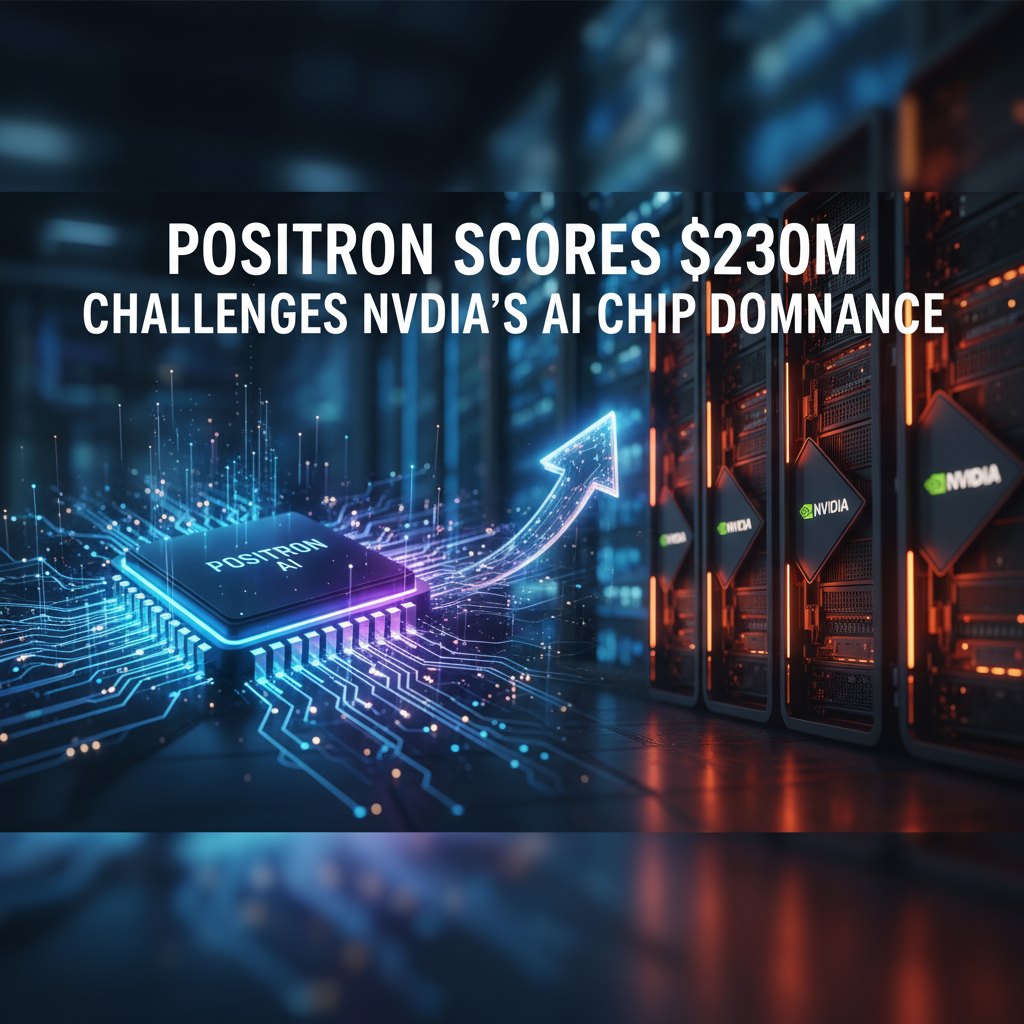
  • Positron Scores $230M to Challenge Nvidia’s AI Chip Dominance

    Positron Scores $230M to Challenge Nvidia’s AI Chip Dominance

    The numbers, they just keep moving. It’s February 4th, 2026, and the tech world is buzzing, again. This time, it’s Positron. The AI chip startup just landed a hefty $230 million Series B, according to reports. The funding, backed by the Qatar Investment Authority, signals a serious play to grab a slice of the market currently dominated by Nvidia.

    It’s a bold move, considering Nvidia’s current stronghold. But the demand for AI chips is, well, insatiable. “The market is hungry for alternatives,” as one analyst at the Brookings Institution put it, “especially as AI infrastructure expands globally.”

    The deal’s about more than just chips, though. It’s about Qatar’s ambitions to build out its own AI infrastructure. That’s the unspoken part, the long game.

    The money, it seems, will be used to accelerate Positron’s chip development. The goal: to take on Nvidia, a company that has, for the moment, the market cornered. Or at least, a very large share.

    The air in the trading rooms, even on a day like this, feels charged. Every announcement, every funding round, is a shot across the bow. Or maybe it’s just the usual pre-market jitters.

    The investment also suggests a broader shift. The tech world is always looking for the next big thing, the next disruptor. And, of course, a good return. The Qatar Investment Authority clearly sees potential. Or they wouldn’t have put their money where their mouth is.

    Demand is soaring beyond Nvidia. That much is clear.

    There’s the question of whether this funding will translate into actual market share, of course. It’s still early days. Competition is fierce.

    But the fact remains: $230 million is a lot of money. A clear signal.

    The implications are still unfolding.

  • Apple Acquires Q.AI for $2B: AI Tech Race Heats Up

    Apple Acquires Q.AI for $2B: AI Tech Race Heats Up

    Apple’s $2 Billion AI Bet: Acquiring Q.AI to Lead the Tech Race

    In a move that underscores its commitment to the future, Apple announced on January 29, 2026, the acquisition of Israeli startup Q.AI. The deal, valued at nearly $2 billion, represents Apple’s second-largest acquisition to date, signaling a significant escalation in the ongoing AI race. This strategic investment is a clear indication of Apple’s determination to solidify its position at the forefront of the rapidly evolving artificial intelligence landscape, as reported by TechCrunch.

    Why Q.AI Matters to Apple

    The acquisition of Q.AI is a strategic move, driven by Apple’s desire to advance its capabilities in the complex field of artificial intelligence. Q.AI, an Israeli startup, likely brings with it a wealth of talent and technology that will be instrumental in Apple’s future endeavors. The specific technologies and expertise that Q.AI possesses remain undisclosed in the initial reports. However, the substantial investment suggests that Apple sees significant value in Q.AI’s contributions to the AI domain.

    This is a particularly interesting development when considering the competitive landscape. With other tech giants heavily investing in AI, Apple is making a bold statement. The acquisition is not just about adding another company to its portfolio; it’s about investing in the future of technology and securing a competitive edge. This is a clear demonstration of Apple’s strategy to innovate and lead in the AI revolution.

    The Broader Implications of the Acquisition

    The acquisition has several implications that extend beyond the immediate benefits to Apple. It highlights the growing importance of AI across various industries and the lengths to which companies are willing to go to secure their place in this transformative field. The fact that an Israeli startup was the target also speaks to the global nature of innovation and the strategic value of international partnerships.

    The move also signifies the continued dominance of Apple in the technology market. With the resources and expertise gained through this acquisition, Apple is poised to integrate AI more deeply into its products and services. This could lead to more innovative features, improved user experiences, and enhanced competitiveness in the market.

    What’s Next for Apple and Q.AI?

    The integration of Q.AI into Apple’s operations will be a key focus in the coming months. As Apple incorporates Q.AI’s technology and talent, the industry will be watching closely to see how this translates into new products or enhancements to existing ones. The acquisition is expected to accelerate Apple’s progress in AI, potentially leading to breakthroughs in areas such as machine learning, natural language processing, and computer vision.

    The substantial investment also suggests that Apple is planning for the long term. This strategic move underscores Apple’s commitment to investing in the future, ensuring that it remains at the forefront of technological innovation and competitive in the global market. The AI race is heating up, and Apple has just made a significant move to stay ahead.

    In Conclusion

    Apple’s acquisition of Q.AI is a landmark event in the technology sector, reflecting the growing importance of artificial intelligence and the strategic moves companies are making to dominate this field. With this acquisition, Apple has demonstrated its commitment to innovation, its vision for the future, and its willingness to invest in the technologies that will shape the world. This is not just an acquisition; it’s a statement of intent.

  • Apple Acquires Q.AI for $2B: AI Tech Race Heats Up

    Apple Acquires Q.AI for $2B: AI Tech Race Heats Up

    Apple’s $2 Billion AI Bet: Acquiring Q.AI to Lead the Tech Race

    In a move that underscores the intensifying competition in the artificial intelligence sector, Apple announced on January 29, 2026, its acquisition of the Israeli startup Q.AI. The deal, reportedly valued at nearly $2 billion, marks Apple’s second-largest acquisition to date, signaling a significant investment in its future AI capabilities. This strategic move highlights Apple’s commitment to staying at the forefront of the technological race, particularly in the rapidly evolving field of AI.

    The Significance of the Acquisition

    The acquisition of Q.AI by Apple is more than just a financial transaction; it’s a strategic maneuver designed to bolster Apple’s position in the AI landscape. The ‘what’ of this acquisition centers on the integration of Q.AI’s innovative AI technologies into Apple’s existing ecosystem. This move is a clear indication of Apple’s intent to enhance its product offerings and user experiences through advanced AI functionalities. The ‘why’ behind this acquisition is clear: to advance in the AI race, ensuring Apple remains competitive with other tech giants.

    Q.AI: An Overview

    While specific details about Q.AI’s technologies remain undisclosed, the fact that Apple was willing to invest such a substantial sum suggests the startup possesses cutting-edge AI capabilities. The ‘where’ of this transaction, in Israel, further emphasizes the country’s growing reputation as a hub for technological innovation. This acquisition allows Apple to tap into Israel’s rich talent pool and innovative ecosystem, which is known for its expertise in AI and related fields. The ‘how’ of the acquisition involved a financial investment, with Apple using its vast resources to secure Q.AI’s expertise. The ‘when’ of the acquisition, January 29, 2026, marks a pivotal moment in Apple’s AI strategy.

    The Broader Implications for the Tech Industry

    This acquisition has significant implications for the wider tech industry. It underscores the increasing importance of AI in driving innovation and competition. As major tech companies like Apple invest heavily in AI, smaller startups and established players alike will need to adapt and innovate to stay relevant. The move is likely to fuel further investment and acquisitions in the AI sector, creating a dynamic and fast-paced environment. This event also highlights the global nature of technological advancement, with companies increasingly looking to international markets, such as Israel, for talent and innovation.

    Looking Ahead

    Apple’s acquisition of Q.AI is a bold move that signals its determination to lead in the AI revolution. By integrating Q.AI’s technologies, Apple is poised to enhance its products and services, potentially reshaping the user experience across its entire product line. This acquisition is a clear indication of Apple’s future trajectory, firmly placing AI at the core of its strategy. As the tech landscape continues to evolve, the impact of this acquisition will undoubtedly be felt across the industry, setting the stage for future innovations and strategic moves.

  • Ricursive: AI Chip Startup Hits $4B Valuation

    Ricursive: AI Chip Startup Hits $4B Valuation

    Ricursive: The AI Chip Startup That’s Already a Billion-Dollar Giant

    The artificial intelligence landscape is witnessing a seismic shift, and at the heart of this transformation are specialized chips designed to power the next generation of AI applications. In a remarkable display of market confidence, the AI chip startup Ricursive has achieved a staggering $4 billion valuation just two months after its launch. This rapid ascent places Ricursive alongside other high-profile ventures like Recursive and Unconventional AI, which have also secured massive funding rounds and multi-billion dollar valuations right out of the gate, as reported by TechCrunch on January 26, 2026.

    A New Era for AI Chips

    The success of Ricursive underscores a significant trend: the burgeoning demand for specialized hardware capable of handling the complex computational needs of modern AI. Traditional processors are often ill-equipped to efficiently process the massive datasets and intricate algorithms that define AI. Consequently, startups like Ricursive are attracting significant investment by offering innovative chip designs tailored to the specific demands of AI workloads.

    This surge in investment reflects a broader recognition of the strategic importance of AI chips. As artificial intelligence continues to permeate various sectors, from healthcare and finance to autonomous vehicles, the demand for powerful, energy-efficient, and purpose-built hardware will only intensify. Ricursive’s rapid rise suggests that investors are betting heavily on the company’s ability to capitalize on this expanding market.

    Key Players and Their Impact

    The success of Ricursive is not an isolated event. The AI chip sector is attracting considerable attention, with other companies like Recursive and Unconventional AI also experiencing substantial funding and valuations. The presence of these major players suggests a dynamic and competitive market poised for continued growth and innovation.

    The fact that Ricursive, Recursive, and Unconventional AI are achieving such impressive valuations so early in their lifecycles is a testament to the transformative potential of AI. These companies are not just building chips; they are building the future of computing. Their success will likely pave the way for further investment and innovation in the AI chip space.

    What’s Next for Ricursive?

    While specific details about Ricursive’s technology and products remain scarce, the company’s rapid ascent suggests a compelling value proposition. Investors are clearly confident in Ricursive’s team, technology, and market strategy. The company’s future will depend on its ability to execute its vision, deliver on its promises, and maintain its competitive edge in a rapidly evolving market.

    The substantial funding Ricursive has secured will undoubtedly fuel further development, research, and expansion. As the company grows, it will be interesting to see how it navigates the competitive landscape and establishes itself as a leader in the AI chip industry.

    The Broader Implications

    Ricursive’s success has broader implications for the technology industry and the global economy. By accelerating the development and deployment of AI technologies, companies like Ricursive are poised to drive innovation across numerous sectors. This could lead to new products, services, and economic opportunities.

    The investment in Ricursive also signals a shift in the tech landscape. As AI becomes increasingly important, the companies that design and manufacture the underlying hardware will play a central role in shaping the future of technology. Ricursive’s success underscores the growing importance of specialized AI chips and the potential for significant returns in this rapidly growing market.

    In conclusion, Ricursive’s remarkable journey is a testament to the transformative power of AI and the importance of specialized hardware. As the demand for AI continues to grow, companies like Ricursive are positioned to lead the way, driving innovation and shaping the future of technology. The rapid rise of Ricursive, along with other high-profile AI chip startups, highlights the dynamic and competitive nature of the AI chip market, which is poised for continued growth and innovation in the years to come.

    Source: TechCrunch

  • Ricursive’s $4B Valuation: AI Chip Startup Revolution

    Ricursive’s $4B Valuation: AI Chip Startup Revolution

    Ricursive’s $4B Valuation: A New Era for AI Chip Startups

    The artificial intelligence (AI) landscape is witnessing a seismic shift, and at the forefront are innovative startups commanding valuations that were once the stuff of science fiction. Leading the charge is Ricursive, an AI chip startup that has already achieved a remarkable $4 billion valuation, a mere two months after its launch. This meteoric rise places Ricursive in rarified air, joining the ranks of other high-flying ventures like Recursive and Unconventional AI.

    The Funding Frenzy in AI Chips

    The speed at which Ricursive secured its valuation speaks volumes about the current investment climate and the insatiable demand for advanced AI chip technology. The ‘what’ here is clear: investors are pouring massive funds into the AI chip sector, recognizing the crucial role these specialized processors play in driving the next generation of AI applications. The ‘how’ of this valuation involves Ricursive’s ability to demonstrate a compelling value proposition, likely centered around innovative chip designs and the potential to disrupt the existing market.

    The ‘why’ behind these massive investments is multifaceted. AI is no longer a futuristic concept; it’s rapidly becoming integrated into nearly every aspect of our lives, from healthcare and finance to transportation and entertainment. This widespread adoption fuels the need for more powerful, efficient, and specialized hardware capable of handling the complex computational demands of AI algorithms. Moreover, the success of companies like Recursive and Unconventional AI has set a precedent, demonstrating the potential for significant returns in this burgeoning market.

    Ricursive’s Place in the Ecosystem

    While specific details about Ricursive’s technology remain undisclosed in the provided context, the company’s rapid ascent suggests a strong focus on innovation. The ‘who’ in this story includes Ricursive, the central player, and the investors who have placed their bets on the startup’s future. The company’s success is a testament to the fact that the demand for AI chips is high, and the market is ready to embrace new players with groundbreaking solutions. This landscape is also seeing the rise of other key players, such as Recursive and Unconventional AI, which are also driving innovation in the AI space.

    The ‘when’ of this event is crucial, with the valuation occurring just two months after launch, highlighting the pace at which the AI chip market is evolving. The ‘what’ in this case is the valuation itself, a significant achievement that underscores the company’s potential. The ‘how’ is through raising massive funds, which will allow Ricursive to further develop its technology, scale its operations, and compete in the rapidly expanding AI chip market.

    Implications for the Future

    Ricursive’s impressive valuation is a bellwether for the broader AI chip industry. It signals a shift in the tech landscape, where specialized hardware is becoming increasingly critical. This trend is likely to continue as AI applications become more sophisticated and widespread. The success of Ricursive, Recursive, and Unconventional AI also demonstrates the opportunities for new entrants in the market. As the demand for AI chips continues to grow, we can expect to see more startups emerge, attracting significant investment and pushing the boundaries of what’s possible in artificial intelligence.

    Conclusion

    Ricursive’s rapid rise to a $4 billion valuation is a significant event in the tech world. It reflects the growing importance of AI chips and the willingness of investors to back innovative startups. As the AI landscape continues to evolve, companies like Ricursive are poised to play a pivotal role in shaping the future of technology. The ‘why’ behind this growth is clear: the world needs more powerful and efficient AI chips to drive the next wave of innovation.

    The ‘when’ of this event, two months post-launch, is just the beginning. The story of Ricursive, Recursive, and Unconventional AI is far from over. As the AI chip market matures, we can expect more exciting developments and groundbreaking achievements. The ‘who’ in this narrative are the companies and the investors who are pushing the boundaries of what’s possible in AI. The ‘what’ is the future, a future driven by the power of AI chips.

    Source: TechCrunch

  • Nvidia CEO Predicts AI Boom & Six-Figure Construction Jobs

    Nvidia CEO Predicts AI Boom & Six-Figure Construction Jobs

    The hum of servers fills the air, a constant thrum in the newly-minted data center. Engineers in hard hats and safety vests are swarming over the concrete shell, installing the cooling systems that will keep the processors from melting down. This isn’t just another construction site; it’s the front line of the AI revolution, a physical manifestation of the digital world’s insatiable appetite for power.

    Nvidia CEO Jensen Huang sees this clearly. He’s calling the AI infrastructure buildout the “largest buildout in human history.” Huang’s prediction? That this boom will create a surge in six-figure construction jobs. The implications are enormous. Increased demand for skilled trades workers—electricians, HVAC technicians, and specialized construction crews—means wage growth, and a potential transformation of the job market.

    “It’s not just about the chips,” says a senior analyst at Gartner, who asked not to be named. “It’s about the entire ecosystem. The power, the cooling, the physical space to house these things. All of that is construction.”

    Consider the scale. Training large language models (LLMs) like those powering generative AI tools requires massive computational resources. This translates directly into more data centers, each a sprawling complex demanding specialized construction. The M100 and M300 chips that Nvidia is rolling out in 2026 and 2027 will demand even more robust infrastructure, pushing the need for more data centers. And more construction workers.

    But there are bottlenecks. The supply chain, for one. TSMC, the world’s largest chip manufacturer, is already running at full capacity. SMIC, China’s largest chipmaker, faces US export controls and is unable to produce the most advanced chips. These constraints create a race against the clock. Can the construction keep pace with the demand for AI?

    The pace is frenetic. At a recent industry event, executives from a major data center construction firm were seen huddling, poring over blueprints and timelines. One attendee overheard them discussing the need to shave weeks off a project’s completion date. The pressure is on, and the clock is ticking.

    Domestic procurement policies also come into play. Beijing, for example, is prioritizing domestic suppliers for infrastructure projects, creating both opportunities and challenges for companies involved in the buildout. This adds another layer of complexity to an already intricate landscape.

    The numbers tell a compelling story. Analyst forecasts suggest that the AI infrastructure market will continue to grow exponentially over the next decade. This growth will be fueled not just by technological advancements, but by the physical reality of building the machines that power them. Or maybe that’s how the supply shock reads from here.

    The implications extend beyond the construction site. Increased wages in the skilled trades could have a ripple effect, boosting local economies and creating new opportunities. It’s a boom that’s not just about bits and bytes, but about concrete and steel, and the people who build it all.

  • Sam Altman Returns to India for AI Summit in New Delhi

    Sam Altman Returns to India for AI Summit in New Delhi

    Sam Altman’s India Return: AI Leaders to Converge in New Delhi

    In a significant development for the Indian tech landscape, OpenAI CEO Sam Altman is planning a visit to India. This trip marks his first return to the country in nearly a year and comes as New Delhi prepares to host a prominent AI summit. The summit is expected to be a major event, drawing top executives and leaders in the field of artificial intelligence.

    AI Summit in New Delhi: A Gathering of Tech Titans

    The upcoming AI summit in New Delhi is poised to be a pivotal event, bringing together key figures from the global tech industry. According to reports, the summit will see the participation of top executives from leading companies such as Meta, Google, and Anthropic. The convergence of these influential leaders underscores the growing importance of India in the global AI landscape and highlights the country’s potential as a hub for technological innovation.

    The exact agenda of the summit remains undisclosed, but it’s anticipated to cover a broad range of topics related to artificial intelligence. Discussions are expected to revolve around the latest advancements, ethical considerations, and the future of AI. The presence of Sam Altman, along with representatives from Meta, Google, and Anthropic, suggests that the summit will address the most pressing issues and opportunities in the AI sector.

    Sam Altman’s Return and the Significance of the Visit

    Sam Altman’s return to India is particularly noteworthy. His last visit was almost a year ago, making this trip a significant event for the Indian tech ecosystem. His presence at the summit indicates OpenAI’s interest in the Indian market and its commitment to engaging with the country’s growing AI sector. This visit provides an opportunity for Altman to connect with local leaders, understand the challenges and opportunities in the region, and potentially explore new partnerships and collaborations.

    The AI summit in New Delhi is more than just a gathering of tech leaders; it’s a reflection of India’s ambition to be at the forefront of the AI revolution. The event’s focus on the latest AI advancements, ethical considerations, and the future of AI will help shape the direction of the industry.

    The Broader Implications for India’s AI Sector

    The convergence of leading AI figures in New Delhi has broader implications for India’s technology sector. The summit could stimulate investment, foster innovation, and create new opportunities for Indian startups and tech companies. It could also lead to a greater understanding of the challenges and opportunities in the AI sector, helping to shape policies and regulations that support the industry’s growth.

    The planned visit by Sam Altman and the AI summit in New Delhi signal a crucial moment for India’s AI landscape. The event is set to be a catalyst for innovation, collaboration, and growth in the country’s burgeoning AI sector.

    Source: TechCrunch

  • OpenAI’s Enterprise Push: A 2026 Strategy?

    OpenAI’s Enterprise Push: A 2026 Strategy?

    The whispers started circulating last week — the news of Barret Zoph rejoining OpenAI, and then, the enterprise focus. It felt sudden, but also inevitable, like a shift in the wind that everyone knew was coming. Now, the question is, can OpenAI make it happen?

    The plan, as per sources, is to seriously target those enterprise dollars by 2026. A bold move, considering the competition. And the stakes, of course, are high.

    The details are still emerging, but the core strategy seems clear: take on the established players. It’s a market currently dominated by the likes of Microsoft and Google, but also a space where the margins are, shall we say, attractive. The potential revenue is staggering — analysts at ARK Invest, for instance, have predicted the AI market could reach a value of $17.4 trillion by 2030. That’s a lot of enterprise spending to chase.

    One of the challenges, though, is the inherent complexity. Enterprise clients have specific needs, often involving customized solutions, stringent security requirements, and long sales cycles. It’s a different beast than the consumer market, where OpenAI has enjoyed remarkable success. Or maybe I’m misreading it.

    As for Barret Zoph, his appointment as the point person is significant. He knows the company, knows the players, and, presumably, knows the strategy. His return, after a week, suggests a rapid acceleration of these enterprise ambitions. Still, a week is a short timeframe.

    “The enterprise market demands a different approach,” said Dr. Emily Carter, a senior fellow at the Brookings Institution, in a recent interview. “It’s about demonstrating value, building trust, and providing solutions that integrate seamlessly into existing workflows. It’s not just about flashy technology.”

    The room, or the virtual room, where the analysts were on the call, felt tense. Not a good sign, necessarily. But the air is thick with uncertainty.

    The shift also comes at a time of broader economic shifts. Interest rates, tax incentives, and evolving regulatory landscapes, all of which will inevitably impact spending decisions. The decisions of OpenAI’s enterprise clients will be influenced by these forces, too. It’s complex, to say the least.

    The competition is fierce. The market is evolving. And the clock is ticking. OpenAI has a plan, and they have a leader. The year 2026 will tell the tale.