
Tag: Authentication

  • Ex-Tesla Manager Battles Luxury Fakes With High-Tech Chip

    Ex-Tesla Manager Battles Luxury Fakes With High-Tech Chip

    The numbers, they say a lot. Counterfeit luxury goods cost brands over $30 billion annually. Meanwhile, the secondary market — that booming space for pre-owned high-end items — is now worth $210 billion. And there’s a massive trust issue, right in the middle.

    Enter Veritas, a startup born from the mind of a former Tesla product manager. Their aim? To make it virtually impossible to fake luxury items. The core of their strategy involves a custom hardware and software solution, starting with a chip.

    It’s a bold move, and the market is certainly watching. Experts, like those at the Brookings Institution, have noted the increasing sophistication of counterfeiters, which is making it harder to distinguish between real and fake goods. The challenge isn’t just about protecting brand value, it’s about consumer trust and the integrity of the market. And, of course, the revenue streams.

    The concept is fairly straightforward, at least in theory. A unique chip embedded in the product, paired with software that authenticates the item. It’s not just about stopping fakes at the point of sale; it’s also about providing a verifiable history for items in the resale market. This is where the real potential lies.

    The second-hand market, after all, is a wild card. It’s growing rapidly, especially among younger consumers, and the demand for authenticated goods is soaring. Veritas is betting that providing a reliable verification system will unlock even more value.

    The technology, as described, is intriguing. Custom hardware, custom software, all working in tandem. Details are scarce, of course, because of the competitive landscape. But the promise is there: a secure, immutable record for each item. Think of it as a digital fingerprint, but for a handbag or a watch.

    It’s not a new problem. Counterfeiting has been around as long as luxury goods. But the scale and sophistication have increased dramatically, as has the global reach of counterfeiters. The digital age has made it easier than ever to copy and sell fake products, so the need for innovative solutions is clear.

    Veritas is entering a crowded space, and success is far from guaranteed. They face technical hurdles, manufacturing challenges, and the need to convince luxury brands and consumers to adopt their technology. But if they can pull it off, the rewards could be substantial. The potential to disrupt both the primary and secondary markets is undeniable.

    Or maybe I’m misreading it. The market is always shifting, and the economic winds can change fast. Still, the fundamental problem remains: consumers want assurance, brands need protection, and the secondary market needs a reliable way to verify authenticity. Veritas is offering a solution, and the world is watching.
  • Securing Remote MCP Servers on Google Cloud: Best Practices

    Securing Remote MCP Servers on Google Cloud: Best Practices

    The Rise of MCP and the Security Tightrope

    The Model Context Protocol (MCP), a universal translator for AI, is rapidly becoming the cornerstone for integrating Large Language Models (LLMs) with diverse systems. MCP allows different tools and data sources to “speak” the same language, standardizing API calls and streamlining workflows. For example, MCP might enable a sales bot to access both CRM and marketing data seamlessly. This interoperability simplifies the creation of automated systems driven by LLMs. However, this increased interconnectedness presents a significant security challenge.

    As research consistently demonstrates, a more connected system equates to a larger attack surface – the potential points of vulnerability. An academic paper, “MCP Safety Audit: LLMs with the Model Context Protocol Allow Major Security Exploits,” highlights how industry-leading LLMs can be manipulated to maliciously utilize MCP tools. This could lead to severe consequences, from malicious code execution to credential theft. This potential necessitates a proactive approach to security.

    Google Cloud’s Proactive Approach: A Best Practices Guide

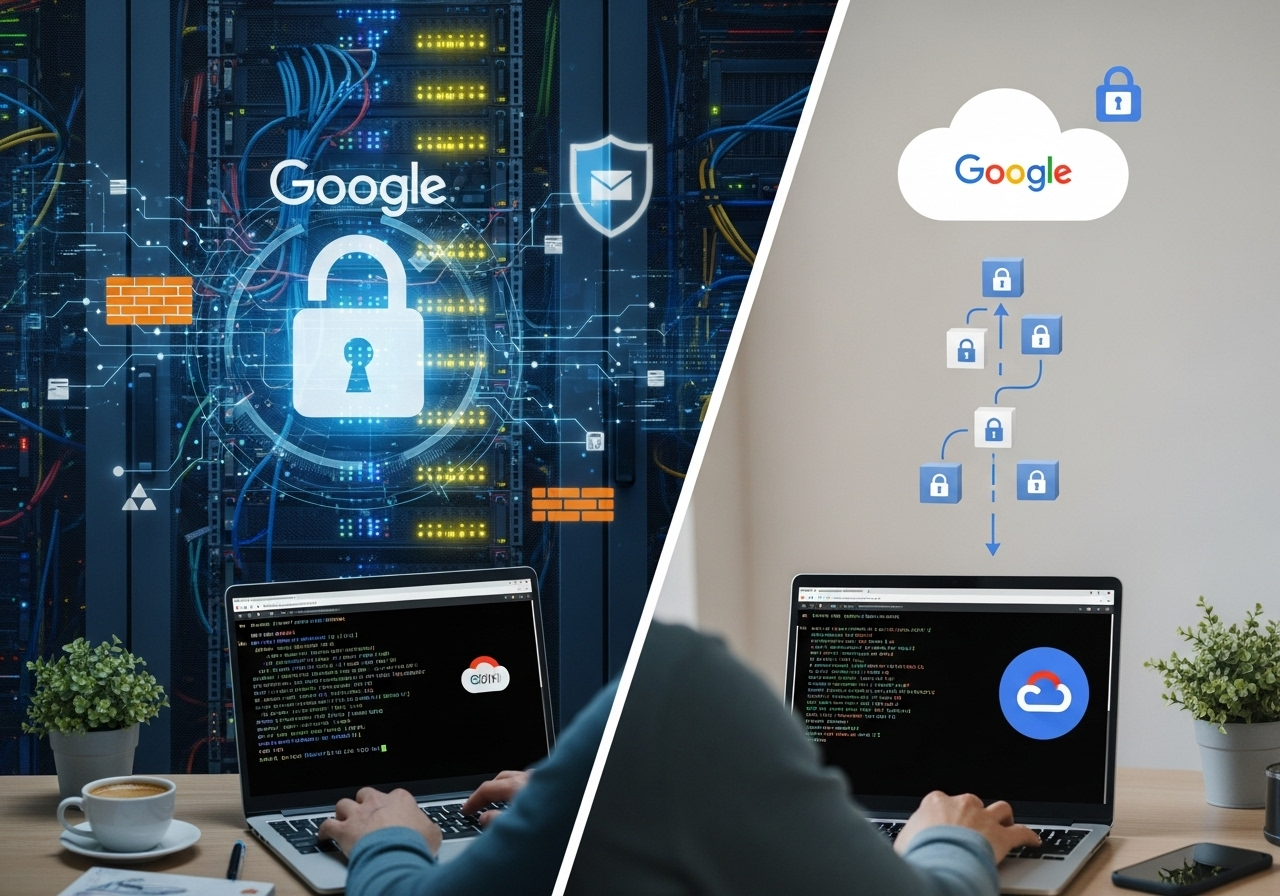
    Recognizing these escalating risks, Google Cloud has published a detailed guide: “How to Secure Your Remote MCP Server on Google Cloud.” The core recommendation centers around leveraging Google Cloud services, such as Cloud Run, to host your MCP servers. This approach minimizes the attack surface and provides a scalable, robust foundation for AI-driven operations. Given these potential security challenges, Google Cloud offers specific guidance and tools to help developers and organizations build secure and resilient systems.

    The guide emphasizes the importance of strong security fundamentals. This includes stringent access controls, robust encryption protocols, and the implementation of advanced authentication methods, such as Google OAuth, to safeguard deployments. Further, it recommends using proxy configurations to securely inject user identities, adhering to zero-trust principles. This layered approach is akin to constructing a multi-layered castle to protect valuable data.

    Advanced Defenses: AI-Driven Security Enhancements

    Google Cloud also emphasizes the integration of AI-native solutions to bolster MCP server resilience. Collaborations with companies like CrowdStrike enable real-time threat detection and response. Security teams can now leverage LLMs to analyze complex patterns that might evade traditional monitoring systems, enabling faster responses to potential breaches. This capability provides a crucial advantage in the dynamic threat landscape.

    The guide further highlights the necessity of regular vulnerability assessments. It suggests utilizing tools announced at Google’s Security Summit 2025. Addressing vulnerabilities proactively is critical in the rapidly evolving AI landscape. These assessments help identify and remediate potential weaknesses before they can be exploited.

    Deployment Strategies and the Future of MCP Security

    Google Cloud provides step-by-step deployment strategies, including building MCP servers using “vibe coding” techniques powered by Gemini 2.5 Pro. The guide also suggests regional deployments to minimize latency and enhance redundancy. Moreover, it advises against common pitfalls, such as overlooking crucial network security configurations. These practices are essential for ensuring both performance and security.

    Another area of concern is the emergence of “Parasitic Toolchain Attacks,” where malicious instructions are embedded within external data sources. Research underscores that a lack of context-tool isolation and insufficient least-privilege enforcement in MCP can allow adversarial instructions to propagate unchecked. This highlights the need for careful data validation and access control.

    Google’s acquisition of Wiz demonstrates a commitment to platforms that proactively address emerging threats. Prioritizing security within AI workflows is crucial to harnessing MCP’s potential without undue risk. This proactive approach is key as technology continues to evolve, setting the stage for a more secure digital future. The focus on robust security measures is critical for enabling the benefits of LLMs and MCP while mitigating the associated risks.