Tag: Business

  • WisdomAI Raises $50M: AI Data Analytics Startup Secures Funding

    WisdomAI Raises $50M: AI Data Analytics Startup Secures Funding

    The news hit my desk earlier today: WisdomAI, the AI data analytics startup, has secured another round of funding. This time, a cool $50 million, led by Kleiner Perkins and Nvidia. It seems like only yesterday they were announcing their seed round, but that was back in the spring of 2024. Time flies, especially in this tech world.

    What’s got everyone so interested? Well, WisdomAI is promising something pretty compelling: AI that can make sense of all kinds of data to answer business questions. Not just the nice, clean stuff, but the messy, “dirty” data, full of typos and errors. That’s a huge promise, and a big problem they’re trying to solve.

    A spokesperson from Kleiner Perkins, reached by phone this afternoon, said, “We see huge potential in WisdomAI’s approach. Their ability to handle unstructured data, the stuff that’s often overlooked, is a game-changer.” That’s the kind of language you hear in these situations, but it’s hard to dismiss the enthusiasm. Especially when you see the names attached.

    And, the numbers don’t lie. This latest round brings WisdomAI’s total funding to over $80 million, as per public records. It’s a sign, I think, of where the market is headed. Data, and making sense of it, is the new gold rush. Everyone wants to be able to pull insights from every scrap of information.

    Meanwhile, the market is watching, too. You see the chatter online, the analysts weighing in. It’s a reminder of how quickly things move. One minute, a company is just an idea; the next, it’s a headline. And then, the pressure is on.

    It’s still early days, of course. But this funding round, coming in November of 2025, certainly feels like a significant step forward for WisdomAI. And, in a way, for the whole field. The kind of investment that makes you wonder what they’ll come up with next.

  • Groww IPO: India’s Retail Investing Surge

    Groww IPO: India’s Retail Investing Surge

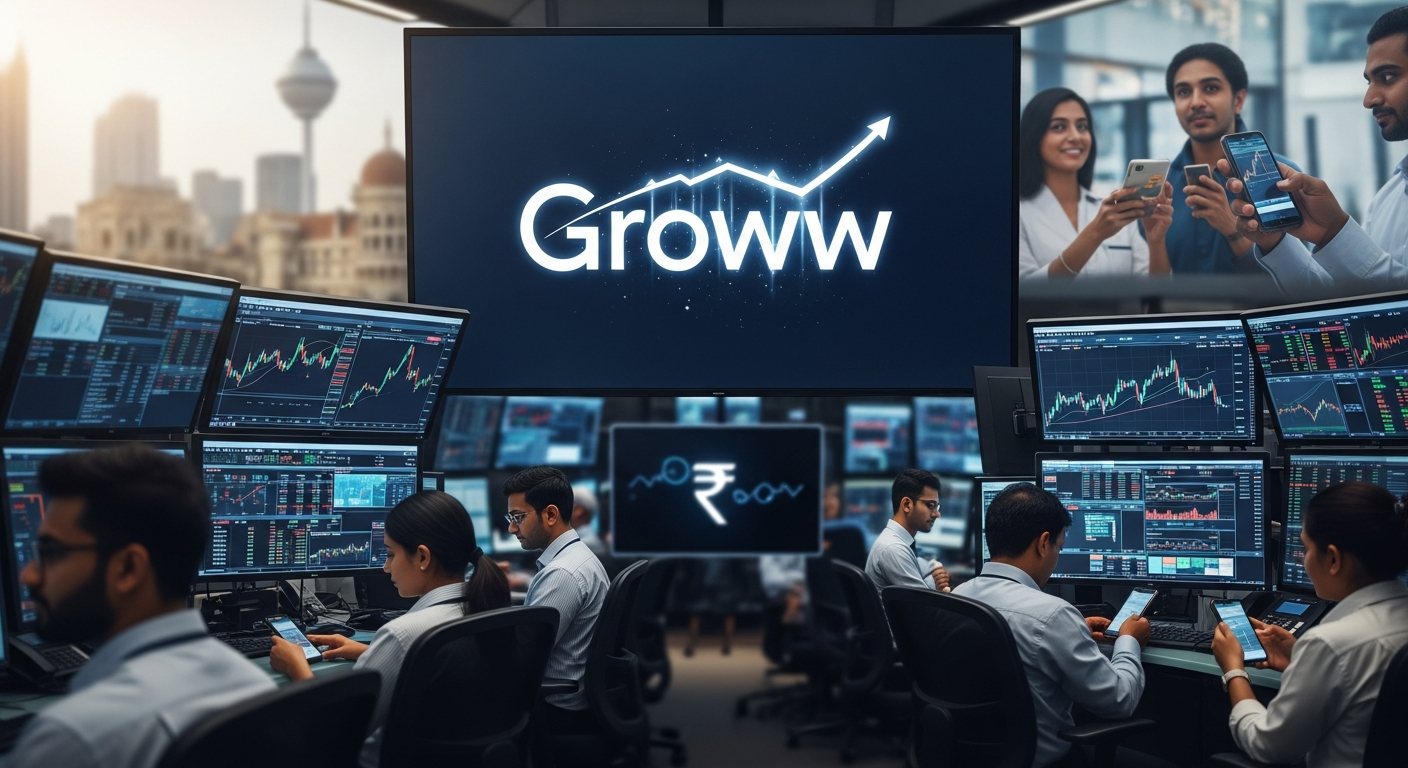
    The air in the trading room felt charged, you know? It was November 12, 2025, and all eyes were on Groww. The company, a prominent player in India’s retail investment space, had just launched its IPO. The numbers, honestly, were pretty striking.

    Groww managed to raise nearly $750 million. Shares opened at ₹112, which was already 12% above the initial issue price. By the close of trading, they’d climbed further, settling at ₹128.85. That gave the company a market capitalization of around ₹795 billion, roughly $9 billion.

    The buzz was palpable. Everyone seemed to be talking about it — from seasoned brokers to first-time investors. The mood was optimistic, reflecting the general sentiment surrounding the Indian market, particularly the retail sector. The tricky part is, a lot of this growth is relatively recent.

    A source at the Bombay Stock Exchange, who preferred to remain anonymous, mentioned that the IPO’s success was a clear indication of the confidence in India’s retail investing boom. “It’s a sign of a maturing market,” they said, “and a testament to the growing financial literacy among the younger generation.”

    The scene at the trading floor was a mix of tension and excitement. Screens flickered with real-time data, and the murmur of conversations filled the room. The success of Groww’s IPO, you could see, was more than just a financial event; it was a cultural one. It spoke volumes about the changing financial landscape in India.

    The company, it seems, is well-positioned to capitalize on this trend. Their platform has gained popularity among younger investors, offering a user-friendly interface and a wide range of investment options. The IPO, in a way, is just the next step.

    And the future? It’s hard to say, of course. But the initial success of the IPO certainly paints a positive picture — or maybe I’m misreading it. The market, after all, is a fickle beast.

  • Groww IPO: India’s Retail Investing Market Surges

    Groww IPO: India’s Retail Investing Market Surges

    The air in the trading room felt charged on November 12, 2025. You could almost feel the anticipation as Groww, the Indian investment platform, launched its Initial Public Offering. The numbers were impressive, as per reports.

    Groww, you see, managed to raise nearly $750 million. The shares opened at ₹112, a significant 12% above the issue price. By the close of trading, they were at ₹128.85. The market cap? Roughly $9 billion, a figure that seemed to hang in the air, a testament to the retail investing boom that’s been sweeping across India.

    It’s hard to ignore the broader context. India’s retail investing scene has been on fire. A witness mentioned, “It’s like everyone is looking for a piece of the pie.” Groww has been a major player in this, and this IPO seems to be a clear sign of confidence.

    The company’s success isn’t just about numbers, though. It’s also about timing, of course. The market is favorable, and Groww has positioned itself well. The platform has made investing more accessible, which is crucial, you know.

    The tricky part is what comes next. How will Groww use these funds? How will they maintain this momentum? The answers, like the market itself, are still unfolding. But the opening day performance gives them a strong starting point.

    And then there’s the ripple effect. Other companies are watching, no doubt. This IPO could well encourage more Indian startups to go public, further fueling the market. Or maybe I’m misreading it.

    The room cleared out slowly as the day ended. The screens, once filled with numbers, began to fade. The feeling, though, the buzz of a successful IPO, lingered.

  • AI Startups: Nailing Product-Market Fit

    AI Startups: Nailing Product-Market Fit

    It’s a question that’s probably been on the minds of every AI startup founder: How do you actually *nail* product-market fit? I was reading a piece over on TechCrunch the other day — dated November 11, 2025, if you’re keeping track — and it got me thinking. The article, which I’ll link below, featured insights from a couple of investors who’ve seen a thing or two.

    They’re not just throwing around buzzwords, either. It’s practical stuff. They talk about what founders and operators should be focusing on. About how to avoid some of the classic pitfalls. The whole product-market fit thing… it’s a journey, right?

    Notably, the article really drove home the idea that AI startups, in particular, face unique challenges. The technology is new, the landscape is shifting constantly, and the expectations are… well, they’re pretty high. So, how do you even begin to approach something like that?

    The Core Questions

    One of the first things the investors highlighted was the need to really understand your customer. Who are they? What problems are they *actually* trying to solve? It sounds simple, but you’d be surprised how many startups get this wrong, especially in the AI space. They get caught up in the technology itself, in the potential, and they forget to listen to what the market is telling them.

    The investors stressed that product-market fit isn’t a one-time thing. It’s an ongoing process. It’s about iterating, testing, and adapting. You build something, you get feedback, you adjust. And you keep doing that until you find something that resonates.

    This means being willing to pivot, too. To change your approach if something isn’t working. That can be tough, especially if you’ve poured your heart and soul into something. But sometimes, it’s necessary.

    Focusing on the Real Problems

    The best AI startups, the article suggested, are the ones that aren’t just building cool tech. They’re building solutions to real problems. Problems that people are willing to pay to solve. It’s about finding that sweet spot where your technology meets a genuine need.

    And it’s not always about the flashiest AI. Sometimes, the most effective solutions are the ones that are the most practical, the most user-friendly, and the ones that deliver the best results. That’s the core of product-market fit, right?

    The investors also touched on the importance of building a strong team. A team that can execute the vision, adapt to change, and keep pushing forward. It’s a key ingredient, you could say.

    Beyond the Tech

    One thing that resonated with me was the idea that product-market fit isn’t just about the product itself. It’s about the whole experience. It’s about how easy it is to use, how well it integrates with other systems, and the level of support you provide. It’s everything, really.

    This article, and the investors’ insights, really make you think. It’s not just about the technology, it’s about the people. It’s about the market, and the need. AI startups, like any startup, need to remember that at their core.

    So, the next time you hear someone talking about AI and product-market fit, remember: it’s a journey. A complex one, sure, but also a really exciting one. And the best AI startups are the ones that are prepared to go the distance.

    For now, it’s a reminder that the best technology solves real problems.

  • Planning Ahead: How Founders Can Prep for Late-Stage Funding

    Planning Ahead: How Founders Can Prep for Late-Stage Funding

    It’s funny, isn’t it? How much of the startup game is about looking ahead. The article I read today, from TechCrunch, really drove that home. It’s all about late-stage fundraises, and how founders can, and really should, start preparing from day one. Seems obvious, but it’s easy to get caught up in the weeds, you know?

    The core idea? Start building those relationships *now*. I mean, if you’re a startup, you probably have a million things on your plate. But the piece really emphasizes that forging connections with late-stage investors early on is crucial. It’s like planting seeds in a garden. You don’t wait until the harvest to start, right?

    Notably, the piece doesn’t just say ‘network.’ It’s more nuanced. It’s about understanding what late-stage investors look for. They’re not just throwing money around; they want to see a clear path to returns. So, it’s not just about knowing names; it’s about understanding their investment theses, their portfolios, what they value. That takes time, it takes research, and it takes… well, it takes the kind of foresight that separates the good founders from the great.

    And it makes sense when you think about it. Late-stage investors are, by definition, looking at more mature companies. They want to see traction, revenue, a solid business model. They’re not taking big risks, so your groundwork has to be rock solid. This means having a clear narrative, a compelling story that resonates with *their* priorities.

    Earlier this week, I was talking to a friend who is a founder. He’s in the thick of it – early stage, trying to get off the ground. He was so focused on the immediate, on getting that initial seed round. And, you know, that’s understandable. But the TechCrunch article kind of nudged me to think: what if he also started, in a small way, to build those relationships for the future? Not in a pushy, desperate way, but in a smart, strategic way.

    It’s not just about the money, either. The article kind of implies that the right investors bring more than just capital. They bring experience, connections of their own, and a deeper understanding of the market. They can help you navigate the tricky waters of scaling up. You get that, and you’re set.

    Still. It’s a balancing act, right? You’re building a company, dealing with the daily grind, and then you have to think about the *future* future. But, in a way, it’s also about changing your mindset. It’s about seeing the whole field, not just the immediate patch in front of you.

    The article also touched on the idea of transparency. Late-stage investors want to see the whole picture. They want to understand the risks, the challenges, the potential roadblocks. So, it’s about being upfront, honest, and building trust. You’re not just selling a dream; you’re building a partnership.

    And, you know, I think that’s the real takeaway. It’s not just about getting the funding. It’s about building a solid foundation, a sustainable business, and a relationship built on mutual respect. It’s a long game, and the best players are always thinking a few steps ahead.

  • Gamma’s $2.1B Valuation: Is PowerPoint Doomed?

    Gamma’s $2.1B Valuation: Is PowerPoint Doomed?

    It’s a funny thing, seeing the tech world move at warp speed. You blink, and suddenly there’s a new contender, ready to shake things up. This time, it’s Gamma, the AI-powered presentation tool, making some serious waves.

    Notably, Gamma’s co-founder and CEO, Grant Lee, just announced some pretty impressive numbers. We’re talking about a $2.1 billion valuation and a cool $100 million in annual recurring revenue. That’s not chump change, right? It’s the kind of figures that make you sit up and take notice, especially in the competitive world of tech startups.

    And, you know, the whole thing got me thinking: could this be the beginning of the end for PowerPoint? I mean, PowerPoint has been the presentation software of choice for, well, pretty much everyone for decades. It’s in the DNA of business presentations, academic lectures, you name it.

    But Gamma? It’s different. It’s built on AI, designed to make creating presentations faster and, maybe, a little less painful. The whole pitch is about streamlining the process, making it easier to whip up something visually appealing without spending hours wrestling with design.

    The AI Factor

    The rise of AI has changed the landscape for all sorts of things, and the presentation game is no exception. It’s not just about automating the creation process. It’s also about changing the way we think about presentations.

    It seems like Gamma has tapped into something. People are looking for ways to work smarter, not harder. They want tools that can help them communicate their ideas effectively without getting bogged down in the technicalities of design. It’s a compelling vision, for sure.

    Back in the day, creating a decent presentation meant hours of work. You’d be fiddling with layouts, choosing fonts, and trying to make sure everything looked polished. But with AI, a lot of that heavy lifting can be automated. You feed the system your content, and it generates a presentation. That’s the promise, anyway.

    Is PowerPoint Doomed?

    Now, I’m not saying PowerPoint is going to disappear overnight. It’s a behemoth, deeply entrenched in the way we work. But the fact that Gamma has reached such a high valuation, so quickly, it does make you wonder. It shows there’s a real appetite for something new, something different.

    And let’s be honest, PowerPoint can be… well, it can be a bit clunky sometimes. The interface isn’t always the most intuitive. It’s a tool that’s been around for a long time, and it shows. So, there’s a definite opening for a competitor that can offer a more modern, streamlined experience.

    Still, it’s a long shot, right? Taking on Microsoft is no small feat. But Gamma has momentum. They’re growing fast, and they’ve got some serious financial backing. The $100 million ARR is particularly telling. It shows that people are actually using the product and, presumably, finding value in it.

    What’s Next?

    So, what’s next for Gamma? That’s the big question. They’ve got the valuation, they’ve got the revenue, and they’ve got the buzz. The next step will be to keep growing, keep innovating, and keep chipping away at PowerPoint’s dominance.

    For now, it’s a fascinating story to watch unfold. It’s a reminder that the tech world is always changing, always evolving. And that the tools we use to communicate, to share ideas, are constantly being reimagined.

    You could say it’s a David versus Goliath story, but with a twist. It’s AI versus… well, you know.

  • Gamma’s $2.1B Valuation: Is PowerPoint Doomed?

    Gamma’s $2.1B Valuation: Is PowerPoint Doomed?

    So, this is interesting, isn’t it? I was just reading about Gamma, the AI presentation tool that’s kind of being touted as a PowerPoint-killer. And it turns out, they’ve just hit a $2.1 billion valuation. That’s… a lot.

    Grant Lee, the co-founder and CEO, says they’ve also reached $100 million in ARR – annual recurring revenue. Which, if true, means they’re growing, and growing fast. The whole thing makes you wonder, is this the future of presentations? Is PowerPoint, this thing we’ve all grown up with, on its way out?

    Gamma, from what I understand, uses AI to help you create presentations. You feed it your content, and it spits out something visually appealing. It’s designed to be quick and easy, which, let’s be honest, is what a lot of us are looking for when we’re staring down the barrel of a presentation deadline.

    Notably, the technology category is seeing a lot of these kinds of startups. AI is, well, everywhere. And it makes sense that it would find its way into something like presentations. It’s a task that can be tedious, time-consuming. Anything that promises to make it easier is going to get a look.

    I mean, PowerPoint has been the default for so long. It’s what we all know. But it’s also… a bit clunky, isn’t it? A bit dated. It’s easy to see how something that’s built from the ground up with AI in mind could offer a real advantage. The ease of use is a big selling point, I’d imagine.

    And the numbers? $2.1 billion is serious money. It’s a sign that investors are seeing something here, that they believe in the potential of Gamma and its AI-powered approach. The $100 million ARR is another key data point. It suggests that people are actually using the product, and that they’re willing to pay for it.

    This is all happening in 2025, according to the TechCrunch report. So it’s not like this is some far-off future. It’s happening now. The startup world moves fast, and it looks like Gamma is leading the charge.

    I can’t help but wonder what this means for the future of work, too. Will presentations become easier, more streamlined? Will we all be using AI to create our slides in the coming years? It’s a bit of a shift, and it’s always interesting to see how technology changes the way we do things.

    Anyway, it’s just a thought. For now, it seems like Gamma is making a splash. And PowerPoint? Well, we’ll see.

  • Carbon Credit Market: Consolidation & Uncertainty

    Carbon Credit Market: Consolidation & Uncertainty

    So, the carbon credit market — it’s changing, isn’t it? Seems like just yesterday everyone was talking about the gold rush, and now? Well, now we’re seeing some serious consolidation. Carbon Direct is buying Pachama, and honestly, it feels like a turning point.

    It’s not exactly a surprise, though. The voluntary carbon markets have been, you know, a bit of a wild west. Lots of players, lots of different standards, and a whole lot of questions about the actual impact of it all. This move by Carbon Direct, though… it’s different. It’s like a signal that the big players are starting to really dig in, ready to shape the future.

    And what does that future look like? That’s the million-dollar question, isn’t it? The TechCrunch article, published November 10, 2025, points to a period of uncertainty. You can feel it, too. There’s a lot of scrutiny on carbon credits right now, with folks wondering if they’re actually doing what they claim to do. Are we really offsetting emissions? Or are we just, well, shuffling numbers around?

    The Players and the Stakes

    Carbon Direct, for those who don’t know, is a climate solutions company. Pachama? They’re all about using tech to verify and manage carbon offset projects. So, in a way, it makes sense. A company that provides the credits, merging with one that helps to validate them. It seems logical, you could say.

    But it’s bigger than that, I think. This whole thing is about trust. The voluntary carbon markets need it. They need it badly. If companies can’t trust the credits, they won’t buy them. If investors aren’t confident, they’ll pull back. And that would be a problem, wouldn’t it? Because these markets, in theory, are supposed to be a key part of the fight against climate change.

    What Does This Mean for the Future?

    So, what happens next? Well, we’ll probably see more of this. More mergers, more acquisitions. The market is maturing, and that means some players will inevitably get squeezed out. The stronger, more established companies, like Carbon Direct, will likely swallow up the smaller ones, or at least partner up.

    This consolidation could be a good thing, you know? It could lead to more standardization, more transparency. Maybe it’ll help to weed out some of the, let’s say, less credible projects. It could also mean that the cost of carbon credits goes up, as the market becomes more concentrated. That’s something to watch.

    And then there’s the whole issue of demand. Will companies continue to buy carbon credits? Will they be willing to pay more? It all depends on the regulations, the public perception, and, of course, the actual effectiveness of these projects. It’s a complex web, for sure.

    A Changing Landscape

    The TechCrunch piece mentions this shift, and I think it’s spot on. The article really captures that feeling of a market in flux. It’s a bit like watching a storm gather. You can see the clouds rolling in, the wind picking up. You know something big is about to happen, but you can’t quite predict where the lightning will strike.

    So, yeah, the carbon credit market. It’s a story that’s still being written. And right now, it feels like a chapter is closing, and a new one is just beginning. For now, we wait and see what the future holds.

  • Lenskart IPO: Stock Market Rollercoaster Ride

    Lenskart IPO: Stock Market Rollercoaster Ride

    There’s been a lot of buzz lately about Lenskart, the online eyewear giant, and their recent IPO. Honestly, the whole thing felt a little… wild. It’s not every day you see a company valued at nearly $8 billion go public, right?

    The first day on the stock market is always a nail-biter, and for Lenskart, it was no different. The opening wasn’t exactly a roaring success. The stock opened with a bit of a whimper, which definitely set some nerves on edge. You could feel the tension, I’m sure.

    But here’s where it gets interesting. Against the odds, Lenskart managed to pull things together. By the end of the day, the stock had clawed its way back, closing slightly above the IPO price. It wasn’t a massive jump, mind you, but it was enough to suggest that investors still had some faith in the company. And that’s saying something.

    Now, the whole situation got me thinking. The big question on everyone’s mind was whether that valuation was justified. $8 billion is a hefty price tag, and it definitely sparked a debate. Was it too high? Just right? Or maybe somewhere in between? The market, as it often does, seemed to be saying, “We’ll see.”

    Lenskart, if you don’t know, has built a pretty impressive business. They’ve disrupted the optics industry, offering a wide selection of eyewear online and through physical stores. They’ve got a strong brand and a loyal customer base. But the stock market is a fickle beast. What works in the business world doesn’t always translate to immediate success when you’re publicly listed.

    The first day performance is often a reflection of investor sentiment, the overall market conditions, and, let’s be honest, a bit of luck. Lenskart’s experience is a good reminder of how unpredictable the stock market can be. It’s a pretty wild ride.

    The public listing is a big step for any company. It brings in capital, yes, but it also brings a whole new level of scrutiny. Investors are watching, analysts are analyzing, and the pressure is on to perform. So, what happens next for Lenskart? That’s the million-dollar question, isn’t it?

    It’s easy to see why.

  • Gameskraft Layoffs: Real Money Gaming Ban’s Impact

    Gameskraft Layoffs: Real Money Gaming Ban’s Impact

    There’s been a bit of a shakeup in the gaming world, and honestly, it’s not looking great for everyone. Gameskraft, a gaming startup, is the latest to feel the pinch, and the story is, unfortunately, becoming all too familiar. The company is laying off a significant chunk of its workforce — a staggering 400 employees, to be exact. And the reason? Well, it all boils down to the ban on real money gaming (RMG) in the country.

    Now, if you’ve been following the business scene, this probably isn’t a huge surprise. The ban on RMG has been looming, and its impact is starting to ripple through the industry. Gameskraft, like many others, is now grappling with the fallout. It’s a tough situation, and it really highlights the challenges that startups face when the regulatory landscape shifts so dramatically.

    This whole thing is pretty wild, if you think about it. You have these companies, like Gameskraft, that are building something, creating jobs, and trying to innovate. Then, a ban comes down, and suddenly, everything changes. It’s not just about the financial hit, either. It’s about the people who lose their jobs, the projects that get put on hold, and the overall uncertainty that hangs over the industry.

    And it’s not just Gameskraft, either. The tags associated with this story, like “Real Money Gaming,” “Layoffs,” and “Gaming Industry,” are becoming unfortunately common headlines. It’s a sign of the times, and it’s a clear indication that the RMG ban is having a real, tangible effect on the businesses involved.

    Anyway, let’s talk about Gameskraft for a second. They’re a pretty big player in the gaming space, so this move is definitely going to send some shockwaves. I mean, 400 jobs is a lot. It means families affected, careers disrupted, and a lot of talented people suddenly looking for new opportunities. It’s a stark reminder that even in a booming industry, things can change in an instant.

    And the “why” is pretty straightforward: the ban on real money gaming. The government is cracking down, and companies that rely on this model are now struggling to stay afloat. It’s a classic case of policy having a direct, and often painful, impact on the business world.

    Now, what happens next? That’s the million-dollar question, isn’t it? Will more companies follow suit? Will the industry find a way to adapt? Or will this ban continue to reshape the gaming landscape? It’s hard to say for sure, but one thing is clear: the situation is still evolving.

    It’s a tough pill to swallow for the employees affected, and for the industry as a whole. It’s a reminder that the world of business is always shifting, and that even successful companies can face unexpected challenges. It is what it is.