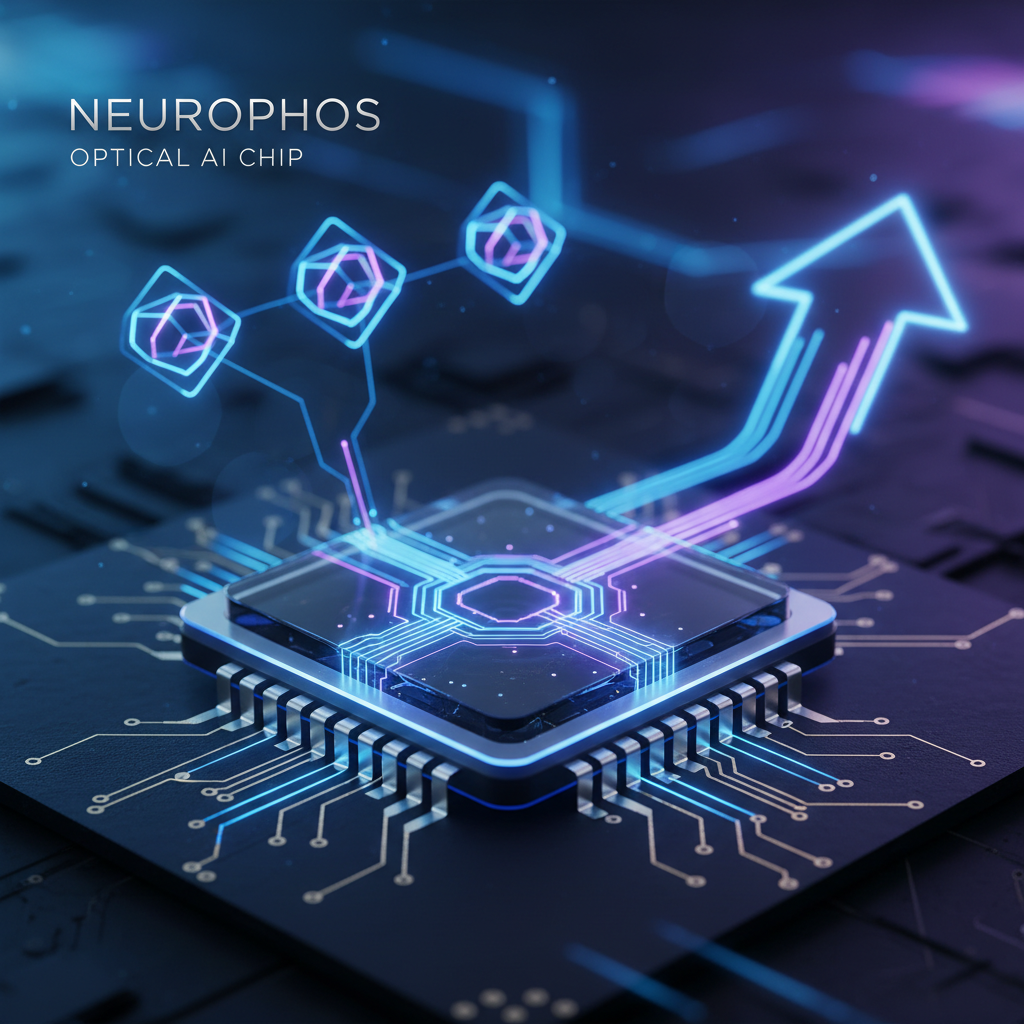
Tag: composite material

  • Neurophos Raises $110M for AI Optical Chip Revolution

    Neurophos Raises $110M for AI Optical Chip Revolution

    Neurophos Raises $110M to Revolutionize AI Inferencing with Optical Chips

    In a significant stride toward a more efficient future for artificial intelligence, Neurophos has secured a substantial $110 million in funding. This investment underscores the growing recognition of the critical need to address the power consumption issues plaguing the AI industry. Neurophos is tackling this challenge head-on with an innovative approach: developing tiny optical processors designed specifically for AI inferencing tasks.

    The Quest for Power Efficiency in AI

    The AI industry is booming, but its growth is being hampered by a significant bottleneck: power efficiency. As AI models become more complex, the energy required to run them skyrockets, leading to increased costs, environmental concerns, and limitations in deployment, particularly in edge computing scenarios. Neurophos aims to overcome these limitations by using a novel optical chip that leverages a composite material to perform the complex mathematical operations required for AI inferencing tasks.

    This innovative approach promises to drastically reduce power consumption compared to traditional electronic chips. By using light instead of electricity, Neurophos hopes to create processors that are not only more energy-efficient but also faster and more compact. This could open up new possibilities for AI applications in various fields, from mobile devices to data centers.

    How Neurophos Is Doing It

    The core of Neurophos’s technology lies in its use of a composite material that can manipulate light in intricate ways. This allows the chip to perform the complex calculations needed for AI inferencing with remarkable efficiency. The company’s focus on optical processing represents a paradigm shift from conventional electronic processors. This shift could lead to a new generation of AI hardware that is more sustainable and capable of handling increasingly complex tasks.

    This is where the ‘how’ comes into play. The company is using a composite material to perform the math required in AI inferencing tasks. This is a key element of the process.

    The Significance of the $110M Funding

    The $110 million funding round is a testament to the potential of Neurophos’s technology and the confidence investors have in its vision. This investment will enable the company to accelerate its research and development efforts, scale up production, and bring its innovative optical processors to market. The funding will also support the expansion of its team and infrastructure, positioning Neurophos to become a leader in the AI hardware space.

    This funding will help Neurophos solve the AI industry’s power efficiency problem and perform AI inferencing tasks.

    Looking Ahead

    The future looks bright for Neurophos. By focusing on optical processing, the company is positioning itself at the forefront of a technological revolution. As AI continues to evolve, the need for more efficient and powerful hardware will only increase. With its innovative approach and substantial funding, Neurophos is well-equipped to meet this demand and shape the future of artificial intelligence. The company’s success could pave the way for a new era of AI, one that is more sustainable, accessible, and powerful.

    This article is based on the information from TechCrunch.

  • Neurophos Raises $110M for AI Optical Processors

    Neurophos Raises $110M for AI Optical Processors

    Neurophos Raises $110M to Build Tiny, Efficient Optical Processors for AI

    In a move that could reshape the future of artificial intelligence, Neurophos has secured a substantial $110 million in funding. The company is tackling the AI industry’s persistent power efficiency problem head-on with an ambitious project: the development of an optical chip designed specifically for AI inferencing tasks. This innovative approach leverages a composite material to perform the complex mathematical calculations required for these tasks, promising a significant leap forward in processing efficiency.

    The Power Efficiency Problem in AI

    The rapid advancement of AI has been accompanied by a significant challenge: the escalating power consumption of AI systems. As AI models grow in complexity, the energy required to run them increases exponentially. This not only raises operational costs but also limits the deployment of AI in resource-constrained environments, such as edge devices and mobile applications. Neurophos’s solution, an optical chip, offers a potential pathway to overcome these limitations.

    How Neurophos Is Tackling the Challenge

    Neurophos is employing a novel approach by utilizing an optical chip built with a composite material. The primary goal is to address the power-hungry nature of current AI inferencing processes. By using light instead of electricity for computation, Neurophos aims to significantly reduce energy consumption. This shift to optical processing could lead to more efficient AI hardware, enabling faster and more cost-effective AI inferencing. The use of a composite material is central to this innovation, allowing the chip to perform complex calculations with remarkable efficiency.

    The Significance of the Funding

    The $110 million in funding represents a significant vote of confidence in Neurophos’s vision and technological approach. This capital infusion will likely fuel the company’s research and development efforts, allowing it to accelerate the development and commercialization of its optical chip technology. The investment suggests a strong belief in the potential of Neurophos to disrupt the AI hardware market and provide a sustainable solution to the industry’s energy concerns.

    The Broader Impact on AI

    The success of Neurophos could have far-reaching implications for the AI landscape. More efficient AI hardware could pave the way for advancements in various fields, including:

    • Edge computing: Enabling AI applications on devices with limited power resources.
    • Mobile AI: Improving the performance and battery life of AI-powered smartphones and other mobile devices.
    • Data centers: Reducing the operational costs and environmental footprint of AI infrastructure.

    By addressing the power efficiency issue, Neurophos is contributing to a future where AI is more accessible, sustainable, and powerful.

    In essence, Neurophos’s innovative approach promises to redefine the landscape of AI hardware. The company’s focus on optical chips and composite materials provides a fresh perspective on how to tackle the persistent power efficiency challenge. With $110 million in funding, Neurophos is well-positioned to drive significant advances in AI inferencing, potentially reshaping the future of AI technology.

    Source: TechCrunch