Tag: Data Leaks

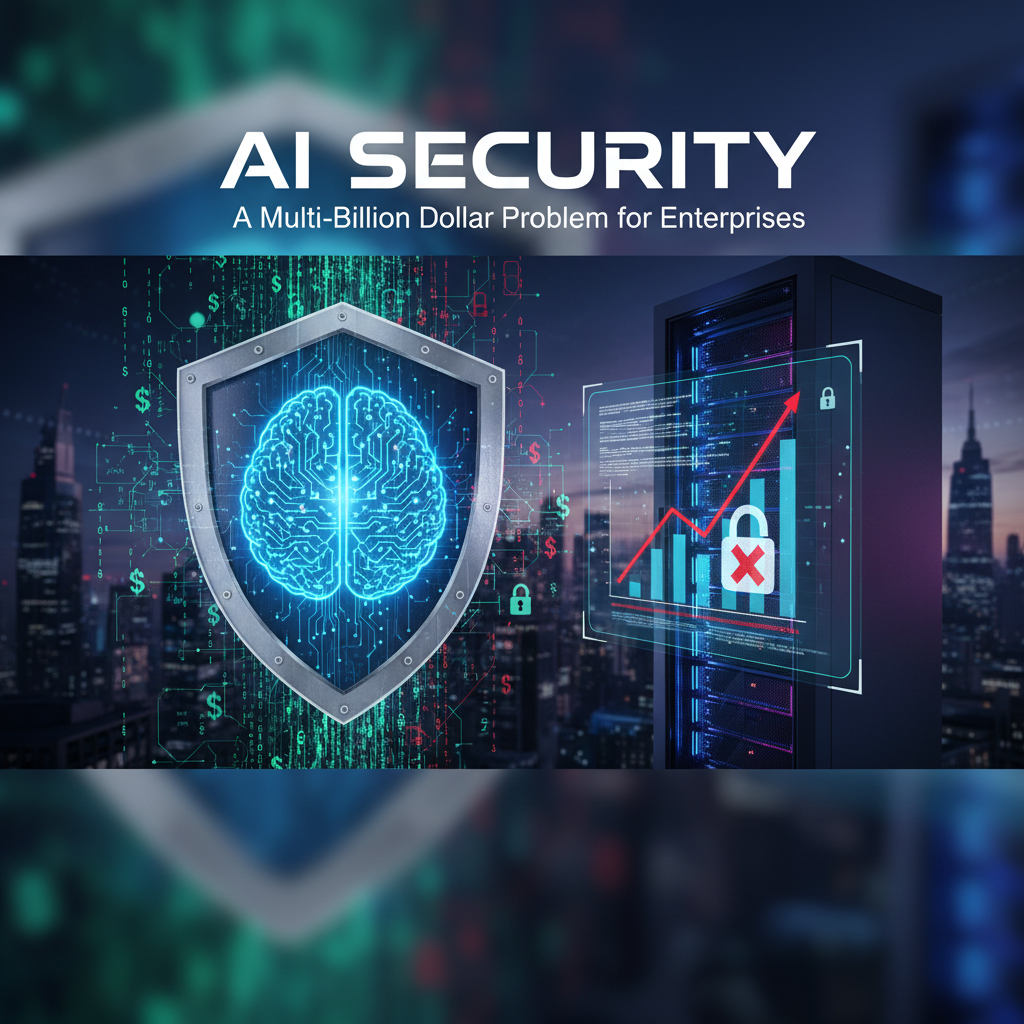
  • AI Security: The $60 Billion Cybersecurity Challenge

    AI Security: The $60 Billion Cybersecurity Challenge

    The hum of servers fills the air. It’s a sound that’s become almost a constant in the modern enterprise, but today, there’s a new kind of tension mixed in. Engineers at a major financial institution, let’s call them “GlobalFin,” are hunched over their screens, poring over logs. The task: to understand the data exfiltration attempts they’ve been seeing. Not from humans, but from AI agents.

    Earlier this year, a report from Gartner projected that the AI security market will reach $60 billion by 2027. That figure, now, seems almost conservative, given the rapid proliferation of AI tools and the corresponding rise in vulnerabilities. GlobalFin, like many others, is racing to keep pace.

    The core problem? AI agents, chatbots, and copilots, while designed to boost productivity, are also creating new attack surfaces. “It’s like giving every employee a key to the vault,” says Sarah Chen, a cybersecurity analyst at Forrester. “Except the key is AI, and the vault is your sensitive data.” And that data, of course, includes everything from customer records to trade secrets.

    The mechanics are complex. Large language models (LLMs) are the engines, and they’re hungry for data. Training these models, and then deploying them, requires careful orchestration. But it’s the fine-tuning and inference stages where the risks really manifest. A careless prompt, a poorly configured access control, and suddenly, sensitive information is exposed. Or worse, the AI agent itself becomes a vector for attack.

    Meanwhile, the regulatory landscape is shifting. Compliance rules are struggling to catch up with the pace of AI development. Companies are caught between the need to innovate and the need to protect themselves. Violations can lead to hefty fines, reputational damage, and, in some cases, legal action. It’s a minefield.

    Consider the case of a major cloud provider, which, in 2023, experienced a significant data breach due to a misconfigured AI chatbot. The incident, which exposed customer data, cost the company millions in remediation and legal fees. It also caused a ripple effect of distrust throughout the industry. The details, as they often do, are still emerging.

    Officials at the company, in a statement, admitted that the breach was “a stark reminder of the challenges we face.” They’re not alone. According to a recent survey by the Ponemon Institute, 68% of IT professionals believe that their organizations are not adequately prepared to defend against AI-related security threats. That’s a sobering statistic.

    By evening, the engineers at GlobalFin are still at it. The server hum continues, a constant reminder of the stakes. The race to secure AI, it seems, has only just begun. Or maybe that’s how the supply shock reads from here.

  • Shadow AI Agents: Cybersecurity Threats Your Business Needs to Know

    The Invisible Enemy: Shadow AI Agents

    The rise of artificial intelligence has ushered in a new era of innovation, but it also brings with it a hidden threat: Shadow AI Agents. These elusive entities operate within our systems, often unseen by security teams, posing significant risks to organizations worldwide. A recent webinar, “[Webinar] Shadow AI Agents Multiply Fast — Learn How to Detect and Control Them,” highlighted the urgency of addressing this growing challenge. Let’s explore what makes these agents so dangerous.

    The Exponential Growth of Shadow AI: Why It Matters Now

    The market is witnessing an unprecedented surge in the creation and deployment of AI Agents. While this rapid innovation fosters new possibilities, it also presents a significant advantage to malicious actors. These bad actors can effortlessly spin up new agents, making it increasingly difficult for security teams to keep pace. This isn’t a futuristic threat; it’s a present-day reality. As the webinar experts emphasized, this rapid proliferation necessitates advanced detection and control mechanisms.

    Unmasking the Risks Lurking in the Shadows

    At the heart of the issue lies the very nature of Shadow AI Agents. These agents frequently operate outside the established security perimeter, often linked to identities that are either unknown or unapproved. This invisibility creates a breeding ground for several key risks, making organizations vulnerable to attack. Specifically:

    • Agent Impersonation: Shadow AI Agents can mimic trusted users, granting them access to sensitive data and critical systems.
    • Unauthorized Access: Non-human identities (NHIs) – software bots, scripts, or other automated processes – can be granted access without proper authorization, potentially leading to devastating data breaches.
    • Data Leaks: Information can unexpectedly escape previously secure boundaries, compromising confidentiality and exposing valuable intellectual property.

    These aren’t hypothetical scenarios; they are active threats. The webinar stressed that the proliferation of these agents outpaces the ability of current governance structures to effectively manage them.

    Taking Action: Proactive Steps for Mitigation

    The webinar provided actionable recommendations to help businesses enhance their visibility and control over Shadow AI Agents. Implementing these steps can significantly improve an organization’s security posture:

    • Define AI Agents: Establish clear, organization-specific criteria for what constitutes an AI Agent.
    • Identify NHIs: Implement robust methods for identifying and managing non-human identities (NHIs).
    • Employ Advanced Detection: Utilize advanced techniques such as IP tracing and code-level analysis to detect malicious activity.
    • Implement Governance: Develop and enforce effective governance policies that promote innovation while minimizing risk.

    By taking proactive measures now, businesses can defend against this escalating threat and secure their digital future. Remember, the time to act is now, before Shadow AI agents control you.