CloudTalk

Tag: Enterprise Security

  • AWS Security Hub Extended: Full-Stack Enterprise Security

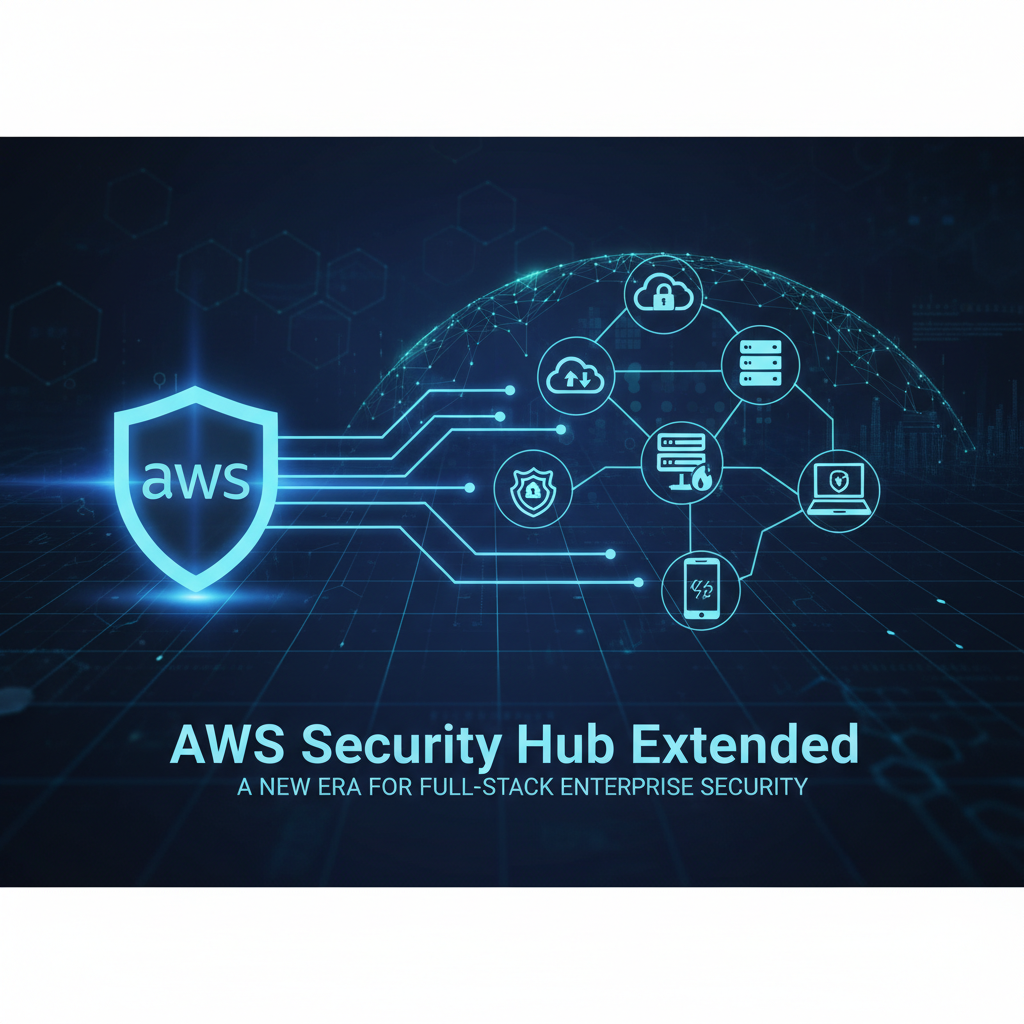
    AWS Security Hub Extended: Full-Stack Enterprise Security

    The hum of servers filled the air, a familiar backdrop for the team at CloudSec Solutions. It was early this week, and the news of AWS Security Hub Extended’s general availability had just dropped. The team, still buzzing from a Monday morning briefing, were already diving in, testing the new features.

    AWS Security Hub Extended, as per the official announcement, aims to provide a unified, full-stack enterprise security solution. This means bringing together AWS detection services and curated partner solutions. The goal? A single, simplified experience for security teams.

    “It’s a game changer,” said Maria Rodriguez, a senior security analyst, as she reviewed the initial setup. “We’ve been waiting for something like this.”

    Earlier today, the announcement was met with a mix of excitement and cautious optimism. The market, as a whole, seems ready for this kind of integrated approach. Cloud security, after all, has become increasingly complex.

    One of the key selling points is the integration of partner solutions. AWS has curated a list of partners whose tools will now work seamlessly within the Security Hub. This includes companies specializing in vulnerability management, threat intelligence, and incident response. This move, analysts believe, will significantly reduce the time security teams spend on integration and management. It’s a bit like having all the tools in one toolbox, finally.

    The integration of AWS detection services is another critical component. These services, which include Amazon GuardDuty and Amazon Inspector, provide real-time threat detection and vulnerability scanning. The extended version streamlines access to these services and provides a centralized view of security findings.

    The announcement also highlighted the benefits for compliance. Security Hub Extended provides tools to assess and manage compliance with industry standards, such as PCI DSS and CIS benchmarks. This is crucial for organizations operating in regulated industries.

    According to a recent report by Gartner, the cloud security market is projected to reach $77.2 billion by 2027. This growth is driven by the increasing adoption of cloud services and the rising number of cyber threats. AWS, with its dominant position in the cloud market, is well-positioned to capitalize on this trend.

    Of course, there are challenges. The success of Security Hub Extended will depend on the quality of partner integrations and the ability of AWS to keep pace with evolving threats. Still, the initial response has been overwhelmingly positive. The market seems to be saying, “It’s about time.”

    The team at CloudSec Solutions, meanwhile, were already planning their next steps. The goal is to fully integrate the new tools into their existing security infrastructure. It’s a process that will take time, but the potential benefits are clear. A more efficient, more effective, and more comprehensive security posture.

    And that, it seems, is what everyone is hoping for.
  • AWS Security Hub Extended: Unified Cloud Security Solution

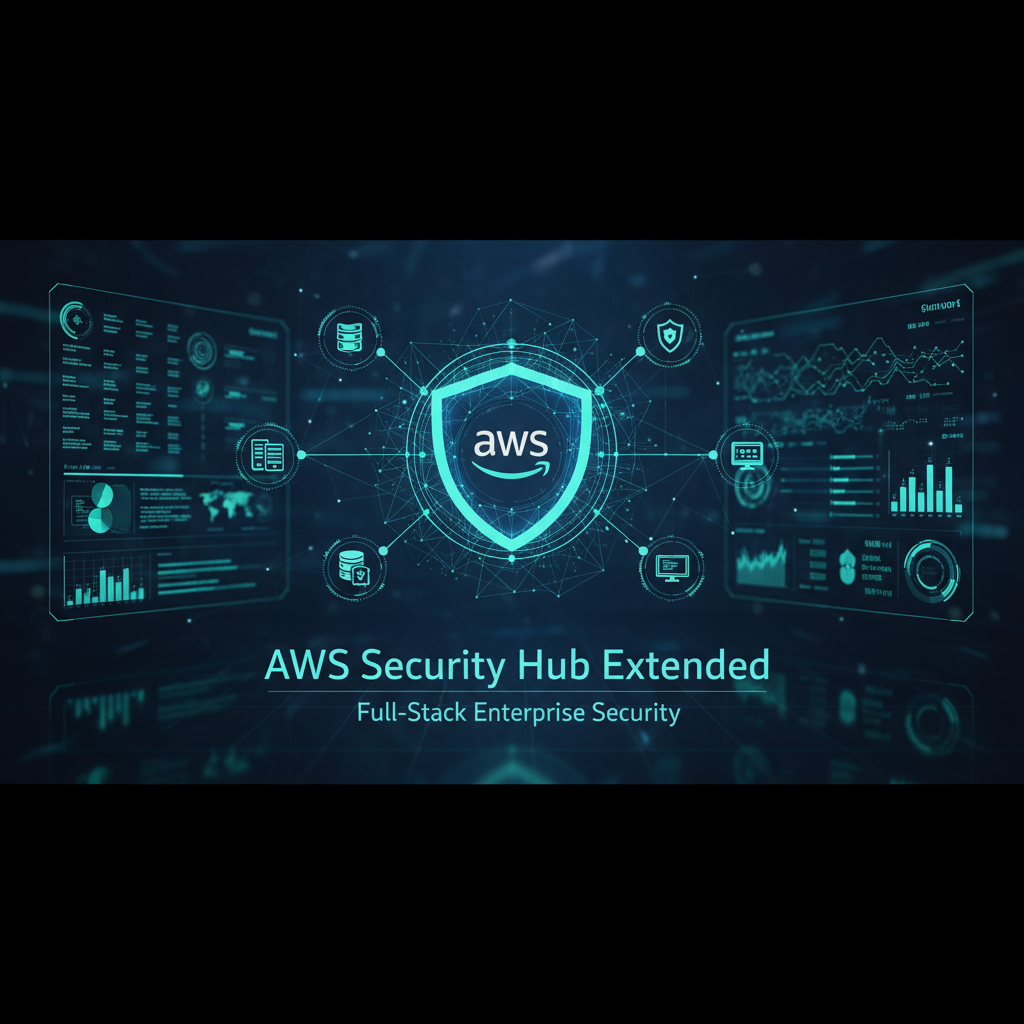
    AWS Security Hub Extended: Unified Cloud Security Solution

    The hum of servers filled the air, a constant white noise in the AWS control room. It was early this morning when the news broke: AWS Security Hub Extended was officially live. A unified, full-stack enterprise security solution, as they put it. The announcement, which came with the usual flurry of press releases, promised a streamlined approach to cloud security, bringing together AWS detection services and curated partner solutions.

    This isn’t just a reshuffling of existing tools, though. Security Hub Extended aims to provide a single pane of glass for managing security across an enterprise’s entire cloud footprint. That’s the promise, at least. And in a world where cybersecurity threats are constantly evolving, that kind of simplification is a welcome prospect.

    Earlier today, I spoke with an analyst at Forrester, who mentioned that the market is currently seeing a 20% year-over-year increase in demand for integrated security solutions. “Companies are tired of stitching together disparate tools,” she said. “They want a cohesive security posture, and AWS is clearly trying to capitalize on that need.”

    The launch includes integrations with a range of security partners, which, according to AWS, have been carefully vetted. The aim, as I understand it, is to offer a more seamless experience than the patchwork approach that many organizations have been forced to adopt. This means fewer consoles to manage, and, hopefully, quicker response times to security incidents.

    One of the key features is the ability to centralize security findings. Security Hub Extended aggregates alerts from various sources, including AWS services like Amazon GuardDuty and Amazon Inspector, as well as partner solutions. This consolidated view should make it easier for security teams to identify and prioritize threats.

    But the devil, as always, is in the details. How well will these partner solutions integrate? Will the single pane of glass actually simplify things, or will it create another layer of complexity? These are questions that remain to be answered, of course. For now, the focus is on the general availability of the service and its potential to reshape the landscape of cloud security.

    The market seems optimistic. At least, that’s what the initial reactions suggest. And for once, it’s not just hype.

  • Shadow AI Agents: The Hidden Threat to Enterprise Security

    The Rise of Shadow AI: A New Frontier of Risk

    Artificial intelligence is rapidly transforming our world, but this technological leap forward comes with unseen dangers. Emerging threats, known as “Shadow AI,” are silently multiplying and posing a significant risk to businesses globally. A recent webinar hosted by The Hacker News, “Shadow AI Agents Exposed,” delved into this critical issue, offering invaluable insights for organizations striving to stay ahead of the curve.

    Understanding Shadow AI and its Proliferation

    The market for AI agents is booming, fueled by their ease of creation and deployment. These tools facilitate innovation and automation, but this same ease opens the door to “Shadow AI.” These are AI agents operating outside the purview of security teams, often unauthorized and unmanaged. As the webinar highlighted, Shadow AI agents are multiplying faster than many organizations can effectively manage. This rapid expansion makes it challenging to track and control AI activities, creating significant vulnerabilities.

    The Risks: Data Breaches and Beyond

    The core problem with Shadow AI agents is the inherent risk they introduce. These agents can impersonate trusted users, potentially leading to data breaches and unauthorized access to sensitive information. Consider the possibility of a Shadow AI agent, disguised as a legitimate employee, accessing and exfiltrating confidential customer data. Furthermore, these agents may utilize non-human identities (NHIs), further complicating detection and control efforts. Data leakage is another significant concern, as agents may inadvertently or intentionally transfer sensitive data across previously secure boundaries. Experts at the “Shadow AI Agents Exposed” webinar emphasized that these are not futuristic threats; they are actively occurring in various enterprises right now. The potential for “infinite risk” requires immediate and decisive action.

    Expert Insights and the Path Forward

    The Hacker News webinar featured experts who dissected the most pressing risks in AI operations. They discussed what constitutes an AI agent, how NHIs fuel Shadow AI, and detailed detection methods like IP tracing and code-level analysis. Strategies for effective governance were also discussed. The consensus was clear: organizations must take proactive steps to enhance visibility and control. The experts stressed the importance of implementing robust security measures, including comprehensive monitoring, identity management, and strict access controls, to mitigate these risks.

    The Strategic Imperative

    The key takeaway is this: the rise of Shadow AI presents a clear and present danger. Data breaches, reputational damage, and regulatory non-compliance are just some of the potential consequences. Businesses that fail to address this threat risk losing control of their data and operations. The solution is not to halt AI adoption, but to manage it proactively. Organizations must embrace a strategy that includes continuous monitoring, comprehensive identity management, and strict access controls. Prepare yourself. If you don’t act now, Shadow AI could outpace your defenses, leaving your organization exposed.