Tag: Financial Research

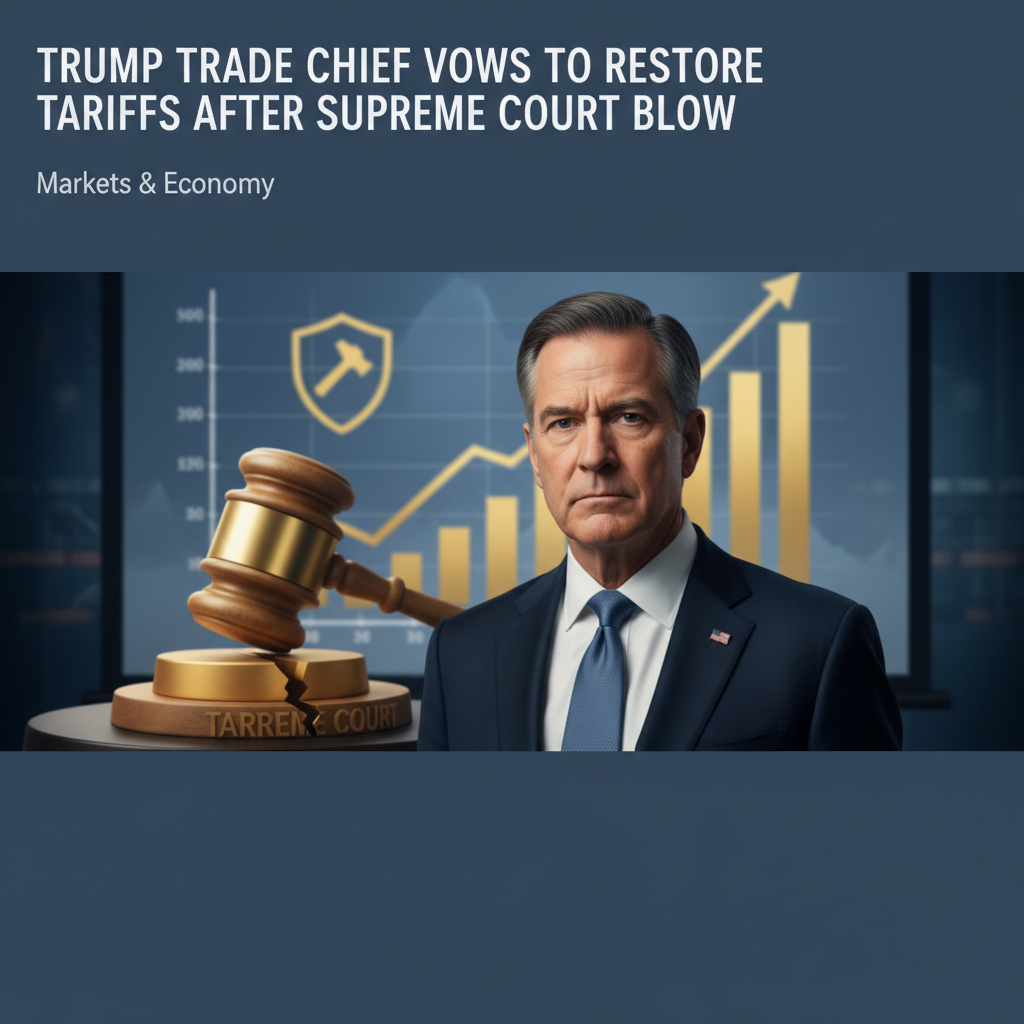
  • Supreme Court Limits Trump’s Tariff Power

    The Supreme Court issued a significant ruling on Friday, curtailing Donald Trump’s authority on trade. The decision, concerning cases challenging Trump’s use of tariffs, specifically addressed the scope of presidential power under the International Emergency Economic Powers Act.

    This ruling is a notable development for several reasons. Primarily, it directly impacts the ability of future presidents to unilaterally impose tariffs. The cases before the court questioned the legality of Trump’s tariff actions. The court’s decision will likely influence how future administrations approach trade policy, potentially requiring greater congressional oversight or limiting the scope of executive action.

    The Supreme Court’s decision arrives amidst an ongoing debate about the balance of power between the executive and legislative branches, particularly in matters of trade and international relations. The implications extend beyond just tariffs. The ruling could influence other areas where the president claims broad authority, requiring a reevaluation of the checks and balances within the government. This ruling underscores the importance of understanding the legal boundaries of presidential power.

    The core of the legal debate centers on the interpretation of the International Emergency Economic Powers Act. The act grants the president certain powers during a declared national emergency, but the specifics of how these powers can be used have been subject to legal challenges. The Supreme Court clarified the limits of this power in this landmark tariff case.

    The impact of this decision will likely be felt across the economy. Changes to tariff structures can affect international trade flows, potentially leading to adjustments in import and export prices, and influencing the competitiveness of various industries. Businesses and investors will undoubtedly be watching to understand the long-term effects on trade relationships and economic stability.

    In conclusion, the Supreme Court’s ruling is a significant event with broad implications for trade policy and the balance of power. The decision will require careful consideration by policymakers, businesses, and anyone interested in the future of the U.S. economy. The long-term effects of this ruling are still unfolding, but it is clear that Trump’s trade agenda has suffered a notable setback.

  • Miami to Get $3B Economic Boost from Sports Events

    Miami to Get $3B Economic Boost from Sports Events

    Miami is gearing up for a significant economic windfall, with a projected $3 billion boost expected from its robust lineup of sporting events, positioning the city as a top-tier sports tourism destination. This surge is fueled by a series of high-profile events, including the 2026 College Football Playoff National Championship, which could see former President Donald Trump in attendance.

    The strategic positioning of Miami and South Florida to host major sporting events highlights a concerted effort to leverage sports for economic growth. The influx of tourists and media attention associated with these events is expected to generate substantial revenue for local businesses, create jobs, and enhance the city’s global profile. Miami’s appeal as a destination is further amplified by its favorable climate, vibrant culture, and extensive infrastructure, making it an attractive location for both athletes and spectators.

    The economic impact stems from various sources, including ticket sales, hotel bookings, dining, transportation, and retail spending. The events also serve as a catalyst for infrastructure development and urban revitalization, as the city invests in upgrades to accommodate the influx of visitors. The convergence of these factors is expected to create a virtuous cycle of economic activity, benefiting a wide range of stakeholders.

    The anticipation surrounding the 2026 College Football Playoff National Championship, and the potential presence of figures like Trump, further elevates the event’s profile, drawing national and international attention. This level of exposure is invaluable for Miami, as it solidifies its reputation as a leading destination for major sporting events. The success of these events is a testament to the city’s ability to attract and manage large-scale gatherings, reinforcing its position in the global sports arena.

    In conclusion, Miami’s strategic focus on sports tourism is poised to deliver significant economic benefits. The city’s ability to attract major events, coupled with its inherent appeal as a destination, positions it for sustained growth in the years to come. The projected $3 billion economic boost underscores the transformative potential of sports to drive economic development and enhance Miami’s standing on the world stage.

  • Prediction Markets: Slim Odds for Trump Tariff Win

    The Supreme Court, it seems, is the place to watch these days. Or, at least, the place to *try* to watch. The legal arguments over Trump-era tariffs have drawn the attention of more than just the usual crowd of lawyers and policy wonks.

    Prediction markets, where people put real money on the line to forecast future events, are also watching closely. And the numbers, as of today, are not looking good for the former president.

    Platforms like Kalshi and Polymarket are showing that traders are betting heavily against the Supreme Court backing Trump’s tariffs. The odds? A mere 24% chance of a win, as of this afternoon. That’s a pretty stark number, especially when you consider the stakes.

    Earlier this week, oral arguments took place, and the markets reacted quickly. It’s a bit like watching a live sporting event, except the players are lawyers, and the game is the future of trade policy.

    One trader on Polymarket, who preferred to remain anonymous, said they were “surprised by the initial reaction.” They added, “I thought the court might lean differently, but the market seems pretty clear.”

    The tariffs in question involve billions of dollars in imported goods. The case hinges on whether the president overstepped his authority when imposing these tariffs. The legal arguments are complex, involving interpretations of trade law and executive power, but the market’s reaction is clear.

    This isn’t the first time prediction markets have offered a glimpse into the likely outcomes of political events. During the 2020 election, they offered a surprisingly accurate view of the race, even as traditional polls wavered. This time, the numbers are a bit more focused: the Supreme Court and its potential decision.

    The Supreme Court, of course, has the final say. No one knows for sure, and that’s the point, isn’t it? The markets are just a reflection of the collective bets, the best guesses, of everyone involved.

    And it’s not just about Trump, of course. It’s about the future of trade, the balance of power, and the way the world works. Or, at least, the way it seems to be working, right now.

  • Deutsche Bank’s AI Revolution: DB Lumina Reshapes Financial Research

    Deutsche Bank’s AI Transformation: Revolutionizing Financial Research with DB Lumina

    The financial world is undergoing a profound transformation, driven by an explosion of data and the need for rapid, insightful decision-making. Deutsche Bank is at the forefront of this shift, investing heavily in artificial intelligence to gain a competitive edge. At the heart of this strategy is DB Lumina, a cutting-edge research agent designed to reshape how the bank analyzes data and delivers critical insights. This isn’t merely about adopting new technology; it’s a strategic imperative with significant implications for Deutsche Bank and the broader financial landscape.

    Navigating the Data Deluge: How AI Provides a Competitive Advantage

    The financial industry is grappling with an unprecedented data deluge. Analyzing vast datasets quickly and accurately is paramount. Traditional research methods often struggle to keep pace with the sheer volume and complexity of modern financial information, from market trends and economic indicators to company performance and risk assessments. As a result, analysts may spend more time collecting and organizing data than interpreting it.

    This is where AI-powered tools like DB Lumina become essential. Lumina analyzes enormous datasets, identifying patterns, correlations, and anomalies that might be missed by human analysts. For example, DB Lumina can analyze news articles, social media feeds, and regulatory filings in real-time, flagging potential risks or opportunities. By automating these time-consuming tasks, DB Lumina frees up analysts to focus on strategic thinking, client engagement, and higher-value activities.

    The competitive advantage is multi-faceted. DB Lumina enables more efficient research, leading to faster insights and quicker responses to market changes. This can mean better investment decisions, more accurate risk assessments, and enhanced client service. According to a Deutsche Bank spokesperson, “DB Lumina allows us to turn raw data into actionable intelligence, empowering our analysts to make smarter, more informed decisions.” This ultimately translates to a more robust and profitable business. The YouTube video titled “Deutsche Bank uses Gemini to revolutionize financial services” highlights some of these benefits.

    Inside DB Lumina: Efficiency, Accuracy, and Client Focus

    Developed using Google Cloud’s Gemini and Vertex AI, DB Lumina is designed to automate time-consuming tasks and streamline workflows, boosting efficiency. This enables analysts to concentrate on higher-value activities like strategic thinking and client engagement. DB Lumina offers increased accuracy and delivers improved insights to stakeholders, contributing to more informed decision-making. The platform also prioritizes client data privacy, adhering to strict security and compliance protocols, a crucial consideration in today’s regulatory environment.

    Consider this example: DB Lumina might identify a previously unnoticed correlation between a specific geopolitical event and the performance of a particular sector. By analyzing vast quantities of data, it can offer insights that would take human analysts far longer to uncover. This level of detailed, accurate information allows the bank to make smarter trades and more informed investment decisions.

    The Future is AI-Powered Financial Research

    The integration of AI in finance is not merely a trend; it’s the future. As AI technology continues to evolve, we can expect even more sophisticated tools to emerge, capable of predicting market trends with greater accuracy and providing deeper insights into complex financial instruments. Deutsche Bank’s implementation of DB Lumina underscores its commitment to this future, positioning the bank to adapt and thrive in the evolving landscape.

    To maximize the benefits of AI-powered research, Deutsche Bank should focus on several key areas: investing in and retaining AI talent, maintaining a robust and scalable data infrastructure, prioritizing data privacy and security, and actively seeking user feedback to continuously refine and improve the platform. It’s an ongoing process, but the rewards – enhanced efficiency, deeper insights, and a stronger competitive position – are well worth the effort. By embracing AI, Deutsche Bank is not just improving its internal operations; it’s redefining the future of financial research.