Tag: fundraising

  • Harvey’s Valuation Jumps to $11B Amidst Rapid Growth

    Harvey’s Valuation Jumps to $11B Amidst Rapid Growth

    Harvey’s Valuation Soars: From $8B to $11B in Months Amidst Rapid Growth

    In the fast-paced world of tech startups, valuations can shift dramatically, and quickly. One company making waves in the legal tech space, Harvey, is reportedly on the cusp of another significant valuation increase. The company, which provides AI-powered solutions for legal professionals, is allegedly seeking to raise funds at an impressive $11 billion valuation. This news comes just months after Harvey achieved an $8 billion valuation, underscoring the company’s rapid growth and the strong investor interest in its innovative approach.

    A Rapid Ascent Fueled by Impressive ARR

    The reported valuation jump is particularly noteworthy given the relatively short timeframe involved. The speed at which Harvey is increasing its valuation speaks volumes about its performance and potential. The startup’s impressive growth is partly reflected in its Annual Recurring Revenue (ARR). In December, Harvey announced $190 million in ARR, a figure that undoubtedly played a key role in attracting further investment and driving up its valuation. This financial performance likely provided the confidence needed to seek a higher valuation in the subsequent funding round.

    The rise in Harvey’s valuation is also a reflection of the broader trends in the tech industry. Investors are increasingly focused on companies that can demonstrate strong growth, innovative technology, and a clear path to profitability. Harvey’s focus on leveraging artificial intelligence to transform the legal sector positions it favorably within these trends. The company’s ability to provide efficient and effective solutions to legal professionals makes it an attractive investment prospect.

    What Drives Harvey’s Valuation Growth?

    Several factors contribute to Harvey’s increasing valuation. The company’s innovative use of AI to automate and improve legal workflows is a major draw. By streamlining tedious tasks and providing valuable insights, Harvey’s platform helps legal professionals increase productivity and make better decisions. Moreover, the legal tech market is experiencing significant growth, and Harvey is well-positioned to capitalize on this trend. As more law firms and legal departments adopt technology to enhance their operations, Harvey is likely to see continued demand for its services.

    The company’s strong financial performance is another critical factor. The $190 million in ARR announced in December is a clear indication of Harvey’s revenue-generating capabilities. Investors always pay close attention to financial metrics, and Harvey’s impressive ARR is a strong signal of its long-term viability and growth potential.

    // Image suggestion: A graphic showing the valuation increase, with a chart or visual representation of Harvey’s growth. Alt text: Harvey valuation growth chart.

    The Future for Harvey

    The reported fundraising efforts and valuation increase are a testament to Harvey’s success and potential. As the company continues to innovate and expand its offerings, it is well-positioned for continued growth. The legal tech market is expected to grow significantly in the coming years, and Harvey is poised to be a major player in this space. The company’s ability to attract investment at an $11 billion valuation is a significant accomplishment, and it will be interesting to see how Harvey evolves in the coming months and years.

    In a world where technological advancements are constantly reshaping industries, Harvey’s trajectory serves as an example of how innovation, strong financial performance, and a clear vision can lead to remarkable success. The company’s story is a compelling example of the dynamism and potential within the tech startup landscape.


  • Harvey’s Valuation Jumps to $11B: Tech Startup Soars

    Harvey’s Valuation Jumps to $11B: Tech Startup Soars

    Harvey’s Valuation Soars: From $8B to $11B in Months

    In the fast-paced world of tech startups, valuations can shift dramatically, and quickly. One company making waves is Harvey, which is reportedly seeking a new funding round that would place its valuation at an impressive $11 billion. This news comes just months after Harvey achieved an $8 billion valuation, signaling remarkable growth and investor confidence. The buzz surrounding Harvey highlights the dynamic nature of the tech investment landscape and the potential for rapid expansion in the right conditions.

    Rapid Valuation Growth: A Sign of Success

    The speed at which Harvey’s valuation has increased is a key indicator of its success. This rapid rise suggests strong performance and future prospects, likely driven by factors such as market demand, innovative products, and efficient execution. The fact that Harvey is raising funds again, so soon after its previous valuation, underscores the company’s ambitious growth trajectory and its ability to attract substantial investment. This also reflects a positive sentiment among investors about the company’s long-term potential.

    Key Drivers Behind Harvey’s Ascent

    Several factors likely contribute to Harvey’s impressive valuation growth. One critical element is its reported $190 million in Annual Recurring Revenue (ARR) as of December. ARR is a crucial metric for SaaS (Software as a Service) businesses, reflecting the stability and predictability of revenue streams. A high and growing ARR often translates to higher valuations because it indicates a sustainable business model and strong customer retention.

    The company’s innovative approach and the ability to capture market share may also be playing a significant role. The tech sector is always looking for the next big thing, and Harvey seems to have captured the attention of investors. The specifics of Harvey’s product or service, though not detailed in the provided data, are clearly resonating with the market, leading to increased interest and investment.

    Fundraising and Investment Strategy

    The decision to raise additional funds, especially at a higher valuation, is a strategic move that can benefit Harvey in several ways. The new capital can be used to fuel further expansion, accelerate product development, and strengthen its market position. The increased valuation also makes Harvey more attractive to potential investors and partners. For Harvey, the higher valuation is not just a number; it’s a tool that can be leveraged to achieve its strategic objectives and maintain its competitive edge.

    The Broader Tech and Finance Context

    Harvey’s story is a microcosm of the broader trends in the tech and finance sectors. The willingness of investors to pour capital into promising startups, even during periods of economic uncertainty, demonstrates the continued belief in the power of innovation and disruption. This trend is particularly evident in sectors with high growth potential, where companies can quickly scale their operations and capture significant market share.

    The increasing valuations of companies like Harvey also have implications for the overall investment landscape. They can lead to more opportunities for venture capitalists and other investors, and create excitement in the market. As Harvey navigates this new round of fundraising, it will be interesting to watch how it continues to evolve and transform the industry.

    Conclusion

    Harvey’s remarkable journey from an $8 billion to an $11 billion valuation in a matter of months underscores the dynamic nature of the tech industry. With a strong ARR, innovative products, and strategic fundraising efforts, Harvey is well-positioned for continued success. As the company continues to grow, it will be fascinating to follow its progress and see how it shapes the future of the market.

  • Bucket Robotics at CES: Startup Survival & Success

    Bucket Robotics at CES: Startup Survival & Success

    Bucket Robotics Navigates Its First CES: A Startup’s Survival Story

    The Consumer Electronics Show (CES) is a crucible for startups. It’s a place where nascent technologies are unveiled, deals are made (or broken), and the future of innovation is on full display. For Bucket Robotics, a Y Combinator-backed startup, their inaugural CES experience marked a pivotal moment. The focus now is on building the business, securing funding, and forming strategic commercial partnerships.

    The CES Gauntlet

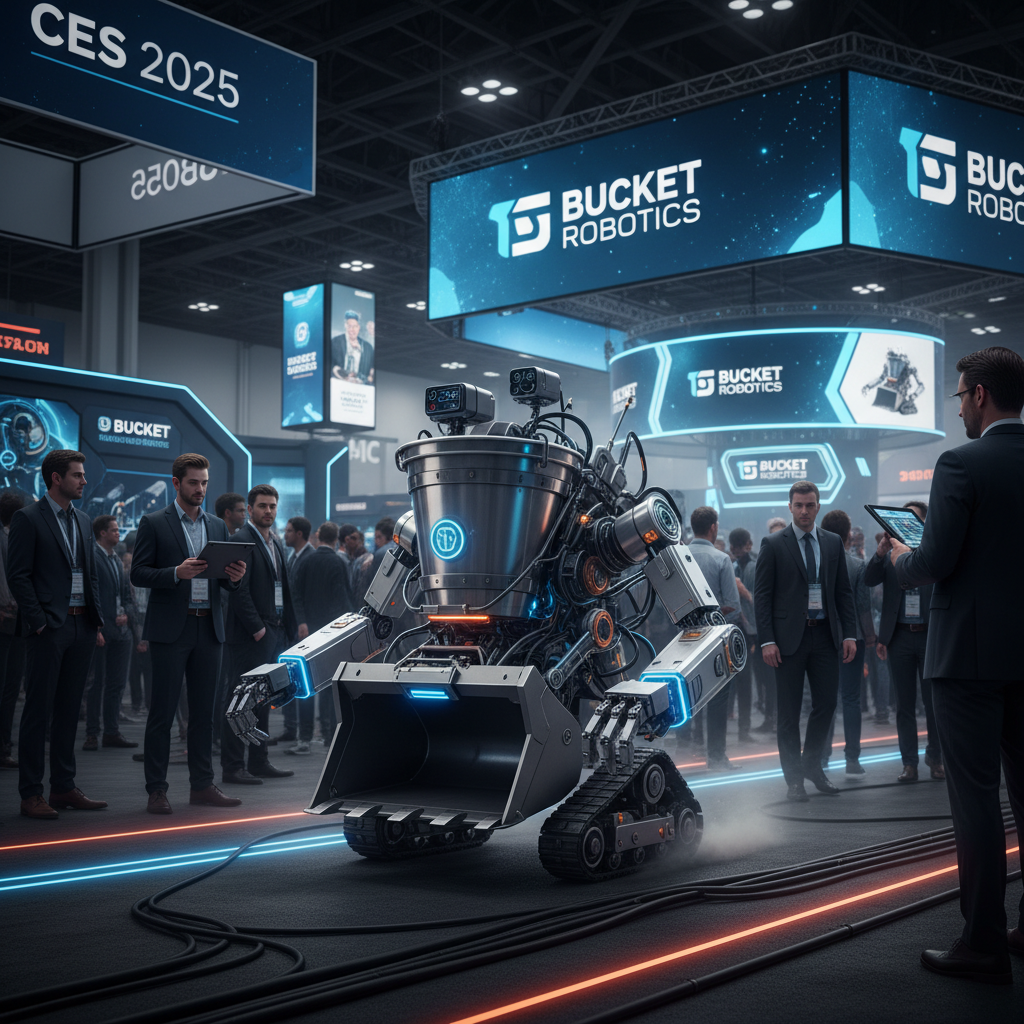
    CES, held in various locations, is a whirlwind of activity. For Bucket Robotics, the event presented a unique set of challenges. The company, like many startups, had to balance showcasing its technology with the practicalities of securing investment and generating leads. The pressure to make a strong impression is immense. (Image: A busy CES exhibit hall with many attendees.)

    The primary ‘what’ for Bucket Robotics at CES was to present its core technology and business model to potential investors, partners, and customers. The ‘when’ was the first CES the startup participated in, and the goal was clear: to move beyond the initial product demonstration and establish a foundation for sustained growth. The ‘why’ behind this push was to ultimately build the business, secure essential fundraising, and finalize commercial deals that would propel the company forward.

    From Showcase to Strategy

    The initial excitement of CES can quickly give way to the realities of the business world. Bucket Robotics, like many startups, likely faced the challenge of translating the buzz from the show floor into tangible business outcomes. This shift is a critical one: moving from the ‘what’ of a product demonstration to the ‘how’ of building a sustainable business. The ‘how’ involves everything from refining the business model and securing funding to building out the sales and marketing infrastructure.

    The Fundraising Landscape

    Fundraising is a constant reality for many startups. CES provided Bucket Robotics with an opportunity to connect with potential investors. The ‘why’ of securing funding is simple: it’s the fuel that drives growth. The ability to articulate a clear vision, demonstrate a market need, and present a compelling financial model is paramount. (Image: A graphic illustrating the funding stages of a startup.)

    Forging Commercial Deals

    Beyond fundraising, CES is a fertile ground for forming commercial partnerships. These deals can range from strategic alliances with established companies to distribution agreements that open up new markets. Bucket Robotics’ success in this area would depend on its ability to identify the right partners, negotiate favorable terms, and demonstrate the value proposition of its technology. The ‘what’ in this case is the commercial deals themselves, and the ‘why’ is to secure market access and generate revenue.

    The Road Ahead

    The journey for Bucket Robotics is just beginning. The insights gained at their first CES, combined with a focused strategy, are essential to navigating the competitive landscape. The ‘what’ in the future will be a continued focus on innovation, customer acquisition, and building a strong brand. The ‘how’ will involve a combination of strategic partnerships, product development, and a relentless focus on execution.

    The experience serves as a reminder that the path to success for a startup is rarely linear. It’s a journey filled with challenges, setbacks, and moments of triumph. For Bucket Robotics, their first CES was a valuable learning experience, setting the stage for future growth and innovation. As they move forward, the company’s ability to adapt, execute, and build strong relationships will be critical to their long-term success. (Image: The Bucket Robotics team celebrating a successful milestone.)

    Source: TechCrunch

  • Bucket Robotics at CES: Startup Survival & Growth

    Bucket Robotics at CES: Startup Survival & Growth

    Bucket Robotics Navigates Its First CES: A Startup’s Survival Guide

    For many startups, the Consumer Electronics Show (CES) is a baptism by fire. The bright lights, the intense competition, and the sheer scale of the event can overwhelm even the most prepared companies. Bucket Robotics, a Y Combinator-backed startup, recently experienced this firsthand. According to a TechCrunch article, their initial foray into CES was a crucial learning experience, setting the stage for their future growth.

    The CES Challenge: More Than Just a Trade Show

    CES isn’t merely a trade show; it’s a crucible. It’s where companies unveil their latest innovations, network with potential investors and partners, and gauge the market’s reaction to their products. For Bucket Robotics, the what was showcasing their technology, the when was at their first CES, and the who was the Bucket Robotics team. The why of attending CES was multifaceted: to build their business, secure funding, and forge commercial deals. This makes CES a critical juncture for any startup hoping to make a splash in a competitive market.

    The TechCrunch article highlights the intense pressure startups face at CES. It’s a high-stakes environment where companies must stand out from the crowd. Bucket Robotics, like many others, had to navigate this complex landscape, balancing the need to attract attention with the practicalities of managing resources and expectations.

    Lessons Learned: Navigating the Startup Journey

    The experience at CES provided valuable insights for Bucket Robotics. The what included the challenges of presenting their technology, managing booth traffic, and effectively communicating their value proposition. The how was through the careful planning of their presence, the training of their staff, and the refinement of their messaging. The why was to improve their business, attract investors, and secure deals.

    The article suggests that Bucket Robotics is now focused on the next phase of their journey. The what includes building the business, seeking funding, and closing commercial deals. The why is to ensure the startup’s long-term success. The when is now, following the CES experience. The who is Bucket Robotics, the startup determined to make its mark.

    Looking Ahead: Building and Scaling

    Bucket Robotics’ participation in CES was more than just a marketing exercise; it was a crucial step in their business development. The what involved the opportunity to showcase their technology and to connect with potential investors and partners. The why was to build the business, secure funding, and strike commercial deals. This is the path many startups follow after the initial buzz of a major event like CES.

    The focus has shifted towards long-term sustainability. The why is the need to develop the product, find investors, and finalize business agreements. The who is Bucket Robotics, now focused on these key areas. The how will involve strategic planning, effective execution, and the ability to adapt to the ever-changing market. The when is now, in the wake of their first CES, as they strive to turn their initial exposure into tangible results.

    Conclusion: The Road Ahead for Bucket Robotics

    Bucket Robotics’ journey through its first CES offers valuable lessons for other startups. The what was the experience of navigating the challenges of a major industry event. The why was to gain exposure, build relationships, and lay the foundation for future success. The who is Bucket Robotics, a YC-backed startup that is now focused on building its business, seeking funding, and closing commercial deals.

    As the article indicates, the company’s next steps will be critical. The what is the execution of their business plan. The why is to achieve sustainable growth and market leadership. With the lessons learned from CES, Bucket Robotics is poised to navigate the road ahead with greater clarity and purpose.

    Source: TechCrunch

  • Planning Ahead: How Founders Can Prep for Late-Stage Funding

    Planning Ahead: How Founders Can Prep for Late-Stage Funding

    It’s funny, isn’t it? How much of the startup game is about looking ahead. The article I read today, from TechCrunch, really drove that home. It’s all about late-stage fundraises, and how founders can, and really should, start preparing from day one. Seems obvious, but it’s easy to get caught up in the weeds, you know?

    The core idea? Start building those relationships *now*. I mean, if you’re a startup, you probably have a million things on your plate. But the piece really emphasizes that forging connections with late-stage investors early on is crucial. It’s like planting seeds in a garden. You don’t wait until the harvest to start, right?

    Notably, the piece doesn’t just say ‘network.’ It’s more nuanced. It’s about understanding what late-stage investors look for. They’re not just throwing money around; they want to see a clear path to returns. So, it’s not just about knowing names; it’s about understanding their investment theses, their portfolios, what they value. That takes time, it takes research, and it takes… well, it takes the kind of foresight that separates the good founders from the great.

    And it makes sense when you think about it. Late-stage investors are, by definition, looking at more mature companies. They want to see traction, revenue, a solid business model. They’re not taking big risks, so your groundwork has to be rock solid. This means having a clear narrative, a compelling story that resonates with *their* priorities.

    Earlier this week, I was talking to a friend who is a founder. He’s in the thick of it – early stage, trying to get off the ground. He was so focused on the immediate, on getting that initial seed round. And, you know, that’s understandable. But the TechCrunch article kind of nudged me to think: what if he also started, in a small way, to build those relationships for the future? Not in a pushy, desperate way, but in a smart, strategic way.

    It’s not just about the money, either. The article kind of implies that the right investors bring more than just capital. They bring experience, connections of their own, and a deeper understanding of the market. They can help you navigate the tricky waters of scaling up. You get that, and you’re set.

    Still. It’s a balancing act, right? You’re building a company, dealing with the daily grind, and then you have to think about the *future* future. But, in a way, it’s also about changing your mindset. It’s about seeing the whole field, not just the immediate patch in front of you.

    The article also touched on the idea of transparency. Late-stage investors want to see the whole picture. They want to understand the risks, the challenges, the potential roadblocks. So, it’s about being upfront, honest, and building trust. You’re not just selling a dream; you’re building a partnership.

    And, you know, I think that’s the real takeaway. It’s not just about getting the funding. It’s about building a solid foundation, a sustainable business, and a relationship built on mutual respect. It’s a long game, and the best players are always thinking a few steps ahead.

  • Essence VC’s Tim Chen: Sales & Traction Strategies for Startups

    Essence VC’s Tim Chen: Rethinking Sales & Traction for Startups

    In the dynamic world of startups, the quest for sales and traction is often a make-or-break endeavor. But what if the conventional wisdom is flawed? Tim Chen, the solo investor behind Essence VC, has a unique perspective, forged from his own experiences in the startup ecosystem. Chen’s journey, which includes a small startup exit and a period of being turned down by venture capital firms, led him to angel investing and eventually, to raising his own successful fund. Now, with his fourth fund recently closed at $41 million, Chen’s insights offer valuable lessons for any startup navigating the challenging landscape of growth.

    The Essence of Chen’s Approach

    Chen’s unconventional path to venture capital has given him a distinct advantage. Having been on both sides of the table – as a founder and as an investor – he understands the nuances of the startup world. His approach isn’t just about financial investment; it’s about a deep understanding of the technical aspects of a business. This technical acumen, he believes, is a key differentiator. Rather than solely relying on traditional metrics, Chen digs deep, analyzing the underlying mechanics of a startup’s sales and traction strategies. This allows him to identify potential pitfalls and opportunities that others might miss.

    Chen’s success with Essence VC underscores the importance of a strategic, informed approach to investing. His ability to secure a $41 million fund without actively seeking it speaks volumes about the value he brings to the table. This success is not just about financial backing; it’s about a commitment to helping startups refine their strategies, particularly in the critical areas of sales and traction. For startups, this means more than just chasing numbers; it means understanding the ‘why’ behind their growth, and the ‘how’ of achieving it.

    Rethinking Sales and Traction

    The core of Chen’s message revolves around a critical reevaluation of how startups pursue sales and traction. This involves a shift from superficial metrics to a more profound understanding of the business model and its underlying drivers. Chen’s experience suggests that startups should prioritize a deep dive into the technical aspects of their operations. This includes understanding the technology, the market, and the customer base. By doing so, startups can build a more resilient and sustainable growth trajectory.

    Key Takeaways for Startups

    • Focus on Fundamentals: Chen emphasizes the importance of a solid understanding of the core business model. This means knowing the technology inside and out, understanding the market dynamics, and having a clear view of the target customer.
    • Strategic Approach: A strategic approach to sales and traction is essential. It’s not just about acquiring customers; it’s about acquiring the right customers and building lasting relationships.
    • Deep Technical Understanding: Chen’s emphasis on technical understanding is a crucial differentiator. Startups should ensure they have the in-house expertise to understand the intricacies of their product and market.

    The insights of Tim Chen and Essence VC offer a roadmap for startups seeking to navigate the complex world of sales and traction. By focusing on a deep understanding of their business, a strategic approach, and a strong technical foundation, startups can improve their chances of success. Chen’s journey from a rejected founder to a successful VC is a testament to the power of perseverance, adaptability, and a willingness to rethink conventional wisdom.

    The Essence VC Difference

    Essence VC, under the guidance of Tim Chen, is not just another venture capital firm. It’s a partner that brings a wealth of experience and a unique perspective to the table. Chen’s ability to see beyond the surface, to understand the technical underpinnings of a business, is what sets him apart. This approach allows him to identify promising startups and provide the kind of support that can help them thrive. For startups, this means more than just funding; it means having a mentor who understands the challenges and can provide guidance based on real-world experience.

    In conclusion, Tim Chen’s journey and his approach at Essence VC offer valuable lessons for startups. Rethinking sales and traction, focusing on fundamentals, and embracing a deep technical understanding are key to building a successful and sustainable business. As the startup landscape continues to evolve, these insights will be more relevant than ever.