
CloudTalk

Tag: Google

  • InfiniMind: AI Transforms Video Archives into Business Intelligence

    InfiniMind: AI Transforms Video Archives into Business Intelligence

    The hum of servers filled the air, a constant white noise in the InfiniMind office. It was early February, 2026, and the team, a mix of former Google Japan engineers and fresh hires, were huddled around monitors, reviewing the latest thermal tests. They were pushing the limits, trying to get more processing power out of the new generation of GPUs.

    InfiniMind, founded by ex-Googlers, is tackling a massive problem: the untapped potential of video data. Companies are drowning in video archives, but extracting actionable insights has been a monumental task. The team is building enterprise AI to make those video archives searchable and useful, turning them into a source of business intelligence.

    Earlier that morning, a conference call with a potential client had been punctuated by long silences. The client, a large retail chain, was eager to use InfiniMind’s AI to analyze security footage, customer behavior, and inventory management. But the scale of the video data was daunting, and the client was cautious. They were, understandably, wary of another over-promised AI solution.

    “It’s a tough sell,” one of the engineers, whose name tag read ‘Kenji,’ muttered, adjusting his glasses. “We’re promising a lot.”

    The core of InfiniMind’s solution lies in its ability to process vast amounts of video data using a combination of advanced AI models. These models, trained on custom datasets, can identify objects, track movements, and understand context within the video. The goal is to provide businesses with a powerful search tool that allows them to quickly find specific events or patterns within their video archives. It is like having a super-powered search engine, but for video.

    As per reports, the market for video analytics is expected to reach $20 billion by 2028, according to a recent report by Gartner. This growth is driven by the increasing availability of video data and the growing demand for AI-powered solutions that can extract valuable insights from this data. The founders are betting that their experience at Google, combined with a deep understanding of the Japanese market, will give them a competitive edge. They are focusing on the enterprise market, targeting companies with large video archives and a need for advanced analytics.

    Meanwhile, the team was also navigating the complexities of the supply chain. The demand for advanced GPUs, essential for running their AI models, was intense. They were competing with companies all over the world. Export controls from the US and the domestic procurement policies in China added another layer of complexity. SMIC, the leading Chinese chip manufacturer, was still a few generations behind TSMC in terms of cutting-edge chip production, which added another wrinkle.

    “We’re looking at a 2027 roadmap for the M300 chips,” said a company spokesperson, “but the supply chain is, well, it’s still a work in progress.”

    The pressure was on. The team knew they were building something significant, something that could revolutionize how businesses use video data. It’s a high-stakes game. But they also knew that success hinged on more than just the technology — also on the ability to navigate the complexities of the market, the supply chain, and the ever-evolving landscape of AI.

  • Sam Altman Returns to India for AI Summit in New Delhi

    Sam Altman Returns to India for AI Summit in New Delhi

    Sam Altman’s India Return: AI Leaders to Converge in New Delhi

    In a significant development for the Indian tech landscape, OpenAI CEO Sam Altman is planning a visit to India. This trip marks his first return to the country in nearly a year and comes as New Delhi prepares to host a prominent AI summit. The summit is expected to be a major event, drawing top executives and leaders in the field of artificial intelligence.

    AI Summit in New Delhi: A Gathering of Tech Titans

    The upcoming AI summit in New Delhi is poised to be a pivotal event, bringing together key figures from the global tech industry. According to reports, the summit will see the participation of top executives from leading companies such as Meta, Google, and Anthropic. The convergence of these influential leaders underscores the growing importance of India in the global AI landscape and highlights the country’s potential as a hub for technological innovation.

    The exact agenda of the summit remains undisclosed, but it’s anticipated to cover a broad range of topics related to artificial intelligence. Discussions are expected to revolve around the latest advancements, ethical considerations, and the future of AI. The presence of Sam Altman, along with representatives from Meta, Google, and Anthropic, suggests that the summit will address the most pressing issues and opportunities in the AI sector.

    Sam Altman’s Return and the Significance of the Visit

    Sam Altman’s return to India is particularly noteworthy. His last visit was almost a year ago, making this trip a significant event for the Indian tech ecosystem. His presence at the summit indicates OpenAI’s interest in the Indian market and its commitment to engaging with the country’s growing AI sector. This visit provides an opportunity for Altman to connect with local leaders, understand the challenges and opportunities in the region, and potentially explore new partnerships and collaborations.

    The AI summit in New Delhi is more than just a gathering of tech leaders; it’s a reflection of India’s ambition to be at the forefront of the AI revolution. The event’s focus on the latest AI advancements, ethical considerations, and the future of AI will help shape the direction of the industry.

    The Broader Implications for India’s AI Sector

    The convergence of leading AI figures in New Delhi has broader implications for India’s technology sector. The summit could stimulate investment, foster innovation, and create new opportunities for Indian startups and tech companies. It could also lead to a greater understanding of the challenges and opportunities in the AI sector, helping to shape policies and regulations that support the industry’s growth.

    The planned visit by Sam Altman and the AI summit in New Delhi signal a crucial moment for India’s AI landscape. The event is set to be a catalyst for innovation, collaboration, and growth in the country’s burgeoning AI sector.

    Source: TechCrunch

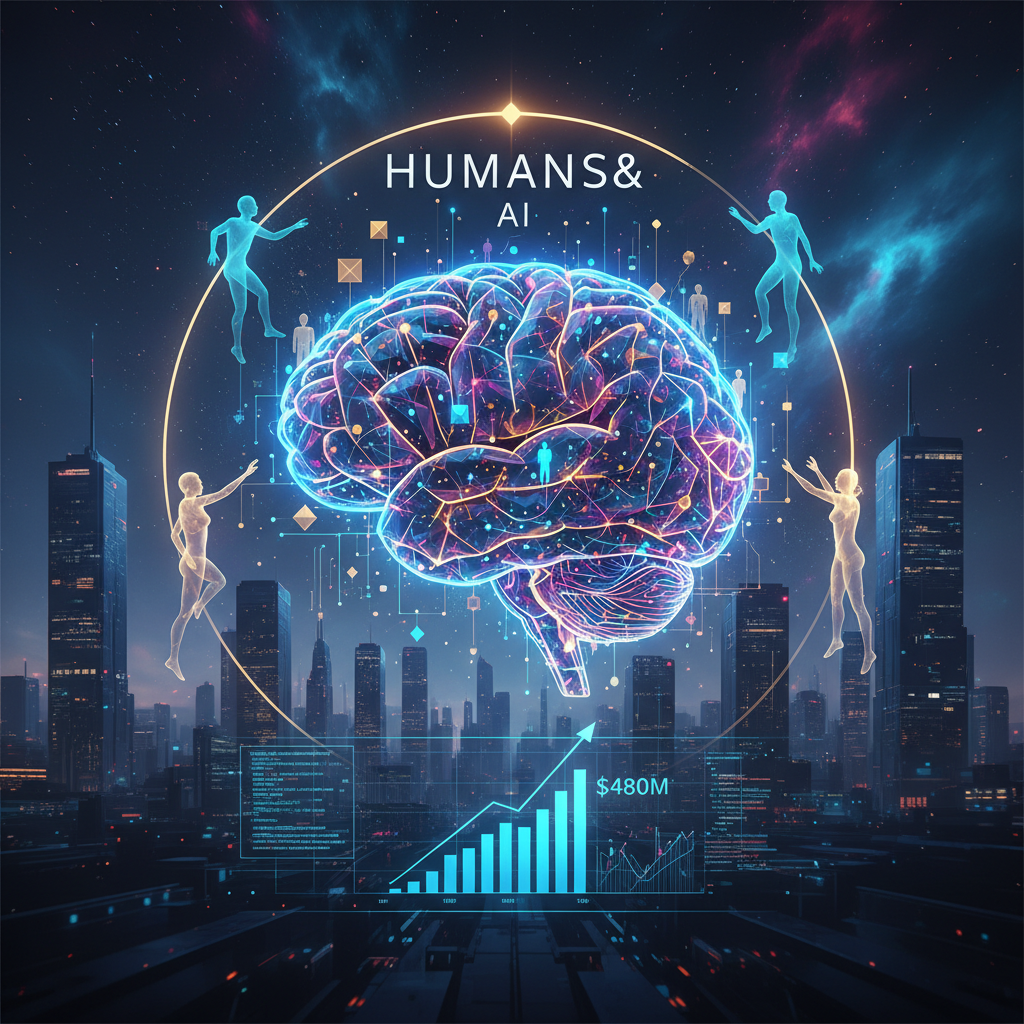
  • Humans& Raises $480M for Human-Centric AI

    Humans& Raises $480M for Human-Centric AI

    Humans& Raises $480M to Build Human-Centric AI

    In a move that signals a significant shift in the AI landscape, Humans&, a startup with a compelling vision, has announced a substantial $480 million seed round. The company, founded by a team of industry veterans from Anthropic, xAI, and Google, is setting out to redefine the role of AI, focusing on how it can empower individuals rather than simply automating tasks. This approach is reflected in their core philosophy: AI should augment human capabilities, not replace them.

    A New Approach to Artificial Intelligence

    The core tenet of Humans& is a human-centric approach to AI development. This means that the technology will be designed with a focus on enhancing human potential, creativity, and decision-making. The funding will be used to further develop this vision and bring it to fruition. This is a crucial distinction from the prevailing narrative that often focuses solely on automation and efficiency.

    The impressive seed round, which values the company at $4.48 billion, speaks volumes about the confidence investors have in this approach. It also highlights the growing recognition of the need for AI that aligns with human values and goals. The fact that the founding team hails from leading AI companies such as Anthropic, xAI, and Google adds significant weight to the project, bringing a wealth of experience and expertise to the table.

    Key Players and Their Vision

    While specific details about Humans&’s products and services remain limited, the company’s mission is clear: to build AI that serves humanity. The founders, with their combined experience, are well-positioned to achieve this goal. Their backgrounds suggest a deep understanding of the technical challenges and ethical considerations involved in AI development. The founders’ past experience at Anthropic, xAI, and Google underscores their commitment to innovation and their understanding of the current AI landscape.

    The Significance of the Seed Round

    The $480 million seed round is a significant investment, indicating strong investor confidence in Humans&’s potential. Seed rounds typically fund early-stage development, allowing startups to build their core technology, hire talent, and begin establishing their market presence. This substantial funding will enable Humans& to accelerate its research and development efforts, expand its team, and potentially launch its first products or services. The large valuation suggests that investors believe in the long-term viability and disruptive potential of a human-centric AI approach.

    The funding round also signals a broader trend in the tech industry. There’s a growing recognition that AI should be developed responsibly, considering its impact on society and individual well-being. Humans& is positioned to be a leader in this movement, demonstrating that ethical considerations and commercial success can go hand in hand. The company’s success could pave the way for other startups and established companies to adopt similar human-centric approaches.

    Looking Ahead

    The future of AI is being actively shaped by companies like Humans&. As the company moves forward, it will be interesting to see how its human-centric vision translates into tangible products and services. The startup’s progress will undoubtedly be closely watched by investors, industry analysts, and the broader public, all eager to see how AI can be harnessed to empower people and create a more positive future.

    The company’s focus on human empowerment, combined with the expertise of its founding team and the backing of significant funding, positions Humans& as a key player in the evolving AI landscape. Their success could redefine the relationship between humans and artificial intelligence.

  • Alphabet Hits $100B Revenue, Cloud Services Soar

    Alphabet Tops $100 Billion Quarterly Revenue Milestone

    In a landmark achievement, Alphabet, the parent company of Google, announced its third-quarter earnings on Wednesday, revealing a financial performance that has set a new benchmark. The tech giant reported quarterly revenue exceeding $100 billion for the first time, signaling robust growth across its diverse portfolio.

    Key Financial Highlights

    The stellar financial results underscore Alphabet’s continued dominance in the technology sector. The company’s performance reflects strategic investments and effective management across its various business segments. A significant driver of this growth was the remarkable expansion of Alphabet’s cloud services.

    Cloud Services: A Growth Engine

    One of the most notable aspects of the earnings report was the impressive 34% growth in Alphabet’s cloud division. This surge highlights the increasing demand for cloud-based solutions and Alphabet’s strong position in this competitive market. The cloud’s robust performance is a testament to the company’s investments in infrastructure, technology, and strategic partnerships.

    Strategic Implications and Future Outlook

    The financial success of Alphabet has broad implications for the tech industry and the overall economy. The company’s ability to achieve such revenue figures demonstrates its adaptability and resilience in a dynamic market. As Alphabet continues to invest in innovation and expand its cloud offerings, it is well-positioned for sustained growth and leadership in the years to come.

    Source: CNBC

  • Google Data Protection: Cryptographic Erasure Explained

    Google Data Protection: Cryptographic Erasure Explained

    Google’s Future of Data Protection: Cryptographic Erasure Explained

    Protecting user data is a top priority at Google. To bolster this commitment, Google is transitioning to a more advanced method of media sanitization: cryptographic erasure. Starting in November 2025, Google will move away from traditional “brute force disk erase” methods, embracing a layered encryption strategy to safeguard user information.

    The Limitations of Traditional Data Erasure

    For nearly two decades, Google has relied on overwriting data as a primary means of media sanitization. While effective, this approach is becoming increasingly unsustainable. The sheer size and complexity of modern storage media make the traditional method slow and resource-intensive. As storage technology evolves, Google recognized the need for a more efficient and environmentally conscious solution.

    Enter Cryptographic Erasure: A Smarter Approach

    Cryptographic erasure offers a modern and efficient alternative. Since all user data within Google’s services is already protected by multiple layers of encryption, this method leverages existing security infrastructure. Instead of overwriting the entire drive, Google will securely delete the cryptographic keys used to encrypt the data. Once these keys are gone, the data becomes unreadable and unrecoverable.

    This approach offers several key advantages:

    • Speed and Efficiency: Cryptographic erasure is significantly faster than traditional overwriting methods.
    • Industry Best Practices: The National Institute of Standards and Technology (NIST) recognizes cryptographic erasure as a valid sanitization technique.
    • Enhanced Security: Google implements cryptographic erasure with multiple layers of security, employing a defense-in-depth strategy.

    Enhanced Security Through Innovation

    Google’s implementation of cryptographic erasure includes a “trust-but-verify” model. This involves independent verification mechanisms to ensure the permanent deletion of media encryption keys. Furthermore, secrets involved in this process, such as storage device keys, are protected with industry-leading security measures. Multiple key rotations further enhance the security of customer data through independent layers of trusted encryption.

    Sustainability and the Circular Economy

    The older “brute force disk erase” method had a significant environmental impact. Storage devices that failed verification were physically destroyed, leading to the disposal of a large number of devices annually. Cryptographic erasure promotes a more sustainable, circular economy by eliminating the need for physical destruction. This enables Google to reuse more hardware and recover valuable rare earth materials, such as neodymium magnets, from end-of-life media. This innovative magnet recovery process marks a significant step forward in sustainable manufacturing.

    Google’s Commitment to Data Protection and Sustainability

    Google has consistently advocated for practices that benefit users, the industry, and the environment. The transition to cryptographic erasure reflects this commitment. It allows Google to enhance security, align with the highest industry standards set forth by organizations such as the National Institute of Standards and Technology (NIST), and build a more sustainable future for its infrastructure. Cryptographic erasure ensures data protection while minimizing environmental impact and promoting responsible growth.

    For more detailed information about encryption at rest, including encryption key management, refer to Google’s default encryption at rest security whitepaper. This document provides a comprehensive overview of Google’s data protection strategies.

    Source: Cloud Blog

  • Google’s Encryption-Based Data Erasure: Future of Sanitization

    Google’s Encryption-Based Data Erasure: Future of Sanitization

    Google’s Future of Data Sanitization: Encryption-Based Erasure

    Protecting user data is a top priority for Google. To bolster this commitment, Google has announced a significant shift in its approach to media sanitization. Starting in November 2025, the company will transition to a fully encryption-based strategy, moving away from traditional disk erasure methods. This change addresses the evolving challenges of modern storage technology while enhancing data security and promoting sustainability.

    The Limitations of Traditional Disk Erasure

    For nearly two decades, Google has relied on the “brute force disk erase” process. While effective in the past, this method is becoming increasingly unsustainable due to the sheer size and complexity of today’s storage media. Overwriting entire drives is time-consuming and resource-intensive, prompting the need for a more efficient and modern solution.

    Cryptographic Erasure: A Smarter Approach

    To overcome these limitations, Google is adopting cryptographic erasure, a method recognized by the National Institute of Standards and Technology (NIST) as a valid sanitization technique. This approach leverages Google’s existing multi-layered encryption to sanitize media. Instead of overwriting the entire drive, the cryptographic keys used to encrypt the data are securely deleted. Once these keys are gone, the data becomes unreadable and unrecoverable.

    This method offers several advantages:

    • Enhanced Speed and Efficiency: Cryptographic erasure is significantly faster than traditional overwriting methods.
    • Alignment with Industry Best Practices: It aligns with standards set by organizations like NIST. [Source: Google Cloud Blog]
    • Improved Security: By focusing on key deletion, it adds another layer of security to data sanitization.

    Defense in Depth: Multiple Layers of Security

    Google implements cryptographic erasure with a “defense in depth” strategy, incorporating multiple layers of security. This includes independent verification mechanisms to ensure the permanent deletion of media encryption keys. Secrets involved in the process, such as storage device keys, are protected with industry-leading measures. Multiple key rotations further enhance the security of customer data through independent layers of trusted encryption.

    Sustainability and the Circular Economy

    The transition to cryptographic erasure also addresses environmental concerns. Previously, storage devices that failed verification were physically destroyed, leading to the destruction of a significant number of devices annually. Cryptographic erasure allows Google to reuse more of its hardware, promoting a more sustainable, circular economy.

    Furthermore, this approach enables the recovery of valuable rare earth materials, such as neodymium magnets, from end-of-life media. This innovative magnet recovery process marks a significant achievement in sustainable manufacturing, demonstrating Google’s commitment to responsible growth.

    Google’s Commitment

    Google has consistently advocated for practices that benefit its users, the broader industry, and the environment. This transition to cryptographic erasure reflects that commitment. It allows Google to enhance security, align with the highest industry standards, and build a more sustainable future for its infrastructure.

    For more detailed information about encryption at rest, including encryption key management, refer to Google’s default encryption at rest security whitepaper. [Source: Google Cloud Blog]

    Conclusion

    By embracing cryptographic erasure, Google is taking a proactive step towards a more secure, efficient, and sustainable future for data sanitization. This innovative approach not only enhances data protection but also contributes to a circular economy by reducing electronic waste and enabling the recovery of valuable resources. This transition underscores Google’s ongoing commitment to responsible data management and environmental stewardship.

  • AP2: Google’s Secure Payment Protocol for AI-Driven Commerce

    Powering the Future: AP2 and the Secure Rise of AI Agents

    The digital landscape is rapidly evolving, and Artificial Intelligence (AI) agents are emerging as powerful tools, ready to assist us with a wide array of tasks. But as these agents transition from simply providing information to managing our finances and making purchases on our behalf, ensuring secure transactions becomes paramount. This is where Google’s Agent Payments Protocol (AP2), announced on September 16, 2025, steps in.

    Imagine AI agents not just writing emails, but also booking travel, managing investments, and even ordering groceries. This shift necessitates a secure, reliable, and standardized payment system. AP2 is designed to meet this need, providing a framework that ensures safe and easy agent-led payments across various platforms. It aims to be the foundation for the future of AI-driven commerce.

    What is AP2? Securing Transactions in the Age of AI

    At its core, AP2 acts as a common language for secure transactions, using “Mandates” – essentially, tamper-proof digital contracts. These Mandates are cryptographically signed, a process similar to a digital fingerprint, to verify user instructions and prevent unauthorized changes. This ensures that every step of a transaction is verifiable and accountable.

    There are two primary types of Mandates:

    • Intent Mandates: These capture your initial request and the parameters of what you want to buy.
    • Cart Mandates: This provides final approval for the purchase, securing the details like the final price and items to be purchased.

    This two-step process creates a clear audit trail, enhancing security and transparency.

    Industry Leaders Embrace AP2 for Secure AI-Driven Commerce

    AP2 has quickly gained significant traction within the industry. Over 60 organizations, including industry giants like Adyen, American Express, and Coinbase, have already pledged their support. This widespread adoption underscores the crucial need for a standardized payment protocol in this emerging AI-driven commerce landscape. According to a press release by American Express, AP2 will allow the company to protect customers and embrace the next generation of digital payments.

    Coinbase has already expanded AP2 to accommodate agent-based crypto payments, showing the protocol’s adaptability and potential for different financial applications. AP2 is designed to be an open and interoperable protocol, which helps to ensure broad adoption and allows for seamless integration across different platforms and services, making it a unique technology.

    The Future is Secure: AP2 and the Evolution of AI Commerce

    The rise of AI agents is undeniable, and AP2 is positioning itself to be the standard for secure and efficient payments within this evolving ecosystem. The protocol’s open nature and broad industry support give it a significant advantage. As AI agents become more sophisticated, AP2 will also evolve. For example, AI agents can use AP2 to monitor prices, compare availability, and execute coordinated tasks, such as booking flights and hotels, all securely and efficiently. With its focus on security, interoperability, and an improved customer experience, AP2 is poised for success.

    If your business is exploring the use of AI agents and you are interested in learning more about implementing AP2, you can access the public GitHub repository for comprehensive technical details and documentation.