CloudTalk

Tag: Innovation

  • PopWheels Powers Food Carts: Sustainable E-Bike Battery Swap

    PopWheels Powers Food Carts: Sustainable E-Bike Battery Swap

    PopWheels Powers Food Carts: Ditching Generators for Sustainable E-Bike Batteries

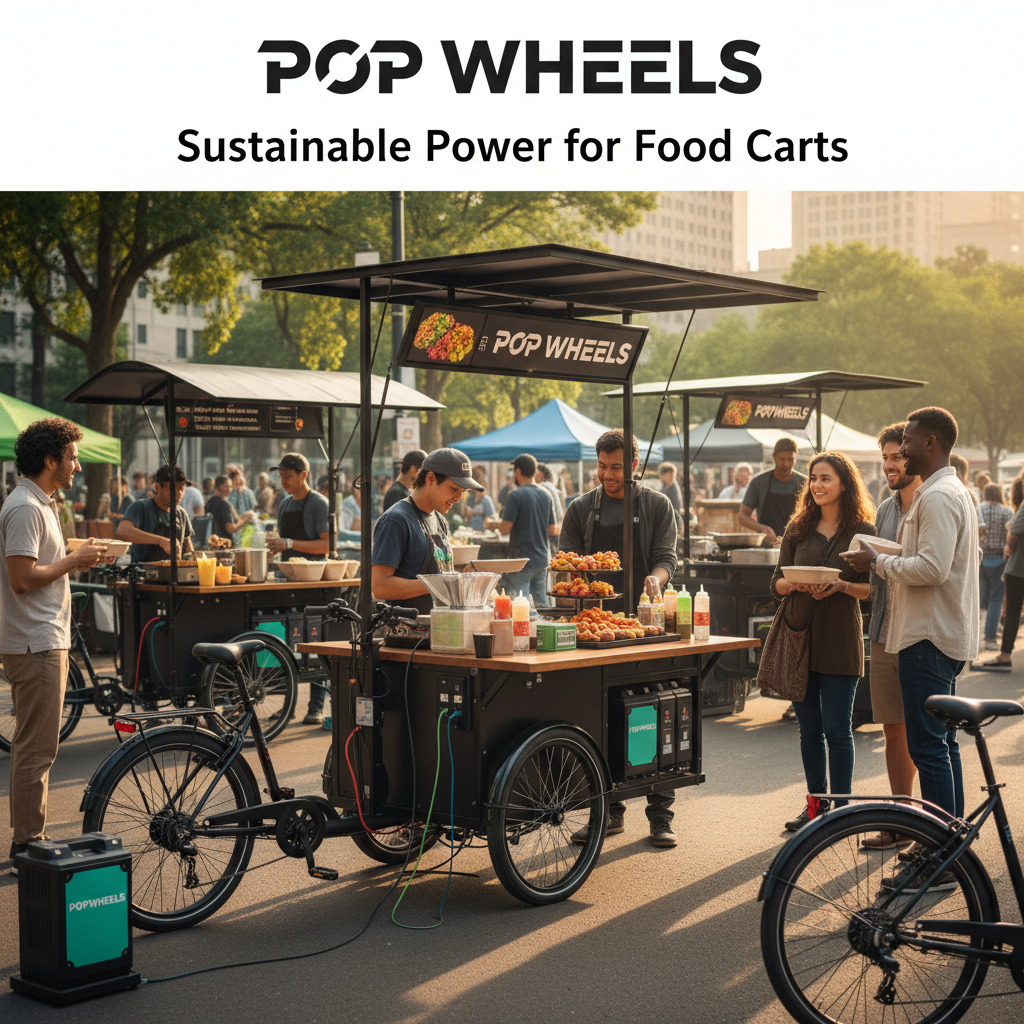
    In a move that marries technological innovation with environmental consciousness, PopWheels is extending its battery swapping network beyond its initial scope. The company, known for supporting food delivery workers, is now enabling food cart vendors to ditch their noisy, polluting generators in favor of cleaner, more efficient e-bike batteries. This shift marks a significant step towards sustainability within the food industry, offering a glimpse into a future where technology and eco-friendliness converge.

    The Genesis of an Idea: From Delivery to Dining

    PopWheels recognized the potential of its existing infrastructure to serve a broader market. The company’s core business involves providing a convenient battery swapping service for e-bike users, allowing them to quickly exchange depleted batteries for charged ones. This innovative approach minimizes downtime and keeps delivery workers on the move. The realization that this same technology could benefit food cart operators was a natural progression, addressing a common pain point for these businesses: the reliance on generators.

    Food carts are often mobile, and their power needs can be significant, especially for refrigeration, cooking equipment, and lighting. Generators have traditionally been the go-to solution, but they come with several drawbacks: they’re noisy, they produce emissions, and they can be costly to operate and maintain. PopWheels saw an opportunity to offer a cleaner, more cost-effective alternative.

    How PopWheels Makes It Happen: The Battery Swapping Network

    The core of PopWheels’ solution is its battery swapping network. Vendors using this system can exchange their depleted e-bike batteries for fully charged ones at designated swap stations. This process is quick and easy, minimizing downtime and ensuring that food carts have a consistent power supply. The batteries themselves are designed for longevity and efficiency, and the swapping stations are strategically located to provide convenient access.

    This approach not only eliminates the need for generators but also offers several other advantages. E-bike batteries are generally quieter than generators, reducing noise pollution in the areas where food carts operate. They also produce zero emissions, contributing to cleaner air and a more sustainable environment. Furthermore, the operational costs of using e-bike batteries can be lower than those associated with generators, offering potential savings for food cart owners.
    The

  • PopWheels Powers Food Carts: Battery Swapping Revolution

    PopWheels Powers Food Carts: Battery Swapping Revolution

    PopWheels Powers Food Carts: Battery Swapping Replaces Generators

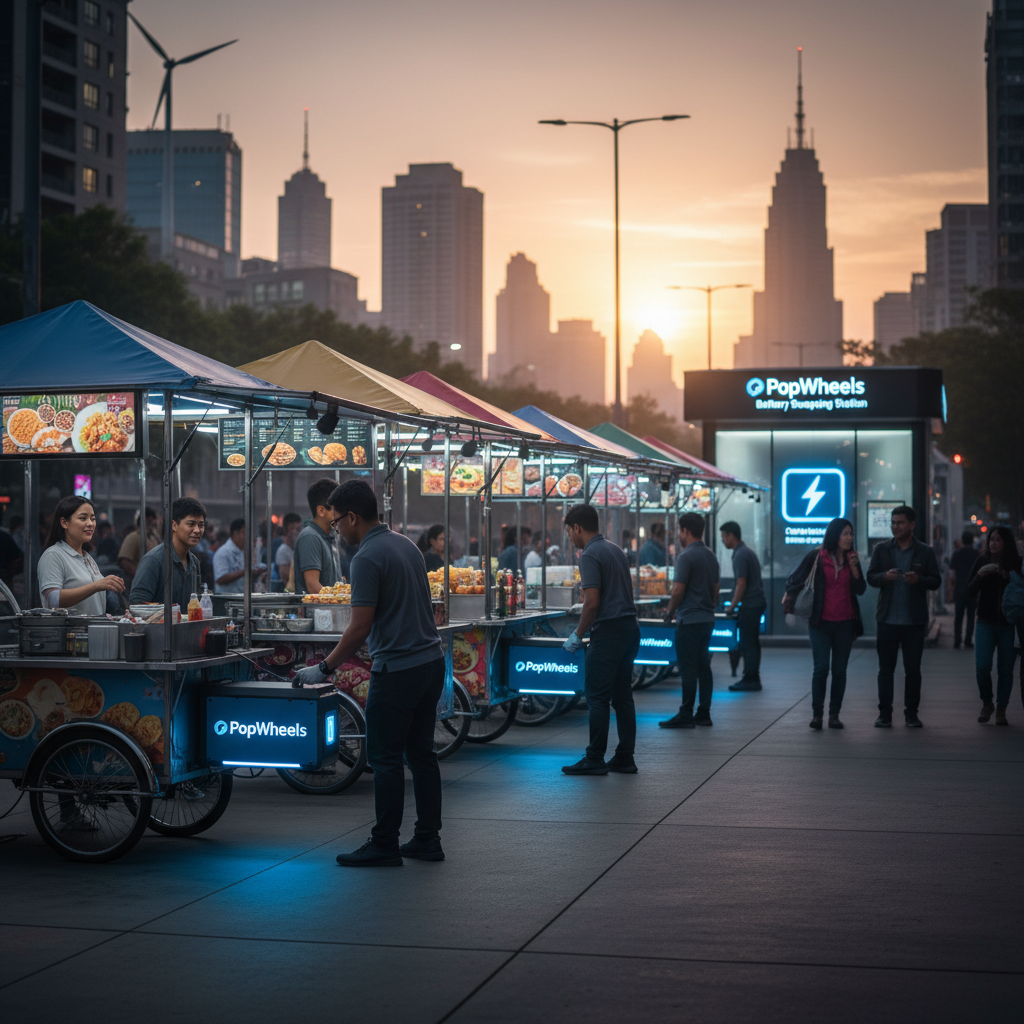
    In a move that marries technological innovation with environmental consciousness, PopWheels is expanding its battery swapping network to support a new sector: food carts. As reported on January 24, 2026, by TechCrunch, the company realized its existing infrastructure could serve a greater purpose than just providing power to e-bike delivery workers. The decision marks a significant step towards sustainable practices within the mobile food industry, offering a compelling alternative to traditional, and often polluting, generators.

    The Problem: Generators and Their Impact

    For years, food carts have relied on generators to power their operations. While providing the necessary electricity, these generators come with a host of drawbacks. They are often noisy, disruptive to the surrounding environment, and contribute significantly to air pollution. Moreover, the cost of fuel and maintenance adds up, impacting the profitability of these small businesses. PopWheels recognized these pain points and saw an opportunity to provide a cleaner, more efficient solution.

    The Solution: PopWheels’ Battery Swapping Network

    PopWheels’ approach centers around its innovative battery swapping network. This system allows food cart operators to quickly exchange depleted e-bike batteries for fully charged ones. This eliminates the need for on-site charging, which can be time-consuming, and removes the reliance on generators. The benefits are multifold: reduced emissions, quieter operations, and lower operational costs. The transition to e-bike batteries offers a win-win scenario for both the food cart owners and the environment.

    How it Works

    The core of the system involves strategically placed battery swapping stations. Food cart operators can visit these stations to swap their depleted batteries for fully charged ones. The process is quick and easy, minimizing downtime. PopWheels manages the charging and maintenance of the batteries, ensuring a reliable supply of power. This streamlined approach allows food cart owners to focus on what they do best: serving their customers.

    The Benefits: Sustainability and Efficiency

    The shift from generators to e-bike batteries brings significant advantages. From a sustainability perspective, it reduces carbon emissions and air pollution, contributing to a cleaner urban environment. Economically, it can lower operational costs by reducing fuel expenses and maintenance needs. The switch to e-bike batteries offers a way for food carts to become more eco-friendly and operationally efficient. The “aggressive rollout” planned for this summer indicates a strong commitment from PopWheels to scale up this initiative.

    Looking Ahead: The Future of Mobile Food

    The expansion of PopWheels’ battery swapping network into the food cart sector represents a forward-thinking approach to sustainable urban development. By providing a practical and cost-effective alternative to generators, PopWheels is not only helping food cart businesses but also contributing to a cleaner, more sustainable future. As the company gears up for its “aggressive rollout” this summer, the impact of this innovative technology will be something to watch. This initiative could set a new standard for mobile food operations, demonstrating how technology can drive both environmental and economic benefits.

    Source: TechCrunch

  • Humans& Bets on AI Collaboration: The Next Frontier

    Humans& Bets on AI Collaboration: The Next Frontier

    The hum of servers filled the room, a constant thrum beneath the focused energy of the team. It was late October 2025, and the Humans& engineers were deep in the weeds, poring over thermal test results. A new generation of foundation models for collaboration, as they called it, was on the line.

    Founded by alumni from Anthropic, Meta, OpenAI, xAI, and Google DeepMind, Humans& is betting big that the next leap in AI isn’t just about bigger models, but better coordination. Their focus, unlike many in the current AI landscape, isn’t on chatbot technology. Instead, they’re building systems designed for collaboration. Think AI that can help teams work together, not just generate text.

    The core of their approach, according to sources familiar with the company, involves a shift in how AI models are trained and deployed. Instead of solely focusing on language generation, Humans& is building models capable of understanding and responding to complex, multi-agent interactions. This means the AI can, for example, coordinate tasks, manage projects, or even facilitate negotiations. This is a big departure from current models.

    “The market is definitely moving in this direction,” said analyst Sarah Chen of Deepwater Research, during a call earlier this week. “We’re seeing a push for AI that can handle more complex workflows, and Humans& is positioned to capitalize on that.” Chen estimates the market for collaborative AI tools could reach $10 billion by 2027.

    The team is working towards several milestones. The M100 model, slated for release in early 2026, focuses on basic task coordination. The M300, planned for 2027, will incorporate advanced features like real-time decision-making and dynamic resource allocation. That’s the plan, anyway.

    Meanwhile, the supply chain is a constant concern. Export controls and manufacturing capacity are major hurdles. The team is aware of the limitations. They’re dealing with the same chip constraints and manufacturing bottlenecks as everyone else. SMIC versus TSMC is a daily conversation, and the US domestic procurement policies add another layer of complexity.

    The challenge, as some see it, is proving the value of coordination. It’s a different metric than the current benchmarks of language models. But Humans& is confident. The company believes that by focusing on collaboration, they can unlock a new level of productivity and efficiency.

    It’s a long shot, maybe. But the engineers kept working, the servers kept humming. The future, in their view, is collaboration.

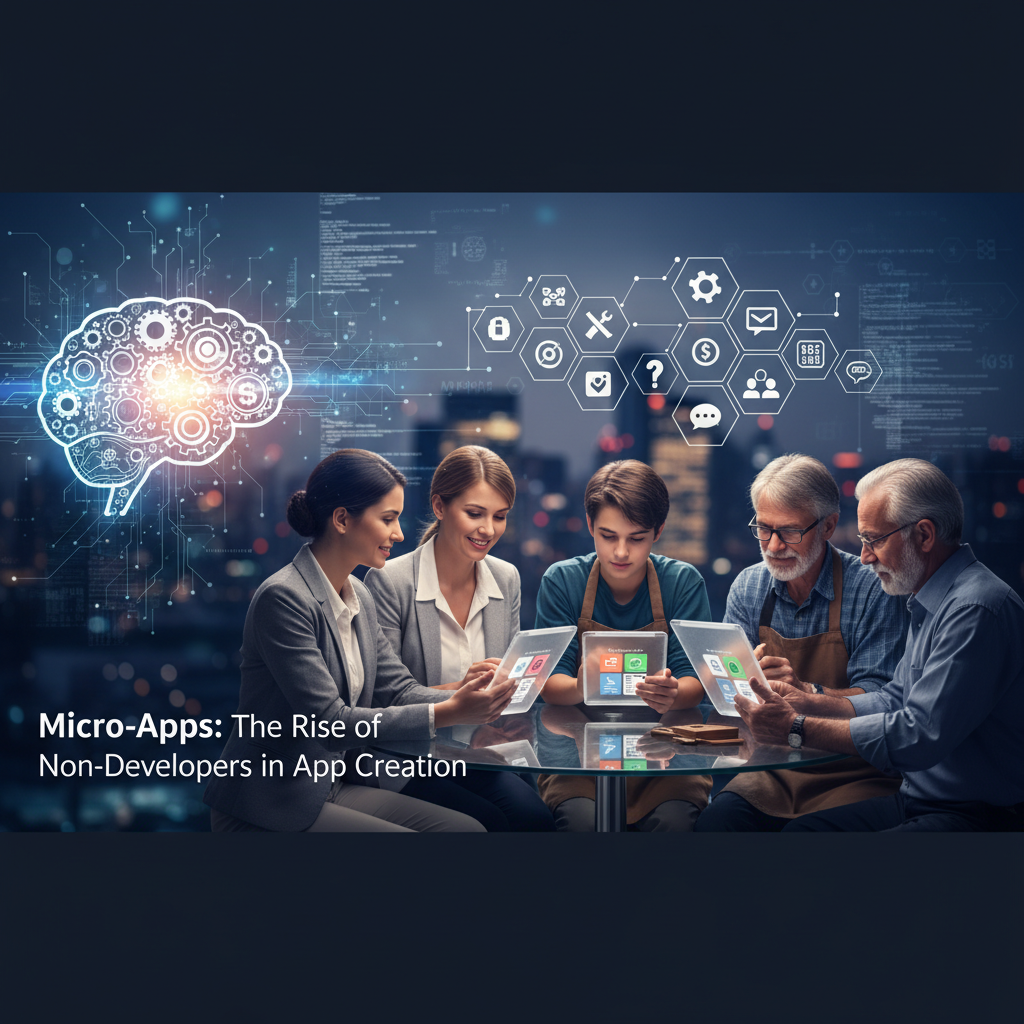
  • Micro-Apps: The Rise of Non-Developers in App Creation

    Micro-Apps: The Rise of Non-Developers in App Creation

    The hum of the server room was almost a constant presence. It was mid-2025, and inside the offices of ‘QuickBuild,’ a small startup, the team was scrambling. They were chasing a new wave, a trend that seemed to be turning the software world on its head: the rise of the micro-app, and the non-developers building them.

    It wasn’t just about the technology; it was about the culture shift. Suddenly, people who weren’t coders were crafting applications, spurred on by no-code and low-code platforms. Instead of waiting for months and spending thousands, these citizen developers were able to build and deploy apps in a matter of days.

    Earlier this year, Deutsche Bank released a report estimating the low-code/no-code market would reach $65 billion by 2027. That projection, at the time, felt ambitious. Now, it seems almost conservative, given the rapid adoption.

    QuickBuild’s CEO, Sarah Chen, had seen the writing on the wall. “We realized the demand wasn’t just coming from traditional businesses,” she explained in a recent interview. “It was coming from everywhere – small businesses, internal teams within larger companies, and even individuals with a specific need.”

    This shift wasn’t without its challenges. The need for specialized skills was still there, of course. Security, scalability, and integration with existing systems remained complex hurdles. But the speed and agility that micro-apps offered were undeniable.

    The shift is also impacting the larger players. Companies like Microsoft and Google are investing heavily in no-code tools. They understand that the future of software development isn’t just about professional developers anymore. It’s about empowering anyone with an idea to build an app.

    One of the key drivers? The increasing sophistication of the platforms themselves. They’re becoming easier to use, offering more features, and integrating with a wider range of services. It’s almost like the tools are anticipating the needs of the non-developer, smoothing the path from idea to execution. Or maybe that’s how the supply shock reads from here.

    The impact is already being felt. A recent study showed that companies using micro-apps were able to reduce their IT development time by an average of 40%. That’s a significant boost in productivity, and it’s changing the way businesses operate.

    Still, the evolution of micro-apps is just beginning. The next few years will likely see even more innovation, with AI playing an increasingly important role. As the technology continues to evolve, the distinction between developers and non-developers may blur further, creating a more inclusive and dynamic software landscape.

  • Micro Apps: The Rise of Non-Developer App Creation

    Micro Apps: The Rise of Non-Developer App Creation

    The hum of the server room was almost a constant, a low thrumming that vibrated through the floor. It was late October 2026, and the team at NovaTech, a mid-sized software firm, was in crisis mode. Not a bug, not a hack – a demand surge. Their micro-app platform, designed to let non-developers build simple applications, was exploding. What started as a niche tool for internal use had become a viral sensation, fueled by a new generation of citizen developers.

    Earlier that day, the company’s CEO, Sarah Chen, had been on a call with investors, trying to explain the sudden spike. “We projected a 30% growth in user base for Q4,” she’d said, “but we’re seeing closer to 70%.” It was, to put it mildly, unexpected.

    The catalyst? A new wave of user-friendly, no-code and low-code platforms that made app creation accessible to everyone. Suddenly, anyone with an idea could build an app, bypassing the traditional gatekeepers of software development. This trend, as many analysts now agree, was a game changer.

    The shift wasn’t just about ease of use. It was about speed. These micro-apps, often designed for specific tasks, could be built and deployed in days, even hours. The speed of iteration was also remarkable, with users quickly adapting and refining their apps based on real-world feedback. According to a report by the research firm, Global Tech Insights, the market for these micro-app platforms was projected to reach $15 billion by the end of 2027, a significant increase from the $6 billion recorded in 2024.

    “It’s like the democratization of software,” said Mark Olsen, a lead analyst at TechInsights, during a recent briefing. “Anyone can build an app to solve a problem, and they don’t need to know how to code.”

    Meanwhile, the implications were starting to ripple through the industry. Traditional app developers, used to months-long development cycles and complex codebases, were feeling the pressure. Some were adapting, offering their own micro-app solutions; others were struggling to keep up. The supply chain was also a factor, with increased demand for the necessary processing power putting a strain on the manufacturers. This meant that the availability of GPUs, which are critical for running these applications, was under pressure. As a result, companies like SMIC and TSMC were working at full capacity, trying to keep up with the demand.

    The micro-app revolution also highlighted the importance of domestic procurement policies. With export controls in place, companies in China, for example, were prioritizing domestic suppliers. This, in turn, fueled the growth of homegrown chip manufacturers, though at times it felt like the supply could never keep pace with the demand. The pressure was on to secure the necessary components.

    NovaTech, for its part, was racing to expand its server capacity. The engineering team, led by a seasoned veteran named Alex Ramirez, was working around the clock. They were running thermal tests, optimizing code, and frantically ordering more servers. It was a race against time. Or maybe, that’s how the supply shock read from here.

    By evening, the server room was still humming. The team was tired, but the energy was palpable. They knew they were part of something big. The rise of micro-apps wasn’t just a trend. It was, in a way, a fundamental shift in how software was created and consumed. And it was happening, right now.

  • Teen AI Pesticide Startup Lands $6M Funding, Backed by Paul Graham

    Teen AI Pesticide Startup Lands $6M Funding, Backed by Paul Graham

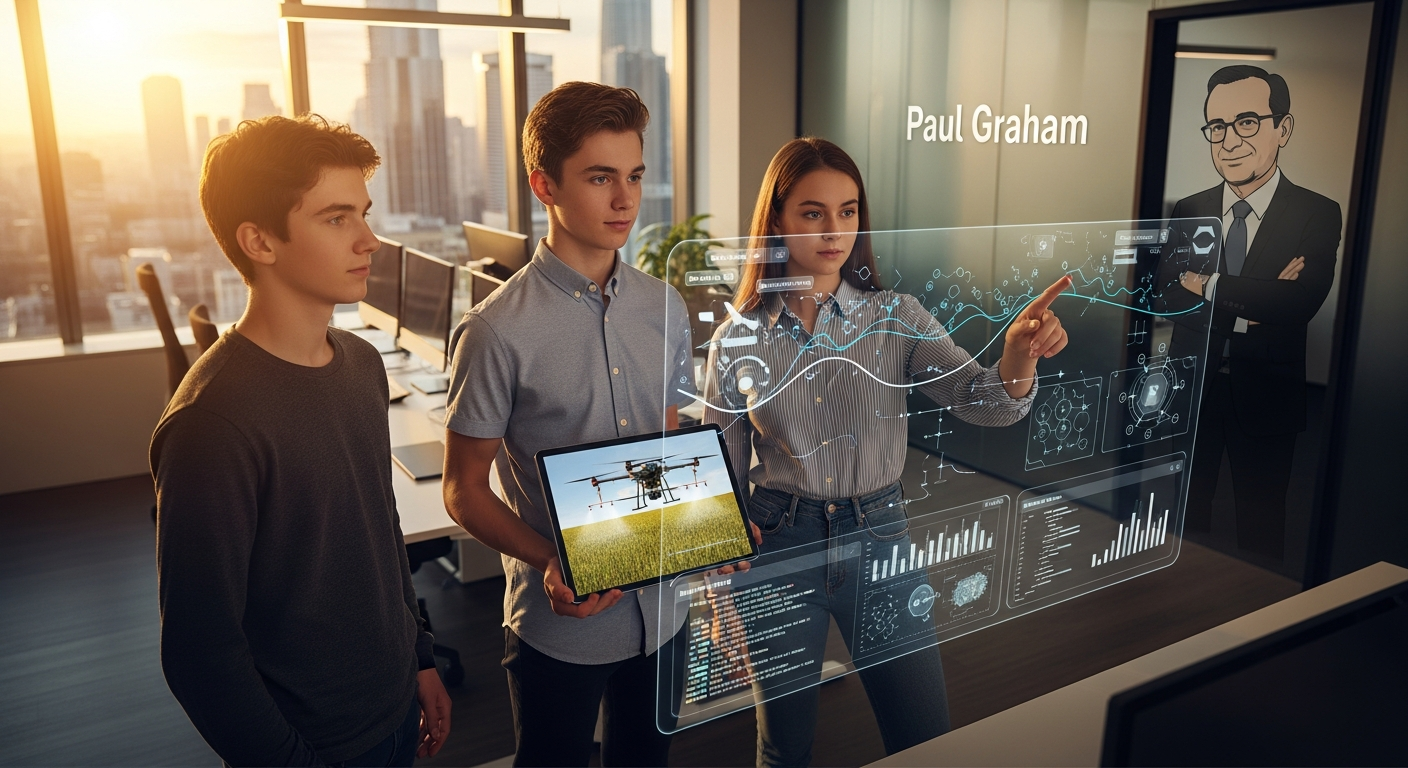
    The news hit my feed yesterday, November 13th, and honestly, it stopped me in my tracks. Teenagers, AI, pesticides… it’s a lot to take in all at once. Bindwell, the company in question, has raised a cool $6 million to, as they put it, “reinvent pesticides.” They’re applying AI drug discovery techniques to come up with new pesticide molecules. The whole thing feels… well, kind of futuristic.

    It’s always interesting to see where the money goes. This round, as per reports, includes investments from none other than Paul Graham, the co-founder of Y Combinator. That alone speaks volumes, doesn’t it? Seems like a pretty significant vote of confidence in these young founders and their vision.

    Bindwell’s approach is, in a way, a blend of two worlds. They’re taking the sophisticated techniques used in pharmaceutical research — specifically, AI-driven drug discovery — and applying them to the agricultural sector. The goal is to create pesticides that are more effective and, hopefully, more environmentally friendly. The details are complex, involving algorithms and molecular modeling, but the core idea is pretty straightforward: find better solutions.

    I’ve always been fascinated by how technology intersects with the more traditional industries. Agriculture, for instance. It’s been around for millennia, and now, here comes AI, promising to shake things up again. It’s a bit of a leap, but it also feels…inevitable.

    One of the things that stands out is the age of the founders. Teenagers. It’s a testament to the fact that you don’t need decades of experience to make a real impact. You just need a good idea and the drive to make it happen. And, of course, some serious backing.

    “We’re excited to leverage AI to create a new generation of pesticides,” a statement from Bindwell read. “Our goal is to protect crops while minimizing environmental impact.”

    The pressure is on, obviously. But it’s also exciting to see what they come up with. The world will be watching.

  • AWS Heroes 2025: Celebrating Cloud Computing Trailblazers

    AWS Heroes 2025: Celebrating Cloud Computing Trailblazers

    With AWS re:Invent 2025 just around the corner, it feels like a good time to reflect. And to celebrate. This year, we’re introducing the final cohort of AWS Heroes, a group of individuals whose work is, in a way, the backbone of the cloud community. Their impact stretches across the globe, touching builders in unexpected ways.

    It’s always inspiring to see the dedication. These aren’t just names; they’re people who pour their time into sharing knowledge and fostering innovation. The AWS Heroes program, as per official statements, recognizes those who go above and beyond. That’s something you feel when you read their stories. They’re not just experts; they’re mentors, collaborators, and often, friends to many in the tech world.

    Take, for instance, Anya Sharma, who’s been working to advance women in tech, especially in rural communities. Her efforts, as far as I can tell, have already touched hundreds. Then there’s David Chen, bridging the gap between academia and industry. And finally, there’s Maria Rodriguez, who’s been pioneering enterprise AI solutions.

    Their stories, as the AWS News Blog highlighted, showcase the innovative spirit. It’s a spirit that drives the community forward, one project at a time. It’s people like this who make the complicated world of cloud computing seem a little more accessible, a little less daunting. They take the time, and that’s what matters.

    Each Hero brings a unique perspective. Their contributions range from detailed technical guides to community workshops. They’re based all over, too, from the US to Europe, and beyond. They’re all united in their commitment, though. They’re all about sharing what they know.

    Earlier this year, AWS announced their plans for even more community outreach. This feels like a continuation of that, a way to spotlight the people who are actually *doing* the work. It’s nice to see that kind of recognition, in a world that often moves too fast to notice.

    By evening, the announcement had already spread across social media. One user, a developer named Alex, posted on X: “These Heroes are the real MVPs. Congrats to all!” It’s true, in a way. They’re the ones making the difference.

  • AWS Heroes: Celebrating Builders & Innovation at re:Invent 2025

    AWS Heroes: Celebrating Builders & Innovation at re:Invent 2025

    As AWS re:Invent 2025 approaches, there’s a certain buzz. It’s that feeling of anticipation, of seeing what the future holds, and, of course, the people who are shaping it. And this year, like every year, AWS is taking a moment to celebrate those who truly embody the spirit of innovation.

    This time, it’s the final three AWS Heroes of 2025. These are the people whose work, dedication, and sheer passion for cloud computing have made a real impact. It’s about more than just technology; it’s about community, about sharing, and about empowering others. The AWS News Blog highlighted their stories, and it’s worth a read.

    One of the Heroes is particularly focused on advancing women in tech and supporting rural communities. Another is bridging the gap between academia and industry. And the third is pioneering enterprise AI solutions. It’s a diverse group, and that’s the beauty of it. They come from different backgrounds, tackle different challenges, but they all share a common goal: to help others build and innovate.

    One of the things that strikes me is the ripple effect. These aren’t just individuals; they’re catalysts. They share their knowledge, and suddenly, more people are empowered to build. More ideas take shape. More innovation happens. It’s like a chain reaction, and it starts with a single person willing to share what they know.

    “We are incredibly proud to recognize these individuals,” a spokesperson from AWS said in a statement. “Their commitment to the community is truly inspiring, and their contributions are invaluable.”

    I find that a fitting sentiment. It’s a reminder that behind all the code and the tech, there are real people. People with stories, with challenges, and with a drive to make things better. And in the end, that’s what it’s all about.

    It’s a bit like watching a puzzle come together, piece by piece. Each Hero, each builder, is a piece of that puzzle. And as they connect, the picture becomes clearer, more complete, and more exciting. By evening, I’m already looking forward to re:Invent.

  • OpenAI & Startups: AI’s Fast-Paced Reality

    OpenAI & Startups: AI’s Fast-Paced Reality

    It’s a whirlwind out there, apparently. The world of AI, as Marc Manara, OpenAI’s head of startups, described it, has moved well beyond the realm of experiments and ideas. Speaking on TechCrunch’s Equity podcast at TechCrunch Disrupt 2025, he painted a picture of a sector in hyperdrive.

    Seems like just yesterday, we were all talking about AI’s potential. Now, according to Manara, AI-native companies are hitting $200 million in annual recurring revenue. That’s… a lot. And the pace? Forget two-week product cycles; we’re talking about days, even single days, to get something new out there.

    Meanwhile, OpenAI is right in the thick of it. Helping, as Manara put it. But what does that really mean, on the ground? What are these startups actually *doing* with the tools they’re getting?

    Earlier today, I was reading a bit about this. Russell Brandom, who was hosting the podcast, really dug into the details. The rapid shift, the shrinking timelines – it’s all kind of mind-boggling, if you stop to think about it. It’s a bit like trying to catch a speeding train.

    Officials from OpenAI have been quoted, of course, but it’s the sense of speed that sticks with me. And the implications. If product cycles are truly measured in days, well, that changes everything. It changes how you build, how you test, how you even *think* about what you’re building.

    “The reality has advanced far beyond ideas,” Manara said during the podcast. A simple sentence, but it carries a lot of weight, doesn’t it?

    And it makes you wonder… what’s next?

  • OpenAI & Startups: AI’s Rapid Evolution

    OpenAI & Startups: AI’s Rapid Evolution

    It’s a whirlwind, isn’t it? The world of AI, I mean. Seems like just yesterday, we were all kicking around ideas, and now… well, now things are different. Marc Manara, OpenAI’s head of startups, was at TechCrunch Disrupt 2025, and he painted a picture of just how quickly the ground is shifting.

    The pace is the most striking thing. Manara mentioned that AI-native companies are already hitting $200 million in annual recurring revenue. That’s not just some distant goal; it’s happening right now. And the product cycles? They’ve shrunk to a matter of days, not weeks. It’s a sprint, constantly.

    Meanwhile, Russell Brandom, as part of the TechCrunch Equity podcast, sat down with Manara to get a better sense of what’s going on. They talked about what startups actually need, what they’re looking for from OpenAI, and how the company is helping them navigate this crazy new landscape.

    “The reality has advanced far beyond ideas and experiments,” Manara explained. That statement really stuck with me. It’s a good way to put it. The whole field has moved from theoretical to practical, almost overnight.

    Earlier today, I was reading through some of the notes from the session. The speed of iteration, the way things are changing, it’s… a bit overwhelming, to be honest. It’s like trying to keep up with a river that’s constantly changing course.

    Officials from OpenAI, as per reports, are focusing on providing the tools and support that startups need to keep up. It’s about more than just the technology; it’s about helping these companies survive and thrive in a world that’s being redefined in real-time. This is, in a way, a race.

    And it seems like OpenAI is right in the thick of it, helping these startups, providing them with the resources they need to go from idea to, well, that $200 million revenue mark. Still, the pressure must be immense.