CloudTalk

Tag: Innovation

  • TechCrunch Disrupt 2025: Startup Battlefield 200 Highlights

    TechCrunch Disrupt 2025: Startup Battlefield 200 Highlights

    There’s a certain buzz that hangs in the air at TechCrunch Disrupt. You can feel it, right? It’s a mix of anticipation, excitement, and maybe a little bit of caffeine-fueled energy. This year, at Disrupt 2025, the Startup Battlefield 200 was the place to be, and honestly, it didn’t disappoint.

    It’s where you go to see the future, or at least, a sneak peek of it. These aren’t just any startups; they’re the ones pushing boundaries, dreaming big, and, you know, actually building the things we’ll all be using in a few years. They were all there, exhibiting and pitching their hearts out on the Showcase Stage.

    The whole point? To celebrate outstanding achievements. And let me tell you, there were plenty to celebrate. The level of innovation on display was pretty wild. From AI-powered solutions to sustainable tech, the Startup Battlefield 200 was a real melting pot of ideas. You could feel the passion radiating from the founders as they talked about their companies, their missions, and, of course, their visions for the future.

    One of the coolest things about Disrupt is the sheer variety. You have companies from all over the world, working on everything you can imagine. It’s a reminder that great ideas can come from anywhere. And that’s what makes events like this so important. They create a space for these startups to connect with investors, potential partners, and, you know, the wider tech community.

    The Showcase Stage itself was a hub of activity. Startups were constantly giving demos, answering questions, and trying to grab the attention of the crowd. The energy was infectious. It’s where the “how” of their success was on full display—the pitching and exhibiting. It’s a tough crowd, too. Everyone there is looking for the next big thing, the next game-changer.

    So, what exactly did these startups achieve? Well, that’s the beauty of it. The achievements are as diverse as the companies themselves. For some, it was securing funding. For others, it was making key connections. And for many, it was simply getting their name out there. They were all there at TechCrunch Disrupt, an event hosted by TechCrunch, and they all had a story to tell.

    The whole thing was a celebration of what’s possible when you bring together brilliant minds, cutting-edge technology, and a shared vision for the future. It’s easy to see why. The Startup Battlefield 200 at TechCrunch Disrupt 2025 wasn’t just an event; it was a glimpse into the future. And honestly, it was pretty inspiring.


  • Terraforming Robots: Protecting Cities from Rising Seas

    Terraforming Robots: Protecting Cities from Rising Seas

    There’s been a lot of talk lately about climate change, and honestly, it’s pretty scary stuff. Sea levels are rising, and that means a lot of cities are facing some serious flooding risks. But what if there was a way to fight back, to adapt, to… well, terraform?

    That’s the idea behind Terranova, a startup that’s got a pretty wild plan: use robots to raise cities. Instead of building the usual seawalls and dikes, they’re proposing a completely different approach. It’s a bold move, and it’s definitely caught my attention.

    I read about it in a TechCrunch article, which focused on the founder’s vision and how these terraforming robots might actually work. The basic concept is to use technology to physically lift the city, creating a buffer against rising tides. It’s like something out of a sci-fi movie, right?

    Now, I’m no engineer, but the idea is fascinating. The article didn’t go into the nitty-gritty details of the technology, but the core concept is pretty clear: robots, working in concert, would essentially reshape the landscape beneath the city. They’d add layers, elevate structures, and hopefully, buy us some time against the inevitable.

    Of course, this raises a ton of questions. How do you actually do this? What about existing infrastructure? And, of course, the big one: how much would it cost? The article didn’t have all the answers, but it did paint a picture of a future where technology is actively fighting back against the effects of climate change. It’s an interesting shift from simply reacting to the problem.

    The article mentioned San Rafael as a potential testing ground, which makes sense. Cities like that are already dealing with the pressures of rising sea levels. It’s a real problem, and finding solutions is more critical than ever. It’s not just about protecting property; it’s about preserving communities and ways of life.

    The Bigger Picture

    What really struck me was the shift in thinking. We’re so used to dealing with climate change by mitigating emissions or building defenses. This is different. This is about adapting the physical world. It’s about being proactive, not just reactive.

    The potential implications are pretty huge. If Terranova’s approach works, it could be a game-changer for coastal cities around the world. It could mean the difference between abandonment and survival for countless communities. It’s a big if, of course, but the potential payoff is enormous.

    I was thinking about the implications. It’s not just about the technology itself. It’s about urban planning, engineering, and the environment all coming together. It’s about finding innovative ways to address the challenges we face. It’s easy to see why this is so compelling.

    The article also touched on the ethics of this kind of intervention. Who decides which cities get “saved”? What are the environmental consequences of such large-scale terraforming? These are important questions, and the answers will be critical to the success of any project like this.

    But still, the core idea — using technology to actively reshape our environment to protect ourselves — is a powerful one. It’s a testament to human ingenuity and our capacity to adapt. It’s a reminder that even when faced with seemingly insurmountable challenges, there are always new ideas, new approaches, and new possibilities. It’s a really interesting thought, and honestly, the whole thing is just pretty wild.

  • Wabi: Replika Founder’s $20M Bet on the ‘YouTube of Apps’

    Wabi: Replika Founder’s $20M Bet on the ‘YouTube of Apps’

    Replika Founder Raises $20M Pre-Seed for Wabi, the ‘YouTube of Apps’

    In a move that’s generating significant buzz within the tech community, the founder of Replika has secured a substantial $20 million pre-seed round for Wabi. Announced on November 5, 2025, this new venture is poised to redefine how we interact with applications, aiming to become the “YouTube of apps.”

    What is Wabi? The Vision Behind the Platform

    Wabi is envisioned as a social platform where users can leverage prompts to instantly generate mini-apps. The core concept is simple yet powerful: to enable anyone to create and share their own applications with friends and communities. This approach democratizes app creation, making it accessible to individuals without extensive coding knowledge. The platform’s design focuses on user-friendliness and ease of sharing, mirroring the intuitive nature of platforms like YouTube.

    The “why” behind Wabi is clear: to empower users to create and share custom applications easily. This removes the traditional barriers to entry for app development, fostering a more dynamic and user-driven ecosystem. By providing a streamlined process for app creation, Wabi aims to tap into the creativity of a broader audience and offer a diverse range of mini-apps.

    Key Features and Functionality

    The platform’s functionality hinges on the ability to generate mini-apps using prompts. This feature allows users to specify the desired functionality and characteristics of their apps, which the platform then translates into a working application. The emphasis on user-generated content and social sharing creates a network effect, encouraging users to explore and engage with a variety of mini-apps created by others.

    The “how” of Wabi’s operation involves a sophisticated system that interprets user prompts and automatically generates functional mini-apps. This behind-the-scenes process is what makes the platform accessible to a wide range of users, regardless of their technical expertise. The platform’s success hinges on its ability to execute this process efficiently and accurately, providing a seamless user experience.

    The Significance of the $20M Pre-Seed Round

    The $20 million pre-seed investment underscores the potential of Wabi and the confidence investors have in the vision of the Replika founder. This funding will likely be used to further develop the platform, enhance its features, and expand its user base. It also signals a growing interest in innovative, user-centric platforms that challenge traditional app development models.

    Comparing Wabi to YouTube: A New Paradigm

    The comparison to YouTube is apt. Just as YouTube allows anyone to create and share videos, Wabi aims to provide a similar level of accessibility for app creation. This approach could lead to a proliferation of mini-apps, each serving a specific niche or purpose. This model shifts the focus from professional developers to a broader community of creators, fostering innovation and diversity in the app landscape.

    Looking Ahead: The Future of Wabi and the App Ecosystem

    Wabi’s emergence marks a significant development in the technology sector, particularly in the realm of social platforms and app development. As it gains traction, Wabi has the potential to reshape how we think about and interact with applications. The “what” of Wabi is clear: a platform that empowers users to create and share mini-apps. Its success will depend on its ability to deliver on this promise and build a thriving community of creators and users.

    The pre-seed funding will undoubtedly play a crucial role in enabling Wabi to realize its vision, and the tech community will be watching closely to see how this innovative platform evolves and impacts the future of app development. The “when” of this transformation is now, with Wabi’s launch setting the stage for a new era of user-generated applications.

  • AI Market Insights: Winners and Openings – Elad Gil

    AI Market Insights: Winners and Openings – Elad Gil

    Elad Gil on which AI markets have winners — and which are still wide open

    In the dynamic realm of artificial intelligence, understanding market trends is crucial. Elad Gil, a notable figure in the tech industry, recently shared his perspective on the current state of AI markets. His insights, published on TechCrunch on November 3, 2025, offer a valuable snapshot of which sectors are dominated by established players and which still present opportunities for startups.

    The Current AI Landscape

    Over the last year, the AI market has seen significant developments. Certain sectors have become highly competitive, with some startups emerging as clear leaders. This landscape underscores the rapid evolution and commercialization of AI technologies. Gil’s analysis helps to navigate this complex environment, providing clarity on where the major players are and where innovation can still thrive.

    The core focus is on identifying which AI markets have already seen the emergence of dominant companies. This is particularly important for entrepreneurs and investors who are looking for the next big thing. Understanding the areas where the market is saturated can help in making more informed strategic decisions.

    Key Market Observations

    While the specifics of Gil’s observations are not detailed in this particular summary, the premise is clear: not all AI markets are created equal. Some have reached a level of maturity where specific startups have secured a significant market share, while others remain relatively open.

    The challenge for new entrants lies in recognizing these distinctions. Identifying markets that are still open requires a deep understanding of technological advancements, customer needs, and competitive dynamics. Gil’s insights likely provide a framework for evaluating these factors, enabling a more strategic approach to market entry.

    Implications for Startups

    For startups, the AI landscape presents both challenges and opportunities. The presence of market leaders in some sectors indicates a high barrier to entry, requiring significant resources and a unique value proposition to compete. However, the areas that are still open suggest that there is room for innovation and disruption.

    Startups need to carefully assess their strategies based on these market dynamics. Those targeting markets with established players may need to focus on niche areas or offer superior technology. Conversely, those entering open markets have the potential to define the future of those sectors.

    Conclusion

    Elad Gil’s analysis of the AI market provides a timely and relevant perspective on the current state of the industry. His insights help to differentiate between mature and emerging markets, offering valuable guidance for entrepreneurs, investors, and industry professionals. As the AI landscape continues to evolve, staying informed about these market dynamics will be essential for success.

    The original article on TechCrunch provides a more detailed analysis, including specific examples and strategic recommendations. For those looking to delve deeper into this topic, consulting the full article is recommended. This will provide a more thorough understanding of the AI market and its future trajectory.

    Source: TechCrunch

  • AWS Weekly Roundup: Generative AI, Project Rainier & More

    AWS Weekly Roundup: Generative AI, Project Rainier & More

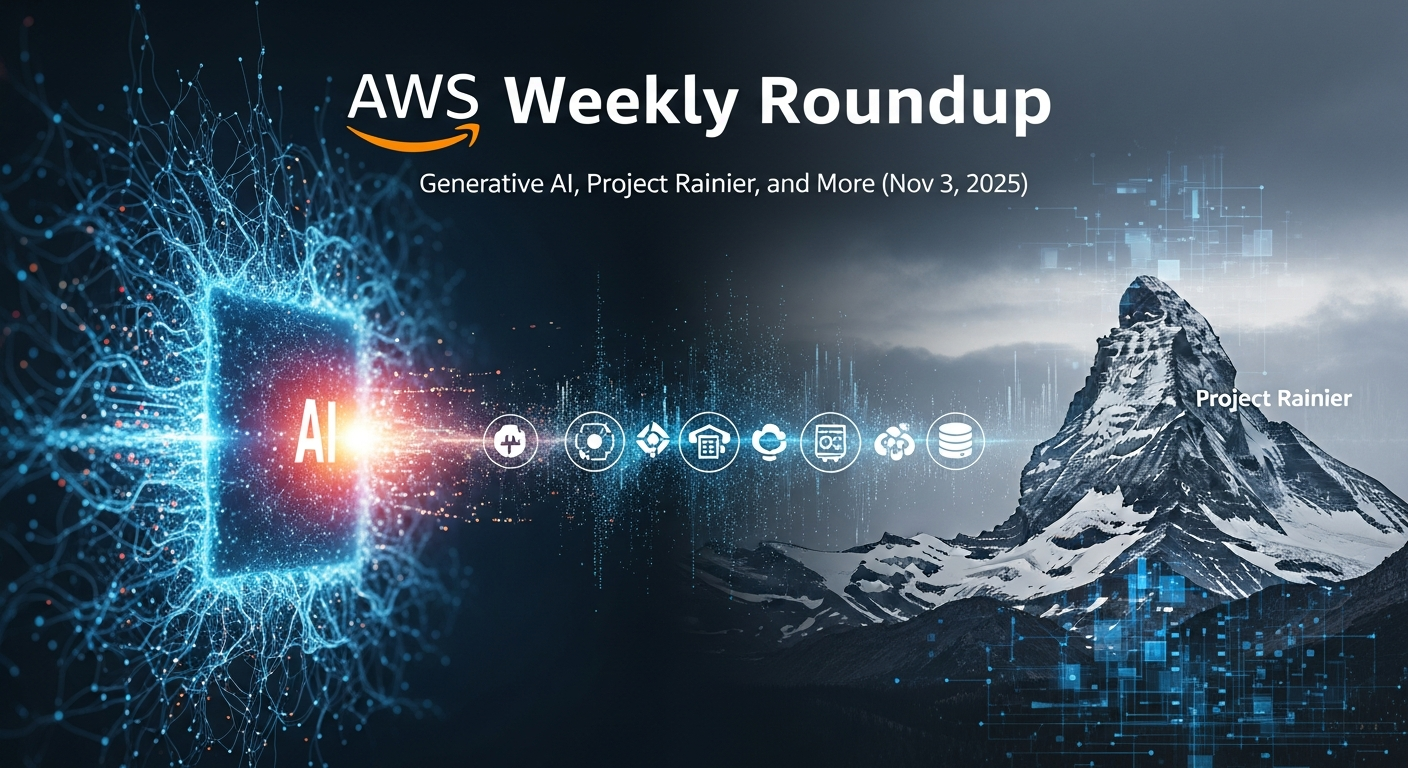
    AWS Weekly Roundup: Generative AI, Project Rainier, and More (Nov 3, 2025)

    Last week, the AWS community buzzed with activity, highlighted by the AWS Shenzhen Community Day. It was here that Jeff Barr, a key figure at AWS, shared insights into the exciting world of generative AI and its impact on developers globally. The focus was on the innovative ways builders are currently experimenting with this technology, encouraging local developers to transform their ideas into tangible prototypes. This AWS Weekly Roundup provides a glimpse into these advancements and more.

    Generative AI Takes Center Stage

    The core of the discussions revolved around the evolving landscape of generative AI. Developers attending the AWS Shenzhen Community Day showed a keen interest in model grounding and evaluation, crucial aspects of bringing generative AI into practical applications. This highlights the growing importance of these technologies within the AWS ecosystem.

    During the event, Jeff Barr shared stories and encouraged developers to explore the potential of generative AI. This initiative underscores AWS’s commitment to supporting the developer community and fostering innovation in the field of artificial intelligence.

    Key Announcements and Developments

    Several key announcements and developments marked the week. These include:

    • Project Rainier: The unveiling of Project Rainier marks a significant step forward in cloud computing.
    • Amazon Nova: Amazon Nova’s introduction offers new possibilities for developers.
    • Amazon Bedrock: The ongoing developments in Amazon Bedrock continue to expand the scope of generative AI.

    These initiatives underscore AWS’s ongoing commitment to pushing the boundaries of technology.

    Community and Innovation in Shenzhen

    The AWS Shenzhen Community Day served as a crucial platform for knowledge exchange and collaboration. Developers from various backgrounds came together to discuss the practical implications of generative AI, model grounding, and evaluation. The event’s success in Shenzhen highlights the region’s importance as a hub for technological innovation.

    The enthusiasm and engagement of the attendees at the AWS Shenzhen Community Day were notable. Many stayed after the sessions to delve deeper into these subjects, emphasizing the community’s dedication to advancing generative AI technologies.

    The Future with AWS

    AWS continues to empower developers with cutting-edge tools and resources. The focus on generative AI, along with the introduction of new services like Project Rainier and Amazon Nova, demonstrates AWS’s commitment to technological advancement.

    The discussions and interactions at the AWS Shenzhen Community Day reflect a positive trajectory for the future of cloud computing and generative AI. AWS is set to remain at the forefront of this evolution, supporting developers in their innovative endeavors.

    Source: AWS News Blog

  • TechCrunch Disrupt 2025: San Francisco Event Recap

    Scenes from TechCrunch Disrupt 2025

    As October 30, 2025, recedes into the rearview mirror, the echoes of TechCrunch Disrupt 2025 in San Francisco still resonate. This year’s event, a vibrant convergence of technology, innovation, and networking, drew over 10,000 attendees, filling the halls with the buzz of new ideas and the promise of future breakthroughs. TechCrunch, the driving force behind this annual gathering, once again orchestrated a platform for startups, investors, and tech enthusiasts to connect, learn, and celebrate the dynamic world of technology.

    The Heart of Innovation in San Francisco

    The essence of TechCrunch Disrupt lies in its ability to foster an environment where innovation thrives. The event served as a launchpad for numerous startups, providing them with the opportunity to showcase their groundbreaking technologies and connect with potential investors. Attendees, eager to witness the next big thing, explored a diverse range of innovations, from cutting-edge software solutions to hardware advancements. The conference, held in San Francisco, was a melting pot of ideas, where the ‘how’ of making connections and the ‘why’ of celebrating the event were on full display.

    Networking and Collaboration

    Beyond the product showcases and keynote speeches, TechCrunch Disrupt is fundamentally about networking. The event provided ample opportunities for attendees to forge new connections, collaborate on projects, and build relationships that could shape the future of the tech industry. These interactions, facilitated within the event halls, were a testament to the power of community and the collective drive to push the boundaries of what’s possible. The atmosphere was charged with enthusiasm, making it a memorable experience for all involved.

    A Look Back at the Year

    This year’s TechCrunch Disrupt, held in 2025, was more than just a conference; it was a snapshot of the current state of technology. The images shared by TechCrunch captured the spirit of the event, illustrating the energy, innovation, and collaboration that defined the gathering. The event served as a reminder of the dynamic nature of the tech world and the incredible potential that lies within the startup ecosystem. The ‘what’ of the event, the ‘where’ of San Francisco, and the ‘when’ of October 30, 2025, all converged to create a unique and impactful experience.

    Conclusion

    TechCrunch Disrupt 2025, a landmark event in the tech calendar, provided a platform for sharing the story of innovation. From the bustling halls of San Francisco to the connections made and the technologies unveiled, the event left a lasting impact on all who attended. As we look forward to future Disrupt events, it’s clear that the spirit of innovation, collaboration, and networking will continue to drive the tech industry forward. The ‘who’ of TechCrunch and the attendees, working together, made this year’s event a resounding success.

  • Glīd Wins Disrupt 2025: Revolutionizing Cargo Logistics

    Glīd Triumphs at Disrupt 2025: A Win for Cargo Logistics Innovation

    The tech world has a new champion. Glīd, a company focused on streamlining cargo container logistics, has been crowned the winner of the highly competitive Startup Battlefield at Disrupt 2025. This victory, announced on October 29, 2025, marks a significant milestone for the startup, which bested nearly 200 other companies vying for the top spot.

    A Battlefield Victory for Logistics

    The Startup Battlefield at Disrupt is a renowned platform for emerging tech companies to showcase their innovations. This year, the competition was fierce, with a diverse range of startups presenting their solutions to a panel of expert judges. Glīd’s win highlights the growing importance of efficient and innovative solutions in the logistics sector. Its approach to improving cargo container logistics clearly resonated with the judges, leading to its ultimate triumph.

    The company’s core mission is to streamline the complex processes involved in managing cargo containers. This includes everything from tracking shipments to optimizing routes and reducing delays. By addressing these challenges, Glīd aims to significantly improve the efficiency of global trade. The Startup Battlefield win provides them with a substantial financial boost of $100,000 to further develop and scale their technology.

    Why Glīd? Disrupt 2025’s Winning Strategy

    Glīd’s success can be attributed to several factors. Firstly, the company is tackling a critical problem: the inefficiencies that plague the cargo container industry. Secondly, its solution is likely innovative and offers a tangible improvement over existing methods. The judges at Disrupt 2025 recognized the potential for Glīd to make a significant impact on the industry. The $100,000 prize will allow Glīd to further refine its technology, expand its team, and accelerate its market entry.

    The Startup Battlefield at Disrupt 2025, held in [Insert Location Here – Not Provided in Data], provided the perfect stage for Glīd to demonstrate its capabilities. The event is a hub for investors, industry leaders, and media, providing unparalleled exposure for the participating startups. The win is not only a financial reward but also a validation of Glīd’s vision and its potential to disrupt the logistics landscape. The event took place in 2025.

    Looking Ahead: The Future of Glīd and Cargo Logistics

    Glīd’s victory at Disrupt 2025 is a testament to the power of innovation and the importance of addressing real-world challenges. As the company moves forward, it will be interesting to see how it leverages its newfound resources and recognition to transform the cargo container logistics sector. This win could signal a shift towards more efficient, transparent, and sustainable practices in global trade. The Startup is focused on cargo, logistics, and technology. The business is already showing signs of innovation, and could be a winner in the long run.

    The team at Glīd, with their focus on streamlining processes, has clearly identified a crucial need within the industry. Their success at Disrupt 2025 is a clear indication of the market’s readiness for innovative solutions. As Glīd continues to grow, it will be a company to watch in the coming years. The competition was tough, but Glīd prevailed.

    Source: TechCrunch

  • geCKo Materials Launches New Products at TechCrunch Disrupt

    geCKo Materials Unveils New Products at TechCrunch Disrupt

    In a notable return to the spotlight, geCKo Materials, the runner-up from the 2024 Startup Battlefield, made waves at TechCrunch Disrupt. The company seized the opportunity to unveil a suite of new products, signaling a significant push into the commercialization of its innovative technology. This event, which took place on October 29, 2025, served as a platform for geCKo Materials to demonstrate its progress and vision for the future.

    A Return to the Battlefield

    The appearance at TechCrunch Disrupt was more than just a product launch; it was a statement. It demonstrated that geCKo Materials is not only surviving but thriving since its initial debut at the Startup Battlefield. The company’s commitment to innovation and its ability to translate that into tangible products has captured the attention of the technology community. This year’s showcase underscored the company’s growth and its ability to adapt and expand its offerings.

    The company’s return to the stage at TechCrunch Disrupt highlights the ongoing evolution of its technology and its strategic approach to commercialization. This event provided geCKo Materials with a unique chance to re-engage with the tech community, potential investors, and customers. The unveiling of four new products reflects a significant investment in research and development and a clear focus on market-ready solutions.

    The New Product Lineup

    While the specifics of the four new products were not detailed in the source material, the fact that geCKo Materials chose this venue to launch them speaks volumes. It suggests that these products represent key advancements in the company’s core tech and are designed to address specific market needs. The event at TechCrunch Disrupt provided a valuable opportunity for geCKo Materials to generate buzz and attract interest from potential partners and customers.

    The decision to showcase these new products at TechCrunch Disrupt underscores geCKo Materials’ strategic approach to entering the market. By leveraging the platform’s reach and influence, the company aims to accelerate its commercialization efforts and establish a strong presence in the technology sector. The products themselves likely embody innovation, potentially revolutionizing industries and setting new standards.

    Looking Ahead

    The unveiling of these new products at TechCrunch Disrupt is a pivotal moment for geCKo Materials. The event served as a springboard for further growth, opening doors to new partnerships, investments, and market opportunities. The company’s commitment to innovation and its strategic approach to commercialization position it well for future success. The future looks bright for geCKo Materials as it continues to push the boundaries of technology.

    The company’s journey, from its initial appearance at the Startup Battlefield to its current product offerings, highlights the importance of perseverance, innovation, and strategic planning in the tech industry. For geCKo Materials, the future looks promising, with the potential to make a substantial impact on the market.

    Source: TechCrunch

  • San Francisco Drives Tech Future with Autonomous Vehicles

    San Francisco’s Tech Vision: Embracing Autonomous Vehicles as a Testbed

    In a bold move signaling San Francisco’s commitment to technological advancement, Mayor Daniel Lurie has declared the city should serve as a premier testing ground for emerging technologies, particularly autonomous vehicles. This stance, articulated on October 29, 2025, highlights a divergence in approach compared to other major urban centers. While San Francisco opens its arms to innovation, cities like Boston are exploring more cautious approaches, even considering potential bans on these technologies.

    San Francisco: A Hub for Innovation

    The vision of Mayor Lurie underscores San Francisco’s historical role as a catalyst for technological change. The city, synonymous with innovation, is looking to cement its position at the forefront of the technology sector. By embracing autonomous vehicles, San Francisco aims to foster an environment where new technologies can be developed, tested, and refined. This proactive approach could bring significant benefits, from improved transportation efficiency to enhanced urban planning strategies. The city’s willingness to integrate self-driving cars positions it to attract investment and talent, further solidifying its reputation as a global tech leader.

    Boston’s Hesitation: A Contrast in Approaches

    In stark contrast to San Francisco’s forward-leaning stance, Boston has shown a degree of resistance. The city is actively considering a ban on autonomous vehicles, reflecting concerns about safety, regulation, and the potential impact on existing infrastructure. This divergence in policy reveals the complex challenges cities face as they navigate the rapid evolution of technology. While San Francisco sees opportunity, Boston is prioritizing caution, weighing the risks and benefits before committing to widespread adoption.

    Policy and Urban Planning Implications

    The different approaches of San Francisco and Boston highlight the broader implications for urban planning and policy. San Francisco’s embrace of autonomous vehicles could lead to innovative solutions in traffic management, public transportation, and urban design. If successful, this could serve as a model for other cities looking to modernize their infrastructure. Conversely, Boston’s more cautious approach reflects a need to carefully consider the potential impacts on existing systems, public safety, and the workforce. The decisions made in these cities will shape the future of urban mobility and influence how technology is integrated into our daily lives.

    The Future of Autonomous Vehicles and Emerging Tech

    The contrasting strategies of San Francisco and Boston offer valuable insights into the future of autonomous vehicles and emerging technologies. As San Francisco moves forward as a testbed, the city will likely encounter unique challenges and opportunities. Boston’s measured approach, on the other hand, allows it to learn from the experiences of other cities, refining its policies and regulations. The ongoing dialogue between these cities and the tech industry will be crucial in shaping the future of autonomous vehicles and their integration into urban environments.

  • Phia’s AI Assistant: Revolutionizing Online Shopping

    Phia’s AI Assistant: Revolutionizing Online Shopping

    Phia’s AI Assistant: Reshaping Online Shopping for Savings

    The world of e-commerce is rapidly evolving, and at the forefront of this transformation are innovative startups leveraging the power of artificial intelligence. One such venture, highlighted by TechCrunch, is Phia, founded by Phoebe Gates and Sophia Kianni. Their mission? To create an AI assistant that not only enhances the online shopping experience but also helps consumers save time and money.

    The Vision Behind Phia

    As of October 29, 2025, the founders of Phia are building an AI assistant that addresses the complexities of online shopping. The core concept revolves around utilizing AI to provide a more personalized and efficient shopping journey. The ultimate goal is to empower users to make informed purchasing decisions, all while optimizing their budgets.

    The innovation lies in how Phia aims to integrate AI into various aspects of the shopping process. This includes everything from product discovery and price comparison to identifying the best deals and offering personalized recommendations. The aim is to simplify the often overwhelming experience of online shopping, making it more user-friendly and cost-effective.

    How AI is Changing Online Shopping

    The integration of AI into online shopping is not merely a trend; it’s a fundamental shift in how consumers interact with e-commerce platforms. AI algorithms are capable of analyzing vast amounts of data in real-time, providing insights that were previously unattainable. This allows for:

    • Personalized Recommendations: AI can understand individual preferences, offering tailored product suggestions.
    • Price Optimization: AI tools can compare prices across multiple vendors, ensuring consumers get the best deals.
    • Enhanced Customer Service: AI-powered chatbots can provide instant support and answer queries.

    Phia is designed to capitalize on these advancements, offering a comprehensive solution that simplifies and enhances the online shopping experience. This is achieved by leveraging AI to navigate the complexities of e-commerce, and helping users save money.

    The Potential Impact

    The potential of Phia and similar AI-driven tools is significant. By streamlining the shopping process and offering data-driven insights, these technologies can empower consumers to make smarter decisions. This shift towards intelligent shopping assistants could lead to a more efficient and cost-effective e-commerce landscape.

    The founders of Phia, Phoebe Gates and Sophia Kianni, are at the vanguard of this change, aiming to redefine how we shop online. Their AI assistant represents a step toward a future where technology and consumer needs converge to create a more informed and optimized shopping experience. As AI continues to evolve, the impact on online shopping will only grow, promising a more personalized, efficient, and cost-effective future for e-commerce.