Tag: IPO

  • SpaceX IPO in 2026: Market Reset on the Horizon?

    SpaceX IPO in 2026: Market Reset on the Horizon?

    The buzz started circulating a few weeks ago, but the news really hit hard this morning: SpaceX is reportedly eyeing a 2026 initial public offering. And that’s not just another IPO; it’s a potential catalyst, a market-mover of significant proportions.

    As per the latest reports, four major Wall Street banks are already on deck to facilitate the offering. The company, fresh off a tender offer that valued it around $800 billion, is facing exceptionally high demand in the secondary markets. Some analysts are already speculating what could happen if SpaceX goes public near its rumored $1.5 trillion valuation. That would be a game-changer.

    The implications are far-reaching. An IPO at that level could trigger an IPO cascade, pulling other late-stage unicorns like OpenAI, Stripe, and Databricks into the public markets. The Equity podcast at TechCrunch discussed this in detail, and the general sentiment was one of anticipation, mixed with a little bit of caution.

    The sheer scale of SpaceX’s potential IPO is what’s making everyone take notice. It’s not just another tech company; it’s a space exploration and technology powerhouse. The financial markets are already attuned to the high-growth, high-risk profile, but a move of this size—well, it could reshape the landscape.

    One expert, speaking anonymously, mentioned the potential for a ‘market reset’ if valuations get too high, too fast. It’s a risk, no doubt.

    It also means a lot of eyes will be on the company’s financials, its future projects, and the overall health of the space industry. The market is always forward-looking, but this IPO will demand more than the usual crystal-ball gazing. Investors will need to assess SpaceX’s long-term sustainability, its competitive advantages, and its ability to navigate the complex regulatory environment.

    The IPO is expected to be a major event, and it could redefine the boundaries of what is possible, what is valuable, and what is, ultimately, sustainable in the long run. The clock is ticking, and the market is watching.

  • Tiger Global & Microsoft Exit PhonePe Ahead of IPO

    Tiger Global & Microsoft Exit PhonePe Ahead of IPO

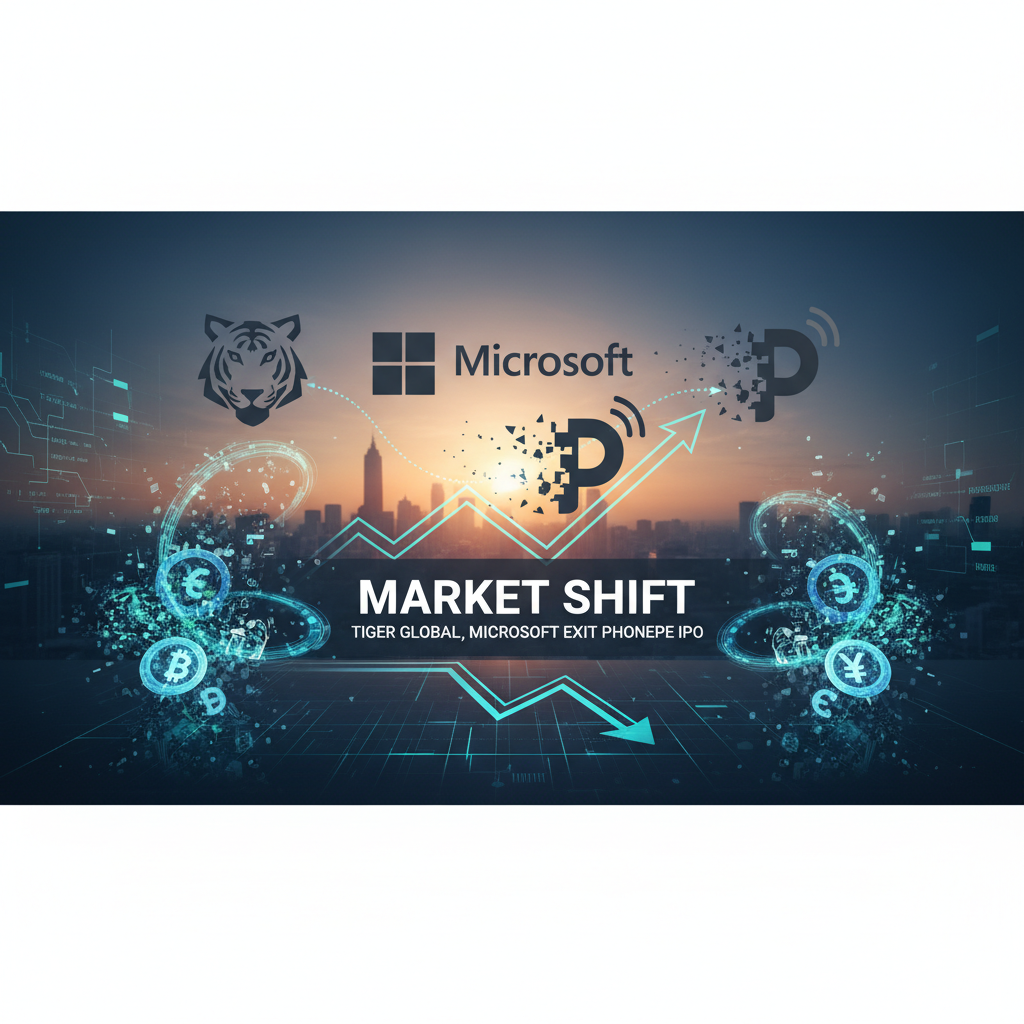
    The numbers were coming in fast, screens flickering in the subdued light of the Bloomberg terminal room. It was January 22, 2026, and the news was breaking: Tiger Global and Microsoft were set to fully exit their positions in PhonePe, the digital payments firm backed by Walmart. The move, announced ahead of PhonePe’s initial public offering, sent a ripple through the market, or so it seemed.

    Walmart, however, wasn’t following suit. Instead, the retail giant planned to retain its majority stake, while also offloading up to 45.9 million shares. The shift in strategy was immediately apparent, and the air in the room felt thick with speculation. What did it mean? Did the exits signal a lack of faith, or a strategic realignment? Or something else entirely?

    The atmosphere was tense, the chatter on the conference call, muted. Analysts were already running the numbers, trying to make sense of the valuation implications. One expert, speaking from the Peterson Institute for International Economics, suggested the move could reflect a broader trend. “It’s about portfolio diversification, and maybe, just maybe, a reassessment of risk in the current climate,” she said, her voice a steady counterpoint to the rising tide of market noise.

    Tiger Global and Microsoft’s decision to fully exit, while Walmart held steady. It was a stark contrast.

    The financial mechanics were intricate, the details of the IPO still unfolding. But the core story was clear: major players were making significant moves. The market’s reaction, of course, was the key.

    The implications were vast, and the possible scenarios, numerous. A successful IPO would validate PhonePe’s growth trajectory, but it also opened the door to new risks. Tax implications, regulatory hurdles, and evolving consumer behavior—all were factors that would shape the company’s future.

    The analysts continued to tap at their spreadsheets, the data points flashing across their screens, the sound a low hum. It was a complex, evolving situation, and the final chapter, still unwritten.

    And it was clear, the story wasn’t over.

  • Tiger Global & Microsoft Exit PhonePe IPO: Market Shift

    Tiger Global & Microsoft Exit PhonePe IPO: Market Shift

    The news hit the wires on January 22, 2026, a Tuesday, and the trading floor felt… subdued. Or maybe it was just the usual mid-week quiet, the air conditioning humming a steady drone, analysts already tapping away at spreadsheets. Tiger Global and Microsoft were finally pulling out of PhonePe, the Walmart-backed digital payments firm, via its upcoming IPO. Not a complete surprise, but the scale of the exit was notable.

    Reports indicate that Tiger Global and Microsoft are offering their full stakes. Walmart, on the other hand, is retaining its controlling interest, though it’s also selling a chunk – up to 45.9 million shares. It’s a shift, a repositioning, the kind that always makes you wonder what the smart money sees that the rest of us don’t.

    Details are still emerging, but the implications are already echoing. The market’s initial reaction? Muted, as far as could be seen. A quick glance at the early trading indicators told the story. This isn’t necessarily a sign of trouble, of course — it could be a strategic move to capitalize on the IPO’s potential. Still, some analysts are cautioning against reading too much into the initial reaction, suggesting a wait-and-see approach. As one financial analyst from a well-known research firm, said, “These kinds of exits are complex, reflecting a blend of portfolio strategy, market timing, and potentially, tax considerations.”

    This isn’t the first time we’ve seen this kind of play. There’s a pattern, a rhythm, to these large-scale exits. The timing, the valuation, the overall market conditions – all play a part, a complicated dance. It’s a game of chess, in a way. The players are shifting their pieces, and the board is constantly changing.

    The exit of these major investors raises several questions. What does this mean for PhonePe’s future? For Walmart’s long-term strategy in the Indian market? And, perhaps most importantly, what does it signal about the broader tech investment landscape? The answers, as always, are not straightforward.

    The details will become clearer in the coming weeks. But the initial move is made. The stakes are set.

  • Groww IPO: India’s Retail Investing Surge

    Groww IPO: India’s Retail Investing Surge

    The air in the trading room felt charged, you know? It was November 12, 2025, and all eyes were on Groww. The company, a prominent player in India’s retail investment space, had just launched its IPO. The numbers, honestly, were pretty striking.

    Groww managed to raise nearly $750 million. Shares opened at ₹112, which was already 12% above the initial issue price. By the close of trading, they’d climbed further, settling at ₹128.85. That gave the company a market capitalization of around ₹795 billion, roughly $9 billion.

    The buzz was palpable. Everyone seemed to be talking about it — from seasoned brokers to first-time investors. The mood was optimistic, reflecting the general sentiment surrounding the Indian market, particularly the retail sector. The tricky part is, a lot of this growth is relatively recent.

    A source at the Bombay Stock Exchange, who preferred to remain anonymous, mentioned that the IPO’s success was a clear indication of the confidence in India’s retail investing boom. “It’s a sign of a maturing market,” they said, “and a testament to the growing financial literacy among the younger generation.”

    The scene at the trading floor was a mix of tension and excitement. Screens flickered with real-time data, and the murmur of conversations filled the room. The success of Groww’s IPO, you could see, was more than just a financial event; it was a cultural one. It spoke volumes about the changing financial landscape in India.

    The company, it seems, is well-positioned to capitalize on this trend. Their platform has gained popularity among younger investors, offering a user-friendly interface and a wide range of investment options. The IPO, in a way, is just the next step.

    And the future? It’s hard to say, of course. But the initial success of the IPO certainly paints a positive picture — or maybe I’m misreading it. The market, after all, is a fickle beast.

  • Groww IPO: India’s Retail Investing Market Surges

    Groww IPO: India’s Retail Investing Market Surges

    The air in the trading room felt charged on November 12, 2025. You could almost feel the anticipation as Groww, the Indian investment platform, launched its Initial Public Offering. The numbers were impressive, as per reports.

    Groww, you see, managed to raise nearly $750 million. The shares opened at ₹112, a significant 12% above the issue price. By the close of trading, they were at ₹128.85. The market cap? Roughly $9 billion, a figure that seemed to hang in the air, a testament to the retail investing boom that’s been sweeping across India.

    It’s hard to ignore the broader context. India’s retail investing scene has been on fire. A witness mentioned, “It’s like everyone is looking for a piece of the pie.” Groww has been a major player in this, and this IPO seems to be a clear sign of confidence.

    The company’s success isn’t just about numbers, though. It’s also about timing, of course. The market is favorable, and Groww has positioned itself well. The platform has made investing more accessible, which is crucial, you know.

    The tricky part is what comes next. How will Groww use these funds? How will they maintain this momentum? The answers, like the market itself, are still unfolding. But the opening day performance gives them a strong starting point.

    And then there’s the ripple effect. Other companies are watching, no doubt. This IPO could well encourage more Indian startups to go public, further fueling the market. Or maybe I’m misreading it.

    The room cleared out slowly as the day ended. The screens, once filled with numbers, began to fade. The feeling, though, the buzz of a successful IPO, lingered.

  • Lenskart IPO: Stock Market Rollercoaster Ride

    Lenskart IPO: Stock Market Rollercoaster Ride

    There’s been a lot of buzz lately about Lenskart, the online eyewear giant, and their recent IPO. Honestly, the whole thing felt a little… wild. It’s not every day you see a company valued at nearly $8 billion go public, right?

    The first day on the stock market is always a nail-biter, and for Lenskart, it was no different. The opening wasn’t exactly a roaring success. The stock opened with a bit of a whimper, which definitely set some nerves on edge. You could feel the tension, I’m sure.

    But here’s where it gets interesting. Against the odds, Lenskart managed to pull things together. By the end of the day, the stock had clawed its way back, closing slightly above the IPO price. It wasn’t a massive jump, mind you, but it was enough to suggest that investors still had some faith in the company. And that’s saying something.

    Now, the whole situation got me thinking. The big question on everyone’s mind was whether that valuation was justified. $8 billion is a hefty price tag, and it definitely sparked a debate. Was it too high? Just right? Or maybe somewhere in between? The market, as it often does, seemed to be saying, “We’ll see.”

    Lenskart, if you don’t know, has built a pretty impressive business. They’ve disrupted the optics industry, offering a wide selection of eyewear online and through physical stores. They’ve got a strong brand and a loyal customer base. But the stock market is a fickle beast. What works in the business world doesn’t always translate to immediate success when you’re publicly listed.

    The first day performance is often a reflection of investor sentiment, the overall market conditions, and, let’s be honest, a bit of luck. Lenskart’s experience is a good reminder of how unpredictable the stock market can be. It’s a pretty wild ride.

    The public listing is a big step for any company. It brings in capital, yes, but it also brings a whole new level of scrutiny. Investors are watching, analysts are analyzing, and the pressure is on to perform. So, what happens next for Lenskart? That’s the million-dollar question, isn’t it?

    It’s easy to see why.

  • Pine Labs Eyes Global Fintech Expansion Amidst IPO

    Pine Labs Eyes Global Fintech Expansion Amidst IPO

    Pine Labs Aims for Global Fintech Leadership Amidst IPO Valuation Shift

    In the dynamic world of fintech, Indian player Pine Labs is making significant strides. With a presence already established in 20 countries, the company is strategically positioning itself for global expansion. This ambition comes at a time when the company has also adjusted its valuation in anticipation of its Initial Public Offering (IPO). This article delves into Pine Labs’ strategy, the current market dynamics, and what the future holds for this ambitious fintech firm.

    Pine Labs: A Fintech Pioneer from India

    Pine Labs, a prominent fintech company, has its roots firmly planted in India. It has evolved from a payment solutions provider to a comprehensive fintech platform. The firm’s expansion strategy has been notably aggressive, with a focus on delivering innovative financial solutions across diverse markets. Their journey reflects the broader growth of the fintech sector, particularly within the Indian market.

    As reported by TechCrunch on November 3, 2025, Pine Labs is aiming to take Indian fintech global. This ambition is not merely about increasing its geographical footprint; it is about establishing a strong presence and becoming a leader in the global fintech arena.

    Navigating the IPO and Valuation Landscape

    One of the critical aspects of Pine Labs’ strategy is its approach to the IPO. The decision to adjust the company’s valuation is a strategic move, reflecting the current market conditions and the company’s long-term vision. This adjustment can be seen as a proactive measure to ensure a successful IPO, aligning with investor expectations and market realities. The intricacies of this process highlight the complexities of entering the public market, especially within the fast-evolving fintech sector.

    The IPO process is often a pivotal moment for any company, and for Pine Labs, it represents an opportunity to secure further investment and accelerate its global expansion plans. The valuation cut, though seemingly a setback, can be viewed as a calculated step to attract investors and build a strong foundation for future growth. The company’s ability to navigate this phase will be crucial in determining its long-term success.

    Global Expansion: A Strategic Imperative

    Pine Labs’ focus on global expansion is a testament to its ambition to become a dominant player in the fintech industry. The company’s presence in 20 countries already provides a solid foundation for further growth. The company is likely focusing on tailoring its products and services to meet the unique needs of each market it enters. Such an approach requires a deep understanding of local regulations, consumer behavior, and technological infrastructure.

    The HOW of Pine Labs’ global expansion is likely multifaceted, including strategic partnerships, acquisitions, and organic growth in key markets. This approach enables them to rapidly scale their operations and gain a competitive edge. The WHY behind this expansion is clear: to establish themselves as a global leader in fintech.

    The Future of Pine Labs

    The future for Pine Labs looks promising, provided they can successfully execute their global expansion strategy and navigate the IPO process effectively. The fintech market is highly competitive, requiring continuous innovation and adaptability. Pine Labs’ ability to stay ahead of the curve, adapt to changing market dynamics, and meet the evolving needs of its customers will be key to its continued success.

    The company’s journey will be closely watched by investors, industry analysts, and competitors alike. Pine Labs’ success story will not only shape its future but also influence the trajectory of the Indian fintech sector on the global stage.