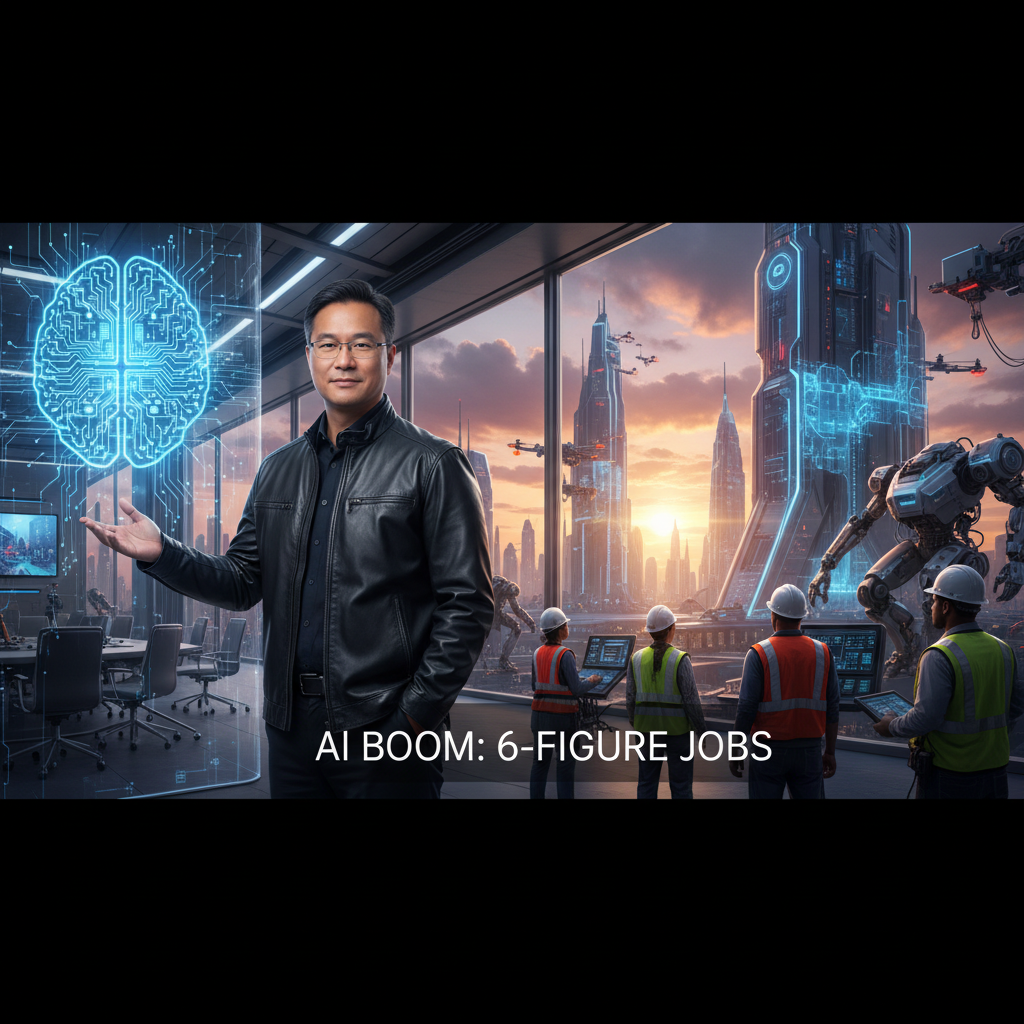
The hum of servers fills the air, a constant thrum in the newly-minted data center. Engineers in hard hats and safety vests are swarming over the concrete shell, installing the cooling systems that will keep the processors from melting down. This isn’t just another construction site; it’s the front line of the AI revolution, a physical manifestation of the digital world’s insatiable appetite for power.
Nvidia CEO Jensen Huang sees this clearly. He’s calling the AI infrastructure buildout the “largest buildout in human history.” Huang’s prediction? That this boom will create a surge in six-figure construction jobs. The implications are enormous. Increased demand for skilled trades workers—electricians, HVAC technicians, and specialized construction crews—means wage growth, and a potential transformation of the job market.
“It’s not just about the chips,” says a senior analyst at Gartner, who asked not to be named. “It’s about the entire ecosystem. The power, the cooling, the physical space to house these things. All of that is construction.”
Consider the scale. Training large language models (LLMs) like those powering generative AI tools requires massive computational resources. This translates directly into more data centers, each a sprawling complex demanding specialized construction. The M100 and M300 chips that Nvidia is rolling out in 2026 and 2027 will demand even more robust infrastructure, pushing the need for more data centers. And more construction workers.
But there are bottlenecks. The supply chain, for one. TSMC, the world’s largest chip manufacturer, is already running at full capacity. SMIC, China’s largest chipmaker, faces US export controls and is unable to produce the most advanced chips. These constraints create a race against the clock. Can the construction keep pace with the demand for AI?
The pace is frenetic. At a recent industry event, executives from a major data center construction firm were seen huddling, poring over blueprints and timelines. One attendee overheard them discussing the need to shave weeks off a project’s completion date. The pressure is on, and the clock is ticking.
Domestic procurement policies also come into play. Beijing, for example, is prioritizing domestic suppliers for infrastructure projects, creating both opportunities and challenges for companies involved in the buildout. This adds another layer of complexity to an already intricate landscape.
The numbers tell a compelling story. Analyst forecasts suggest that the AI infrastructure market will continue to grow exponentially over the next decade. This growth will be fueled not just by technological advancements, but by the physical reality of building the machines that power them. Or maybe that’s how the supply shock reads from here.
The implications extend beyond the construction site. Increased wages in the skilled trades could have a ripple effect, boosting local economies and creating new opportunities. It’s a boom that’s not just about bits and bytes, but about concrete and steel, and the people who build it all.