Tag: news

  • OpenClaw Creator Peter Steinberger Joins OpenAI

    OpenClaw Creator Peter Steinberger Joins OpenAI

    OpenClaw Creator Peter Steinberger Joins OpenAI: A New Chapter

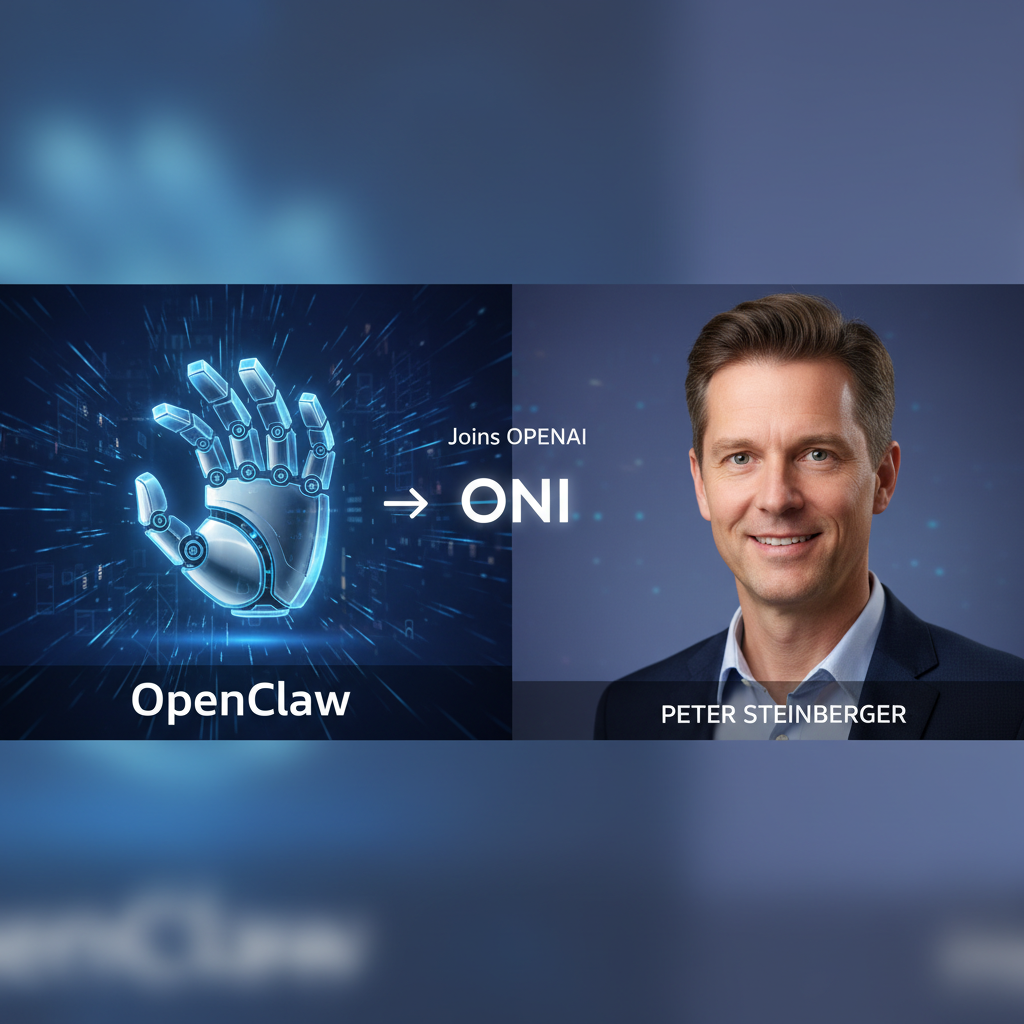
    In a move that’s captured the attention of the tech world, Peter Steinberger, the creator of OpenClaw, is joining OpenAI. This announcement, made on February 15, 2026, marks a significant moment for both the open-source community and the rapidly evolving field of artificial intelligence. This article delves into the implications of this partnership, exploring what it means for the future of OpenClaw and the broader tech landscape.

    OpenAI Welcomes Peter Steinberger

    OpenAI, known for its cutting-edge research and development in AI, has brought Peter Steinberger into its fold. While the specific role Steinberger will occupy within OpenAI has not been fully disclosed, his expertise in creating OpenClaw, an open-source project, suggests a strategic alignment with OpenAI’s goals. The integration of Steinberger’s talents hints at a deeper investment in open-source initiatives or perhaps a renewed focus on tools that complement OpenAI’s core offerings.

    The Future of OpenClaw

    One of the key takeaways from this announcement is OpenAI’s commitment to keep OpenClaw alive as an open-source project. This commitment is crucial, as it ensures that the community that has grown around OpenClaw will continue to thrive and contribute to its development. The decision to maintain OpenClaw as an open-source entity also aligns with the broader movement within the tech industry toward transparency and collaboration. This approach allows developers worldwide to access, modify, and distribute the software, fostering innovation and community-driven improvements. This decision also provides a valuable signal about OpenAI’s approach to open-source projects.

    Implications for the Tech Community

    The addition of Peter Steinberger to OpenAI could have several implications for the tech community. First, it could lead to increased collaboration between OpenAI and the open-source community, fostering a more inclusive and collaborative environment. Second, it could signal a shift in OpenAI’s strategy, with a greater emphasis on open-source projects. Lastly, it may lead to new innovations that combine the strengths of both OpenAI and OpenClaw. The combination of Steinberger’s expertise and OpenAI’s resources could create powerful new tools and technologies.

    Conclusion

    Peter Steinberger’s move to OpenAI is a notable event in the tech world. It represents a confluence of talent, resources, and a shared vision for the future of technology. As OpenAI continues to grow and evolve, the contributions of individuals like Steinberger will be instrumental in shaping the landscape of artificial intelligence and open-source software. The tech community will be watching closely to see how this partnership unfolds and what innovations emerge as a result.

    Source: TechCrunch article, February 15, 2026. (https://techcrunch.com/2026/02/15/openclaw-creator-peter-steinberger-joins-openai/)

  • OpenClaw Creator Peter Steinberger Joins OpenAI: Open Source Future

    OpenClaw Creator Peter Steinberger Joins OpenAI: Open Source Future

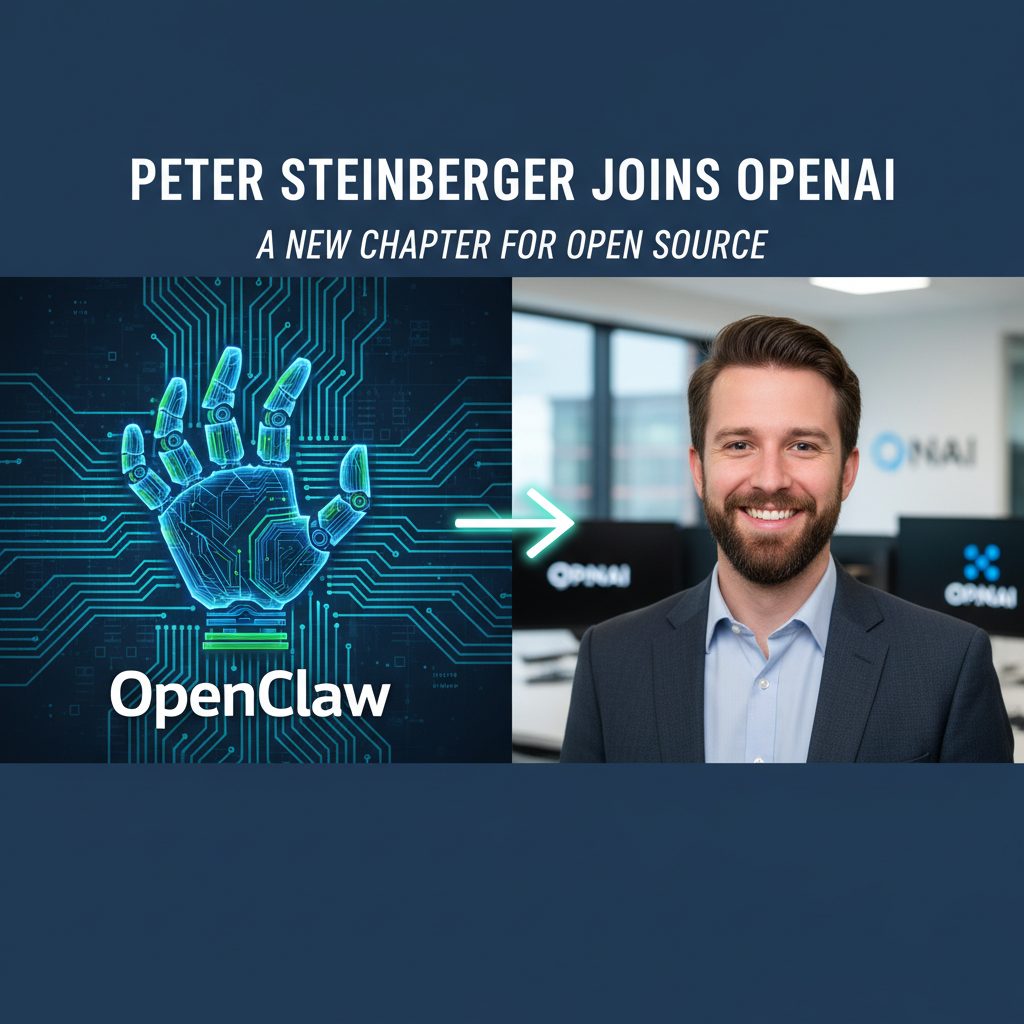
    OpenClaw Creator Peter Steinberger Joins OpenAI: A New Chapter for Open Source

    In a move that underscores the continued importance of open-source projects within the tech landscape, OpenAI has announced that Peter Steinberger, the creator of OpenClaw, is joining their team. This announcement, made on February 15, 2026, marks a significant moment for both Steinberger and the future of OpenClaw, which will continue as an open-source project.

    This news, reported by TechCrunch, highlights OpenAI’s commitment to supporting and expanding open-source initiatives. The integration of Steinberger, a key figure in the open-source community, into OpenAI suggests a strategic move to leverage his expertise and ensure the continued development and accessibility of OpenClaw. This decision not only benefits OpenAI but also reinforces the value of open-source projects within the broader tech ecosystem.

    The Significance of OpenClaw

    OpenClaw’s continued existence as an open-source project is a testament to the community’s dedication to collaborative development and innovation. Open-source projects like OpenClaw thrive on contributions from developers worldwide, fostering an environment of shared knowledge and continuous improvement. The commitment to keeping OpenClaw open source ensures that it remains accessible to developers, researchers, and anyone interested in contributing to its evolution.

    By bringing Peter Steinberger into the fold, OpenAI is not only gaining his expertise but also signaling its support for the open-source community. This move could potentially lead to increased collaboration between OpenAI and the OpenClaw community, resulting in new features, improvements, and broader adoption of the project. The synergy between a leading AI research company and an established open-source project promises exciting developments in the future.

    OpenAI’s Strategic Vision

    OpenAI’s decision to bring in Steinberger aligns with its broader vision of fostering innovation and collaboration within the tech community. By supporting open-source projects, OpenAI can tap into a vast pool of talent and knowledge, accelerating its own research and development efforts. This approach not only benefits OpenAI but also contributes to the growth of the tech industry as a whole.

    The move also reflects a growing trend in the tech industry, where companies are increasingly recognizing the value of open-source projects. By embracing open-source, companies can foster innovation, build stronger communities, and accelerate the development of new technologies. OpenAI’s actions serve as an example of how tech companies can successfully integrate open-source initiatives into their strategies.

    The Future of OpenClaw

    With Peter Steinberger now at OpenAI, the future of OpenClaw looks promising. The project’s open-source nature, combined with the resources and expertise of OpenAI, is likely to lead to further innovation and development. The open-source community can look forward to new features, improvements, and increased accessibility as a result of this partnership.

    This is a positive development for both OpenAI and the open-source community. It underscores the importance of collaboration and knowledge sharing in the tech industry, and it promises exciting advancements in the years to come. The continued availability of OpenClaw as an open-source project ensures that it will remain a valuable resource for developers and researchers worldwide.

  • Aditya Birla Group & JOE & THE JUICE Partner for India Launch

    Aditya Birla Group & JOE & THE JUICE Partner for India Launch

    The news arrived during a quiet patch in the markets, the kind where the air feels thick with anticipation, and everyone’s watching the screens. Aditya Birla New Age Hospitality (ABNAH) announced a partnership with JOE & THE JUICE, the international café brand. The plan? To open the first Indian store in 2026. A move that, on paper, looks like a savvy play for the food services sector.

    It’s a bold step, especially considering the current economic climate. Inflation figures, though showing signs of cooling, still cast a long shadow. Consumer spending, while resilient, is showing cracks. The Aditya Birla Group, with its deep pockets, seems to be betting on the long game. Their existing portfolio includes brands like Hakkasan and Yauatcha, so they know the landscape.

    The details, as always, are what matter. The exact financial terms of the partnership weren’t immediately disclosed, but these deals are rarely simple. There are franchise fees, royalty agreements, and the not-so-small matter of real estate. Finding prime locations in a country as diverse as India is a challenge in itself. The market, in its current state, is not exactly predictable.

    “This is a calculated risk,” an analyst from a leading financial firm said, speaking on condition of anonymity. “The Aditya Birla Group has a reputation for strategic investments. They’re likely banking on the brand’s appeal to younger consumers. And the potential for expansion across the country is significant, or so it seems.”

    The opening in 2026 is the key, really. It gives ABNAH time to navigate the regulatory landscape and build a solid foundation. Or maybe to adjust plans, if needed. The food and beverage sector in India is highly competitive. Several international brands have already made their mark, and the local players are formidable.

    The initial reaction in the market was muted, nothing dramatic. No major sell-offs, no sudden spikes. More of a wait-and-see attitude, the kind that often precedes a significant shift. The next few quarters will reveal much.

    The deal, and the timing of it, is a gamble. But in the world of business, what isn’t?

  • AWS Weekly Roundup: Kiro CLI, EC2 X8i, & European Sovereign Cloud

    AWS Weekly Roundup: Kiro CLI, EC2 X8i, & European Sovereign Cloud

    The hum of the servers was a constant presence, a low thrum that vibrated through the floor of the AWS data center in Frankfurt. It was late January 2026, and the team was back from the holidays, diving headfirst into the new year’s updates. The AWS News Blog had just released its weekly roundup, and the buzz was immediate.

    First up, the Kiro CLI, the command-line interface, had some shiny new features. Apparently, it now supports a wider range of instance types, which, according to a blog post, streamlined deployment for the EC2 X8i instances. These instances, launched just a few months prior, were already making waves, promising significant performance gains for compute-intensive workloads.

    Then, the AWS European Sovereign Cloud. This was a big one. The initiative, designed to provide cloud services within the EU with enhanced data residency and control, was a direct response to increasing regulatory pressures. As per reports, the first phase of this rollout, based in Germany, had already seen a considerable uptake from government agencies and financial institutions. It seemed like a smart move.

    Meanwhile, the EC2 X8i instances themselves were attracting a lot of attention. They boasted improved networking and storage capabilities. An analyst from Gartner, in a recent report, predicted a 20% increase in adoption rates for these instances throughout 2026, driven by demand from AI and machine learning applications. They were built with Intel’s latest Xeon processors, which, for once, seemed to be keeping pace with the demands of the market.

    The team lead, Sarah Chen, leaned back in her chair, a slight frown creasing her brow. “Still waiting on those thermal tests from the Shanghai fab,” she muttered, more to herself than anyone else. The supply chain was… well, it was what it was. US export controls, and the ongoing chip wars, meant that every deployment was a delicate dance.

    The AWS Weekly Roundup also mentioned other updates, including enhancements to the Amazon S3 service and new features for the AWS Lambda compute service. It was, as usual, a flurry of activity, reflecting the relentless pace of innovation in the cloud computing space. It’s kind of overwhelming.

    By evening, the data center was still humming, the team was still working, and the cloud, as always, was expanding. The updates kept coming, and the world kept changing. The European Sovereign Cloud and the EC2 X8i instances, in a way, represented both the promise and the challenges of the future: innovation, regulation, and the ever-present shadow of the global supply chain.

  • AWS Weekly Roundup: Kiro CLI, European Cloud, & EC2 X8i

    AWS Weekly Roundup: Kiro CLI, European Cloud, & EC2 X8i

    The hum of the servers was a constant companion in the AWS data center, a low thrum that vibrated through the floor. It was January 19, 2026, and the team was back in action after a well-deserved break. The air crackled with the usual energy of a new year, but also with the anticipation of the updates coming from AWS.

    First on the list was the Kiro CLI. The latest features were rolling out, and engineers were already diving into the code, testing the new functionalities. It seemed like the tool was becoming even more crucial for managing cloud resources. A senior developer, Sarah Chen, mentioned, “The Kiro CLI is becoming indispensable for our daily operations. It streamlines everything.”

    Meanwhile, the AWS European Sovereign Cloud was another major topic. The initiative, designed to provide enhanced data residency and control for European customers, was gaining traction. It was a response to the growing demand for data sovereignty, a trend that’s reshaping the cloud landscape. As per reports, the project was expected to generate a 20% increase in European customer adoption by Q2 2026.

    The EC2 X8i instances also sparked discussion. These new instances promised improved performance for demanding workloads. The team was particularly interested in the enhanced memory capabilities, which could be a game-changer for certain applications. They were meticulously reviewing the thermal tests, a critical step before full deployment.

    Earlier today, an analyst from Gartner, Maria Rodriguez, noted, “AWS continues to innovate, but the market is becoming more competitive. The European Sovereign Cloud is a smart move, addressing a critical need.”

    By evening, the team was still at it, poring over the details, the keyboard clicks a steady rhythm in the room. The updates were a lot to take in, but it was all part of the job.

    And then there was the ongoing discussion about supply chains, the constraints, the export rules. It was a reality of the tech world, a constant factor in planning and execution. The team knew it well.

    It’s all connected, in a way. The hardware, the software, the policy, the market. It was a complex web, and AWS was right in the middle.

  • AWS Weekly Roundup: Anticipating re:Invent 2025

    AWS Weekly Roundup: Anticipating re:Invent 2025

    Alright, so it’s that time of year again, isn’t it? The AWS Weekly Roundup just dropped, and it’s got me thinking about re:Invent 2025. Seems like it was just last year, but already, we’re only three weeks away.

    I remember last year’s re:Invent. Sixty thousand people descended on Las Vegas, Nevada. The atmosphere? Electric. You could feel the buzz everywhere, from the keynote sessions to the late-night networking events. It’s a huge deal for the AWS community, a real gathering of minds.

    This year, the anticipation is building. I’m already looking forward to the new launches and announcements. That’s always the highlight, right? Seeing what AWS has been cooking up, how they’re pushing the boundaries of cloud computing.

    Notably, the roundup touches on some key areas. There’s the usual updates on Amazon S3, which is always evolving, always getting better. Then, of course, Amazon EC2, the workhorse of the AWS infrastructure. They’re constantly refining those services, making them more powerful, more efficient.

    But re:Invent is more than just product updates, though. It’s about the whole experience. The chance to connect with other AWS users, the deep dives into new technologies, the keynotes that set the tone for the coming year. It’s a place to learn, to network, and to get inspired.

    I’m also wondering what this year’s conference will bring. What new innovations will be unveiled? What trends will dominate the conversations? It’s always a bit of a guessing game, but that’s part of the fun, you know?

    Meanwhile, registration is still open. If you’re considering going, I’d say, do it. It’s an investment in yourself, in your career. It’s a chance to learn from the best, to see what the future holds, and to be a part of something big.

    I’m already mentally preparing for the trip, you could say. Booking flights, making a list of sessions, and, most importantly, getting ready to soak it all in. It’s a lot to take in, but that’s the point, isn’t it? To be immersed in the world of AWS, even if it’s just for a few days.

    It’s funny, the whole thing. The sheer scale of it. All those people, all those announcements, all that energy. It’s a bit overwhelming, in a good way. You walk away feeling energized, ready to take on the world. Or, at least, ready to take on the next cloud project.

    For now, I’m just looking forward to it. Three weeks. It’ll be here before we know it.

  • Mazama Energy: Superhot Rocks Powering Data Centers 24/7

    Mazama Energy’s Superhot Rocks Could Power Data Centers 24/7

    In a significant step forward for the renewable energy sector, geothermal startup Mazama Energy, with backing from Khosla Ventures, is making waves in the pursuit of continuous power. The company’s innovative approach centers on harnessing the potential of superhot rocks to provide a constant source of energy, a critical need for modern data centers. This advancement positions geothermal energy as a key player in the future of power generation.

    The Promise of Geothermal Energy

    Mazama Energy’s recent achievement involves drilling a borehole that has set a new temperature record. This breakthrough is pivotal because it demonstrates the viability of extracting energy from exceptionally hot geological formations. The goal is clear: to deliver 24/7 power, a capability that sets geothermal apart from intermittent sources like solar and wind. The ‘what’ here is geothermal energy, and the ‘how’ involves utilizing advanced drilling techniques to access these superhot resources.

    Geothermal’s Role in Data Center Power

    The strategic importance of this development lies in its potential to transform the energy landscape for data centers. These facilities require a consistent and reliable power supply to operate, making geothermal energy an ideal solution. By tapping into these superhot rocks, Mazama Energy aims to provide data centers with a sustainable and dependable power source. The ‘why’ behind this endeavor is to make geothermal a key player in data center power, a move that could significantly reduce the carbon footprint of these energy-intensive facilities.

    Innovation and the Future of Energy

    The innovation demonstrated by Mazama Energy highlights the ongoing advancements in renewable energy technologies. The company’s success in drilling a record-setting borehole showcases the potential of geothermal energy to meet the growing demands for sustainable power. As technology continues to evolve, geothermal energy could become a cornerstone of the global shift towards cleaner and more reliable energy sources. This is a story of ‘what’ – geothermal energy – and ‘who’ – Mazama Energy and Khosla – working together to forge a new path in the ‘technology’ sector.

    Conclusion

    Mazama Energy’s work represents a significant step forward in the quest for sustainable and reliable energy solutions. By focusing on the untapped potential of superhot rocks, the company is not only pushing the boundaries of geothermal technology but also paving the way for a more sustainable future. This initiative underscores the critical role of innovation in addressing global energy challenges and the increasing importance of renewable energy sources in powering our world.