Tag: simulation

  • Amazon EC2 Hpc8a: New AMD Power for HPC Workloads

    Amazon EC2 Hpc8a: New AMD Power for HPC Workloads

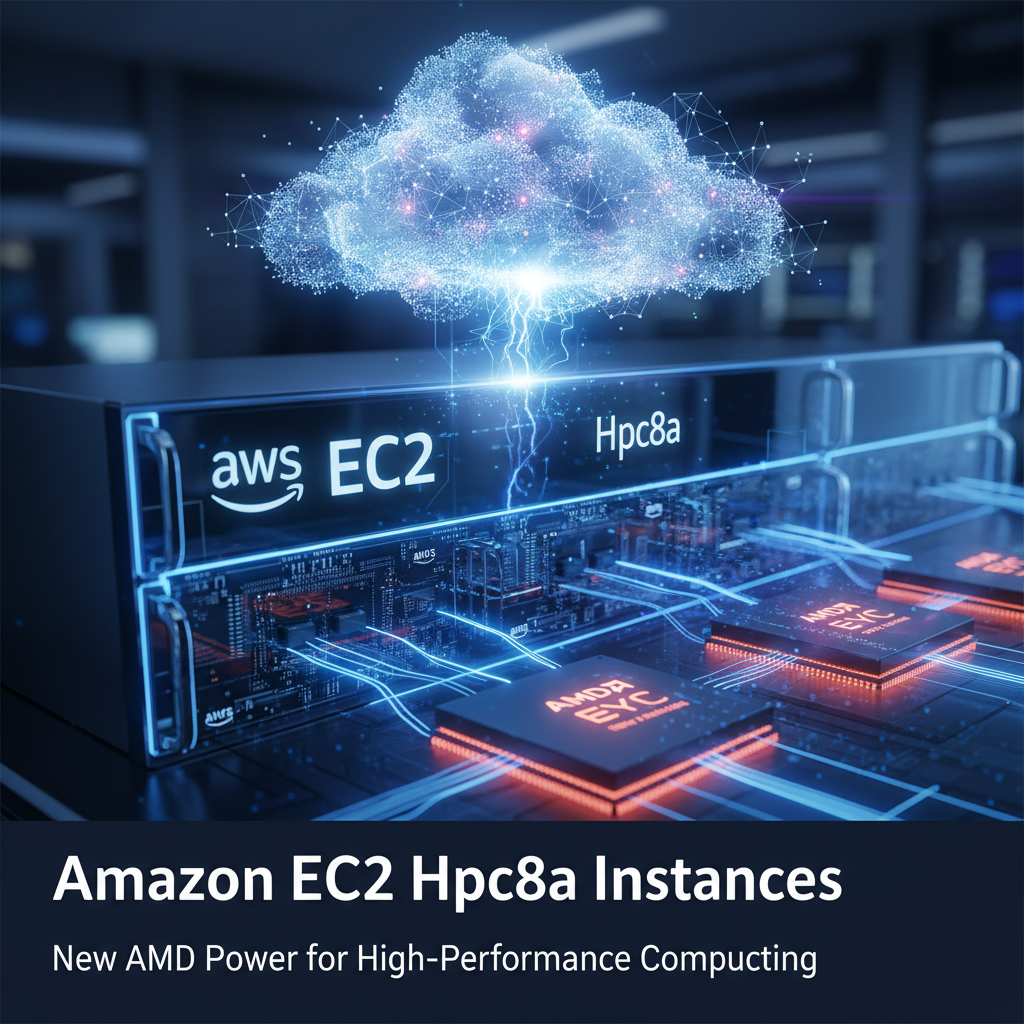
    The hum of the servers was almost a constant presence in the AWS data center, I’m told. Engineers, heads down, were likely poring over thermal tests. It was just announced: Amazon EC2 Hpc8a instances, now available, are powered by the 5th Gen AMD EPYC processors. This launch marks a significant upgrade for high-performance computing (HPC) workloads.

    According to the official AWS News Blog, these new instances deliver up to 40% higher performance compared to previous generations. That’s a pretty hefty jump. They also boast increased memory bandwidth and 300 Gbps Elastic Fabric Adapter networking. The aim is to accelerate compute-intensive simulations, engineering workloads, and tightly coupled HPC applications. It seems like the improvements are targeted at areas where raw processing power and fast data transfer are critical.

    For context, AWS has been steadily expanding its offerings in the HPC space, recognizing the growing demand for cloud-based solutions in scientific research, financial modeling, and engineering design. The shift towards cloud computing has been driven, in part, by the need for scalable and cost-effective infrastructure. Companies can avoid the capital expenditure of building and maintaining their own data centers. Analysts at Gartner have, for some time, predicted this trend. “The move to the cloud allows organizations to quickly scale their resources up or down based on their needs,” as one analyst put it, “which is particularly advantageous for HPC workloads that can be very spiky in their demand.”

    The 5th Gen AMD EPYC processors are built on the latest “Zen 4c” architecture, and the instances utilize the Elastic Fabric Adapter (EFA) networking. This combination is designed to provide high levels of performance. This will, of course, be essential for applications that require fast communication between compute nodes. Think of weather forecasting models, drug discovery simulations, and complex financial risk analysis. These are the kinds of applications that stand to benefit most.

    The announcement comes at a time when the market is seeing a lot of competition in the high-performance computing space. Intel, NVIDIA, and other players are also vying for market share. AMD has been making steady gains in recent years, particularly in the server market. These new EC2 instances are a further example of their efforts. They are hoping to continue this momentum.

    The launch of the Hpc8a instances is a clear signal of Amazon’s commitment to the HPC market. It offers customers access to cutting-edge hardware and infrastructure. It will be interesting to see how the market reacts and how this impacts the competitive landscape. The increased performance and capabilities certainly seem like they will be welcomed by a wide range of users.

  • Amazon EC2 Hpc8a: New HPC Power with AMD EPYC Processors

    Amazon EC2 Hpc8a: New HPC Power with AMD EPYC Processors

    The hum of the servers was almost a constant presence in the AWS data center, a low thrum punctuated by the occasional higher-pitched whine of a cooling fan. It was late, maybe 10 PM, and the team was running thermal tests on the new Amazon EC2 Hpc8a instances. These were the machines, the latest from Amazon, powered by the 5th Gen AMD EPYC processors.

    Earlier this week, Amazon announced the availability of these new instances. The promise? Up to 40% higher performance compared to the previous generation, along with increased memory bandwidth and 300 Gbps Elastic Fabric Adapter networking. That kind of boost is significant, especially for those running compute-intensive simulations, engineering workloads, and tightly coupled HPC applications. It’s a clear signal of where the market is headed.

    “This is a significant step forward,” said Sid Sharma, an analyst at Forrester Research, in a phone call. “The increased performance and networking capabilities are crucial for applications like computational fluid dynamics and weather modeling. These kinds of workloads demand raw processing power and high-speed data transfer.”

    The announcement itself was pretty straightforward. However, the implications ripple outwards. The Hpc8a instances are designed to tackle some of the most demanding computational challenges. These include everything from complex simulations in the automotive and aerospace industries to advanced research in fields like genomics and drug discovery. The 300 Gbps Elastic Fabric Adapter networking is particularly important here, ensuring that data can move quickly between nodes, a critical element in tightly coupled HPC applications.

    The team was focused on the thermal performance. Every watt of power matters. The new AMD EPYC processors are supposed to be more efficient, but the engineers were double-checking everything. It’s the kind of detail that matters when you’re talking about running large-scale simulations or complex engineering projects.

    Meanwhile, the market is reacting. According to a recent report from Gartner, the HPC market is projected to reach $49 billion by 2027. This growth is driven by the increasing need for faster processing power and more efficient infrastructure. The new EC2 instances are certainly positioned to capture a piece of that.

    The shift to these new processors, the 5th Gen AMD EPYC, also points to the ongoing competition in the chip market. AMD has been steadily gaining ground against Intel, and these new instances are another data point in that trend. The availability of these new instances, the Hpc8a, is happening now.

    The new instances are available now, but the full impact will take time to unfold. It’s still early days, but the initial signs are promising. At least, that’s what it seems like from here.