CloudTalk

Tag: Startup

  • VoiceRun Secures $5.5M to Build Voice Agent Factory

    VoiceRun Secures $5.5M to Build Voice Agent Factory

    VoiceRun Secures $5.5M to Fuel Development of Voice Agent Factory

    In a significant boost for the voice technology sector, VoiceRun, a startup specializing in the creation of voice agents, has announced a successful funding round. The company has secured $5.5 million in investment, spearheaded by FlyBridge. This infusion of capital is earmarked for the development of a ‘voice agent factory,’ a concept poised to revolutionize how voice-based AI is developed and deployed.

    The announcement, made on January 14, 2026, highlights the growing interest and investment in artificial intelligence (AI) and voice technology. VoiceRun’s approach centers on streamlining the creation and implementation of voice agents, which are becoming increasingly prevalent across various industries. The funding will allow VoiceRun to accelerate its mission of building advanced voice technologies.

    Understanding VoiceRun’s Vision

    The core of VoiceRun’s strategy revolves around its ‘voice agent factory.’ This innovative concept suggests a streamlined, efficient process for creating and deploying voice agents. The goal is to make these agents more accessible and easier to integrate into different applications, from customer service to personal assistants. The funding will enable VoiceRun to invest in the infrastructure and expertise necessary to scale its operations and meet the growing demand for sophisticated voice solutions.

    By focusing on efficiency and scalability, VoiceRun aims to become a key player in the rapidly expanding voice technology market. The investment from FlyBridge underscores the belief in VoiceRun’s potential to disrupt the industry and drive innovation. This funding is a strategic move, reflecting the growing importance of voice technology in the future of human-computer interaction.

    The Impact of the Funding

    The $5.5 million funding round represents more than just a financial injection; it’s a validation of VoiceRun’s vision and business model. The investment will be used to build the necessary resources to develop and deploy voice agents. This includes investments in research and development, talent acquisition, and infrastructure development. The ‘voice agent factory’ model promises to accelerate innovation and reduce the time-to-market for new voice agent solutions.

    The involvement of FlyBridge, a recognized player in the investment landscape, further solidifies the credibility of VoiceRun. This partnership provides VoiceRun with not only capital but also access to valuable industry expertise and networks. This strategic alliance is crucial for VoiceRun’s long-term growth and success.

    Looking Ahead

    VoiceRun is poised to make a significant impact on the voice technology landscape. The recent funding round will enable the company to execute its vision of creating a ‘voice agent factory,’ which is set to change the way voice agents are developed and deployed. The company is well-positioned to capitalize on the growing demand for voice-based AI solutions.

    This investment reflects a broader trend of increased investment in artificial intelligence and voice technology, signaling the industry’s belief in the future of voice-driven interaction. VoiceRun is at the forefront of this evolution, and with this new funding, the company is well-equipped to drive innovation and transformation in the years to come.

    Source: TechCrunch

  • VoiceRun Secures $5.5M to Build Voice Agent Factory

    VoiceRun Secures $5.5M to Build Voice Agent Factory

    VoiceRun Secures $5.5M to Fuel Development of Voice Agent Factory

    In a significant boost for voice technology, VoiceRun, a startup specializing in the creation of voice agents, has successfully closed a $5.5 million funding round. The investment, spearheaded by FlyBridge, signals growing confidence in the future of conversational AI and automated voice interactions. This news, first reported on January 14, 2026, by TechCrunch, underscores the dynamic growth within the artificial intelligence (AI) sector.

    Building the Voice Agent Factory

    The core objective of this funding is to establish a ‘voice agent factory.’ This ambitious project aims to streamline the development and deployment of sophisticated voice agents. The ‘what’ of VoiceRun’s mission is to create a scalable system for producing intelligent virtual assistants capable of handling a wide range of tasks. This approach reflects a strategic move to meet the increasing demand for advanced voice-based solutions across various industries.

    The ‘why’ behind this investment is clear: to capitalize on the expanding market for voice technology. As voice assistants become more integrated into daily life, from smart home devices to customer service platforms, the need for efficient, high-quality voice agents is escalating. VoiceRun’s initiative to build a factory dedicated to this purpose positions the company to be a significant player in the years to come.

    Key Players and the Investment

    FlyBridge, as the lead investor, brings a wealth of experience in backing innovative technology companies. Their decision to invest in VoiceRun highlights their belief in the startup’s potential and the broader voice technology market. The ‘who’ of this story includes the individuals and teams at both VoiceRun and FlyBridge who are driving this forward. This financial backing will provide VoiceRun with the resources necessary to scale its operations, expand its team, and accelerate its product development roadmap.

    The ‘when’ of this event is crucial. The funding round, announced on January 14, 2026, marks a pivotal moment for VoiceRun. It reflects the current momentum in the AI landscape, where innovative solutions are attracting substantial investment. This timing also aligns with the growing adoption of voice-based technologies by consumers and businesses alike. The ‘what’ of the investment – $5.5 million – is a substantial amount that will allow VoiceRun to execute its vision effectively.

    The Future of Voice Agents

    The concept of a ‘voice agent factory’ suggests a move towards industrializing the creation of AI-powered assistants. This approach has the potential to dramatically reduce the time and resources required to develop and deploy these technologies. The ‘how’ of VoiceRun’s approach, while not fully detailed, likely involves automation, standardized processes, and advanced AI tools to create and refine its voice agents. This strategic initiative could lead to more accessible, efficient, and versatile voice solutions for consumers and businesses.

    In conclusion, VoiceRun’s successful funding round is a testament to the increasing importance of voice technology in our lives. The establishment of a ‘voice agent factory’ is a bold move that could reshape the industry. With the backing of FlyBridge and a clear vision for the future, VoiceRun is well-positioned to make significant strides in the development and deployment of advanced voice agents.

  • Harbinger Raises $160M to Build Electric Trucks for FedEx

    Harbinger Raises $160M to Build Electric Trucks for FedEx

    The news hit late on a Tuesday, or maybe it was Wednesday — the days blur when you’re chasing a story. Harbinger, a Los Angeles-based startup, had just landed a hefty $160 million in funding.

    The plan? To build electric truck chassis. And not just any chassis, but ones specifically for FedEx.

    By the end of this year, they’re aiming to deliver more than 50 of these electric workhorses. It’s an ambitious goal, especially given the timelines in this industry.

    The announcement, picked up by TechCrunch on November 13, 2025, sent a ripple through the industry. Electric vehicles, and the companies that build them, are always a hot topic.

    The air in the room, when I first heard it, felt charged. There’s a lot of pressure, of course, on these companies. Building trucks, especially electric ones, is not easy. It’s expensive, and the technology is still developing rapidly.

    But the funding signals something. It’s a bet, a vote of confidence in Harbinger’s vision. And in the future of transportation, too.

    “This funding allows us to scale our production,” an official reportedly said, “and meet the growing demand for sustainable delivery solutions.”

    Sustainable delivery solutions — that’s the phrase everyone’s using now. It’s more than just buzzwords, though; it’s about adapting. About being ready for what’s coming.

    Fifty trucks is a start. A small one, in a way, when you consider the scale of FedEx’s operations. Still, it’s a step. A real one.

  • Cursor’s $2.3B Funding: AI Coding Tools Surge

    Cursor’s $2.3B Funding: AI Coding Tools Surge

    The tech world, it seems, moves at warp speed these days. It was just five months ago, wasn’t it, that we were all talking about Cursor’s previous funding round? Now, the coding assistant startup has secured a whopping $2.3 billion. That’s a lot of zeros, even for Silicon Valley.

    The news broke on November 13, 2025, according to a TechCrunch report. The funding, they say, is earmarked for further development of Composer. That’s the AI model Cursor rolled out back in October. Seems like a smart move, given the buzz around AI and its potential to reshape, well, everything.

    Cursor, as a company, is riding a wave. And it’s a big one. This latest investment is a clear signal of the growing interest in AI-powered coding tools. It’s a field that’s attracting major attention, and for good reason. Imagine a future where coding is more accessible, more efficient, and perhaps, even a little less tedious. That’s the promise, anyway.

    Of course, with these kinds of numbers, there’s always a ripple effect. Competitors are probably already strategizing, and investors are looking for the next big thing. The ministry confirmed that the investment will be used to improve the current AI model.

    And it’s not just about the money. It’s about what the money *means*. It means confidence in the technology, in the team, and in the future of coding. It’s a bet on innovation, on the idea that AI can genuinely make a difference in how we build things. For once, that feels like a good bet.

    A witness recalled: “The development of the AI coding assistant has been very fast, and it is a good sign for the industry.”

  • Milestone Raises $10M to Ensure AI Investments Pay Off

    Milestone Raises $10M to Ensure AI Investments Pay Off

    The news arrived on November 13, 2025, from Tel Aviv: Milestone, an Israeli startup, had secured a $10 million seed funding round. The goal? To make sure that the promises of AI in engineering actually, you know, pay off. It’s a concept that’s been floating around the tech world for a bit now, this idea of connecting AI tools with concrete results.

    Milestone is trying to bridge the gap, correlating AI tool usage with engineering metrics. Things like code quality, for instance. Because, let’s be honest, throwing money at AI is one thing. Actually *seeing* a return on that investment, especially in a field as complex as software engineering, is another.

    The funding, as per reports, is intended to help them build out their platform. They want to give engineering teams a clearer picture of how their AI investments are actually performing. It’s a practical approach, really. The kind of thing that makes you wonder why it wasn’t a priority sooner. The company, as it stands, is based in Israel.

    I spoke with one of the investors earlier today. “We believe in Milestone’s vision to bring clarity to AI investments,” they said. “It’s about making sure that the tools are actually delivering improvements.” A pretty straightforward statement, but it speaks to a larger undercurrent in the tech world. The initial hype around AI is settling, and now the focus is shifting. How do you quantify the value? How do you make it real?

    It’s about more than just buzzwords and promises. It’s about building something that actually works, that solves real problems. The kind of thing that, hopefully, makes a difference.

  • WisdomAI Raises $50M: AI Data Startup Secures Funding

    WisdomAI Raises $50M: AI Data Startup Secures Funding

    It’s a familiar story, in a way. Another day, another hefty investment in the world of AI. This time, it’s WisdomAI, the data analytics startup, announcing a fresh round of funding. The news, breaking on November 12th, 2025, seems to confirm the relentless march of technological advancement. Or at least, the relentless flow of venture capital.

    WisdomAI, as per reports, secured a cool $50 million. The round was led by Kleiner Perkins and Nvidia, two names that carry a certain weight in the tech world. It’s a vote of confidence, no doubt, in WisdomAI’s approach to data analytics.

    What exactly does WisdomAI do? Well, they’re offering AI-driven solutions to make sense of, well, everything. Structured data, unstructured data, even the “dirty” kind — the stuff riddled with typos and errors. Seems like a necessary service, these days.

    I remember reading a tweet from a data scientist a while back. She was complaining about the sheer volume of unusable data, the digital equivalent of a cluttered desk. WisdomAI, at least on paper, seems to offer a solution to that very problem.

    The company’s goal is to answer business questions by sifting through this digital mess. It’s a bold ambition. To take the chaotic reality of raw data and turn it into something useful.

    “We believe in the power of data, even the messy bits,” an official from WisdomAI was quoted as saying in TechCrunch.

    And it’s not just about the technology itself. It’s about what that technology *allows*. Could this mean faster insights, better decisions? Maybe. Or maybe it’s just another step in the ongoing quest to make sense of the world, one data point at a time. Still, $50 million is a lot of faith.

  • WisdomAI Raises $50M: AI Data Analytics Startup Secures Funding

    WisdomAI Raises $50M: AI Data Analytics Startup Secures Funding

    The news hit my desk earlier today: WisdomAI, the AI data analytics startup, has secured another round of funding. This time, a cool $50 million, led by Kleiner Perkins and Nvidia. It seems like only yesterday they were announcing their seed round, but that was back in the spring of 2024. Time flies, especially in this tech world.

    What’s got everyone so interested? Well, WisdomAI is promising something pretty compelling: AI that can make sense of all kinds of data to answer business questions. Not just the nice, clean stuff, but the messy, “dirty” data, full of typos and errors. That’s a huge promise, and a big problem they’re trying to solve.

    A spokesperson from Kleiner Perkins, reached by phone this afternoon, said, “We see huge potential in WisdomAI’s approach. Their ability to handle unstructured data, the stuff that’s often overlooked, is a game-changer.” That’s the kind of language you hear in these situations, but it’s hard to dismiss the enthusiasm. Especially when you see the names attached.

    And, the numbers don’t lie. This latest round brings WisdomAI’s total funding to over $80 million, as per public records. It’s a sign, I think, of where the market is headed. Data, and making sense of it, is the new gold rush. Everyone wants to be able to pull insights from every scrap of information.

    Meanwhile, the market is watching, too. You see the chatter online, the analysts weighing in. It’s a reminder of how quickly things move. One minute, a company is just an idea; the next, it’s a headline. And then, the pressure is on.

    It’s still early days, of course. But this funding round, coming in November of 2025, certainly feels like a significant step forward for WisdomAI. And, in a way, for the whole field. The kind of investment that makes you wonder what they’ll come up with next.

  • Uare.ai: From Immortality to Personalized AI

    Uare.ai: From Immortality to Personalized AI

    So, Eternos. Remember them? They were the immortality startup, right? Well, things have…shifted. It seems they’re now pivoting, or you could say, they’ve taken a sharp turn into something a little less…eternal.

    Now, they’re called Uare.ai. And the focus? A personal AI. One that, if the reports are accurate, will actually sound like *you*. Kind of a wild concept, honestly.

    Notably, this shift comes alongside a fresh round of funding. Uare.ai just snagged $10.3 million in seed funding. Mayfield and Boldstart Ventures led the investment, as per the news from November 11th, 2025. Not a small sum, by any means. That amount of cash suggests some serious belief in this new direction. It makes you wonder what the investors saw in this pivot.

    Earlier, the core idea was, well, to beat death. Now, it’s about creating an AI that, presumably, knows you inside and out. That’s a huge change. But in a way, it also makes sense. The dream of immortality is…vast. Perhaps too vast. Maybe the more achievable goal is to create something that captures *you*.

    And it’s a smart play, if you think about it. The AI space is hot. Everyone’s talking about it. Every tech company is trying to get in on the action. But a personal AI? One that mimics your voice, your mannerisms, your…well, *you*? That’s different. That’s a unique selling point, you could say.

    The shift from an immortality startup to a personal AI also speaks volumes about the tech landscape. It’s a reminder that even the most ambitious ideas evolve. They have to. The market shifts, investors’ interests change, and sometimes, the original vision just…isn’t feasible. Or maybe it’s too far ahead of its time.

    Mayfield and Boldstart Ventures obviously saw something compelling in this new direction. Uare.ai is now positioned to capitalize on the growing demand for personalized technology. It’s a smart move, and it’ll be interesting to see how this plays out. It’s a long shot, sure, but it’s a fascinating one.

    Technology is always evolving. Startups are constantly adapting. This is just another example of that constant change. The whole thing is a reminder of how quickly things move in the tech world. One minute, you’re promising eternal life, and the next, you’re building an AI that sounds like you.

    Still, the question remains: what does this mean for the future? Will we all have AI companions that perfectly mirror us? Will we be able to, in a way, live on, even after we’re gone? It’s a bit of a mind-bender.

    For now, though, Eternos, or rather, Uare.ai, has secured its funding and is moving forward. The seed funding is in place. The personal AI is on the horizon. It’s a new chapter. And it’s probably going to be a fascinating one to watch.

  • Gamma’s $2.1B Valuation: Is PowerPoint Doomed?

    Gamma’s $2.1B Valuation: Is PowerPoint Doomed?

    It’s a funny thing, seeing the tech world move at warp speed. You blink, and suddenly there’s a new contender, ready to shake things up. This time, it’s Gamma, the AI-powered presentation tool, making some serious waves.

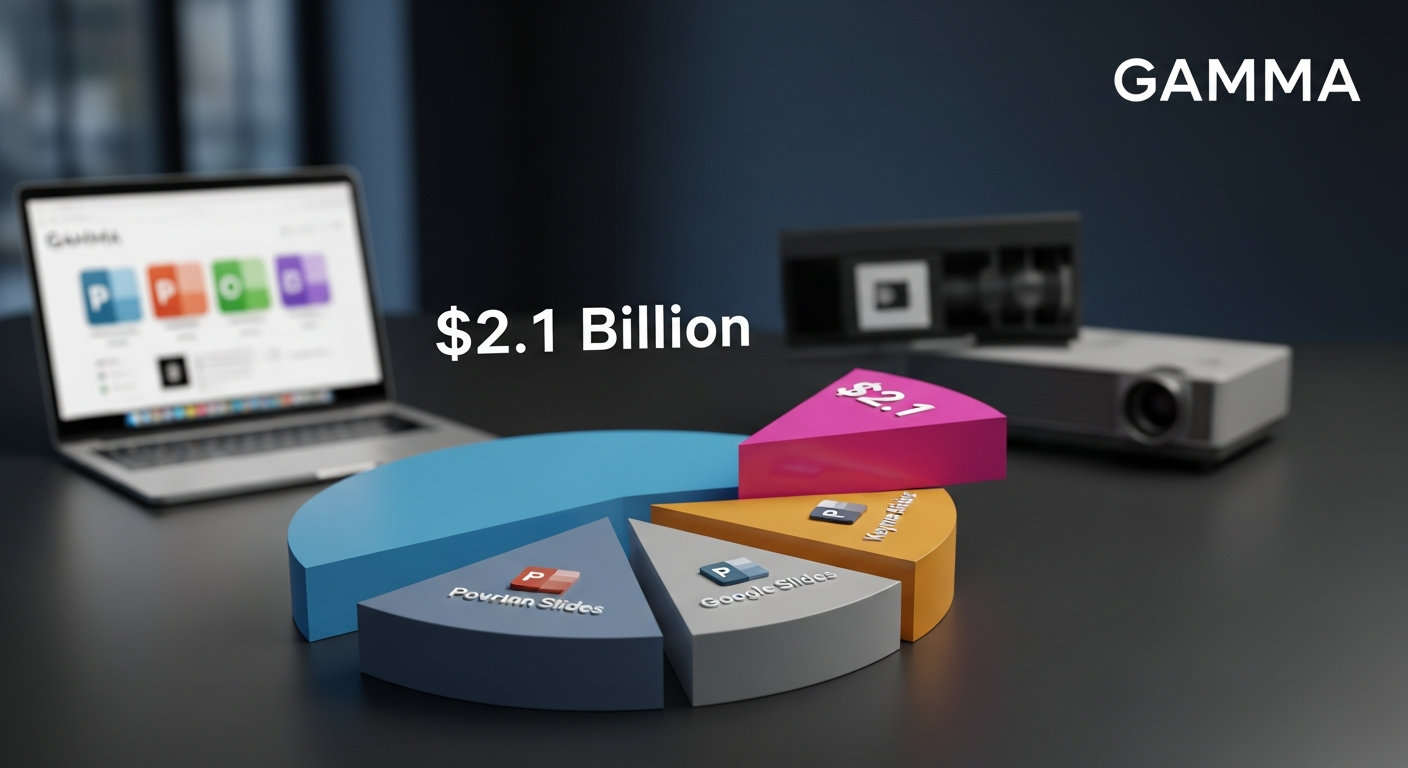
    Notably, Gamma’s co-founder and CEO, Grant Lee, just announced some pretty impressive numbers. We’re talking about a $2.1 billion valuation and a cool $100 million in annual recurring revenue. That’s not chump change, right? It’s the kind of figures that make you sit up and take notice, especially in the competitive world of tech startups.

    And, you know, the whole thing got me thinking: could this be the beginning of the end for PowerPoint? I mean, PowerPoint has been the presentation software of choice for, well, pretty much everyone for decades. It’s in the DNA of business presentations, academic lectures, you name it.

    But Gamma? It’s different. It’s built on AI, designed to make creating presentations faster and, maybe, a little less painful. The whole pitch is about streamlining the process, making it easier to whip up something visually appealing without spending hours wrestling with design.

    The AI Factor

    The rise of AI has changed the landscape for all sorts of things, and the presentation game is no exception. It’s not just about automating the creation process. It’s also about changing the way we think about presentations.

    It seems like Gamma has tapped into something. People are looking for ways to work smarter, not harder. They want tools that can help them communicate their ideas effectively without getting bogged down in the technicalities of design. It’s a compelling vision, for sure.

    Back in the day, creating a decent presentation meant hours of work. You’d be fiddling with layouts, choosing fonts, and trying to make sure everything looked polished. But with AI, a lot of that heavy lifting can be automated. You feed the system your content, and it generates a presentation. That’s the promise, anyway.

    Is PowerPoint Doomed?

    Now, I’m not saying PowerPoint is going to disappear overnight. It’s a behemoth, deeply entrenched in the way we work. But the fact that Gamma has reached such a high valuation, so quickly, it does make you wonder. It shows there’s a real appetite for something new, something different.

    And let’s be honest, PowerPoint can be… well, it can be a bit clunky sometimes. The interface isn’t always the most intuitive. It’s a tool that’s been around for a long time, and it shows. So, there’s a definite opening for a competitor that can offer a more modern, streamlined experience.

    Still, it’s a long shot, right? Taking on Microsoft is no small feat. But Gamma has momentum. They’re growing fast, and they’ve got some serious financial backing. The $100 million ARR is particularly telling. It shows that people are actually using the product and, presumably, finding value in it.

    What’s Next?

    So, what’s next for Gamma? That’s the big question. They’ve got the valuation, they’ve got the revenue, and they’ve got the buzz. The next step will be to keep growing, keep innovating, and keep chipping away at PowerPoint’s dominance.

    For now, it’s a fascinating story to watch unfold. It’s a reminder that the tech world is always changing, always evolving. And that the tools we use to communicate, to share ideas, are constantly being reimagined.

    You could say it’s a David versus Goliath story, but with a twist. It’s AI versus… well, you know.

  • Gamma’s $2.1B Valuation: Is PowerPoint Doomed?

    Gamma’s $2.1B Valuation: Is PowerPoint Doomed?

    So, this is interesting, isn’t it? I was just reading about Gamma, the AI presentation tool that’s kind of being touted as a PowerPoint-killer. And it turns out, they’ve just hit a $2.1 billion valuation. That’s… a lot.

    Grant Lee, the co-founder and CEO, says they’ve also reached $100 million in ARR – annual recurring revenue. Which, if true, means they’re growing, and growing fast. The whole thing makes you wonder, is this the future of presentations? Is PowerPoint, this thing we’ve all grown up with, on its way out?

    Gamma, from what I understand, uses AI to help you create presentations. You feed it your content, and it spits out something visually appealing. It’s designed to be quick and easy, which, let’s be honest, is what a lot of us are looking for when we’re staring down the barrel of a presentation deadline.

    Notably, the technology category is seeing a lot of these kinds of startups. AI is, well, everywhere. And it makes sense that it would find its way into something like presentations. It’s a task that can be tedious, time-consuming. Anything that promises to make it easier is going to get a look.

    I mean, PowerPoint has been the default for so long. It’s what we all know. But it’s also… a bit clunky, isn’t it? A bit dated. It’s easy to see how something that’s built from the ground up with AI in mind could offer a real advantage. The ease of use is a big selling point, I’d imagine.

    And the numbers? $2.1 billion is serious money. It’s a sign that investors are seeing something here, that they believe in the potential of Gamma and its AI-powered approach. The $100 million ARR is another key data point. It suggests that people are actually using the product, and that they’re willing to pay for it.

    This is all happening in 2025, according to the TechCrunch report. So it’s not like this is some far-off future. It’s happening now. The startup world moves fast, and it looks like Gamma is leading the charge.

    I can’t help but wonder what this means for the future of work, too. Will presentations become easier, more streamlined? Will we all be using AI to create our slides in the coming years? It’s a bit of a shift, and it’s always interesting to see how technology changes the way we do things.

    Anyway, it’s just a thought. For now, it seems like Gamma is making a splash. And PowerPoint? Well, we’ll see.