Tag: Tata Steel

  • Pentagon vs. Anthropic: AI Contract Showdown

    The news hit the wires on Friday — the Pentagon, unhappy with Anthropic PBC, and its handling of AI tech, threatening to pull the plug on military contracts. It felt like a shot across the bow, a clear signal that the government is tightening its grip on the rapidly evolving world of artificial intelligence. The stakes? Potentially millions in contracts, and a precedent for how these deals will play out.

    The specifics are still emerging, but the core issue seems to be a disagreement over terms of use. The Pentagon, as per reports, wants certain assurances about how its technology is being used. Anthropic, which has received substantial backing in recent years, now faces a critical choice: comply or risk losing a major client. It’s a classic business standoff, amplified by the sensitive nature of the technology involved.

    At least, that’s how it looked then.

    The ripple effects could be significant. For Anthropic, a loss of this contract would be a blow to its revenue stream. For the Pentagon, it would mean finding a replacement, which is easier said than done, given the specialized nature of AI development. It also raises questions about the government’s broader strategy for AI adoption. Are they being too cautious? Or, maybe, not cautious enough?

    This isn’t just a tech story; it’s a business one. The implications for the market are already being felt. Shares of Anthropic’s competitors—if there are any—are likely to see some movement. The incident underscores the risks inherent in the AI sector, particularly for companies reliant on government contracts. As one analyst from a respected policy center noted, “This situation highlights the need for clear guidelines and strong oversight in the use of AI, especially in sensitive areas like defense.”

    Think about the money. Contracts, of course, but also the intangible value of trust. The government’s willingness to work with a company often depends on its ability to meet specific requirements. This is where things get interesting. What exactly are the terms? What does compliance look like? The answers to these questions will reveal a lot about the future of AI and government relations.

    Then, there’s the question of enforcement. The Pentagon, as a major purchaser, has considerable leverage. But what happens if Anthropic digs in its heels? Does the government have other options? It’s a game of brinkmanship, and the players are now in the spotlight.

    The air in the room, or at least the digital one, is thick with uncertainty. Where will it go from here?
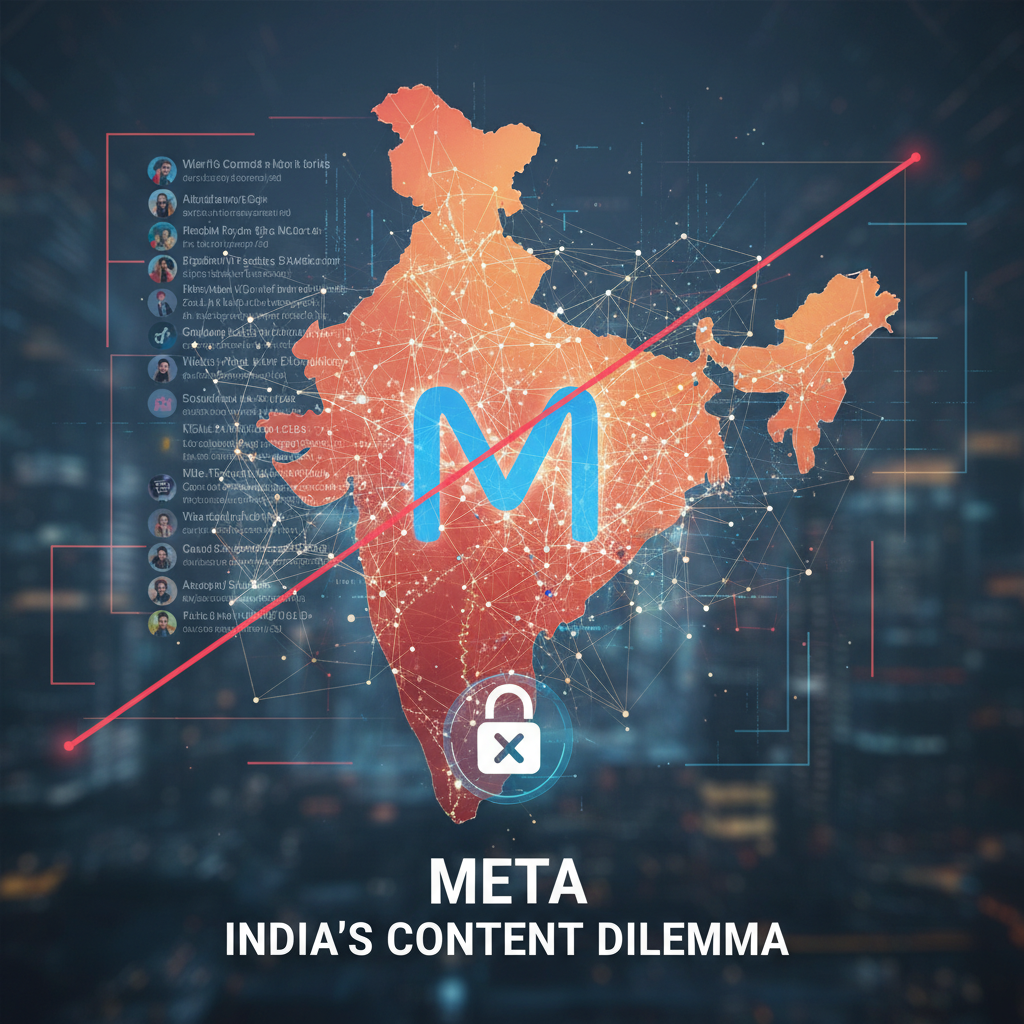
  • Meta Faces Content Takedown Challenges in India

    Meta Faces Content Takedown Challenges in India

    The news hit the wires, and immediately, it felt like a tightening of the screws — Meta, grappling with India’s new content takedown rules. Three hours. That’s the window. A blink, really, in the world of global content moderation. The implications, as the analysts began to parse them, felt significant.

    It’s not just about the speed; it’s the operational pressure that comes with it, according to the company. The compressed timelines, as Meta stated, add to an already complex environment. Compliance windows are getting shorter, especially considering the rapid spread of AI-driven content. The Indian government’s push to curb these harms has put tech giants like Meta in a tough spot.

    The immediate effect? Increased operational costs, certainly. More staff, more automation, more everything to meet these demands. And then there’s the potential for errors. The pressure to act quickly, to remove content within that three-hour window, increases the risk of mistakes. A misstep, and suddenly, Meta is facing fines, reputational damage, or worse. The details are still emerging, but the market’s reaction — a slight dip in the stock price — spoke volumes.

    One expert, speaking from the Brookings India Center, noted the potential for this to become a global trend, that’s what’s worrying the industry. “India is often a testing ground,” the analyst said. “What happens here, how these regulations evolve, could very well influence other nations.”

    The three-hour rule isn’t just about speed; it’s about shifting responsibilities. Meta, like other tech platforms, is now more directly responsible for policing content. Or maybe that’s just how it looks right now. The government is essentially saying, “You host it, you manage it.” And that changes the entire game.

    Privacy compliance is another layer, another headache. The shorter windows mean less time to assess the legality of content, to weigh the privacy implications. It’s a delicate balance, and the margin for error is shrinking. The atmosphere in the room, where the news broke, felt tense. Still does, in a way.

    The numbers themselves tell a story. Meta’s advertising revenue in India, for example, which hit approximately $2 billion last year, is now at risk. The increased regulatory burden, the potential for fines, all contribute to financial uncertainty. And that uncertainty is something the market hates.

    The shift also impacts AI. As AI-generated content becomes more prevalent, the challenge of detecting and removing harmful material within that three-hour window grows exponentially. It’s a race against the clock, a constant game of catch-up. The room was quiet, except for the tapping of keyboards.

    The conclusion, though still forming, seems clear: Meta faces significant hurdles. The three-hour rule is just one piece of the puzzle, but it’s a crucial one. It’s a sign of the times, a reflection of the evolving relationship between tech companies and governments. And the costs, both financial and operational, are adding up.

  • India’s Revised CPI: Better Policy Outcomes Ahead

    The newsroom felt a bit subdued this morning, or maybe it’s just the usual pre-market quiet. But the revised consumer price index (CPI) figures for India, they’re out, and the mood is shifting. The upgraded index, designed to better reflect how people actually experience the cost of living, is a crucial step.

    It’s about time. For years, economists have pointed out the flaws in the old system, how it failed to capture the realities on the ground. This overhaul, as per reports, should lead to more effective policy formulation. It’s a good sign, especially when considering the volatility in global markets.

    The core issue? The old CPI, in some ways, was out of touch. It didn’t accurately gauge the shifts in consumer behavior, the impact of localized price hikes, or the changing spending patterns. The revised version is expected to change that, with a broader basket of goods and services, and a more granular approach to data collection. The statistics ministry has a real task ahead, making sure these key macro gauges don’t get outdated again.

    The implications are significant. Better data means better decisions. For instance, the Reserve Bank of India (RBI) relies heavily on the CPI to set its monetary policy. If the index is flawed, the policy response will be, too. This impacts everything from interest rates to inflation targets.

    “It’s a game changer, in a way,” said Dr. Priya Sharma, an economist at the Center for Economic Policy Research, on a call earlier this morning. “With a more accurate picture of inflation, the government can fine-tune its fiscal policies, targeting specific sectors or income groups.” And that’s the crux of it.

    Consider the impact on the common household. If the CPI accurately reflects the price of food, fuel, and essential goods, the government can design more effective social welfare programs, or adjust tax brackets to provide relief. It’s about being responsive to the needs of the people, I think.

    And then there’s the market reaction. Investors watch these numbers closely. A more reliable CPI could lead to greater confidence in the Indian economy, attracting foreign investment and stabilizing the rupee. Stability is key.

    The details are still being parsed, of course. The exact weightings of the new index, the base year, and the methodologies – all these matter. But the shift toward a more representative CPI is a positive one. It’s a signal that India is committed to sound economic management. It’s a message to the world, really.

    From here on, better data, better policies, and hopefully, a better economic outlook. The room is starting to fill, the trading floor is probably heating up, and the numbers are still shifting.

  • Tata Steel & Google Cloud: Digital Transformation for Steel Success

    Tata Steel Forges Ahead: A Digital Revolution in Steelmaking

    In an era demanding both sustainability and efficiency, Tata Steel is undergoing a significant transformation, setting a new standard for the global steel industry. Partnering with Google Cloud, the company is leveraging the power of data and digital technologies to optimize operations, reduce downtime, and pave the way for a more sustainable future. This initiative promises to reshape the way steel is made, offering a compelling case study for other heavy industries.

    Why Digital Transformation Matters in Steel

    The steel industry is facing unprecedented pressure. Demand for high-performance, innovative steels is rising, while the need to minimize environmental impact and streamline production processes is more critical than ever. Consider the use of thermally sprayed components, for instance. These components enhance performance but often present complex maintenance challenges. Identifying and addressing potential issues quickly is key. This is where the power of data analytics comes into play.

    “We recognized early on that digital transformation was not just an option, but a necessity for our future competitiveness,” says a Tata Steel spokesperson. “Our collaboration with Google Cloud is enabling us to unlock unprecedented insights into our operations.”

    Data-Driven Insights: The Engine of Change

    At the heart of Tata Steel’s initiative lies a focus on predictive maintenance. Imagine a network of sensors and IoT devices constantly feeding real-time data into the cloud. This data, encompassing factors like temperature, vibration, and energy consumption, is analyzed using advanced machine learning algorithms. This allows Tata Steel to anticipate equipment failures before they occur.

    The early results are promising. Tata Steel has already achieved a 15% reduction in unplanned outages across several key facilities. Furthermore, by using Google Cloud’s machine learning capabilities, the company is optimizing production schedules and resource allocation, resulting in an estimated 5% increase in overall efficiency.

    Concrete Examples: Transforming Steelmaking Processes

    This digital transformation extends beyond predictive maintenance. For example:

    • Blast Furnace Optimization: Real-time monitoring and analysis of blast furnace data allows for adjustments to the process, improving efficiency and reducing emissions.
    • Quality Control: Machine learning algorithms analyze data from various stages of production to identify and address quality issues proactively.
    • Energy Management: Data-driven insights help optimize energy consumption across the plant, contributing to significant cost savings and reduced environmental footprint.

    Sustainability at the Forefront

    Sustainability is a core tenet of Tata Steel’s strategy. By leveraging data-driven insights, the company is actively working to minimize its environmental impact. This includes reducing energy waste, optimizing resource utilization, and lowering emissions. The integration of cloud-based dashboards provides real-time alerts on potential issues, integrating seamlessly with existing systems. This approach is crucial for compliance with increasingly stringent environmental regulations.

    What This Means for the Industry

    Industry experts are closely monitoring Tata Steel’s progress, viewing it as a potential blueprint for other heavy industries. The ability to anticipate and prevent equipment failures translates directly into increased production, reduced costs, and improved safety. The use of a hybrid deep learning model, for example, could soon allow for real-time slag flow monitoring, further improving process efficiency.

    “Tata Steel’s approach highlights the transformative potential of cloud-based technologies in the industrial sector,” says [Quote from Google Cloud representative], “[their] commitment to innovation and sustainability is truly inspiring.”

    The Bottom Line

    While challenges such as data security and integration costs remain, Tata Steel’s unwavering focus on data-driven insights, predictive maintenance, and sustainable practices has positioned them for continued success. By embracing digital transformation, Tata Steel is not just improving its own operations; it is setting a new standard for the future of steelmaking, proving that efficiency, sustainability, and innovation can go hand in hand. This is a smart move, and one that other companies would be wise to emulate.