CloudTalk

Tag: threat landscape

  • Pentagon vs. Anthropic: AI Contract Showdown

    The news hit the wires on Friday — the Pentagon, unhappy with Anthropic PBC, and its handling of AI tech, threatening to pull the plug on military contracts. It felt like a shot across the bow, a clear signal that the government is tightening its grip on the rapidly evolving world of artificial intelligence. The stakes? Potentially millions in contracts, and a precedent for how these deals will play out.

    The specifics are still emerging, but the core issue seems to be a disagreement over terms of use. The Pentagon, as per reports, wants certain assurances about how its technology is being used. Anthropic, which has received substantial backing in recent years, now faces a critical choice: comply or risk losing a major client. It’s a classic business standoff, amplified by the sensitive nature of the technology involved.

    At least, that’s how it looked then.

    The ripple effects could be significant. For Anthropic, a loss of this contract would be a blow to its revenue stream. For the Pentagon, it would mean finding a replacement, which is easier said than done, given the specialized nature of AI development. It also raises questions about the government’s broader strategy for AI adoption. Are they being too cautious? Or, maybe, not cautious enough?

    This isn’t just a tech story; it’s a business one. The implications for the market are already being felt. Shares of Anthropic’s competitors—if there are any—are likely to see some movement. The incident underscores the risks inherent in the AI sector, particularly for companies reliant on government contracts. As one analyst from a respected policy center noted, “This situation highlights the need for clear guidelines and strong oversight in the use of AI, especially in sensitive areas like defense.”

    Think about the money. Contracts, of course, but also the intangible value of trust. The government’s willingness to work with a company often depends on its ability to meet specific requirements. This is where things get interesting. What exactly are the terms? What does compliance look like? The answers to these questions will reveal a lot about the future of AI and government relations.

    Then, there’s the question of enforcement. The Pentagon, as a major purchaser, has considerable leverage. But what happens if Anthropic digs in its heels? Does the government have other options? It’s a game of brinkmanship, and the players are now in the spotlight.

    The air in the room, or at least the digital one, is thick with uncertainty. Where will it go from here?

  • Social Media’s Feast: How Online Buzz Reshaped Food Festivals

    Social Media’s Feast: How Online Buzz Reshaped Food Festivals

    The shift was almost imperceptible at first, a subtle current in the vast ocean of online trends. But by late 2022, it was undeniable: social media had begun to reshape the food festival scene, and the changes were profound. It’s a story of shifting attention spans, evolving consumer habits, and, of course, the ever-present influence of the almighty dollar.

    It started with the influencers. Those digital tastemakers, with their perfectly curated feeds, became the new face of promotion. Food festival organizers, once reliant on print ads and local radio spots, began courting these online personalities, offering them exclusive previews and prime photo opportunities. The goal? To generate buzz, to create a sense of FOMO (fear of missing out), and to drive ticket sales.

    And it worked. For a while, at least. Attendance figures, in some cases, saw a marked increase. Events that once struggled to fill their venues found themselves inundated with eager foodies, all clamoring for a taste of the latest culinary creations. But this new reality also came with its own set of challenges. The dependence on social media meant a constant need to feed the beast, to keep the content flowing, to stay relevant in a world where trends could shift overnight.

    “The game has changed,” says Sarah Chen, a marketing analyst at the Urban-Brookings Tax Policy Center. “It’s no longer just about the food; it’s about the experience, the shareability, the Instagrammability.” She notes the shift is also visible in the types of vendors that now thrive at these events, with an emphasis on visually appealing dishes. The focus is increasingly on the aesthetics of consumption.

    The numbers tell a story, too. According to a recent report by the National Restaurant Association, digital marketing spending among food-related businesses increased by roughly 35% between 2021 and 2023. This is a significant jump, reflecting the growing importance of online presence. And, yet, there’s a downside: the reliance on paid promotions and influencer endorsements, which can quickly become expensive, potentially squeezing profit margins for smaller organizers. Or maybe I’m misreading it.

    Consider the case of the “Taste of [City Name]” festival. In 2021, the event relied primarily on traditional advertising, with a budget of roughly $50,000. By 2023, that figure had more than doubled, with a significant portion allocated to social media marketing and influencer collaborations.

    The rise of social media also created new opportunities. Food festivals began to experiment with online ticket sales, virtual cooking classes, and live streaming of events. This expanded their reach, allowing them to connect with audiences far beyond their physical locations. This is an interesting development.

    But the story doesn’t end there. There’s also the question of sustainability. The emphasis on quick trends and fleeting moments can lead to a sense of disposability, both for the food itself and for the events. The pressure to constantly innovate, to stay ahead of the curve, can be exhausting. It’s a relentless cycle.

    In the end, social media has transformed food festivals, for better and for worse. It’s a new era, one defined by digital influence, shifting consumer behaviors, and the constant pursuit of the next viral sensation. The question now is: can these events adapt to the ever-changing landscape, or will they be swallowed by the very platforms that once propelled them to stardom?

  • KRAFTON Appoints Kangwook Lee as Chief AI Officer

    The news arrived mid-afternoon, just as the markets began their slow, steady descent. KRAFTON, the South Korean gaming giant, had appointed Kangwook Lee as its Chief AI Officer. The announcement, released on December 14th, immediately sparked interest across financial circles, and the murmur of analysts on the trading floor – the muted chatter that always precedes a significant shift – was almost audible.

    It’s a move that, on the surface, seems straightforward enough. Lee, tasked with leading AI research, is expected to drive innovation and boost KRAFTON’s technological edge. But what does it truly signify? Especially considering the broader landscape of the gaming industry.

    The company, known for its blockbuster title PUBG: Battlegrounds, has been under pressure to diversify and innovate. The appointment of a Chief AI Officer is one step. Another is the need to stay ahead of the curve. The gaming world is changing fast, and AI is becoming more critical to development.

    The press release was short on specifics, of course. It mentioned the usual goals: to enhance the company’s capabilities, to push the boundaries of what’s possible. But the details, the actual mechanics of how this would play out, remained elusive. Or maybe I’m misreading it.

    One thing is clear: KRAFTON is placing a significant bet on AI. This isn’t just about integrating some new features; it’s about fundamentally reshaping the way games are made, played, and experienced. The potential impact on everything from game design to player engagement is immense. But the risks are equally substantial.

    “It’s a bold move,” said an analyst from a Seoul-based financial firm. “KRAFTON is signaling its commitment to staying ahead, but the investment required – in talent, infrastructure, and research – will be considerable.” The analyst, who requested anonymity, added that the market’s reaction would be telling. The initial response was positive, but the long-term view is still uncertain. The success of this strategy hinges on execution, and that is where the real challenge lies.

    The industry is watching. A lot of eyes, in fact. The appointment of Kangwook Lee is more than just a personnel change; it’s a strategic move that could define KRAFTON’s future. The implications are far-reaching. The room felt tense — still does, in a way. The next few months will be crucial.

  • India’s AI Surge: OpenAI’s Codex Sees Explosive Growth

    The buzz in the air at the IndiaAI Impact Summit was palpable, a mix of excitement and quiet calculation. Sam Altman, OpenAI’s CEO, stood before the crowd, and his words hung in the air: India is the fastest-growing market for Codex. That detail, more than any grand pronouncements about the future, seemed to capture the moment.

    It’s a significant marker. Not just for OpenAI, but for India. The country’s role in shaping the next phase of AI deployment, as Altman put it, is undeniable. The speed with which Codex has been embraced is a clear indicator of the nation’s appetite for technological advancement.

    The numbers, of course, tell their own story. While specific figures weren’t immediately available, the overall sentiment was one of rapid uptake. This kind of growth doesn’t happen in a vacuum. It speaks to a confluence of factors: a burgeoning tech talent pool, a government increasingly supportive of AI initiatives, and, of course, a market hungry for innovation.

    There was a feeling, too, of something larger at play. India, with its vast population and diverse economy, has the potential to become a major player in the global AI landscape. Or maybe it already is.

    The implications are far-reaching, as analysts at the summit were quick to point out. “This isn’t just about coding,” one expert mentioned, “it’s about the potential for AI to transform industries across the board, from healthcare to finance.” The room felt tense with anticipation, the air thick with the promise of what’s to come.

    The IndiaAI Impact Summit itself was a carefully orchestrated event, with the aim of bringing together industry leaders, policymakers, and researchers. The goal was to foster collaboration and drive innovation. It was clear from the presentations and the hushed conversations during the breaks, that the adoption of tools like Codex is seen as a key component of this strategy.

    Consider the broader context, too. The Indian government has been investing heavily in digital infrastructure, creating a fertile ground for AI to take root and flourish. This includes initiatives to improve internet access across the country and a focus on skilling and upskilling the workforce.

    The rapid growth, the government’s push, the talent pool — they are all interconnected. OpenAI’s success in India underscores not only the company’s reach, but also the dynamic nature of the country’s tech sector. It’s a moment worth watching.

  • Google’s $15B AI Push: Undersea Cables & India Hub

    The numbers, they say, don’t lie. Or maybe they do, depending on the day. Still, Google’s announcement feels like a definite marker.

    It was Sundar Pichai, CEO, who laid it out. New undersea cable routes, connecting the US and India. And not just that—a $15 billion AI hub in Visakhapatnam, Andhra Pradesh. A gigawatt-scale compute facility, an international subsea cable gateway. The whole package.

    The implications? They ripple. For India, it’s a massive injection of infrastructure, a bet on future tech growth. For Google, it’s about building the backbone for its AI ambitions—a sort of digital artery. It’s a move that’s likely to affect the markets.

    The details, as always, are where the story lives. This isn’t just about laying cables; it’s about control. Data sovereignty, bandwidth, the ability to move information at the speed of light—or as close as we can get. The timing matters, too. This comes as the tech sector sees a general slowdown and the market responds, often unpredictably.

    “It’s a long-term play,” said Dr. Anika Sharma, an economist at the Center for International Development. “These kinds of investments don’t show immediate returns, but they set the stage for decades of growth—if the strategy works.”

    The air in the room, analysts tapping, the screens glowing. A different kind of energy.

    The $15 billion figure, that’s what caught everyone’s attention. That kind of money can reshape a landscape—a city, an industry, maybe even an entire region. It’s a statement, a declaration of intent. It’s a lot of money to be sure.

    And the location? Visakhapatnam, in Andhra Pradesh. A strategic choice. The area’s already seen investment, and this could be a catalyst for more, bringing the potential for new jobs and economic activity. A lot of activity.

    The undersea cables themselves—they’re the unsung heroes of the internet. They carry the world’s data, and now, they’ll carry more, faster. A bigger pipeline.

    This is a bet on the future, on AI, on India. Google’s making its move. The markets are watching.

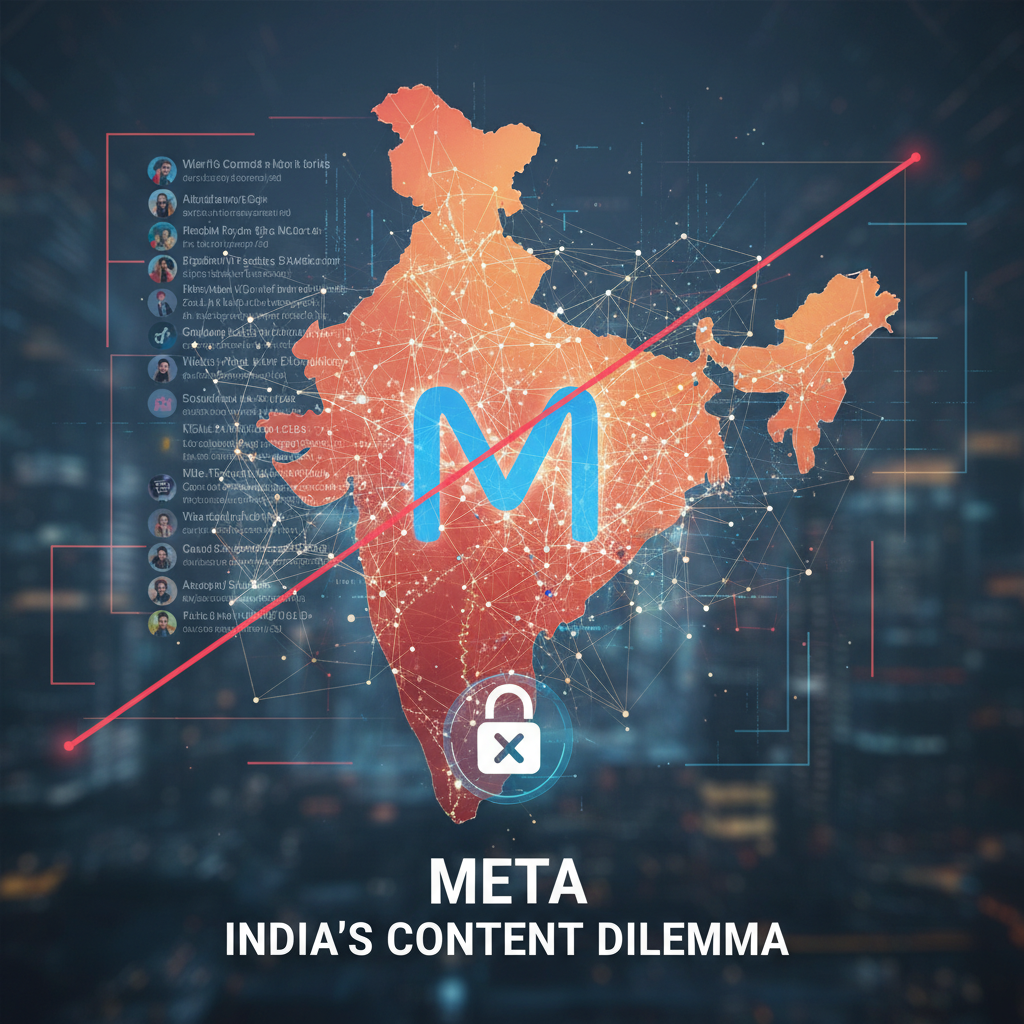
  • Meta Faces Content Takedown Challenges in India

    Meta Faces Content Takedown Challenges in India

    The news hit the wires, and immediately, it felt like a tightening of the screws — Meta, grappling with India’s new content takedown rules. Three hours. That’s the window. A blink, really, in the world of global content moderation. The implications, as the analysts began to parse them, felt significant.

    It’s not just about the speed; it’s the operational pressure that comes with it, according to the company. The compressed timelines, as Meta stated, add to an already complex environment. Compliance windows are getting shorter, especially considering the rapid spread of AI-driven content. The Indian government’s push to curb these harms has put tech giants like Meta in a tough spot.

    The immediate effect? Increased operational costs, certainly. More staff, more automation, more everything to meet these demands. And then there’s the potential for errors. The pressure to act quickly, to remove content within that three-hour window, increases the risk of mistakes. A misstep, and suddenly, Meta is facing fines, reputational damage, or worse. The details are still emerging, but the market’s reaction — a slight dip in the stock price — spoke volumes.

    One expert, speaking from the Brookings India Center, noted the potential for this to become a global trend, that’s what’s worrying the industry. “India is often a testing ground,” the analyst said. “What happens here, how these regulations evolve, could very well influence other nations.”

    The three-hour rule isn’t just about speed; it’s about shifting responsibilities. Meta, like other tech platforms, is now more directly responsible for policing content. Or maybe that’s just how it looks right now. The government is essentially saying, “You host it, you manage it.” And that changes the entire game.

    Privacy compliance is another layer, another headache. The shorter windows mean less time to assess the legality of content, to weigh the privacy implications. It’s a delicate balance, and the margin for error is shrinking. The atmosphere in the room, where the news broke, felt tense. Still does, in a way.

    The numbers themselves tell a story. Meta’s advertising revenue in India, for example, which hit approximately $2 billion last year, is now at risk. The increased regulatory burden, the potential for fines, all contribute to financial uncertainty. And that uncertainty is something the market hates.

    The shift also impacts AI. As AI-generated content becomes more prevalent, the challenge of detecting and removing harmful material within that three-hour window grows exponentially. It’s a race against the clock, a constant game of catch-up. The room was quiet, except for the tapping of keyboards.

    The conclusion, though still forming, seems clear: Meta faces significant hurdles. The three-hour rule is just one piece of the puzzle, but it’s a crucial one. It’s a sign of the times, a reflection of the evolving relationship between tech companies and governments. And the costs, both financial and operational, are adding up.