Tag: valuation

  • Parloa’s Valuation Triples to $3B After $350M Funding

    Parloa’s Valuation Triples to $3B After $350M Funding

    Parloa’s Valuation Soars to $3B in Months After $350M Funding Round

    In a remarkable display of rapid growth, Parloa, the artificial intelligence (AI) driven customer service startup, has seen its valuation triple in a mere eight months. As of January 15, 2026, the company’s valuation reached an impressive $3 billion, a testament to its innovative approach and market traction. This surge in value was fueled by a substantial $350 million funding round.

    The investment, a significant vote of confidence in Parloa’s vision, was spearheaded by existing investor General Catalyst. The continued support from General Catalyst, alongside other returning backers, underscores the confidence in Parloa’s trajectory and its potential to revolutionize the customer service landscape. This funding round demonstrates the company’s ability to attract and secure substantial capital, a crucial element for continued growth and expansion.

    Funding Fuels Rapid Expansion

    The $350 million investment is not just a financial boost; it is a strategic move that will enable Parloa to accelerate its growth plans. With this influx of capital, the company is well-positioned to expand its operations, invest in further research and development, and potentially broaden its market reach. The funding will likely be used to enhance Parloa’s existing AI-powered customer service solutions, making them even more efficient and effective for businesses across various sectors.

    The success of the funding round reflects the increasing demand for advanced customer service solutions. As businesses strive to improve customer satisfaction and streamline operations, AI technologies like those developed by Parloa are becoming increasingly vital. The investment from General Catalyst and other backers signifies a strong belief in Parloa’s ability to capitalize on this growing market opportunity.

    General Catalyst Leads the Way

    The leadership of General Catalyst in this funding round highlights the firm’s commitment to supporting innovative companies with high-growth potential. General Catalyst’s decision to reinvest in Parloa speaks volumes about the startup’s performance and the promise of its technology. The ongoing partnership between Parloa and General Catalyst is poised to drive further innovation and expansion in the customer service domain.

    The swift rise in Parloa’s valuation and the successful funding round are significant milestones for the company. They not only validate its business model but also set the stage for continued innovation and market leadership. The investment will undoubtedly allow Parloa to further refine its offerings and solidify its position as a key player in the AI-driven customer service industry.

    The company’s ability to attract such a large investment, and to triple its valuation in such a short period, is a clear indication of its strength. The future looks bright for Parloa, and the industry will be watching closely as it continues to grow and evolve.


  • Parloa Valuation Soars to $3B After $350M Funding Round

    Parloa Valuation Soars to $3B After $350M Funding Round

    Parloa’s Valuation Soars to $3B in 8 Months Following $350M Funding Round

    In the dynamic world of tech startups, rapid growth stories are always captivating. One such story is unfolding with Parloa, a company that has impressively tripled its valuation in a mere eight months. This remarkable feat was fueled by a significant $350 million funding round, showcasing the confidence investors have in the company’s potential.

    A Testament to Rapid Growth

    The news, first reported by TechCrunch, highlights the impressive trajectory of Parloa. The funding round, which closed on January 15, 2026, has propelled the company’s valuation to an astounding $3 billion. This is a significant jump from its previous valuation, reflecting the company’s ability to execute and deliver value in a competitive market.

    The investment underscores the strategic importance of Parloa‘s mission and the strength of its business model. The company’s ability to attract such a large investment in a relatively short period speaks volumes about its market position and future prospects. This kind of growth often signals strong underlying fundamentals and a clear vision for the future.

    General Catalyst Leads the Charge

    The funding round was led by General Catalyst, a firm that has demonstrated a keen eye for identifying and supporting high-growth startups. The continued investment from General Catalyst is a strong endorsement of Parloa‘s strategy and execution. It’s a clear signal that the existing investors see significant potential for further growth and market dominance.

    The involvement of returning backers, in addition to General Catalyst, further solidifies the financial backing. This collective support provides Parloa with the resources necessary to scale its operations, expand its product offerings, and solidify its market position. The investment is not just a financial boost; it is also a vote of confidence in the company’s leadership and its vision for the future.

    Strategic Implications and Future Outlook

    The influx of capital will undoubtedly allow Parloa to accelerate its strategic initiatives. The company can now invest more aggressively in research and development, expand its team, and potentially pursue strategic acquisitions. This increased financial flexibility positions Parloa to capitalize on market opportunities and solidify its competitive advantage.

    The rapid increase in valuation is a positive indicator for the broader startup ecosystem. It demonstrates that innovative companies with strong value propositions can attract significant investment and achieve rapid growth. As Parloa continues its journey, the industry will be watching closely to see how the company leverages this new capital to drive further innovation and expansion.

  • EtherealX Soars: Indian Aerospace Startup Eyes 2027 Launch

    EtherealX Soars: Indian Aerospace Startup Eyes 2027 Launch

    Indian Aerospace Startup EtherealX Soars: 5x Valuation Before 2027 Launch

    The Indian aerospace sector is witnessing a surge of activity, and at the forefront is EtherealX, a company that’s quickly becoming a name to watch. With a valuation that has increased fivefold, EtherealX is making significant strides in its quest to establish itself as a prominent player in the global space industry. The company is not just talking the talk; it’s actively building a 150-acre rocket campus in India and gearing up for crucial engine tests, all with an eye on a 2027 launch mission.

    A New Challenger Emerges: EtherealX’s Ambitious Plans

    EtherealX’s rapid ascent is fueled by its ambitious plans to compete in the space race. The company’s strategy mirrors some of the innovative approaches pioneered by SpaceX, particularly in the realm of reusable rocket technology. This focus has clearly resonated with investors, driving the significant valuation increase. The primary what for EtherealX involves conducting rigorous engine tests, a critical step towards ensuring the reliability and performance of its rockets. Furthermore, the construction of a sprawling rocket campus in India signifies a long-term commitment to innovation and infrastructure development. The why behind these activities is clear: EtherealX is determined to target a 2027 launch mission, staking its claim in the competitive landscape of space exploration.

    Key Milestones and Strategic Initiatives

    The journey of EtherealX is marked by a series of strategic initiatives and key milestones. The when, 2027, is a pivotal target date, representing the culmination of years of hard work and planning. The how of EtherealX’s operations involves not only technological innovation but also the strategic development of infrastructure. The 150-acre rocket campus will serve as the hub for research, development, and manufacturing, allowing for greater control over the entire process. The company’s focus on engine testing is a crucial element in its preparation for the planned launch. Success in this area is paramount, as it directly impacts the reliability and performance of its rockets. This commitment to quality and innovation has positioned EtherealX favorably in the eyes of investors and industry experts alike. The company’s success also hinges on its ability to attract and retain top talent, as well as forge strategic partnerships with key players in the aerospace sector.

    The Competitive Landscape and Future Prospects

    The aerospace industry is highly competitive, with established players like SpaceX and numerous emerging startups vying for market share. EtherealX’s success will depend on its ability to differentiate itself through innovative technology, cost-effective solutions, and a strong execution strategy. The company’s focus on engine tests and building its own rocket campus provides a solid foundation for growth. The 2027 launch target is ambitious, but if successful, it could catapult EtherealX into the global spotlight. The who, EtherealX, is determined to make its mark, and the where, India, is poised to become a significant hub for space exploration and technology. The what, the upcoming launch mission, will be a major test of the company’s capabilities, but the positive sentiment surrounding EtherealX suggests that it is well-positioned for future success.

    Conclusion

    EtherealX’s impressive growth and ambitious plans signal a new era for the Indian aerospace sector. With its significant valuation increase, commitment to engine testing, and development of a rocket campus, the company is positioning itself to be a formidable competitor in the space race. While the 2027 launch mission presents a considerable challenge, the positive outlook and strategic initiatives suggest that EtherealX is well on its way to achieving its goals. The company’s progress serves as an inspiration and a testament to the potential of the Indian space industry.

    Source: TechCrunch

  • Emversity Valuation Doubles: Training India’s Future Workforce

    Emversity Valuation Doubles: Training India’s Future Workforce

    Emversity’s Valuation Doubles as It Trains India’s Workforce for the Future

    In a significant development for India’s burgeoning tech and education sectors, Emversity, a company focused on providing job-ready training, has announced a new funding round. This round has resulted in a doubling of Emversity’s valuation, signaling strong investor confidence and the growing importance of its mission. The company, which is based in India, is focused on equipping workers with skills that are increasingly valuable in a rapidly evolving job market. This focus is particularly relevant as artificial intelligence (AI) continues to reshape industries.

    The core of Emversity’s strategy lies in identifying and delivering training programs that focus on skills that are difficult for AI to replicate. This approach is not only forward-thinking but also strategically positions Emversity as a key player in the future of work. By emphasizing human skills, such as critical thinking, creativity, and complex problem-solving, the company ensures that its graduates are well-prepared for the challenges of the modern workplace.

    The Funding and Its Implications

    The recent funding round, which raised $30 million, is a testament to Emversity’s success and potential. This investment will enable the company to scale its operations, expand its course offerings, and reach a wider audience of aspiring professionals across India. The increased valuation reflects the market’s recognition of Emversity’s value proposition and its ability to address a critical need in the Indian economy. The funding will likely be allocated to enhance the company’s technological infrastructure, develop new training modules, and expand its team of instructors and support staff.

    The timing of this funding is also noteworthy, as it comes at a time when the demand for skilled workers in India is growing rapidly. The country’s economic expansion, coupled with the increasing adoption of technology across various industries, has created a significant need for a workforce that is equipped with the skills required to thrive in the 21st-century workplace. Emversity is well-positioned to meet this demand, providing a crucial bridge between education and employment.

    Focus on Skills AI Can’t Replace

    One of the key differentiators for Emversity is its emphasis on skills that are less susceptible to automation. While AI and machine learning are transforming many industries, certain human capabilities remain indispensable. These include:

    • Critical Thinking: The ability to analyze information, identify problems, and develop effective solutions.
    • Creativity and Innovation: The capacity to generate new ideas, think outside the box, and develop innovative solutions.
    • Emotional Intelligence: The ability to understand and manage emotions, build relationships, and communicate effectively.
    • Complex Problem-Solving: The skill to tackle intricate challenges that require a combination of knowledge, analysis, and decision-making.

    By focusing on these skills, Emversity is not only preparing its students for immediate employment but also equipping them with the tools they need to adapt and thrive throughout their careers. This approach is particularly relevant in a world where technological advancements are constantly changing the landscape of work.

    The Broader Impact on India’s Tech Ecosystem

    Emversity’s success has broader implications for India’s tech and education ecosystems. It demonstrates the growing importance of skills-based training and the increasing recognition of its value by investors and the market. The company’s expansion is likely to create new job opportunities, stimulate economic growth, and contribute to the overall development of India’s workforce. Furthermore, Emversity’s model could serve as an inspiration for other educational institutions and startups, encouraging them to adopt similar approaches to skills development.

    The company’s focus on job-ready training, combined with its ability to attract significant investment, positions it as a leader in India’s education sector. As Emversity continues to grow and evolve, it is poised to play an increasingly important role in shaping the future of work in India and beyond.

  • Skild AI’s $14B Valuation: The Robotics Revolution

    Skild AI’s $14B Valuation: The Robotics Revolution

    The hum of the servers was almost a constant presence in the Skild AI lab. Engineers, mostly hunched over monitors, were running simulations, tweaking algorithms. It was mid-January, and the air buzzed with a different kind of energy: the news of the SoftBank-led funding round had just broken. A $1.4 billion injection, rocketing the company’s valuation to a staggering $14 billion.

    It’s a figure that, for a company specializing in general-purpose robotic software, is raising eyebrows across the industry. Skild AI is, in a way, betting on a future where robots aren’t just confined to factories but are integrated into every aspect of life. As one analyst from Ark Invest, as per reports, put it, “They’re not just building software; they’re building the operating system for the next industrial revolution.”

    The core of Skild AI’s business is its software platform, designed to enable robots to perform a wide range of tasks. This requires sophisticated AI, capable of handling everything from object recognition and manipulation to navigation and decision-making. The funding, according to company statements, will be used to accelerate the development of this platform, expand its engineering team, and, of course, secure more manufacturing capacity.

    The market context is crucial here. Demand for robotics solutions is soaring. Labor shortages, particularly in developed economies, are pushing companies to automate. At the same time, the cost of robotics hardware and software is decreasing, making automation more accessible. And, you know, the rise of AI is making robots smarter.

    The company is targeting the M300 release by late 2026, which is expected to offer significant improvements in processing speed and energy efficiency. That’s the plan, at least. But supply chain constraints remain a serious challenge. The availability of advanced chips and other components is still a concern, particularly with the ongoing US export controls on critical technologies. And maybe that’s how the supply shock reads from here.

    Meanwhile, the competition is fierce. Companies like Boston Dynamics and Agility Robotics have already made significant strides in the field. But Skild AI’s focus on general-purpose software could give it an edge. It’s a bet on adaptability, on creating a platform that can be easily customized for different applications.

    Earlier today, a spokesperson for SoftBank confirmed their commitment, highlighting Skild AI’s “visionary approach” and “potential for massive growth”. The deal, apparently, also includes provisions for further investment rounds, suggesting that SoftBank is in it for the long haul. The goal, it seems, is to capture a significant share of a market that’s only going to get bigger. Or so they hope.

    By evening, the lab was still humming, the engineers still coding. The $14 billion valuation was a validation of their work. But the real test, of course, lies in the future: in the robots they build, and the world they help create.

  • Skild AI Valuation Soars to $14B After SoftBank Funding

    Skild AI Valuation Soars to $14B After SoftBank Funding

    The hum of the server room always felt the same. But today, something was different. A quiet buzz of excitement, a few more Slack pings than usual, and the low thrum of the cooling fans seemed to vibrate with a new energy. This morning’s news: Skild AI, the robotics software maker, had just hit a $14 billion valuation. The announcement followed a $1.4 billion funding round led by SoftBank, as reported on January 14, 2026.

    It’s a significant moment for the robotics sector, especially considering the broader economic climate. “This investment reflects a growing confidence in the potential of general-purpose robotic software,” noted analyst Maria Chen of Arkham Capital. She added that the valuation “is a bold statement about the future of automation.”

    The company, Skild AI, is positioning itself at the forefront of this future, building software designed to control robots across a wide range of applications. This approach contrasts with the more specialized software that has dominated the market until now. They aim to provide a versatile platform, capable of adapting to diverse tasks and environments. This flexibility could be key to unlocking new efficiencies in manufacturing, logistics, and beyond. This is what the investment community is betting on.

    The funding round, led by SoftBank, is a clear signal of market confidence. It also highlights the strategic importance of the robotics sector. SoftBank’s involvement often signals a long-term vision and a willingness to invest in disruptive technologies. It seems like they see the potential for Skild AI to become a major player in the rapidly evolving robotics landscape. The company’s roadmap includes ambitious plans for expanding its software capabilities and scaling its operations, according to sources familiar with the matter.

    Earlier today, engineers were huddled around monitors, running simulations. The air crackled with the quiet tension of a team under pressure. One engineer, Sarah Lee, mentioned the challenges of optimizing algorithms for different hardware configurations. “We’re constantly pushing the limits of what’s possible,” she said, her voice barely audible above the whirring fans. “It’s about making the software adaptable, regardless of the underlying hardware.”

    The valuation, of course, is a snapshot in time. But it’s a powerful one. It reflects the convergence of several trends: the increasing demand for automation, the advancements in AI, and the growing availability of capital. It’s also a reminder that the robotics revolution is well underway.

  • Gamma’s $2.1B Valuation: Is PowerPoint Doomed?

    Gamma’s $2.1B Valuation: Is PowerPoint Doomed?

    It’s a funny thing, seeing the tech world move at warp speed. You blink, and suddenly there’s a new contender, ready to shake things up. This time, it’s Gamma, the AI-powered presentation tool, making some serious waves.

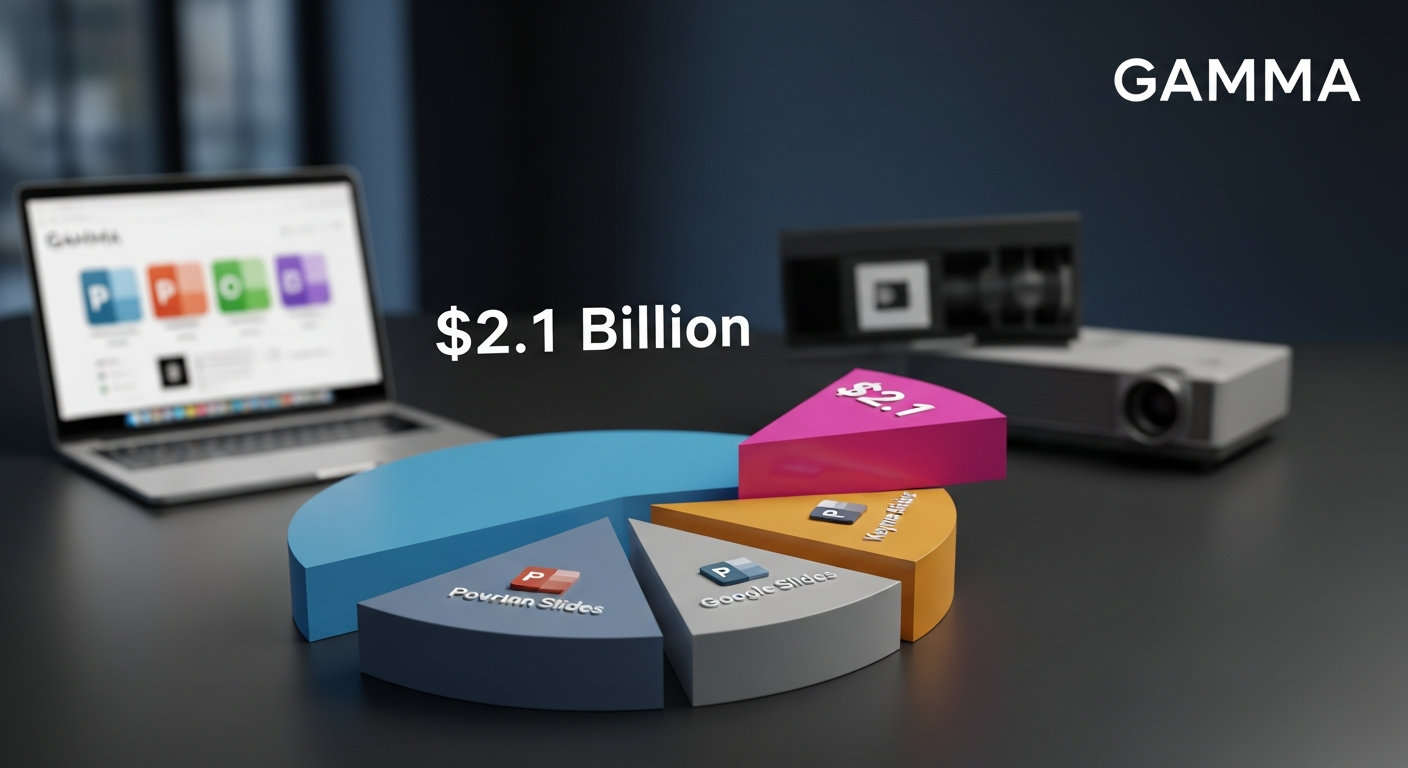
    Notably, Gamma’s co-founder and CEO, Grant Lee, just announced some pretty impressive numbers. We’re talking about a $2.1 billion valuation and a cool $100 million in annual recurring revenue. That’s not chump change, right? It’s the kind of figures that make you sit up and take notice, especially in the competitive world of tech startups.

    And, you know, the whole thing got me thinking: could this be the beginning of the end for PowerPoint? I mean, PowerPoint has been the presentation software of choice for, well, pretty much everyone for decades. It’s in the DNA of business presentations, academic lectures, you name it.

    But Gamma? It’s different. It’s built on AI, designed to make creating presentations faster and, maybe, a little less painful. The whole pitch is about streamlining the process, making it easier to whip up something visually appealing without spending hours wrestling with design.

    The AI Factor

    The rise of AI has changed the landscape for all sorts of things, and the presentation game is no exception. It’s not just about automating the creation process. It’s also about changing the way we think about presentations.

    It seems like Gamma has tapped into something. People are looking for ways to work smarter, not harder. They want tools that can help them communicate their ideas effectively without getting bogged down in the technicalities of design. It’s a compelling vision, for sure.

    Back in the day, creating a decent presentation meant hours of work. You’d be fiddling with layouts, choosing fonts, and trying to make sure everything looked polished. But with AI, a lot of that heavy lifting can be automated. You feed the system your content, and it generates a presentation. That’s the promise, anyway.

    Is PowerPoint Doomed?

    Now, I’m not saying PowerPoint is going to disappear overnight. It’s a behemoth, deeply entrenched in the way we work. But the fact that Gamma has reached such a high valuation, so quickly, it does make you wonder. It shows there’s a real appetite for something new, something different.

    And let’s be honest, PowerPoint can be… well, it can be a bit clunky sometimes. The interface isn’t always the most intuitive. It’s a tool that’s been around for a long time, and it shows. So, there’s a definite opening for a competitor that can offer a more modern, streamlined experience.

    Still, it’s a long shot, right? Taking on Microsoft is no small feat. But Gamma has momentum. They’re growing fast, and they’ve got some serious financial backing. The $100 million ARR is particularly telling. It shows that people are actually using the product and, presumably, finding value in it.

    What’s Next?

    So, what’s next for Gamma? That’s the big question. They’ve got the valuation, they’ve got the revenue, and they’ve got the buzz. The next step will be to keep growing, keep innovating, and keep chipping away at PowerPoint’s dominance.

    For now, it’s a fascinating story to watch unfold. It’s a reminder that the tech world is always changing, always evolving. And that the tools we use to communicate, to share ideas, are constantly being reimagined.

    You could say it’s a David versus Goliath story, but with a twist. It’s AI versus… well, you know.

  • Gamma’s $2.1B Valuation: Is PowerPoint Doomed?

    Gamma’s $2.1B Valuation: Is PowerPoint Doomed?

    So, this is interesting, isn’t it? I was just reading about Gamma, the AI presentation tool that’s kind of being touted as a PowerPoint-killer. And it turns out, they’ve just hit a $2.1 billion valuation. That’s… a lot.

    Grant Lee, the co-founder and CEO, says they’ve also reached $100 million in ARR – annual recurring revenue. Which, if true, means they’re growing, and growing fast. The whole thing makes you wonder, is this the future of presentations? Is PowerPoint, this thing we’ve all grown up with, on its way out?

    Gamma, from what I understand, uses AI to help you create presentations. You feed it your content, and it spits out something visually appealing. It’s designed to be quick and easy, which, let’s be honest, is what a lot of us are looking for when we’re staring down the barrel of a presentation deadline.

    Notably, the technology category is seeing a lot of these kinds of startups. AI is, well, everywhere. And it makes sense that it would find its way into something like presentations. It’s a task that can be tedious, time-consuming. Anything that promises to make it easier is going to get a look.

    I mean, PowerPoint has been the default for so long. It’s what we all know. But it’s also… a bit clunky, isn’t it? A bit dated. It’s easy to see how something that’s built from the ground up with AI in mind could offer a real advantage. The ease of use is a big selling point, I’d imagine.

    And the numbers? $2.1 billion is serious money. It’s a sign that investors are seeing something here, that they believe in the potential of Gamma and its AI-powered approach. The $100 million ARR is another key data point. It suggests that people are actually using the product, and that they’re willing to pay for it.

    This is all happening in 2025, according to the TechCrunch report. So it’s not like this is some far-off future. It’s happening now. The startup world moves fast, and it looks like Gamma is leading the charge.

    I can’t help but wonder what this means for the future of work, too. Will presentations become easier, more streamlined? Will we all be using AI to create our slides in the coming years? It’s a bit of a shift, and it’s always interesting to see how technology changes the way we do things.

    Anyway, it’s just a thought. For now, it seems like Gamma is making a splash. And PowerPoint? Well, we’ll see.

  • Lenskart IPO: Stock Market Rollercoaster Ride

    Lenskart IPO: Stock Market Rollercoaster Ride

    There’s been a lot of buzz lately about Lenskart, the online eyewear giant, and their recent IPO. Honestly, the whole thing felt a little… wild. It’s not every day you see a company valued at nearly $8 billion go public, right?

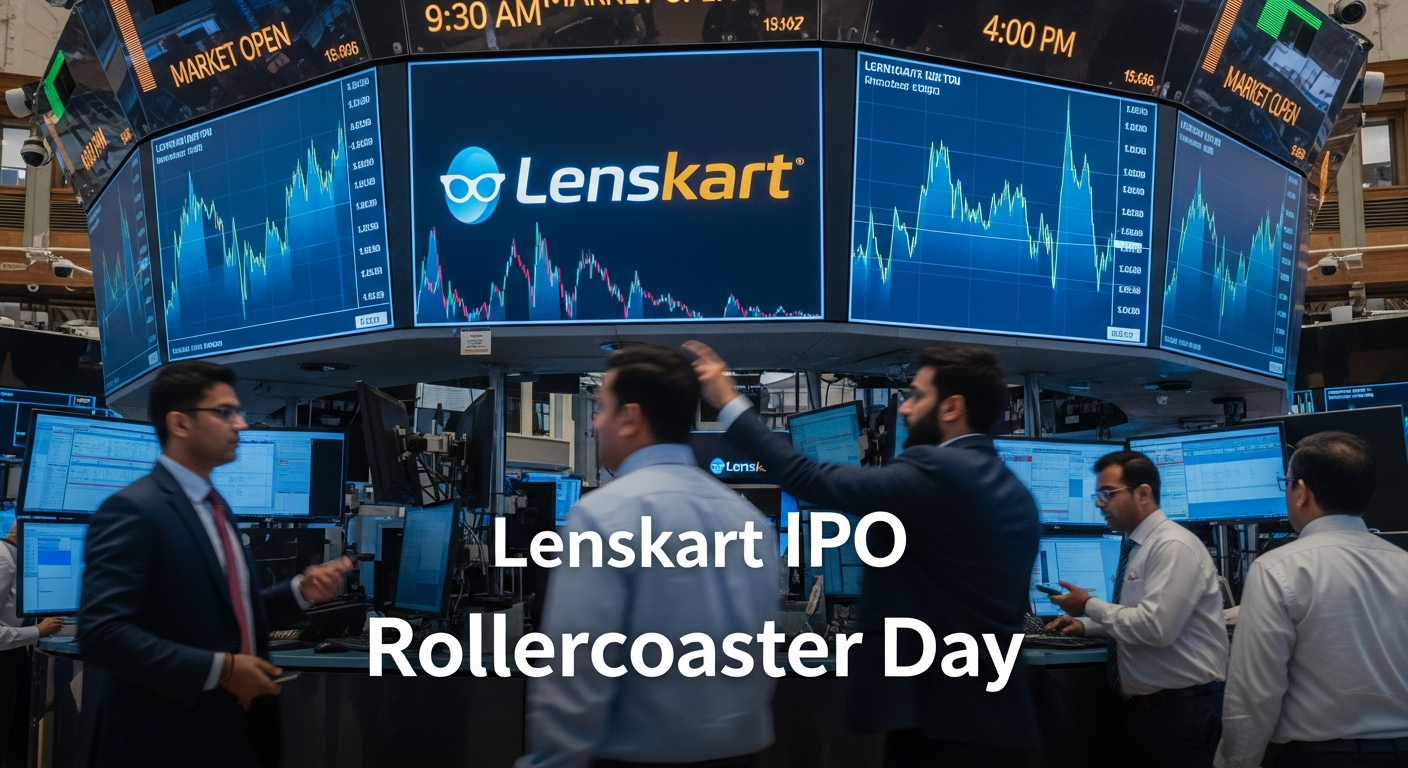
    The first day on the stock market is always a nail-biter, and for Lenskart, it was no different. The opening wasn’t exactly a roaring success. The stock opened with a bit of a whimper, which definitely set some nerves on edge. You could feel the tension, I’m sure.

    But here’s where it gets interesting. Against the odds, Lenskart managed to pull things together. By the end of the day, the stock had clawed its way back, closing slightly above the IPO price. It wasn’t a massive jump, mind you, but it was enough to suggest that investors still had some faith in the company. And that’s saying something.

    Now, the whole situation got me thinking. The big question on everyone’s mind was whether that valuation was justified. $8 billion is a hefty price tag, and it definitely sparked a debate. Was it too high? Just right? Or maybe somewhere in between? The market, as it often does, seemed to be saying, “We’ll see.”

    Lenskart, if you don’t know, has built a pretty impressive business. They’ve disrupted the optics industry, offering a wide selection of eyewear online and through physical stores. They’ve got a strong brand and a loyal customer base. But the stock market is a fickle beast. What works in the business world doesn’t always translate to immediate success when you’re publicly listed.

    The first day performance is often a reflection of investor sentiment, the overall market conditions, and, let’s be honest, a bit of luck. Lenskart’s experience is a good reminder of how unpredictable the stock market can be. It’s a pretty wild ride.

    The public listing is a big step for any company. It brings in capital, yes, but it also brings a whole new level of scrutiny. Investors are watching, analysts are analyzing, and the pressure is on to perform. So, what happens next for Lenskart? That’s the million-dollar question, isn’t it?

    It’s easy to see why.

  • Pine Labs Eyes Global Fintech Expansion Amidst IPO

    Pine Labs Eyes Global Fintech Expansion Amidst IPO

    Pine Labs Aims for Global Fintech Leadership Amidst IPO Valuation Shift

    In the dynamic world of fintech, Indian player Pine Labs is making significant strides. With a presence already established in 20 countries, the company is strategically positioning itself for global expansion. This ambition comes at a time when the company has also adjusted its valuation in anticipation of its Initial Public Offering (IPO). This article delves into Pine Labs’ strategy, the current market dynamics, and what the future holds for this ambitious fintech firm.

    Pine Labs: A Fintech Pioneer from India

    Pine Labs, a prominent fintech company, has its roots firmly planted in India. It has evolved from a payment solutions provider to a comprehensive fintech platform. The firm’s expansion strategy has been notably aggressive, with a focus on delivering innovative financial solutions across diverse markets. Their journey reflects the broader growth of the fintech sector, particularly within the Indian market.

    As reported by TechCrunch on November 3, 2025, Pine Labs is aiming to take Indian fintech global. This ambition is not merely about increasing its geographical footprint; it is about establishing a strong presence and becoming a leader in the global fintech arena.

    Navigating the IPO and Valuation Landscape

    One of the critical aspects of Pine Labs’ strategy is its approach to the IPO. The decision to adjust the company’s valuation is a strategic move, reflecting the current market conditions and the company’s long-term vision. This adjustment can be seen as a proactive measure to ensure a successful IPO, aligning with investor expectations and market realities. The intricacies of this process highlight the complexities of entering the public market, especially within the fast-evolving fintech sector.

    The IPO process is often a pivotal moment for any company, and for Pine Labs, it represents an opportunity to secure further investment and accelerate its global expansion plans. The valuation cut, though seemingly a setback, can be viewed as a calculated step to attract investors and build a strong foundation for future growth. The company’s ability to navigate this phase will be crucial in determining its long-term success.

    Global Expansion: A Strategic Imperative

    Pine Labs’ focus on global expansion is a testament to its ambition to become a dominant player in the fintech industry. The company’s presence in 20 countries already provides a solid foundation for further growth. The company is likely focusing on tailoring its products and services to meet the unique needs of each market it enters. Such an approach requires a deep understanding of local regulations, consumer behavior, and technological infrastructure.

    The HOW of Pine Labs’ global expansion is likely multifaceted, including strategic partnerships, acquisitions, and organic growth in key markets. This approach enables them to rapidly scale their operations and gain a competitive edge. The WHY behind this expansion is clear: to establish themselves as a global leader in fintech.

    The Future of Pine Labs

    The future for Pine Labs looks promising, provided they can successfully execute their global expansion strategy and navigate the IPO process effectively. The fintech market is highly competitive, requiring continuous innovation and adaptability. Pine Labs’ ability to stay ahead of the curve, adapt to changing market dynamics, and meet the evolving needs of its customers will be key to its continued success.

    The company’s journey will be closely watched by investors, industry analysts, and competitors alike. Pine Labs’ success story will not only shape its future but also influence the trajectory of the Indian fintech sector on the global stage.