Tag: venture capital

  • a16z Partner Kofi Ampadu Departs Amid TxO Program Uncertainty

    a16z Partner Kofi Ampadu Departs Amid TxO Program Uncertainty

    a16z Partner Kofi Ampadu Departs Amid TxO Program’s Uncertain Future

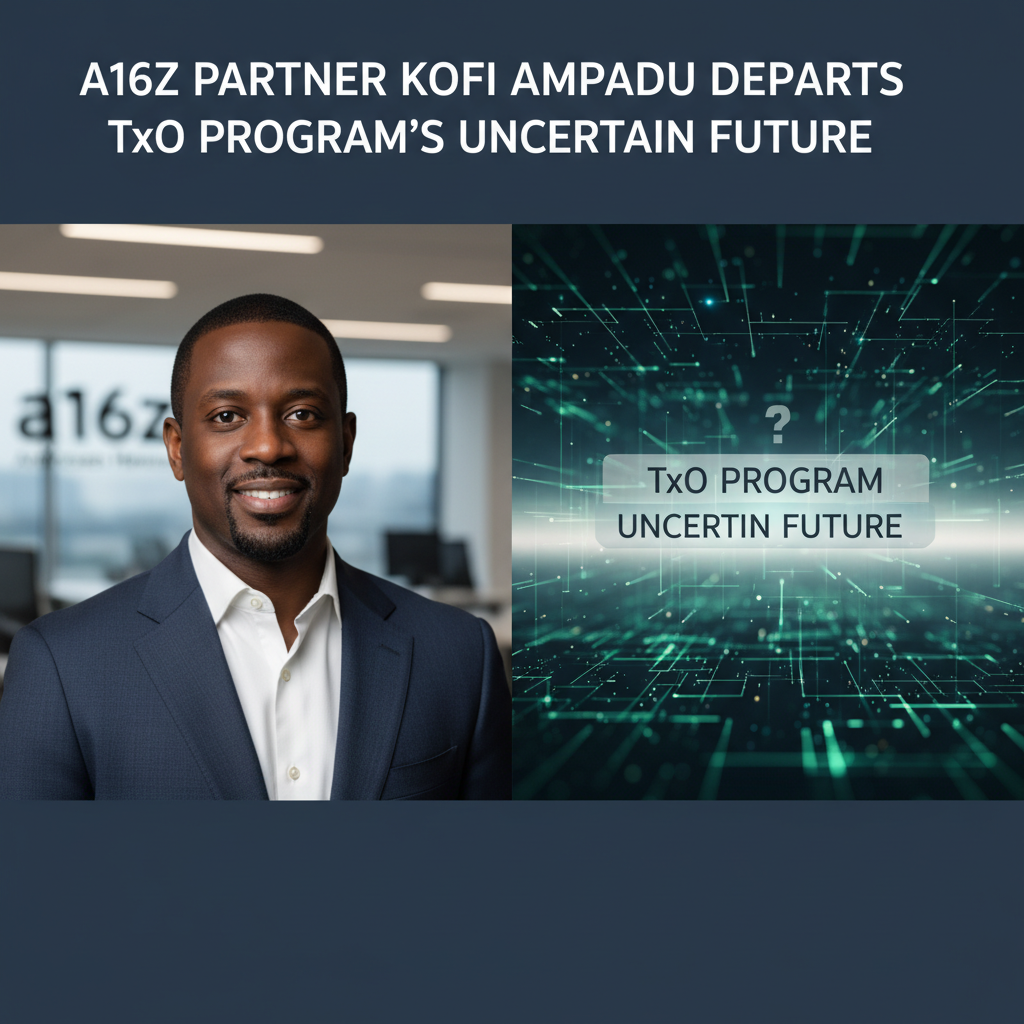
    In a move that signals potential shifts within the venture capital landscape, a16z partner Kofi Ampadu is set to depart from the firm. This announcement, made on January 30, 2026, comes at a pivotal moment, coinciding with the pause of a16z’s TxO program. The program, which focused on supporting underserved founders, now faces an uncertain future. This departure and the pause of TxO raise questions about the program’s long-term viability and the firm’s strategic priorities.

    The Significance of Ampadu’s Departure

    Kofi Ampadu’s exit from a16z is more than just a personnel change. As a partner, Ampadu held a significant role within the firm, and his departure may indicate a strategic realignment. The TxO program, which Ampadu was involved in, aimed to provide underserved founders with crucial resources, including access to tech networks and investment capital. The program operated through a donor-advised fund, allowing for a unique approach to supporting startups.

    Ampadu’s departure, coupled with the TxO program’s pause, suggests a potential shift in a16z’s approach to supporting underrepresented founders. The reasons behind this decision are not immediately clear, but the timing is certainly noteworthy. It raises questions about the firm’s commitment to these initiatives and its broader diversity and inclusion strategy.

    TxO Program: A Focus on Underserved Founders

    The TxO program was designed with a clear mission: to support underserved founders. This support came in the form of access to tech networks and investment capital, crucial elements for any startup’s success. The program’s structure, utilizing a donor-advised fund, offered a unique avenue for a16z to deploy resources and make a tangible impact on the startup ecosystem. This approach allowed the firm to target specific needs and provide tailored support to founders who often face significant challenges in securing funding and mentorship.

    The pause of the TxO program is a setback for the underserved founders it aimed to help. The program’s value extended beyond mere financial investment; it provided access to a network of industry experts and potential investors, creating opportunities for growth and collaboration. The program’s suspension leaves a void in the support system for underrepresented founders, which may have lasting effects on the industry.

    Implications for the Tech Industry

    The changes at a16z have wider implications for the tech industry. The venture capital landscape is constantly evolving, and decisions made by firms like a16z can set precedents and influence investment trends. The pause of the TxO program could signal a broader shift in how venture capital firms approach diversity and inclusion. It prompts a critical examination of the strategies employed to support underserved founders and the effectiveness of such programs.

    The tech industry, often criticized for its lack of diversity, relies on initiatives like TxO to create a more inclusive environment. The program’s pause raises concerns about the industry’s commitment to these goals. It also highlights the challenges of balancing financial objectives with social responsibility in the venture capital world. The future of similar programs and their impact on the startup ecosystem are now under scrutiny.

    It remains to be seen what the future holds for both Kofi Ampadu and the TxO program. However, their intertwined fates underscore the dynamic nature of the venture capital industry and the constant need for adaptation and strategic recalibration.


  • a16z Partner Kofi Ampadu Departs, TxO Program Paused

    a16z Partner Kofi Ampadu Departs, TxO Program Paused

    a16z Partner Kofi Ampadu Departs Amid TxO Program Pause

    The venture capital landscape is always in flux, and recent developments at Andreessen Horowitz (a16z) underscore this reality. In a move that has sent ripples through the tech and investment communities, a16z partner Kofi Ampadu is set to leave the firm. This announcement arrives concurrently with the pause of the TxO program, a key initiative aimed at supporting underserved founders.

    The Significance of Ampadu’s Departure

    The departure of a partner, particularly one with a focus on diversity and inclusion initiatives, is always noteworthy. Ampadu’s role at a16z involved more than just traditional venture capital activities; he was instrumental in the TxO program. The exit of Ampadu, coupled with the program’s pause, suggests a potential strategic shift within a16z. While the specifics remain unclear, the simultaneous nature of these events raises questions about the future of a16z’s commitment to supporting underrepresented founders.

    The news, reported on January 30, 2026, highlights the dynamic nature of the venture capital world. The tech industry, particularly the startup ecosystem, is known for its rapid evolution. Personnel changes and program adjustments are not uncommon, but the confluence of Ampadu’s departure and the TxO pause warrants closer examination.

    Understanding the TxO Program

    The TxO program was designed to provide critical resources to underserved founders. This was achieved by offering access to tech networks and investment capital, facilitated through a donor-advised fund. The program’s mission was clear: to address the funding gap and provide opportunities for those who may have been historically excluded from the venture capital arena. The core of the program was its focus on supporting founders by providing access to tech networks and investment capital.

    The Broader Implications

    The pause of the TxO program and Ampadu’s departure could signal a reevaluation of a16z’s investment strategies or a shift in focus. While the firm has not released detailed statements about the changes, the tech industry is watching closely. The venture capital world is often shaped by the decisions of its key players, and these events could have wider ramifications for startups and investors alike.

    The tech industry’s commitment to supporting underserved founders is a crucial element of its evolution. The TxO program was a tangible example of this commitment. Its pause raises questions about the future of such initiatives and the strategies venture capital firms will adopt to promote diversity and inclusion. The departure of Ampadu, who was closely associated with these efforts, further underscores the importance of this moment.

    Looking Ahead

    The departure of Kofi Ampadu and the pause of the TxO program mark a significant moment in a16z’s history. The tech and investment communities will be watching closely to see how the firm adapts and what new initiatives might arise. This is a moment of transition, and the decisions made in the coming months will likely shape the future of a16z and its role in the venture capital landscape.

  • AI Security: VCs Invest in a Shadowy Space

    AI Security: VCs Invest in a Shadowy Space

    AI Security: Why VCs Are Pouring Funds into a Shadowy Space

    The convergence of artificial intelligence and cybersecurity has created a new frontier, and it’s one that venture capitalists (VCs) are aggressively exploring. The rise of sophisticated threats, particularly those stemming from ‘rogue agents’ and ‘shadow AI,’ is driving substantial investment in AI security solutions. This is not merely a trend; it’s a recognition of the fundamental shift in how we must approach digital defense. As the TechCrunch article highlights, the stakes are higher than ever.

    The Growing Threat Landscape

    The core of the issue lies in what are termed ‘misaligned agents.’ These are AI systems or components that, intentionally or unintentionally, operate outside of established security protocols. They can be exploited by malicious actors or even create vulnerabilities through their own actions. Shadow AI, referring to AI tools and systems operating outside of IT’s purview, adds another layer of complexity. This proliferation of unmanaged AI introduces significant risks, including data breaches, compliance violations, and intellectual property theft.

    The increased sophistication of attacks and the potential impact of AI-driven vulnerabilities necessitate proactive security measures. VCs are keen to fund companies that can not only identify these threats but also offer comprehensive solutions to mitigate them. The rapid evolution of AI means that traditional cybersecurity approaches are often insufficient, creating a demand for innovative, AI-powered security tools.

    Witness AI: A Case Study in AI Security Investment

    One company that has captured the attention of VCs is Witness AI. Their approach to AI security is multi-faceted, focusing on several key areas:

    • Detection of Unapproved Tools: Witness AI monitors employee use of AI tools to identify and prevent the use of unapproved or potentially risky applications.
    • Attack Blocking: The platform actively works to block potential attacks by identifying and responding to suspicious activities in real-time.
    • Compliance Assurance: Witness AI helps organizations maintain compliance with relevant regulations by providing visibility into AI usage and ensuring adherence to established policies.

    Witness AI’s focus on detecting employee use of unapproved tools, blocking attacks, and ensuring compliance directly addresses the challenges presented by rogue agents and shadow AI. This comprehensive approach is what makes it an attractive investment for VCs.

    The Venture Capital Perspective

    The decision by VCs to invest heavily in AI security is strategic. The potential for high returns is tied to the growing demand for robust cybersecurity solutions. As AI becomes more integrated into business operations, the need to protect these systems from internal and external threats becomes paramount. VCs are actively seeking to capitalize on this trend by backing companies that are at the forefront of AI security innovation.

    The investment in companies like Witness AI reflects a broader trend. VCs are looking for solutions that not only address current security challenges but also anticipate future threats. This forward-thinking approach is critical in a landscape where AI technology is constantly evolving. The cybersecurity market is ripe for disruption, and VCs are betting on the companies that can lead this transformation.

    Looking Ahead

    The future of AI security will likely involve more sophisticated threat detection, proactive defense mechanisms, and a greater emphasis on compliance and governance. As AI systems become more complex and integrated, the need for robust security measures will only increase. VCs recognize this and are positioning themselves to benefit from the growth of the AI security market. Their investments in companies like Witness AI are a clear indication of their confidence in the future of this field.

    The proactive stance of VCs underscores the importance of staying ahead of the curve in cybersecurity. As the landscape evolves, the companies that can effectively address the risks posed by rogue agents and shadow AI will be well-positioned for success. With the right strategies and investments, the cybersecurity industry can mitigate the risks of AI and harness its potential for positive change.

  • AI Security: VCs Invest in a Shadowy World

    AI Security: VCs Invest in a Shadowy World

    AI Security: Why VCs Are Pouring Money into a Shadowy World

    The rapid advancement of artificial intelligence has opened a Pandora’s Box of possibilities. While we celebrate the potential of AI, a less discussed aspect has emerged: the growing need for robust AI security. This is not just a niche concern; it’s a critical area drawing significant investment from venture capitalists (VCs). The rise of “rogue agents” and “shadow AI” has created a landscape where the stakes are higher than ever, and companies are scrambling to catch up. As of January 19, 2026, the urgency of this situation is clear, with a substantial financial backing to secure the future of AI.

    The Threats: Rogue Agents and Shadow AI

    So, what exactly are VCs betting on? The answer lies in the increasingly complex threats within the AI ecosystem. “Rogue agents” refer to AI systems or employees who misuse AI tools or act outside of established security protocols. These agents can be internal, where employees use unapproved tools, or external, where attackers exploit vulnerabilities. This can lead to data breaches, intellectual property theft, or even manipulation of AI systems for malicious purposes. The term “shadow AI” refers to AI systems that operate outside of an organization’s control. These may be unapproved AI tools used by employees or AI models developed and deployed without proper oversight. This lack of visibility creates significant security risks, leaving organizations vulnerable to attacks and compliance violations.

    Witness AI: A Frontrunner in the AI Security Race

    One company that is addressing this critical need is Witness AI. This startup is at the forefront of developing solutions to combat the challenges posed by rogue agents and shadow AI. They are leveraging advanced technologies to detect employee use of unapproved tools. By blocking attacks and ensuring compliance, Witness AI is helping organizations regain control over their AI environments. This proactive approach is exactly what VCs are looking for: solutions that anticipate and mitigate risks before they can cause significant damage. Witness AI’s approach is a prime example of the innovative solutions that are attracting significant investment in the AI security space.

    Why VCs Are Investing Now

    The surge in VC investment in AI security is not arbitrary. Several factors are driving this trend:

    • The Expanding Attack Surface: As AI becomes more integrated into business operations, the potential attack surface expands exponentially. Every new AI tool, every new application, and every new employee using these technologies creates new vulnerabilities.
    • The Increasing Sophistication of Attacks: Cybercriminals are constantly evolving their tactics, and AI is becoming a tool in their arsenal. AI-powered attacks are more difficult to detect and defend against, necessitating more advanced security solutions.
    • The Need for Compliance: Regulatory bodies worldwide are beginning to establish guidelines and standards for AI usage. Companies must ensure their AI systems comply with these regulations, or they face significant penalties.

    These factors combine to create a perfect storm, making AI security a top priority for businesses. VCs understand this and are positioning themselves to capitalize on the growing demand for effective security solutions.

    The Future of AI Security

    The AI security landscape is constantly evolving, and the challenges are complex. However, the investment from VCs indicates a strong belief in the potential for innovative solutions. Companies like Witness AI are leading the charge, developing technologies to detect and prevent misuse of AI tools, and ensure compliance. As AI continues to transform industries, the need for robust security measures will only intensify. This makes AI security not just a trend, but a fundamental pillar of the future. The ability to secure AI systems will determine the extent to which we can leverage its transformative potential. Therefore, the focus on AI security is not just about protecting technology; it is about protecting the future.

    Source: TechCrunch

  • NVIDIA & Qualcomm Invest $850M in India’s Deep Tech

    NVIDIA & Qualcomm Invest $850M in India’s Deep Tech

    NVIDIA, Qualcomm Join Forces to Boost India’s Deep Tech Startup Ecosystem

    In a significant move for India’s technology landscape, NVIDIA and Qualcomm are joining forces with a consortium of U.S. and Indian VCs to bolster the nation’s deep-tech startup ecosystem. This collaborative effort, announced on November 4, 2025, represents a substantial investment in India’s technological future. The initiative, spearheaded by Qualcomm Ventures and six Indian venture firms, will see over $850 million injected into the burgeoning deep-tech sector.

    A Strategic Investment in India’s Tech Landscape

    This investment is more than just a financial injection; it’s a strategic move designed to nurture and accelerate the growth of India’s deep-tech startups. The why behind this venture is clear: to help build India’s next deep tech startups and to boost India’s deep-tech ecosystem. Deep tech, encompassing areas like artificial intelligence, biotechnology, and advanced computing, is poised to drive significant advancements and economic opportunities. By joining venture firms, these tech giants are not only providing capital but also contributing their expertise and networks to foster innovation.

    The what of this investment is focused on funding and developing the deep-tech ecosystem in India. This encompasses everything from early-stage startups to more established ventures, all working on cutting-edge technologies. The how involves the collaborative efforts of NVIDIA, Qualcomm, and the venture firms, pooling resources and knowledge to create a supportive environment for innovation. The where is, of course, India, signaling the country’s growing importance as a hub for technological advancement.

    Key Players and Their Roles

    NVIDIA and Qualcomm are not just passive investors; they bring decades of experience and technological prowess to the table. Their involvement will likely include mentorship, strategic guidance, and access to critical resources for the startups. The six Indian venture firms, with their deep understanding of the local market, will play a crucial role in identifying promising startups and providing on-the-ground support. Qualcomm Ventures, leading the charge, exemplifies the commitment of these firms to fostering the growth of the deep-tech sector.

    Impact and Future Outlook

    The infusion of $850 million is expected to have a transformative impact on India’s deep-tech ecosystem. This investment will enable startups to scale their operations, accelerate product development, and attract top talent. It also signals a growing confidence in India’s potential as a global leader in technology. The collaborative approach, bringing together industry giants and local venture firms, is a model for fostering innovation in emerging markets.

    This initiative, announced on November 4, 2025, is a testament to the dynamic nature of the technology industry and the importance of strategic partnerships. By investing in India’s deep tech startups, these companies are not only supporting innovation but also positioning themselves to benefit from the future growth of this dynamic market.

    Source: TechCrunch

  • Goldman Sachs Fuels MoEngage’s Global Expansion

    Goldman Sachs Fuels MoEngage’s Global Expansion

    Goldman Sachs Bets Big: Fuels MoEngage’s Global Expansion

    In a significant vote of confidence, Goldman Sachs has increased its investment in MoEngage, a marketing automation platform. This new round of funding, announced on November 4, 2025, is set to propel MoEngage’s global expansion, building on its already impressive reach across 75 countries. The investment underscores the growing importance of sophisticated customer engagement strategies in today’s business landscape.

    The Investment and Its Significance

    The decision by Goldman Sachs to ‘double down’ on MoEngage highlights the firm’s belief in the platform’s potential for continued growth. This additional funding will serve as a catalyst, enabling MoEngage to strengthen its position in existing markets and penetrate new ones. The ‘how’ of this expansion likely involves strategic hiring, product development, and increased marketing efforts to reach a wider audience. The ‘why’ is clear: to capitalize on the increasing demand for effective customer engagement solutions.

    MoEngage’s success thus far, particularly in North America, has been a key driver for this additional investment. This region currently represents the company’s largest market, demonstrating the strong demand for its services. The platform offers a range of features designed to help businesses understand their customers better and deliver personalized experiences across various channels.

    MoEngage’s Global Footprint

    MoEngage’s presence in 75 countries speaks volumes about its ability to adapt and cater to diverse markets. The platform’s ability to provide localized solutions and support is critical to its international success. The company’s expansion strategy appears to prioritize regions with high growth potential, leveraging data and analytics to inform its decisions.

    The ‘what’ of MoEngage’s offering is a comprehensive marketing automation platform. This includes features for customer segmentation, campaign management, and performance analytics. This allows businesses to streamline their marketing efforts and achieve better results. The ‘where’ of their operations spans across the globe, with a significant focus on North America as a key growth driver.

    Implications for the Future

    This investment from Goldman Sachs is more than just a financial boost; it’s a strategic partnership that provides MoEngage with valuable resources and expertise. This collaboration will likely lead to further innovation, allowing MoEngage to stay ahead of the curve in the rapidly evolving marketing technology space.

    The ‘when’ of this announcement, November 4, 2025, marks a pivotal moment for MoEngage. As the company continues its global expansion journey, the support of Goldman Sachs will be crucial. The venture capital backing provides the necessary fuel for this expansion, enabling MoEngage to reach new heights and solidify its position as a leader in the marketing automation industry.

    Source: TechCrunch

  • a16z Pauses TxO Fund: Shift in Focus for Underserved Founders?

    a16z Pauses TxO Fund: Shift in Focus for Underserved Founders?

    a16z Pauses TxO Fund, Signaling Shift in Underserved Founder Focus

    In a move that has sent ripples through the venture capital landscape, Andreessen Horowitz (a16z) has decided to put its Talent x Opportunity (TxO) fund and program on hold. This decision, reported by TechCrunch on November 3, 2025, also includes staff layoffs, raising questions about the future of a16z’s commitment to supporting underserved founders.

    The TxO Fund: A Brief Overview

    The TxO fund was created with the specific aim of investing in and supporting founders from underrepresented backgrounds. The program was designed to provide not only financial backing but also mentorship and resources to help these founders navigate the often-challenging world of venture capital. Pausing the fund suggests a strategic recalibration within a16z, potentially impacting the broader ecosystem of support for diverse entrepreneurs.

    Implications of the Pause

    The pause on the TxO fund is significant for several reasons. Firstly, it indicates a shift in priorities within a16z. While the exact reasons for the decision remain unclear, the move may reflect changes in market conditions, internal strategic adjustments, or a reassessment of the program’s effectiveness. Secondly, the layoffs accompanying the fund’s pause suggest a broader restructuring within the firm. This could mean a reduction in resources allocated to supporting underserved founders or a change in the firm’s overall investment strategy.

    The impact of this decision extends beyond a16z. The TxO fund served as a model for other venture capital firms looking to increase diversity and inclusion in their portfolios. Its pause could potentially discourage other firms from launching similar initiatives, which could have a negative effect on the funding landscape for diverse founders.

    What Happens Next?

    As the venture capital industry watches, the questions remain: What are the long-term implications of this decision? Will a16z recommit to supporting underserved founders in the future? And how will this move affect the broader ecosystem of support for diverse entrepreneurs? The answers to these questions will be crucial in determining the future of diversity and inclusion in the world of venture capital.

    The pause of the TxO fund and the associated layoffs at Andreessen Horowitz signal a notable shift in the venture capital landscape. The implications of this decision will continue to unfold in the coming months, and the industry will be watching closely to see how a16z navigates this change and what it means for the future of funding for underrepresented founders. The original report from TechCrunch provides further details on the situation. (Source: TechCrunch)

  • Essence VC’s Tim Chen: Sales & Traction Strategies for Startups

    Essence VC’s Tim Chen: Rethinking Sales & Traction for Startups

    In the dynamic world of startups, the quest for sales and traction is often a make-or-break endeavor. But what if the conventional wisdom is flawed? Tim Chen, the solo investor behind Essence VC, has a unique perspective, forged from his own experiences in the startup ecosystem. Chen’s journey, which includes a small startup exit and a period of being turned down by venture capital firms, led him to angel investing and eventually, to raising his own successful fund. Now, with his fourth fund recently closed at $41 million, Chen’s insights offer valuable lessons for any startup navigating the challenging landscape of growth.

    The Essence of Chen’s Approach

    Chen’s unconventional path to venture capital has given him a distinct advantage. Having been on both sides of the table – as a founder and as an investor – he understands the nuances of the startup world. His approach isn’t just about financial investment; it’s about a deep understanding of the technical aspects of a business. This technical acumen, he believes, is a key differentiator. Rather than solely relying on traditional metrics, Chen digs deep, analyzing the underlying mechanics of a startup’s sales and traction strategies. This allows him to identify potential pitfalls and opportunities that others might miss.

    Chen’s success with Essence VC underscores the importance of a strategic, informed approach to investing. His ability to secure a $41 million fund without actively seeking it speaks volumes about the value he brings to the table. This success is not just about financial backing; it’s about a commitment to helping startups refine their strategies, particularly in the critical areas of sales and traction. For startups, this means more than just chasing numbers; it means understanding the ‘why’ behind their growth, and the ‘how’ of achieving it.

    Rethinking Sales and Traction

    The core of Chen’s message revolves around a critical reevaluation of how startups pursue sales and traction. This involves a shift from superficial metrics to a more profound understanding of the business model and its underlying drivers. Chen’s experience suggests that startups should prioritize a deep dive into the technical aspects of their operations. This includes understanding the technology, the market, and the customer base. By doing so, startups can build a more resilient and sustainable growth trajectory.

    Key Takeaways for Startups

    • Focus on Fundamentals: Chen emphasizes the importance of a solid understanding of the core business model. This means knowing the technology inside and out, understanding the market dynamics, and having a clear view of the target customer.
    • Strategic Approach: A strategic approach to sales and traction is essential. It’s not just about acquiring customers; it’s about acquiring the right customers and building lasting relationships.
    • Deep Technical Understanding: Chen’s emphasis on technical understanding is a crucial differentiator. Startups should ensure they have the in-house expertise to understand the intricacies of their product and market.

    The insights of Tim Chen and Essence VC offer a roadmap for startups seeking to navigate the complex world of sales and traction. By focusing on a deep understanding of their business, a strategic approach, and a strong technical foundation, startups can improve their chances of success. Chen’s journey from a rejected founder to a successful VC is a testament to the power of perseverance, adaptability, and a willingness to rethink conventional wisdom.

    The Essence VC Difference

    Essence VC, under the guidance of Tim Chen, is not just another venture capital firm. It’s a partner that brings a wealth of experience and a unique perspective to the table. Chen’s ability to see beyond the surface, to understand the technical underpinnings of a business, is what sets him apart. This approach allows him to identify promising startups and provide the kind of support that can help them thrive. For startups, this means more than just funding; it means having a mentor who understands the challenges and can provide guidance based on real-world experience.

    In conclusion, Tim Chen’s journey and his approach at Essence VC offer valuable lessons for startups. Rethinking sales and traction, focusing on fundamentals, and embracing a deep technical understanding are key to building a successful and sustainable business. As the startup landscape continues to evolve, these insights will be more relevant than ever.

  • UAE Tech Startups: The Next Global Powerhouse?

    In recent years, the United Arab Emirates (UAE) has emerged as a significant player in the global technology landscape, particularly through its innovative tech startups. This surge in entrepreneurship is primarily centered in Dubai, a city that embodies the spirit of innovation and has become a magnet for entrepreneurs and investors alike. As we delve into the world of UAE tech startups, we explore the factors propelling their growth, the role of innovation in this ecosystem, and the potential for these startups to gain a foothold on the global stage.

    ### The Rise of UAE Tech Startups
    The UAE has long been recognized for its ambitious vision and rapid development, but the past decade has seen a remarkable shift towards fostering a vibrant startup culture. With government initiatives like Dubai’s Smart City program and various free zones dedicated to tech entrepreneurship, the environment is ripe for innovation.

    Investors are taking notice, and UAE tech startups are increasingly attracting global attention. According to recent reports, funding for startups in the UAE has seen a substantial increase, with venture capital firms eager to invest in promising technologies. The UAE’s strategic location, coupled with a diverse talent pool, positions it as a hub for tech innovation in the Middle East and beyond.

    ### Innovation as the Cornerstone
    Innovation is at the heart of the UAE’s tech startup ecosystem. From fintech to healthtech and everything in between, UAE tech startups are leveraging cutting-edge technologies like artificial intelligence, blockchain, and IoT to solve real-world problems. For instance, fintech startups are transforming the banking sector by offering seamless digital payment solutions, while healthtech startups are revolutionizing patient care through telemedicine.

    The entrepreneurial spirit in the UAE is further fueled by initiatives such as the Dubai Future Foundation, which aims to foster innovation and support startups through mentorship, funding, and networking opportunities. This foundation has become instrumental in connecting entrepreneurs with global markets and resources, further enhancing the potential for success.

    ### Dubai as a Tech Hub
    Dubai has positioned itself as a leading tech hub not just in the Middle East, but globally. The city’s infrastructure, business-friendly regulations, and cosmopolitan lifestyle attract entrepreneurs and investors from across the world. The Dubai Internet City and Dubai Silicon Oasis are prime examples of the city’s commitment to creating an ecosystem that nurtures tech startups.

    Moreover, events like GITEX Technology Week showcase the latest innovations and bring together startups, investors, and industry leaders, providing a platform for networking and collaboration. These gatherings not only spotlight homegrown talent but also attract international players eager to tap into the UAE market.

    ### Challenges Ahead
    Despite the promising landscape, UAE tech startups face challenges that could hinder their journey towards becoming global powerhouses. Competition is fierce, and startups must differentiate themselves in a crowded marketplace. Additionally, navigating regulatory frameworks and securing funding can be daunting for new entrepreneurs.

    However, the resilience and adaptability of UAE tech startups have proven to be their greatest assets. As they continue to innovate and iterate, many are finding ways to overcome these obstacles, positioning themselves as leaders in their respective fields.

    ### Conclusion
    The UAE’s tech startup scene is rapidly evolving, with innovation at its core and Dubai serving as the beating heart of this transformation. As these startups gain global attention and continue to attract investment, they hold the potential to become significant players on the world stage. The combination of a supportive ecosystem, a diverse talent pool, and a forward-thinking approach to technology and entrepreneurship suggests that UAE tech startups are well on their way to becoming the next global powerhouse in the tech industry.