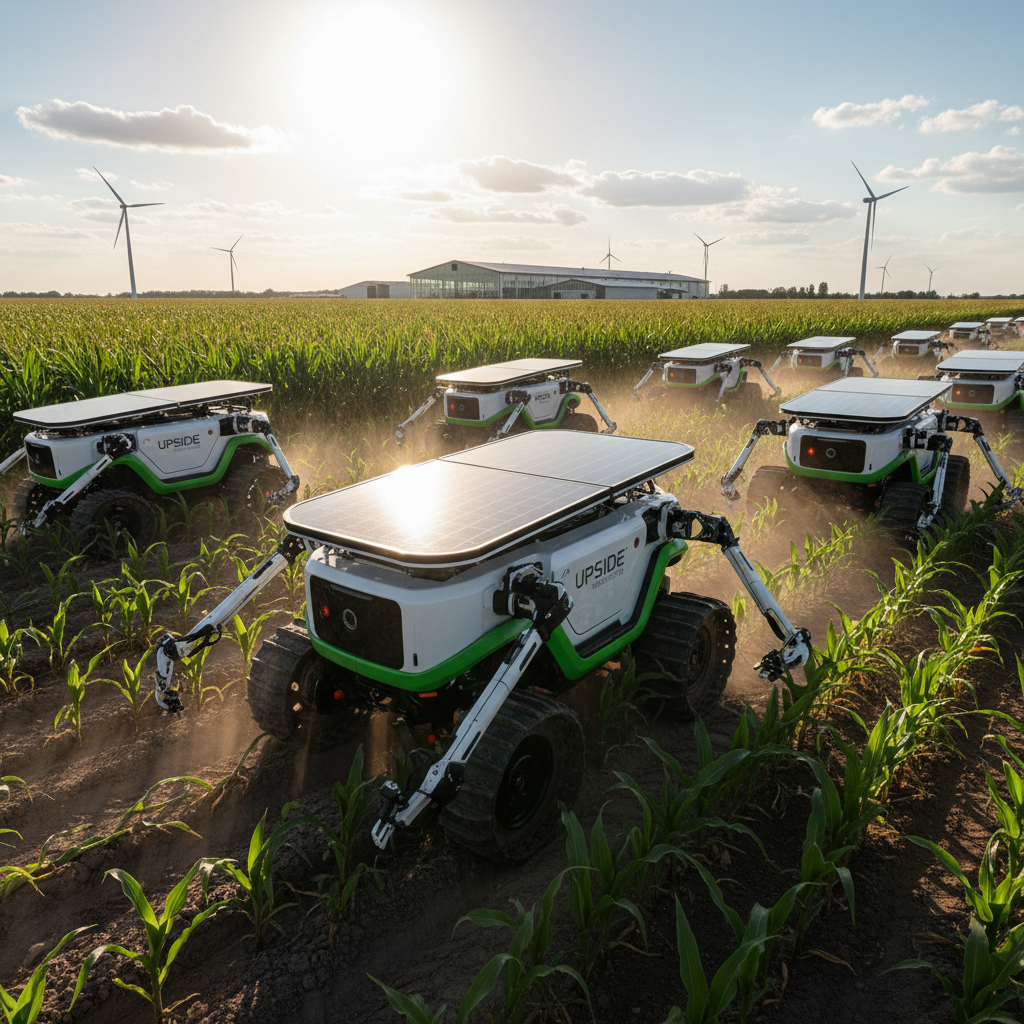
The hum of the solar panels was almost imperceptible over the whir of the prototype robot as it navigated the cornfield. Earlier this month, Upside Robotics showcased its latest iteration, designed to autonomously manage fertilizer application. The goal? To slash fertilizer use by up to 70%, as per company reports.
The company, founded in 2024, has been quietly testing its technology across various test farms. The core innovation lies in the robots’ ability to analyze soil conditions and plant health in real-time. This data-driven approach allows for precision fertilizer application, targeting only the areas that need it. It’s a smart system.
“We’re not just reducing waste; we’re optimizing resource allocation,” explained Dr. Anya Sharma, lead engineer at Upside Robotics, during a recent press briefing. “Our robots use advanced sensors and AI to understand the unique needs of each plant.” This localized approach minimizes environmental impact, reducing runoff and protecting water quality. A win-win, really.
The market context is significant. Fertilizer prices have been volatile, and the demand for sustainable agricultural practices is growing. Analysts at AgriTech Insights project a 25% increase in demand for precision agriculture technologies over the next five years. Seems like a good time for Upside Robotics.
The robots themselves are solar-powered, adding another layer of sustainability. They operate independently, requiring minimal human intervention once deployed. This is where it gets interesting: the robots are designed to work in swarms, covering large areas efficiently. Each robot is equipped with a suite of sensors, including hyperspectral cameras and soil nutrient detectors. These sensors feed data to an onboard AI system, which then determines the optimal fertilizer application rate. Or, at least, that’s the current model.
The implications are far-reaching. Reduced fertilizer use translates to lower input costs for farmers and a smaller carbon footprint. The technology also has the potential to improve crop yields by ensuring plants receive the precise nutrients they need. And, of course, the technology is still developing.
Still, there are challenges. The initial investment in the robots can be substantial, and the technology requires a reliable internet connection for data transmission. But the potential benefits, both economic and environmental, are compelling. The company is planning a wider rollout in 2027, according to a recent statement.
Leave a Reply