
Blog

  • Carbon Credit Market: Consolidation & Uncertainty

    Carbon Credit Market: Consolidation & Uncertainty

    So, the carbon credit market — it’s changing, isn’t it? Seems like just yesterday everyone was talking about the gold rush, and now? Well, now we’re seeing some serious consolidation. Carbon Direct is buying Pachama, and honestly, it feels like a turning point.

    It’s not exactly a surprise, though. The voluntary carbon markets have been, you know, a bit of a wild west. Lots of players, lots of different standards, and a whole lot of questions about the actual impact of it all. This move by Carbon Direct, though… it’s different. It’s like a signal that the big players are starting to really dig in, ready to shape the future.

    And what does that future look like? That’s the million-dollar question, isn’t it? The TechCrunch article, published November 10, 2025, points to a period of uncertainty. You can feel it, too. There’s a lot of scrutiny on carbon credits right now, with folks wondering if they’re actually doing what they claim to do. Are we really offsetting emissions? Or are we just, well, shuffling numbers around?

    The Players and the Stakes

    Carbon Direct, for those who don’t know, is a climate solutions company. Pachama? They’re all about using tech to verify and manage carbon offset projects. So, in a way, it makes sense. A company that provides the credits, merging with one that helps to validate them. It seems logical, you could say.

    But it’s bigger than that, I think. This whole thing is about trust. The voluntary carbon markets need it. They need it badly. If companies can’t trust the credits, they won’t buy them. If investors aren’t confident, they’ll pull back. And that would be a problem, wouldn’t it? Because these markets, in theory, are supposed to be a key part of the fight against climate change.

    What Does This Mean for the Future?

    So, what happens next? Well, we’ll probably see more of this. More mergers, more acquisitions. The market is maturing, and that means some players will inevitably get squeezed out. The stronger, more established companies, like Carbon Direct, will likely swallow up the smaller ones, or at least partner up.

    This consolidation could be a good thing, you know? It could lead to more standardization, more transparency. Maybe it’ll help to weed out some of the, let’s say, less credible projects. It could also mean that the cost of carbon credits goes up, as the market becomes more concentrated. That’s something to watch.

    And then there’s the whole issue of demand. Will companies continue to buy carbon credits? Will they be willing to pay more? It all depends on the regulations, the public perception, and, of course, the actual effectiveness of these projects. It’s a complex web, for sure.

    A Changing Landscape

    The TechCrunch piece mentions this shift, and I think it’s spot on. The article really captures that feeling of a market in flux. It’s a bit like watching a storm gather. You can see the clouds rolling in, the wind picking up. You know something big is about to happen, but you can’t quite predict where the lightning will strike.

    So, yeah, the carbon credit market. It’s a story that’s still being written. And right now, it feels like a chapter is closing, and a new one is just beginning. For now, we wait and see what the future holds.

    🎙️ Latest Podcast

    Always plays the latest podcast episode

  • Knicks’ Miles McBride Launches ‘Mmotion’ App

    So, a new app just dropped, and it’s got a pretty interesting backstory. Miles McBride, the guard for the New York Knicks, is stepping into the tech arena with his own creation: an app called “Mmotion.” The buzz is, it’s aiming to be a contender in the location-sharing space, giving Snap Map a run for its money. It launched on November 10, 2025, according to TechCrunch, which is always a good place to start when you’re trying to get the scoop on the latest tech.

    It’s not just another location tracker, though. Mmotion is trying to blend that whole “where are you?” vibe with social discovery. The idea? Find people nearby who share your interests. You know, maybe you’re into indie music, or perhaps you’re a serious foodie. The app, it seems, wants to connect you with like-minded folks in your area. That’s the core of it.

    You could say it’s a bit of a pivot from the court to the code, right? McBride, known for his hustle on the court, is now trying to bring that same energy to the app world. It’s a move that’s definitely raising eyebrows, and for good reason. Athletes getting involved in tech isn’t exactly new, but it’s always interesting to see how they approach it. They bring a different perspective, you know?

    Notably, the app is focusing on friendship. The whole idea is to help you connect with people. It’s not just about showing where you are. It’s about finding your people, which is a pretty cool concept when you think about it. It’s a space that’s seen a lot of activity in recent years, with apps like Snap Map already established. So, Mmotion is stepping into a crowded market, that’s for sure.

    How Does It Work?

    Well, from what I’ve gathered, Mmotion combines location sharing with social discovery features. It’s a way to see where your friends are while also finding people nearby who share your interests. That’s the gist of it. It’s a pretty straightforward concept, but the execution is key, of course. The app will have to nail down the user experience, the algorithm, and all the stuff that makes an app sticky, so people keep coming back.

    The tech world moves fast, and competition is fierce. Snap Map has a huge user base, so Mmotion has its work cut out for it. It’s going to be interesting to see how it all plays out. The article on TechCrunch didn’t go into a ton of detail about the specific features, but the idea is clear: it’s all about connecting people.

    The Bigger Picture

    This whole thing is kind of a reflection of how intertwined sports and tech have become. Athletes are no longer just athletes; they’re brands, and they’re entrepreneurs. McBride’s move with Mmotion is a perfect example. It’s a way to diversify, to build something new, and to leverage his platform. It’s a smart move in a way, especially if the app takes off. And, hey, even if it doesn’t, it’s a learning experience, right?

    The app landscape is always evolving. New apps pop up all the time, and some stick around while others fade away. It’s a gamble, but it’s also exciting. I mean, who knows? Maybe Mmotion will be the next big thing. Or maybe it won’t. But the fact that someone like Miles McBride is putting his name and effort behind it makes it worth watching.

    For now, Mmotion is out there, trying to find its place in the world. It’s a story about a basketball player, a new app, and the ever-changing world of technology. And honestly, it’s a story about connection.

    🎙️ Latest Podcast

    Always plays the latest podcast episode

  • Lenskart IPO: Stock Market Rollercoaster Ride

    Lenskart IPO: Stock Market Rollercoaster Ride

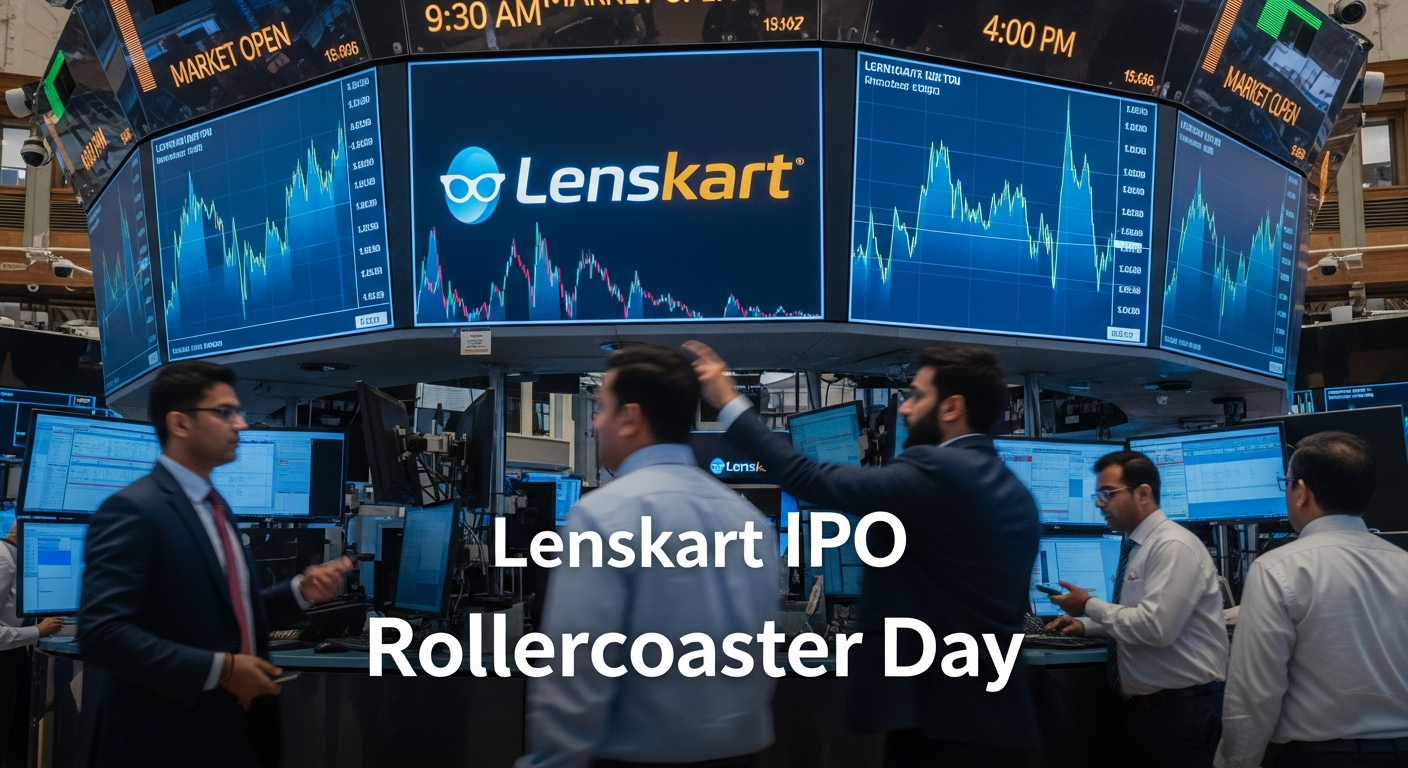
    There’s been a lot of buzz lately about Lenskart, the online eyewear giant, and their recent IPO. Honestly, the whole thing felt a little… wild. It’s not every day you see a company valued at nearly $8 billion go public, right?

    The first day on the stock market is always a nail-biter, and for Lenskart, it was no different. The opening wasn’t exactly a roaring success. The stock opened with a bit of a whimper, which definitely set some nerves on edge. You could feel the tension, I’m sure.

    But here’s where it gets interesting. Against the odds, Lenskart managed to pull things together. By the end of the day, the stock had clawed its way back, closing slightly above the IPO price. It wasn’t a massive jump, mind you, but it was enough to suggest that investors still had some faith in the company. And that’s saying something.

    Now, the whole situation got me thinking. The big question on everyone’s mind was whether that valuation was justified. $8 billion is a hefty price tag, and it definitely sparked a debate. Was it too high? Just right? Or maybe somewhere in between? The market, as it often does, seemed to be saying, “We’ll see.”

    Lenskart, if you don’t know, has built a pretty impressive business. They’ve disrupted the optics industry, offering a wide selection of eyewear online and through physical stores. They’ve got a strong brand and a loyal customer base. But the stock market is a fickle beast. What works in the business world doesn’t always translate to immediate success when you’re publicly listed.

    The first day performance is often a reflection of investor sentiment, the overall market conditions, and, let’s be honest, a bit of luck. Lenskart’s experience is a good reminder of how unpredictable the stock market can be. It’s a pretty wild ride.

    The public listing is a big step for any company. It brings in capital, yes, but it also brings a whole new level of scrutiny. Investors are watching, analysts are analyzing, and the pressure is on to perform. So, what happens next for Lenskart? That’s the million-dollar question, isn’t it?

    It’s easy to see why.

    🎙️ Latest Podcast

    Always plays the latest podcast episode

  • Gameskraft Layoffs: Real Money Gaming Ban’s Impact

    Gameskraft Layoffs: Real Money Gaming Ban’s Impact

    There’s been a bit of a shakeup in the gaming world, and honestly, it’s not looking great for everyone. Gameskraft, a gaming startup, is the latest to feel the pinch, and the story is, unfortunately, becoming all too familiar. The company is laying off a significant chunk of its workforce — a staggering 400 employees, to be exact. And the reason? Well, it all boils down to the ban on real money gaming (RMG) in the country.

    Now, if you’ve been following the business scene, this probably isn’t a huge surprise. The ban on RMG has been looming, and its impact is starting to ripple through the industry. Gameskraft, like many others, is now grappling with the fallout. It’s a tough situation, and it really highlights the challenges that startups face when the regulatory landscape shifts so dramatically.

    This whole thing is pretty wild, if you think about it. You have these companies, like Gameskraft, that are building something, creating jobs, and trying to innovate. Then, a ban comes down, and suddenly, everything changes. It’s not just about the financial hit, either. It’s about the people who lose their jobs, the projects that get put on hold, and the overall uncertainty that hangs over the industry.

    And it’s not just Gameskraft, either. The tags associated with this story, like “Real Money Gaming,” “Layoffs,” and “Gaming Industry,” are becoming unfortunately common headlines. It’s a sign of the times, and it’s a clear indication that the RMG ban is having a real, tangible effect on the businesses involved.

    Anyway, let’s talk about Gameskraft for a second. They’re a pretty big player in the gaming space, so this move is definitely going to send some shockwaves. I mean, 400 jobs is a lot. It means families affected, careers disrupted, and a lot of talented people suddenly looking for new opportunities. It’s a stark reminder that even in a booming industry, things can change in an instant.

    And the “why” is pretty straightforward: the ban on real money gaming. The government is cracking down, and companies that rely on this model are now struggling to stay afloat. It’s a classic case of policy having a direct, and often painful, impact on the business world.

    Now, what happens next? That’s the million-dollar question, isn’t it? Will more companies follow suit? Will the industry find a way to adapt? Or will this ban continue to reshape the gaming landscape? It’s hard to say for sure, but one thing is clear: the situation is still evolving.

    It’s a tough pill to swallow for the employees affected, and for the industry as a whole. It’s a reminder that the world of business is always shifting, and that even successful companies can face unexpected challenges. It is what it is.

    🎙️ Latest Podcast

    Always plays the latest podcast episode

  • Slow Ventures’ Finishing School: Etiquette for Founders

    Slow Ventures’ Finishing School: Etiquette for Founders

    There’s been a quiet shift happening. It seems like the venture capital world is getting, well, fancy. Or, at the very least, they want their founders to be. This week, Slow Ventures hosted a three-hour “Etiquette Finishing School.” Yep, you read that right. A finishing school. For startup founders.

    I know, right? Pretty wild. The whole thing was designed to help these founders learn to be… well, fancy. The curriculum? Everything from the perfect handshake to the nuances of public speaking and even office decorum. I’m picturing tiny forks and pinkies up, but I’m probably wrong.

    It’s a fascinating move, honestly. You’ve got these companies, these scrappy startups, building the future, and suddenly, they need a lesson in how to shake hands properly? It’s a bit of a culture clash, but maybe that’s the point. The world of venture capital has always had its own set of unspoken rules, and perhaps Slow Ventures is trying to help their founders navigate that world a little smoother.

    The goal, it seems, is to equip these founders with the tools they need to succeed not just in building a product or service, but also in the boardroom, at networking events, and, well, wherever else they might find themselves. Think about it: a polished founder is probably more likely to impress investors, land partnerships, and generally make a good impression. And in the world of startups, perception is often reality.

    This “Etiquette Finishing School” covered a lot of ground. The perfect handshake, which, let’s be honest, is a skill many of us could probably brush up on. Public speaking – a huge factor in whether a startup gets funded or not. And then there’s office decorum. I’m curious what that entailed. Were there lessons on how to arrange the succulents? How to avoid passive-aggressive sticky notes?

    Anyway, this whole thing got me thinking about the evolving definition of what it means to be a successful founder. For a long time, it was all about the hustle, the late nights, the ramen noodles, and the ability to code like a ninja. Now, it seems, there’s a new set of skills being valued. Soft skills, you might call them. The ability to network, to present yourself well, to navigate the social landscape of the business world.

    And it makes sense, right? As startups grow, founders have to step into a different role. They go from being the doers to the leaders, the visionaries, the faces of the company. And that requires a whole new set of skills. This is the new normal, it seems.

    Look, the “Finishing School” concept is unusual, but maybe it’s a sign of the times. It’s a signal that the venture capital world is becoming more sophisticated and that founders need to keep up. It’s an interesting concept, to say the least.

    🎙️ Latest Podcast

    Always plays the latest podcast episode

  • Attract Top Talent: Startup Strategies Without Big Budgets

    Attract Top Talent: Startup Strategies Without Big Budgets

    There’s been a quiet shift happening. Startups, those scrappy underdogs of the business world, are facing a familiar challenge: how to snag the best talent without the massive bank accounts of the big tech behemoths. It’s a classic David versus Goliath scenario, and honestly, it’s always been a tough fight. But, as I was reading a recent article, I realized there’s a smarter way to play the game.

    The core of the issue? Money. Or, rather, the lack of it. Big tech companies can offer eye-watering salaries and perks that smaller companies just can’t match. So, how do you compete? The answer, according to the article, lies in something that’s become a cornerstone of startup culture: employee equity.

    Now, before you zone out, thinking this is all finance-speak, stick with me. This isn’t about complex spreadsheets. It’s about fairness, strategy, and understanding what really motivates people. It’s about giving employees a real stake in the company’s success, which, in turn, can be a powerful lure.

    The article, which I found on TechCrunch, dove into this very topic. It featured insights from three industry insiders who really know their stuff. They broke down how startups can set up an employee equity strategy that remains fair as the company grows. Because, let’s be honest, what seems fair at the seed stage can look a whole lot different when you’re scaling up.

    The Equity Equation: Fairness First

    One of the key takeaways? Fairness isn’t just a nice-to-have; it’s essential. Employees need to believe they’re being treated equitably. That means understanding how equity works, how it’s distributed, and how it translates into real value. It’s not just about handing out stock options; it’s about creating a system where everyone feels valued and motivated.

    The insiders emphasized the importance of transparency. Be upfront about the equity pool, how it’s allocated, and how it might change over time. This builds trust and shows employees that you’re not just trying to pull a fast one. It’s a long game, after all. Building a great team takes time.

    They also pointed out that equity isn’t the only thing. A competitive salary, a good work-life balance, and a positive company culture are all important pieces of the puzzle. Equity is the cherry on top, the thing that can make a good offer great.

    Growth and the Equity Plan

    So, how does a startup’s equity strategy evolve as it grows? This is where things get interesting. The article highlighted the need to revisit the equity plan regularly. What works at the beginning might not be sustainable as the company scales. And let’s be real, scaling is the goal, right?

    This means considering things like:

    • Dilution: As you bring in more investors, the percentage of equity each employee holds will likely decrease. This is normal, but it’s important to communicate this clearly.
    • Performance-Based Equity: Tying equity to performance can be a powerful motivator. It rewards those who contribute the most to the company’s success.
    • Refresher Grants: As employees stay with the company, consider offering additional equity grants to keep them engaged and invested.

    The article also touched on the legal side. Equity plans can be complex, so it’s crucial to get good legal advice. Make sure everything is structured correctly to avoid problems down the road. It’s an investment, but it’s a worthwhile one.

    The Big Picture: Why It Matters

    The real beauty of a well-crafted employee equity strategy? It’s a win-win. Startups get access to top talent, and employees get the chance to share in the company’s success. It fosters a sense of ownership, which can lead to increased productivity, loyalty, and a stronger company culture. It’s not just about attracting talent; it’s about building a team that’s invested in the long haul.

    And honestly, in a world where the competition for talent is fierce, that kind of edge can make all the difference. It levels the playing field, allowing startups to compete with the big guys, not just on salary, but on something even more valuable: a shared vision of success.

    Anyway, that’s how it seems to me.

    🎙️ Latest Podcast

    Always plays the latest podcast episode

  • TechCrunch Disrupt 2025: Startup Battlefield 200 Highlights

    TechCrunch Disrupt 2025: Startup Battlefield 200 Highlights

    There’s a certain buzz that hangs in the air at TechCrunch Disrupt. You can feel it, right? It’s a mix of anticipation, excitement, and maybe a little bit of caffeine-fueled energy. This year, at Disrupt 2025, the Startup Battlefield 200 was the place to be, and honestly, it didn’t disappoint.

    It’s where you go to see the future, or at least, a sneak peek of it. These aren’t just any startups; they’re the ones pushing boundaries, dreaming big, and, you know, actually building the things we’ll all be using in a few years. They were all there, exhibiting and pitching their hearts out on the Showcase Stage.

    The whole point? To celebrate outstanding achievements. And let me tell you, there were plenty to celebrate. The level of innovation on display was pretty wild. From AI-powered solutions to sustainable tech, the Startup Battlefield 200 was a real melting pot of ideas. You could feel the passion radiating from the founders as they talked about their companies, their missions, and, of course, their visions for the future.

    One of the coolest things about Disrupt is the sheer variety. You have companies from all over the world, working on everything you can imagine. It’s a reminder that great ideas can come from anywhere. And that’s what makes events like this so important. They create a space for these startups to connect with investors, potential partners, and, you know, the wider tech community.

    The Showcase Stage itself was a hub of activity. Startups were constantly giving demos, answering questions, and trying to grab the attention of the crowd. The energy was infectious. It’s where the “how” of their success was on full display—the pitching and exhibiting. It’s a tough crowd, too. Everyone there is looking for the next big thing, the next game-changer.

    So, what exactly did these startups achieve? Well, that’s the beauty of it. The achievements are as diverse as the companies themselves. For some, it was securing funding. For others, it was making key connections. And for many, it was simply getting their name out there. They were all there at TechCrunch Disrupt, an event hosted by TechCrunch, and they all had a story to tell.

    The whole thing was a celebration of what’s possible when you bring together brilliant minds, cutting-edge technology, and a shared vision for the future. It’s easy to see why. The Startup Battlefield 200 at TechCrunch Disrupt 2025 wasn’t just an event; it was a glimpse into the future. And honestly, it was pretty inspiring.

    🎙️ Latest Podcast

    Always plays the latest podcast episode

  • SoftBank’s AI Bet in Japan: Masterstroke or Hype?

    SoftBank’s AI Bet in Japan: Masterstroke or Hype?

    There’s a pretty interesting story unfolding in the tech world right now, and it involves two big names: SoftBank and OpenAI. They just announced a new joint venture, a 50-50 split, to sell enterprise AI tools in Japan. They’re calling it “Crystal Intelligence.” On the surface, it looks like a straightforward move: international expansion, tapping into a new market. But when you dig a little deeper, things get… well, a bit more complicated.

    See, SoftBank’s a major investor in OpenAI. That detail alone is enough to make you raise an eyebrow. It’s got people wondering if we’re seeing real economic value being created, or if this is just money being shuffled around within the AI hype cycle. That’s the question, isn’t it?

    It’s easy to get swept up in the AI frenzy. Every other day, there’s a new announcement, a new breakthrough, a new promise of how AI is going to change everything. But are we actually seeing tangible results? Or is it all just a lot of hot air, a bubble waiting to burst?

    Now, Japan is a smart choice for this venture. It’s a market with a strong appetite for new technologies, and a culture that values innovation. But it’s also a market that’s seen its fair share of tech hype, and it’s probably a bit more discerning than some. So, will Crystal Intelligence be able to break through the noise and deliver real value?

    The “who” is pretty clear: SoftBank and OpenAI. The “what” is enterprise AI tools, and the “where” is Japan. The “when” is right now. But the “why” is the real kicker. Why are they doing this? Is it about genuine innovation, or is it about keeping the hype machine running?

    Honestly, the whole thing feels a bit like a high-stakes game of musical chairs. Companies are pouring money into AI, and the valuations are soaring. But when the music stops… who’s going to be left holding the bag? SoftBank, with its history of big bets and sometimes mixed results, is definitely a player to watch.

    The AI Hype Cycle: A Quick Refresher

    If you’re not familiar with the AI hype cycle, it goes something like this: a new technology emerges, there’s a burst of excitement, everyone jumps on the bandwagon, valuations go through the roof, and then… reality sets in. The technology doesn’t live up to the hype, the bubble bursts, and things cool down. Then, eventually, the technology matures, finds its footing, and actually starts delivering real value. It’s happened with the internet, it’s happened with mobile phones, and it’s happening with AI.

    Right now, it feels like we’re somewhere in the middle of that cycle. The hype is still very much alive, but the cracks are starting to show. Some AI companies are struggling to generate revenue, some are facing ethical concerns, and some are just… overvalued.

    So, where does SoftBank and OpenAI’s new venture fit in? Is it a sign of things to come, a smart move to capitalize on the AI boom? Or is it a case of history repeating itself?

    It’s hard to say for sure, but it’s definitely a story worth following. The success or failure of Crystal Intelligence could tell us a lot about the future of AI, and whether the current hype is justified.

    It’s not just about the tech; it’s about the money, the expectations, and the long game. And honestly, it’s going to be fascinating to watch how this plays out.

    Anyway, that’s how it seems to me.

    🎙️ Latest Podcast

    Always plays the latest podcast episode

  • Terraforming Robots: Protecting Cities from Rising Seas

    Terraforming Robots: Protecting Cities from Rising Seas

    There’s been a lot of talk lately about climate change, and honestly, it’s pretty scary stuff. Sea levels are rising, and that means a lot of cities are facing some serious flooding risks. But what if there was a way to fight back, to adapt, to… well, terraform?

    That’s the idea behind Terranova, a startup that’s got a pretty wild plan: use robots to raise cities. Instead of building the usual seawalls and dikes, they’re proposing a completely different approach. It’s a bold move, and it’s definitely caught my attention.

    I read about it in a TechCrunch article, which focused on the founder’s vision and how these terraforming robots might actually work. The basic concept is to use technology to physically lift the city, creating a buffer against rising tides. It’s like something out of a sci-fi movie, right?

    Now, I’m no engineer, but the idea is fascinating. The article didn’t go into the nitty-gritty details of the technology, but the core concept is pretty clear: robots, working in concert, would essentially reshape the landscape beneath the city. They’d add layers, elevate structures, and hopefully, buy us some time against the inevitable.

    Of course, this raises a ton of questions. How do you actually do this? What about existing infrastructure? And, of course, the big one: how much would it cost? The article didn’t have all the answers, but it did paint a picture of a future where technology is actively fighting back against the effects of climate change. It’s an interesting shift from simply reacting to the problem.

    The article mentioned San Rafael as a potential testing ground, which makes sense. Cities like that are already dealing with the pressures of rising sea levels. It’s a real problem, and finding solutions is more critical than ever. It’s not just about protecting property; it’s about preserving communities and ways of life.

    The Bigger Picture

    What really struck me was the shift in thinking. We’re so used to dealing with climate change by mitigating emissions or building defenses. This is different. This is about adapting the physical world. It’s about being proactive, not just reactive.

    The potential implications are pretty huge. If Terranova’s approach works, it could be a game-changer for coastal cities around the world. It could mean the difference between abandonment and survival for countless communities. It’s a big if, of course, but the potential payoff is enormous.

    I was thinking about the implications. It’s not just about the technology itself. It’s about urban planning, engineering, and the environment all coming together. It’s about finding innovative ways to address the challenges we face. It’s easy to see why this is so compelling.

    The article also touched on the ethics of this kind of intervention. Who decides which cities get “saved”? What are the environmental consequences of such large-scale terraforming? These are important questions, and the answers will be critical to the success of any project like this.

    But still, the core idea — using technology to actively reshape our environment to protect ourselves — is a powerful one. It’s a testament to human ingenuity and our capacity to adapt. It’s a reminder that even when faced with seemingly insurmountable challenges, there are always new ideas, new approaches, and new possibilities. It’s a really interesting thought, and honestly, the whole thing is just pretty wild.

    🎙️ Latest Podcast

    Always plays the latest podcast episode