
Blog

  • Google Data Cloud: Latest Updates and Innovations

    Google Data Cloud: Latest Updates and Innovations

    What’s New with Google Data Cloud

    Google Cloud continually updates its Data Cloud services, providing new features, enhancements, and integrations. This article summarizes key announcements and improvements made between late July and late October, 2024. These updates span various services, including Cloud SQL, AlloyDB, BigQuery, and others, aimed at improving performance, security, and user experience.

    Cloud SQL Enhancements

    Cloud SQL has seen significant upgrades, particularly in features related to data recovery, connection management, and security. In October, the introduction of point-in-time recovery (PITR) for deleted instances addressed compliance and disaster recovery needs. This feature is crucial for managing accidental deletions and ensuring data integrity. Users can leverage existing PITR clone API and getLatestRecoveryTime API for deleted instances, with the recovery window varying based on log retention policies.

    Also, the Precheck API for Cloud SQL for PostgreSQL improves major version upgrades by proactively identifying potential incompatibilities, thus preventing downtime. This feature directly addresses customer requests for a precheck utility to identify and resolve upgrade issues.

    Furthermore, Cloud SQL now supports Managed Connection Pool (in GA) across MySQL and PostgreSQL. Managed Connection Pooling optimizes resource utilization for Cloud SQL instances, enhancing scalability. IAM authentication is also available for secure connections. Read more about this feature in the provided guide.

    AlloyDB Updates

    AlloyDB continues to evolve with new features designed to improve database performance and integration capabilities. Notably, AlloyDB now supports the tds_fdw extension, enabling direct access to SQL Server and Sybase databases. This streamlines database migrations and allows hybrid data analysis. AlloyDB is also offering general availability for PostgreSQL 17, bringing improvements such as enhanced query performance, incremental backup capabilities, and improved JSON data type handling.

    AlloyDB also saw the C4A Axion processor support in GA, providing improved performance and price-performance, along with a 50% reduced entry price for development environments. Additionally, Parameterized Secured Views (now in Preview) in AlloyDB provides application data security and row access control using SQL views.

    BigQuery Innovations

    BigQuery has introduced several enhancements, including a redesigned “Add Data” experience to simplify data ingestion. This update streamlines the process of choosing from various ingestion methods, making it more intuitive for users to bring data into BigQuery. BigQuery also offers soft failover, which gives administrators options over failover procedures, minimizing data loss during planned activities. The BigQuery AI Hackathon encouraged users to build solutions using Generative AI, Vector Search, and Multimodal capabilities.

    Other Notable Updates

    Several other Google Cloud services have received updates. Firestore with MongoDB compatibility is now generally available (GA), allowing developers to build cost-effective and scalable applications using a familiar MongoDB-compatible API. The Database Migration Service (DMS) offers support for Private Service Connect (PSC) interfaces for homogenous migrations to Cloud SQL and AlloyDB.

    The introduction of Pub/Sub Single Message Transforms (SMTs), specifically JavaScript User-Defined Functions (UDFs), allows for real-time data transformations within Pub/Sub. The Serverless Spark is now generally available directly within BigQuery, reducing TCO and providing strong performance. The Bigtable Spark connector is now GA, opening up possibilities for Bigtable and Apache Spark applications.

    Conclusion

    Google Cloud continues to enhance its data services with features designed to improve performance, security, and integration capabilities. These updates provide users with the tools they need to manage, analyze, and secure their data effectively. Staying informed about these changes is crucial for optimizing data workflows and leveraging the full potential of Google Cloud’s data solutions.

    Source: Google Cloud Blog
    🎙️ Latest Podcast

    Always plays the latest podcast episode

  • Vox Casino Polska 2026 Ponad 3500 Gier i Bonusy

    Automaty, gry stołowe i kasyno na żywo są dostępne z tą samą jakością grafiki. Obydwa depozyty i wypłata są dostępne w szerokiej gamie metod płatności online. Kasyno działa na podstawie licencji Curacao eGaming, co gwarantuje legalność, uczciwość i bezpieczeństwo rozgrywki dla graczy z Polski. Przygotowaliśmy specjalną aplikację mobilną, dzięki której możesz obstawiać i grać w swoje ulubione gry kasynowe gdziekolwiek jesteś! Czasami kasyno nagradza użytkowników mobilnych ekskluzywnymi promocjami, dostępnymi tylko gdy wykonasz vox casino zaloguj przez telefon.
    Niezależnie od tego, czy interesuje Cię prowadzenie konta, bonusy, zakłady sportowe czy wypłaty, nasz zespół jest dostępny dla Ciebie przez całą dobę. Naszą pozycję na rynku umacniamy dzięki wiedzy niezależnych specjalistów oraz autentycznym opiniom graczy. Proponujemy szeroki wybór gier – od klasycznych automatów po popularne gry stołowe, więc każdy miłośnik hazardu znajdzie coś dla siebie. Wpłacaj szybko i bezpiecznie, korzystając z popularnych metod płatności dostępnych w Polsce. Dbamy o Twoje bezpieczeństwo, stosując zaawansowane szyfrowanie SSL, które chroni każdą wymianę danych.
    Twoje dane są u nas bezpieczne i przetwarzane zgodnie z obowiązującymi w Polsce przepisami o ochronie danych osobowych. Stosujemy procedury KYC, by potwierdzić tożsamość graczy oraz zabezpieczyć się przed nadużyciami i praniem pieniędzy. Proponujemy ciekawy program partnerski stworzony z myślą o osobach pasjonujących się grami kasynowymi i obstawianiem sportu. Wspieramy również kontakt z organizacjami udzielającymi pomocy osobom mającym trudności z kontrolowaniem gry.

    Wpłaty i Wypłaty w Vox Casino

    W ofercie Meybe znajdują się także popularne automaty, rozrywki kasyna online oraz związane z hazardem sportowe. Casino Vox online dysponuje dużą ilością różnych gier, które każdy gracz uzna za atrakcyjne. Wszystkie transakcje są bezpieczne, a wsparcie dostępne 24/7. Jako redaktor naczelny czuwam nad jakością, rzetelnością i aktualnością publikowanych treści – od e-sportu po kasyna online. Aplikacja działa płynnie na wszystkich nowoczesnych urządzeniach i obsługuje szybkie płatności w PLN. Dzięki aplikacji mobilnej Vox Casino możesz grać gdziekolwiek jesteś.

    Pakiet Powitalny Vox Casino: Do 10 000 PLN + 500 Darmowych Spinów!

    Wybierz sprawdzone kasyno vox i ciesz się grą na najwyższym poziomie. Zgodnie z RODO, Vox Casino wdraża rygorystyczne polityki prywatności. Wszystkie gry wykorzystują certyfikowane Generatory Liczb Losowych (RNG) od niezależnych laboratoriów, takich jak eCOGRA lub iTech Labs. Zarówno depozyty, jak i każde vox casino logowanie, są chronione zaawansowanymi zaporami sieciowymi. Każdy postawiony zakład przybliża Cię do nagród dzięki systemowi punktów lojalnościowych. Bonusy od doładowania (Reload bonus), cotygodniowy cashback, darmowe spiny w określone dni i promocje tematyczne utrzymują świeżość i satysfakcję z gry.
    Daje to dostęp do szerokiej gamy gier, zapewniając wygodę i bezpieczeństwo wszystkim użytkownikom. Vox Casino Poland rozpoczęło działalność w 2024 roku i już zdobyło zaufanie ponad 6 milionów polskich użytkowników. Udział w turniejach Vox Casino Polska daje szansę na dodatkowe bonusy, darmowe spiny oraz miejsce w rankingach graczy. Vox Casino priorytetowo traktuje bezpieczeństwo graczy i transparentność swoich usług. Dla fanów szybkich wyników i intensywnej rozgrywki dostępne są dynamiczne gry crash, takie jak kultowy Aviator od Spribe.

    Jak zacząć w Vox Casino: Rejestracja i Pierwsze Kroki

    Dla fanów strategii i klasycznych gier, VoxCasino oferuje wyrafinowany wybór gier stołowych. Usprawniliśmy płatności, odświeżyliśmy bibliotekę slotów i dodaliśmy spersonalizowane bonusy, czyniąc naszą ofertę najbardziej atrakcyjną w branży. Posiadając oficjalną i regulowaną licencję, kasyno gwarantuje uczciwe i przejrzyste środowisko gry. Polscy gracze wybierają Vox Casino ze względu na idealne połączenie jakości, bezpieczeństwa i różnorodności. Dołącz do nas i poczuj prawdziwą ekscytację kasyna na żywo! Każda z wymienionych gier wyróżnia się unikalnym stylem rozgrywki i tematem, zapewniając graczom niezapomniane emocje.

    • Aktualna oferta obejmuje bonus do € oraz dodatkowo 500 darmowych spinów (FS).
    • Vox Casino słynie z bogatej oferty promocyjnej, która wyprzedza konkurencję.
    • Zapewni to dostęp do gier w dowolnym miejscu i czasie na telefonie lub tablecie, ciesząc się nieprzerwaną rozgrywką.
    • Współdziałamy z niezależnymi instytucjami mediacyjnymi, aby w rzetelny sposób rozstrzygać wszelkie spory.
    • Wykorzystujemy nowoczesną technologię szyfrowania SSL, aby zapewnić bezpieczne przesyłanie danych.
    • Jest to włókno standartowej serii wymagań, bezpieczeństwo gracza jest pracownikowe.

    Darmowe spiny

    • Deweloperzy ci znani są z wysokiej jakości grafiki, innowacyjnej rozgrywki i hojnych wskaźników zwrotu dla gracza (RTP).
    • Oferta bonusowa Vox Casino to gwarancja dodatkowej zabawy i nagród.
    • Minimalna kwota depozytu dla bonusu powitalnego wynosi 40 PLN, a darmowe spiny są przydzielane do konkretnych gier.
    • W 4–6 sekund jesteś w lobby z pełnym dostępem
    • Istnieje także szerokie wsparcie dla graczy pochodzących ze różnych środowisk, którzy mogą potrzebować pomocy w zarządzaniu swoim zachowaniem związanym z hazardem.
    • Licencja Curaçao i ocena 8,2 na Casino Guru gwarantują bezpieczeństwo.

    Współdziałamy z niezależnymi instytucjami mediacyjnymi, aby w rzetelny sposób rozstrzygać wszelkie spory. Zachęcamy do odpowiedzialnej zabawy oraz poszerzania wiedzy o ryzyku związanym z grą w kasynach i zakładach sportowych. Dzięki naszym procesom weryfikacyjnym możesz mieć pewność, że gra odbywa się w uczciwych i przejrzystych warunkach – zgodnie z polskim prawem hazardowym.

    Jak wybrać wiarygodne kasyno online?

    Wymóg obrotu to x40 (dla poszczególnych wpłat z pakietu powitalnego), choć inne bonusy mogą mieć x30, x35 lub x45. Minimalna kwota depozytu dla bonusu powitalnego wynosi 40 PLN, a darmowe spiny są przydzielane do konkretnych gier. Nowi gracze otrzymują imponujący pakiet startowy, który rozłożony jest na trzy pierwsze wpłaty. Vox Casino słynie z bogatej oferty promocyjnej, która wyprzedza konkurencję.

    Wybierz grę i rozpocznij rozgrywkę, odkrywając świat bonusów i nieskończonej https://slodkizapachmalin.pl/ rozrywki. Wybierz preferowaną metodę płatności i dokonaj depozytu od 20 PLN. Aby korzystać ze wszystkich funkcji Vox Casino Poland, musisz się zalogować.
    Gracze mogą ustawić limity wpłat, korzystać z narzędzi odpowiedzialnej gry i mieć pewność, że dane są bezpieczne. Vox Casino Polska stosuje szyfrowanie SSL oraz pełną zgodność z RODO. Regularne nowości i gry ekskluzywne zapewniają świeżą rozrywkę.

    🎙️ Latest Podcast

    Always plays the latest podcast episode

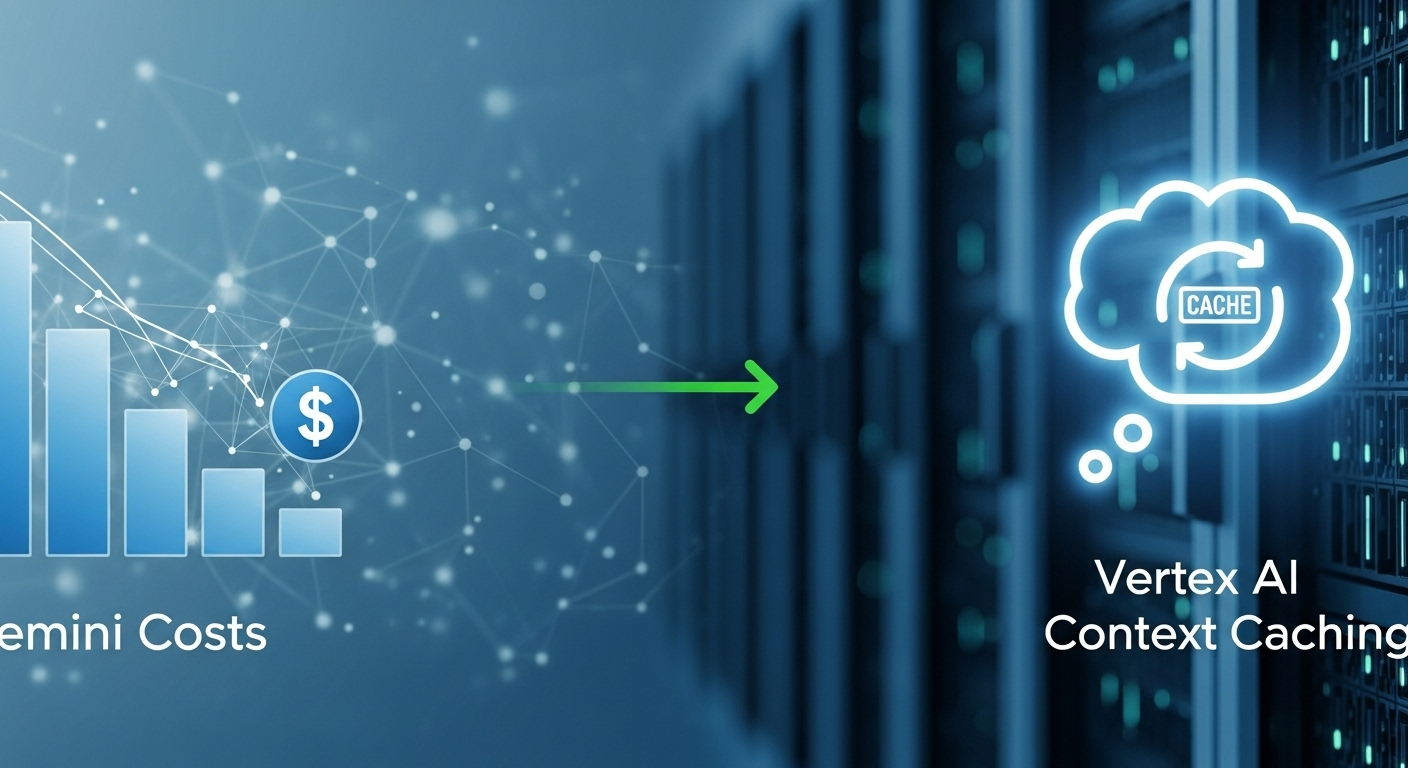
  • Reduce Gemini Costs & Latency with Vertex AI Context Caching

    Reduce Gemini Costs & Latency with Vertex AI Context Caching

    Reduce Gemini Costs and Latency with Vertex AI Context Caching

    As developers build increasingly complex AI applications, they often face the challenge of repeatedly sending large amounts of contextual information to their models. This can include lengthy documents, detailed instructions, or extensive codebases. While this context is crucial for accurate responses, it can significantly increase both costs and latency. To address this, Google Cloud introduced Vertex AI context caching in 2024, a feature designed to optimize Gemini model performance.

    What is Vertex AI Context Caching?

    Vertex AI context caching allows developers to save and reuse precomputed input tokens, reducing the need for redundant processing. This results in both cost savings and improved latency. The system offers two primary types of caching: implicit and explicit.

    Implicit Caching

    Implicit caching is enabled by default for all Google Cloud projects. It automatically caches tokens when repeated content is detected. The system then reuses these cached tokens in subsequent requests. This process happens seamlessly, without requiring any modifications to your API calls. Cost savings are automatically passed on when cache hits occur. Caches are typically deleted within 24 hours, based on overall load and reuse frequency.

    Explicit Caching

    Explicit caching provides users with greater control. You explicitly declare the content to be cached, allowing you to manage which information is stored and reused. This method guarantees predictable cost savings. Furthermore, explicit caches can be encrypted using Customer Managed Encryption Keys (CMEKs) to enhance security and compliance.

    Vertex AI context caching supports a wide range of use cases and prompt sizes. Caching is enabled from a minimum of 2,048 tokens up to the model’s context window size – over 1 million tokens for Gemini 2.5 Pro. Cached content can include text, PDFs, images, audio, and video, making it versatile for various applications. Both implicit and explicit caching work across global and regional endpoints. Implicit caching is integrated with Provisioned Throughput to ensure production-grade traffic benefits from caching.

    Ideal Use Cases for Context Caching

    Context caching is beneficial across many applications. Here are a few examples:

    • Large-Scale Document Processing: Cache extensive documents like contracts, case files, or research papers. This allows for efficient querying of specific clauses or information without repeatedly processing the entire document. For instance, a financial analyst could upload and cache numerous annual reports to facilitate repeated analysis and summarization requests.
    • Customer Support Chatbots/Conversational Agents: Cache detailed instructions and persona definitions for chatbots. This ensures consistent responses and allows chatbots to quickly access relevant information, leading to faster response times and reduced costs.
    • Coding: Improve codebase Q&A, autocomplete, bug fixing, and feature development by caching your codebase.
    • Enterprise Knowledge Bases (Q&A): Cache complex technical documentation or internal wikis to provide employees with quick answers to questions about internal processes or technical specifications.

    Cost Implications: Implicit vs. Explicit Caching

    Understanding the cost implications of each caching method is crucial for optimization.

    • Implicit Caching: Enabled by default, you are charged standard input token costs for writing to the cache, but you automatically receive a discount when cache hits occur.
    • Explicit Caching: When creating a CachedContent object, you pay a one-time fee for the initial caching of tokens (standard input token cost). Subsequent usage of cached content in a generate_content request is billed at a 90% discount compared to regular input tokens. You are also charged for the storage duration (TTL – Time-To-Live), based on an hourly rate per million tokens, prorated to the minute.

    Best Practices and Optimization

    To maximize the benefits of context caching, consider the following best practices:

    • Check Limitations: Ensure you are within the caching limitations, such as the minimum cache size and supported models.
    • Granularity: Place the cached/repeated portion of your context at the beginning of your prompt. Avoid caching small, frequently changing pieces.
    • Monitor Usage and Costs: Regularly review your Google Cloud billing reports to understand the impact of caching on your expenses. The cachedContentTokenCount in the UsageMetadata provides insights into the number of tokens cached.
    • TTL Management (Explicit Caching): Carefully set the TTL. A longer TTL reduces recreation overhead but incurs more storage costs. Balance this based on the relevance and access frequency of your context.

    Context caching is a powerful tool for optimizing AI application performance and cost-efficiency. By intelligently leveraging this feature, you can significantly reduce redundant token processing, achieve faster response times, and build more scalable and cost-effective generative AI solutions. Implicit caching is enabled by default for all GCP projects, so you can get started today.

    For explicit caching, consult the official documentation and explore the provided Colab notebook for examples and code snippets.

    By using Vertex AI context caching, Google Cloud users can significantly reduce costs and latency when working with Gemini models. This technology, available since 2024, offers both implicit and explicit caching options, each with unique advantages. The financial analyst, the customer support chatbot, and the coder can improve their workflow by using context caching. By following best practices and understanding the cost implications, developers can build more efficient and scalable AI applications. Explicit Caching allows for more control over the data that is cached.

    To get started with explicit caching check out our documentation and a Colab notebook with common examples and code.

    Source: Google Cloud Blog

    🎙️ Latest Podcast

    Always plays the latest podcast episode

  • AI at the Edge: Akamai’s India Inference Cloud & the Shifting Power from Central Compute

    Akamai’s India Move: What’s Changing

    Inference at the edge, rather than training in a central hub
    The idea is to reduce response times, save bandwidth, and offload heavy requests from the core cloud.

    Hardware integration
    Akamai intends to deploy NVIDIA’s newer Blackwell chips to power the inference cloud by end of December 2025.

    Strategic growth in a high-demand market
    India has been buzzing as a major AI growth region — local infrastructure for inference means better access, lower cost, and potential for new local AI apps.

    🎙️ Latest Podcast

    Always plays the latest podcast episode

  • How OpenAI’s Custom AI Chips & the Push for Efficiency Are Reshaping the AI Race

    Introduction

    The AI boom isn’t just about bigger models anymore. Behind the scenes, the war for efficiency, proprietary hardware, and smarter architectures is heating up. In a recent move that could shift the AI landscape, OpenAI partnered with Broadcom to design its own AI processors — just one example of the deeper transformation underway.

    OpenAI + Broadcom: Building In-House Chips

    OpenAI has struck a deal with Broadcom to build custom chips tailored for AI workloads, with deployment expected in 2026–2029.

    The reasoning? General-purpose GPUs (like Nvidia’s) are great, but custom silicon can be optimized for inference, memory, interconnects — giving speed, power, and cost advantages.

    Still, analysts see challenges ahead: the cost, R&D complexity, and keeping up with rapid model evolution.

    🎙️ Latest Podcast

    Always plays the latest podcast episode

  • Влияние искусственного интеллекта на операции казино

    Искусственный интеллект (ИИ) преобразует поле казино, оптимизируя операции и улучшая опыт клиентов. В 2023 году в исследовании Deloitte подчеркивалось, что технологии искусственного интеллекта могут повысить производительность эксплуатации до 30%, что позволило казино лучше управлять постановлениями и улучшить предоставление услуг.

    Одним из выдающихся фигур в этой области является Билл Миллер, президент и генеральный директор Американской игровой ассоциации. Он был горячим сторонником включения ИИ в игровые операции, чтобы повысить участие и защиту игроков. Вы можете узнать больше о его проектах на его профиль Twitter .

    В 2022 году в Лас-Вегас Стрип испытала принятие систем мониторинга, управляемых ИИ, которые используют технологию распознавания лиц для повышения безопасности и наблюдения за действиями игроков. Эти системы помогают казино выявлять потенциальные проблемы до того, как они будут расти, обеспечивая более безопасную среду как для игроков, так и для персонала. Для получения дополнительной информации об ИИ в игровой области, посетите The New York Times .

    AI также играет жизненно важную роль в адаптации игрового события. Оценивая данные игроков, казино могут представлять индивидуальные стимулы и предложения, увеличивая удовлетворенность и лояльность игрока. Тем не менее, казино необходимо обрабатывать эти данные с этически и открыто, чтобы поддерживать доверие со своими покровителями. Для получения более подробной информации о ответственных стратегиях игр, посетите pin up kz казино онлайн.

    По прогнозам, по мере того, как технология машинного обучения продолжает развиваться, прогнозируется, что ее реализации в индустрии казино увеличатся, что приведет к более креативным решениям, которые повышают как операционную эффективность, так и вовлечение потребителей. Оставаться в курсе этих прогрессии может помочь игрокам и менеджерам ориентироваться в перспективе игр.

    🎙️ Latest Podcast

    Always plays the latest podcast episode

  • Google Data Protection: Cryptographic Erasure Explained

    Google Data Protection: Cryptographic Erasure Explained

    Google’s Future of Data Protection: Cryptographic Erasure Explained

    Protecting user data is a top priority at Google. To bolster this commitment, Google is transitioning to a more advanced method of media sanitization: cryptographic erasure. Starting in November 2025, Google will move away from traditional “brute force disk erase” methods, embracing a layered encryption strategy to safeguard user information.

    The Limitations of Traditional Data Erasure

    For nearly two decades, Google has relied on overwriting data as a primary means of media sanitization. While effective, this approach is becoming increasingly unsustainable. The sheer size and complexity of modern storage media make the traditional method slow and resource-intensive. As storage technology evolves, Google recognized the need for a more efficient and environmentally conscious solution.

    Enter Cryptographic Erasure: A Smarter Approach

    Cryptographic erasure offers a modern and efficient alternative. Since all user data within Google’s services is already protected by multiple layers of encryption, this method leverages existing security infrastructure. Instead of overwriting the entire drive, Google will securely delete the cryptographic keys used to encrypt the data. Once these keys are gone, the data becomes unreadable and unrecoverable.

    This approach offers several key advantages:

    • Speed and Efficiency: Cryptographic erasure is significantly faster than traditional overwriting methods.
    • Industry Best Practices: The National Institute of Standards and Technology (NIST) recognizes cryptographic erasure as a valid sanitization technique.
    • Enhanced Security: Google implements cryptographic erasure with multiple layers of security, employing a defense-in-depth strategy.

    Enhanced Security Through Innovation

    Google’s implementation of cryptographic erasure includes a “trust-but-verify” model. This involves independent verification mechanisms to ensure the permanent deletion of media encryption keys. Furthermore, secrets involved in this process, such as storage device keys, are protected with industry-leading security measures. Multiple key rotations further enhance the security of customer data through independent layers of trusted encryption.

    Sustainability and the Circular Economy

    The older “brute force disk erase” method had a significant environmental impact. Storage devices that failed verification were physically destroyed, leading to the disposal of a large number of devices annually. Cryptographic erasure promotes a more sustainable, circular economy by eliminating the need for physical destruction. This enables Google to reuse more hardware and recover valuable rare earth materials, such as neodymium magnets, from end-of-life media. This innovative magnet recovery process marks a significant step forward in sustainable manufacturing.

    Google’s Commitment to Data Protection and Sustainability

    Google has consistently advocated for practices that benefit users, the industry, and the environment. The transition to cryptographic erasure reflects this commitment. It allows Google to enhance security, align with the highest industry standards set forth by organizations such as the National Institute of Standards and Technology (NIST), and build a more sustainable future for its infrastructure. Cryptographic erasure ensures data protection while minimizing environmental impact and promoting responsible growth.

    For more detailed information about encryption at rest, including encryption key management, refer to Google’s default encryption at rest security whitepaper. This document provides a comprehensive overview of Google’s data protection strategies.

    Source: Cloud Blog

    🎙️ Latest Podcast

    Always plays the latest podcast episode

  • Agile AI Data Centers: Fungible Architectures for the AI Era

    Agile AI Data Centers: Fungible Architectures for the AI Era

    Agile AI Architectures: Building Fungible Data Centers for the AI Era

    Artificial Intelligence (AI) is rapidly transforming every aspect of our lives, from healthcare to software engineering. Innovations like Google’s Magic Cue on the Pixel 10, Nano Banana Gemini 2.5 Flash image generation, Code Assist, and Deepmind’s AlphaFold highlight the advancements made in just the past year. These breakthroughs are powered by equally impressive developments in computing infrastructure.

    The exponential growth in AI adoption presents significant challenges for data center design and management. At Google I/O, it was revealed that Gemini models process nearly a quadrillion tokens monthly, with AI accelerator consumption increasing 15-fold in the last 24 months. This explosive growth necessitates a new approach to data center architecture, emphasizing agility and fungibility to manage volatility and heterogeneity effectively.

    Addressing the Challenges of AI Growth

    Traditional data center planning involves long lead times that struggle to keep pace with the dynamic demands of AI. Each new generation of AI hardware, such as TPUs and GPUs, introduces unique power, cooling, and networking requirements. This rapid evolution increases the complexity of designing, deploying, and maintaining data centers. Furthermore, the need to support various data center facilities, from hyperscale environments to colocation providers across multiple regions, adds another layer of complexity.

    To address these challenges, Google, in collaboration with the Open Compute Project (OCP), advocates for designing data centers with fungibility and agility as core principles. Modular architectures, interoperable components, and the ability to late-bind facilities and systems are essential. Standard interfaces across all data center components—power delivery, cooling, compute, storage, and networking—are also crucial.

    Power and Cooling Innovations

    Achieving agility in power management requires standardizing power delivery and building a resilient ecosystem with common interfaces at the rack level. The Open Compute Project (OCP) is developing technologies like +/-400Vdc designs and disaggregated solutions using side-car power. Emerging technologies such as low-voltage DC power and solid-state transformers promise fully integrated data center solutions in the future.

    Data centers are also being reimagined as potential suppliers to the grid, utilizing battery-operated storage and microgrids. These solutions help manage the “spikiness” of AI training workloads and improve power efficiency. Cooling solutions are also evolving, with Google contributing Project Deschutes, a state-of-the-art liquid cooling solution, to the OCP community. Companies like Boyd, CoolerMaster, Delta, Envicool, Nidec, nVent, and Vertiv are showcasing liquid cooling demos, highlighting the industry’s enthusiasm.

    Standardization and Open Standards

    Integrating compute, networking, and storage in the server hall requires standardization of physical attributes like rack height, width, and weight, as well as aisle layouts and network interfaces. Standards for telemetry and mechatronics are also necessary for building and maintaining future data centers. The Open Compute Project (OCP) is standardizing telemetry integration for third-party data centers, establishing best practices, and developing common naming conventions and security protocols.

    Beyond physical infrastructure, collaborations are focusing on open standards for scalable and secure systems:

    • Resilience: Expanding manageability, reliability, and serviceability efforts from GPUs to include CPU firmware updates.
    • Security: Caliptra 2.0, an open-source hardware root of trust, defends against threats with post-quantum cryptography, while OCP S.A.F.E. streamlines security audits.
    • Storage: OCP L.O.C.K. provides an open-source key management solution for storage devices, building on Caliptra’s foundation.
    • Networking: Congestion Signaling (CSIG) has been standardized, improving load balancing. Advancements in SONiC and efforts to standardize Optical Circuit Switching are also underway.

    Sustainability Initiatives

    Sustainability is a key focus. Google has developed a methodology for measuring the environmental impact of AI workloads, demonstrating that a typical Gemini Apps text prompt consumes minimal water and energy. This data-driven approach informs collaborations within the Open Compute Project (OCP) on embodied carbon disclosure, green concrete, clean backup power, and reduced manufacturing emissions.

    Community-Driven Innovation

    Google emphasizes the power of community collaborations and invites participation in the new OCP Open Data Center for AI Strategic Initiative. This initiative focuses on common standards and optimizations for agile and fungible data centers.

    Looking ahead, leveraging AI to optimize data center design and operations is crucial. Deepmind’s AlphaChip, which uses AI to accelerate chip design, exemplifies this approach. AI-enhanced optimizations across hardware, firmware, software, and testing will drive the next wave of improvements in data center performance, agility, reliability, and sustainability.

    The future of data centers in the AI era depends on community-driven innovation and the adoption of agile, fungible architectures. By standardizing interfaces, promoting open collaboration, and prioritizing sustainability, the industry can meet the growing demands of AI while minimizing environmental impact. These efforts will unlock new possibilities and drive further advancements in AI and computing infrastructure.

    Source: Cloud Blog

    🎙️ Latest Podcast

    Always plays the latest podcast episode

  • Google’s Encryption-Based Data Erasure: Future of Sanitization

    Google’s Encryption-Based Data Erasure: Future of Sanitization

    Google’s Future of Data Sanitization: Encryption-Based Erasure

    Protecting user data is a top priority for Google. To bolster this commitment, Google has announced a significant shift in its approach to media sanitization. Starting in November 2025, the company will transition to a fully encryption-based strategy, moving away from traditional disk erasure methods. This change addresses the evolving challenges of modern storage technology while enhancing data security and promoting sustainability.

    The Limitations of Traditional Disk Erasure

    For nearly two decades, Google has relied on the “brute force disk erase” process. While effective in the past, this method is becoming increasingly unsustainable due to the sheer size and complexity of today’s storage media. Overwriting entire drives is time-consuming and resource-intensive, prompting the need for a more efficient and modern solution.

    Cryptographic Erasure: A Smarter Approach

    To overcome these limitations, Google is adopting cryptographic erasure, a method recognized by the National Institute of Standards and Technology (NIST) as a valid sanitization technique. This approach leverages Google’s existing multi-layered encryption to sanitize media. Instead of overwriting the entire drive, the cryptographic keys used to encrypt the data are securely deleted. Once these keys are gone, the data becomes unreadable and unrecoverable.

    This method offers several advantages:

    • Enhanced Speed and Efficiency: Cryptographic erasure is significantly faster than traditional overwriting methods.
    • Alignment with Industry Best Practices: It aligns with standards set by organizations like NIST. [Source: Google Cloud Blog]
    • Improved Security: By focusing on key deletion, it adds another layer of security to data sanitization.

    Defense in Depth: Multiple Layers of Security

    Google implements cryptographic erasure with a “defense in depth” strategy, incorporating multiple layers of security. This includes independent verification mechanisms to ensure the permanent deletion of media encryption keys. Secrets involved in the process, such as storage device keys, are protected with industry-leading measures. Multiple key rotations further enhance the security of customer data through independent layers of trusted encryption.

    Sustainability and the Circular Economy

    The transition to cryptographic erasure also addresses environmental concerns. Previously, storage devices that failed verification were physically destroyed, leading to the destruction of a significant number of devices annually. Cryptographic erasure allows Google to reuse more of its hardware, promoting a more sustainable, circular economy.

    Furthermore, this approach enables the recovery of valuable rare earth materials, such as neodymium magnets, from end-of-life media. This innovative magnet recovery process marks a significant achievement in sustainable manufacturing, demonstrating Google’s commitment to responsible growth.

    Google’s Commitment

    Google has consistently advocated for practices that benefit its users, the broader industry, and the environment. This transition to cryptographic erasure reflects that commitment. It allows Google to enhance security, align with the highest industry standards, and build a more sustainable future for its infrastructure.

    For more detailed information about encryption at rest, including encryption key management, refer to Google’s default encryption at rest security whitepaper. [Source: Google Cloud Blog]

    Conclusion

    By embracing cryptographic erasure, Google is taking a proactive step towards a more secure, efficient, and sustainable future for data sanitization. This innovative approach not only enhances data protection but also contributes to a circular economy by reducing electronic waste and enabling the recovery of valuable resources. This transition underscores Google’s ongoing commitment to responsible data management and environmental stewardship.

    🎙️ Latest Podcast

    Always plays the latest podcast episode

  • Agile AI: Google’s Fungible Data Centers for the AI Era

    Agile AI: Google’s Fungible Data Centers for the AI Era

    Agile AI Architectures: A Fungible Data Center for the Intelligent Era

    Artificial intelligence (AI) is rapidly transforming every aspect of our lives, from healthcare to software engineering. Google has been at the forefront of these advancements, showcasing developments like Magic Cue on the Pixel 10, Nano Banana Gemini 2.5 Flash image generation, Code Assist, and AlphaFold. These breakthroughs are powered by equally impressive advancements in computing infrastructure. However, the increasing demands of AI services require a new approach to data center design.

    The Challenge of Dynamic Growth and Heterogeneity

    The growth in AI is staggering. Google reported a nearly 50X annual growth in monthly tokens processed by Gemini models, reaching 480 trillion tokens per month, and has since seen an additional 2X growth, hitting nearly a quadrillion monthly tokens. AI accelerator consumption has grown 15X in the last 24 months, and Hyperdisk ML data has grown 37X since GA. Moreover, there are more than 5 billion AI-powered retail search queries per month. This rapid growth presents significant challenges for data center planning and system design.

    Traditional data center planning involves long lead times, but AI demand projections are now changing dynamically and dramatically, creating a mismatch between supply and demand. Furthermore, each generation of AI hardware, such as TPUs and GPUs, introduces new features, functionalities, and requirements for power, rack space, networking, and cooling. The increasing rate of introduction of these new generations complicates the creation of a coherent end-to-end system. Changes in form factors, board densities, networking topologies, power architectures, and liquid cooling solutions further compound heterogeneity, increasing the complexity of designing, deploying, and maintaining systems and data centers. This also includes designing for a spectrum of data center facilities, from hyperscale to colocation providers, across multiple geographical regions.

    The Solution: Agility and Fungibility

    To address these challenges, Google proposes designing data centers with fungibility and agility as primary considerations. Architectures need to be modular, allowing components to be designed and deployed independently and be interoperable across different vendors or generations. They should support the ability to late-bind the facility and systems to handle dynamically changing requirements. Data centers should be built on agreed-upon standard interfaces, so investments can be reused across multiple customer segments. These principles need to be applied holistically across all components of the data center, including power delivery, cooling, server hall design, compute, storage, and networking.

    Power Management

    To achieve agility and fungibility in power, Google emphasizes standardizing power delivery and management to build a resilient end-to-end power ecosystem, including common interfaces at the rack power level. Collaborating with the Open Compute Project (OCP), Google introduced new technologies around +/-400Vdc designs and an approach for transitioning from monolithic to disaggregated solutions using side-car power (Mt. Diablo). Promising technologies like low-voltage DC power combined with solid state transformers will enable these systems to transition to future fully integrated data center solutions.

    Google is also evaluating solutions for data centers to become suppliers to the grid, not just consumers, with corresponding standardization around battery-operated storage and microgrids. These solutions are already used to manage the “spikiness” of AI training workloads and for additional savings around power efficiency and grid power usage.

    Data Center Cooling

    Data center cooling is also being reimagined for the AI era. Google announced Project Deschutes, a state-of-the-art liquid cooling solution contributed to the Open Compute community. Liquid cooling suppliers like Boyd, CoolerMaster, Delta, Envicool, Nidec, nVent, and Vertiv are showcasing demos at major events. Further collaboration is needed on industry-standard cooling interfaces, new components like rear-door-heat exchangers, and reliability. Standardizing layouts and fit-out scopes across colocation facilities and third-party data centers is particularly important to enable more fungibility.

    Server Hall Design

    Bringing together compute, networking, and storage in the server hall requires standardization of physical attributes such as rack height, width, depth, weight, aisle widths, layouts, rack and network interfaces, and standards for telemetry and mechatronics. Google and its OCP partners are standardizing telemetry integration for third-party data centers, including establishing best practices, developing common naming and implementations, and creating standard security protocols.

    Open Standards for Scalable and Secure Systems

    Beyond physical infrastructure, Google is collaborating with partners to deliver open standards for more scalable and secure systems. Key highlights include:

    • Resilience: Expanding efforts on manageability, reliability, and serviceability from GPUs to include CPU firmware updates and debuggability.
    • Security: Caliptra 2.0, the open-source hardware root of trust, now defends against future threats with post-quantum cryptography, while OCP S.A.F.E. makes security audits routine and cost-effective.
    • Storage: OCP L.O.C.K. builds on Caliptra’s foundation to provide a robust, open-source key management solution for any storage device.
    • Networking: Congestion Signaling (CSIG) has been standardized and is delivering measured improvements in load balancing. Alongside continued advancements in SONiC, a new effort is underway to standardize Optical Circuit Switching.

    Sustainability

    Sustainability is embedded in Google’s work. They developed a new methodology for measuring the energy, emissions, and water impact of emerging AI workloads. This data-driven approach is applied to other collaborations across the OCP community, focusing on an embodied carbon disclosure specification, green concrete, clean backup power, and reduced manufacturing emissions.

    AI-for-AI

    Looking ahead, Google plans to leverage AI advances in its own work to amplify productivity and innovation. Deepmind AlphaChip, which uses AI to accelerate and optimize chip design, is an early example. Google sees more promising uses of AI for systems across hardware, firmware, software, and testing; for performance, agility, reliability, and sustainability; and across design, deployment, maintenance, and security. These AI-enhanced optimizations and workflows will bring the next order-of-magnitude improvements to the data center.

    Conclusion

    Google’s vision for agile and fungible data centers is crucial for meeting the dynamic demands of AI. By focusing on modular architectures, standardized interfaces, power management, liquid cooling, and open compute standards, Google aims to create data centers that can adapt to rapid changes and support the next wave of AI innovation. Collaboration within the OCP community is essential to driving these advancements forward.

    Source: Cloud Blog

    🎙️ Latest Podcast

    Always plays the latest podcast episode