CloudTalk

Blog

  • Agentic AI: Manuel Killian at FOI 2026 – GGTC Insights

    Agentic AI: Manuel Killian at FOI 2026 – GGTC Insights

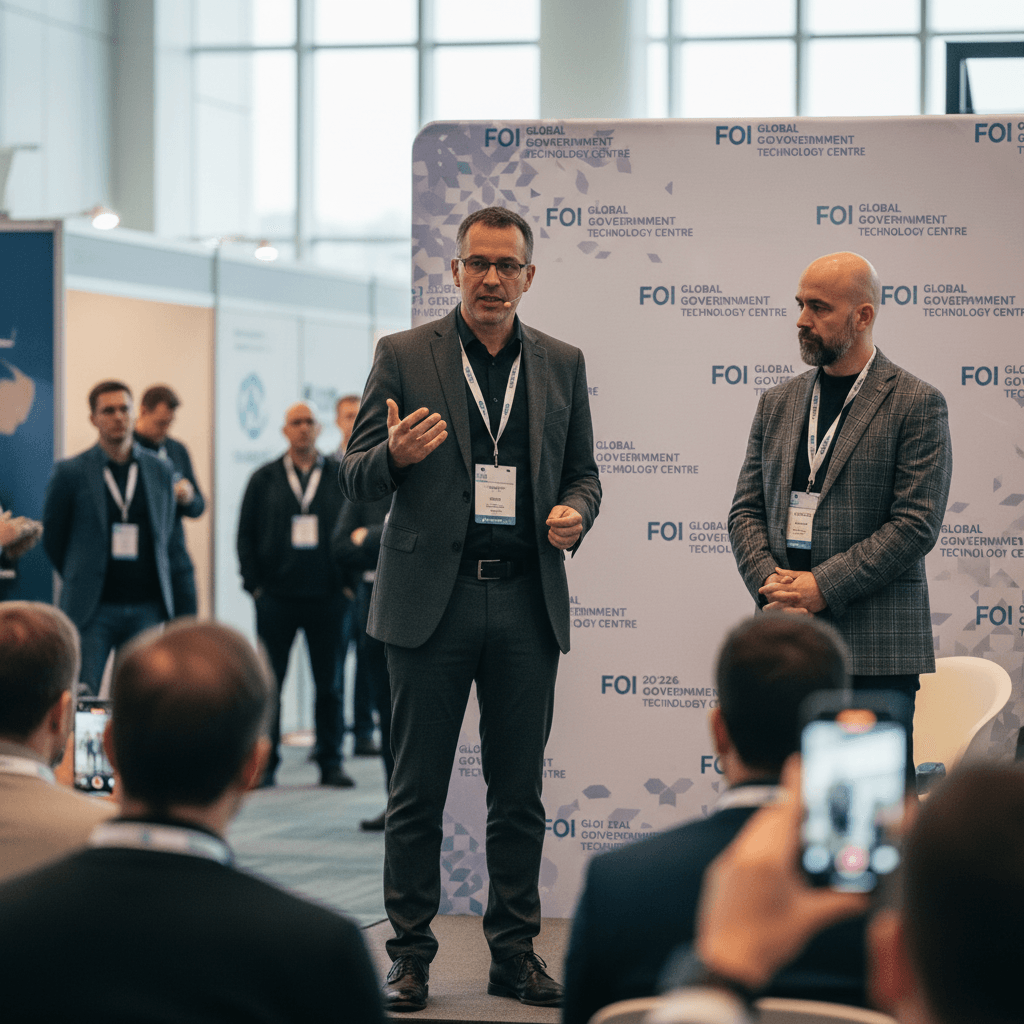
    Manuel Killian from the Global Government Technology Centre (GGTC) recently discussed the concept of “Agentic AI” in an interview during the Festival of Innovation (FOI) 2026. The interview, conducted by Derek Alton, centered on Killian’s white paper, “The Agentic State,” which delves into the emerging field of artificial intelligence.

    Kilian’s white paper explores how governments and societies can prepare for the impact of Agentic AI. He highlighted Agentic AI as a significant advancement in artificial intelligence.

    The video content was initially published on Civic Punks’ YouTube channel through a collaboration between GovInsider and Civic Punks. The Festival of Innovation (FOI) 2026 took place from March 3-4, 2026.

    Additional information can be found in Kilian’s white paper at https://agenticstate.org/.

    🎙️ Latest Podcast

    Always plays the latest podcast episode

  • Asia-Pacific Desk Lamp Market to Hit $815M by 2035

    Asia-Pacific Desk Lamp Market to Hit $815M by 2035

    The Asia-Pacific desk lamp market is poised for substantial growth, with projections indicating a rise from USD 465 million in 2025 to USD 815.7 million by 2035. This expansion, representing a compound annual growth rate (CAGR) of 5.9%, is primarily fueled by the increasing adoption of work-from-home arrangements and hybrid office models throughout the region. Additionally, a growing consumer awareness regarding eye health and the importance of quality lighting solutions is contributing to this market surge.

    Wireless lamps dominated the market in 2025, capturing the largest share at USD 284.18 million. Their popularity stems from their portability, cordless design, and versatile placement options. LED desk lamps also hold a significant position, accounting for approximately 63.1% of the market share in 2025, due to their energy efficiency, long lifespan, minimal heat emission, and compatibility with smart features. Government regulations in countries such as China, Hong Kong, Indonesia, and Vietnam are further promoting the adoption of LED technology by establishing minimum efficacy standards.

    Offline channels currently hold the larger share of the distribution landscape, accounting for approximately 66% in 2025. This preference is attributed to consumers’ desire to physically examine lamp designs and light output before making a purchase. However, online channels are experiencing rapid growth, with a CAGR of 6.5%, driven by increasing internet penetration, smartphone adoption, and the convenience of e-commerce platforms offering competitive pricing and diverse product choices.

    China emerges as the largest single market in the Asia-Pacific region, commanding a 33% regional share valued at USD 153.7 million in 2025, and is also the fastest-growing country. This growth is primarily attributed to the extensive adoption of work-from-home practices, a growing middle class, and robust domestic manufacturing capabilities. Other key markets contributing to regional growth include Japan, India, and South Korea.

    Current market trends highlight the increasing integration of smart home features and IoT connectivity, with products offering Wi-Fi, Bluetooth, and voice control compatibility with platforms like Google Assistant and Amazon Alexa. There is also a strong emphasis on health-focused lighting solutions that promote eye care through flicker-free operation, adjustable color temperatures, and circadian rhythm support. Furthermore, multifunctional designs that incorporate wireless charging pads, USB ports, and speaker integration are gaining popularity, particularly in home office settings where space-saving and versatile products are highly valued.

    The competitive landscape is moderately fragmented, with key players including Signify (Philips Lighting), Xiaomi, Panasonic Holdings Corporation, BenQ, and Inter IKEA B.V. Signify leads the market with over 9% share in 2025, while the top five players collectively hold around 42%. These companies are actively engaged in strategic initiatives such as product innovation, expanding manufacturing capabilities, forming partnerships with e-commerce platforms, and investing in research and development to introduce advanced features like Matter protocol support, enhanced wireless charging, and AI-powered adaptive lighting to maintain their competitive edge and cater to evolving consumer demands.


    🎙️ Latest Podcast

    Always plays the latest podcast episode

  • NuCana’s ProTide Tech: Revolutionizing Cancer Treatment

    NuCana’s ProTide Tech: Revolutionizing Cancer Treatment

    NuCana plc, a biopharmaceutical firm in the clinical stage, is dedicated to transforming cancer treatment through its ProTide prodrug technology. This platform enhances the effectiveness of nucleoside analog drugs by improving cell permeability and preventing enzymatic degradation, addressing common issues with current cancer therapies. The company modifies nucleoside analogs to boost active metabolite levels, applicable to both solid tumors and hematological malignancies.

    The company’s pipeline features Nadacomotide (NUC-3373), a ProTide version of gemcitabine in Phase 2 trials for colorectal cancer, and Acelarin (NUC-1031), another gemcitabine ProTide for broader solid tumor applications. NuCana focuses on achieving human proof-of-concept and utilizes a modular platform for efficiency, which is appealing to investors in a sector known for high failure rates.

    The oncology market is growing, and NuCana’s ProTide technology addresses bioavailability limitations of traditional nucleoside analogs, setting it apart from competitors. NuCana, trading on NASDAQ as NCNA (ISIN: GB00BD8P0H86), provides North American investors access to a UK-based entity. The company’s alignment with U.S. regulations and trial conduct enhances its relevance for local investors.

    Investors should consider clinical trial risks, funding needs, intellectual property protection, and macroeconomic factors. Future catalysts include clinical results, financial reports, and potential partnerships.

    🎙️ Latest Podcast

    Always plays the latest podcast episode

  • CLA Acquires Answerport to Boost Digital Advisory

    CLA Acquires Answerport to Boost Digital Advisory

    CliftonLarsonAllen (CLA), a US-based accounting and professional services firm, has augmented its technology advisory services by incorporating the Answerport team into its operations. Answerport, established in 1999 and based in Milwaukee, Wisconsin, specializes in managing technological transitions related to business deals, including mergers, acquisitions, and carve-outs. The firm primarily serves private equity firms and their portfolio companies.

    The integration aims to enhance CLA’s digital solutions and broaden technology-focused services for clients navigating complex transactions. John Cordio, Answerport’s founder and CEO, stated that technology often presents significant challenges during company sales, purchases, or combinations. Joining CLA will provide Answerport with access to a broader network of financial and business advisors, enabling clients to execute critical transitions more efficiently.

    The collaboration will offer clients a unified team capable of addressing both financial and IT challenges. This combines Answerport’s technology expertise with CLA’s strengths in accounting, tax, consulting, and transaction advisory services. James Watson, CLA’s chief solutions officer, emphasized that this addition will facilitate smoother management of complex technology issues during major business transactions, from financial and operational planning to the underlying technology systems essential for business operations.

    🎙️ Latest Podcast

    Always plays the latest podcast episode

  • Flipkart IPL 2026: Unlock Electronics Deals!

    Flipkart IPL 2026: Unlock Electronics Deals!

    Flipkart has launched an innovative campaign during IPL 2026, offering users a unique way to discover deals on electronics and other products. The initiative involves capturing photos of umpire signals during IPL matches, which often resemble different products.

    Users can participate by scanning a QR code and sending the image of the umpire’s signal to Flipkart’s official WhatsApp chat. Participants will then be prompted to identify the product category represented by the signal, such as a fan, a top-load washing machine, a front-load washing machine, or a TV.

    Upon receiving the correct product category, Flipkart will provide relevant deals. Users can tap on a coupon code, which redirects them to the Flipkart app. Here, the discount can be applied in the ‘My Rewards’ section to purchase items like ACs or fans at reduced prices.

    For example, a third umpire review signal might represent a TV, while a free hit could signify a top-load washing machine. This interactive approach aims to enhance user engagement and provide a fun way to access discounted products during the IPL season.

    🎙️ Latest Podcast

    Always plays the latest podcast episode

  • Miniaturized Quantum Tech: Trapped Ions on a Chip

    Miniaturized Quantum Tech: Trapped Ions on a Chip

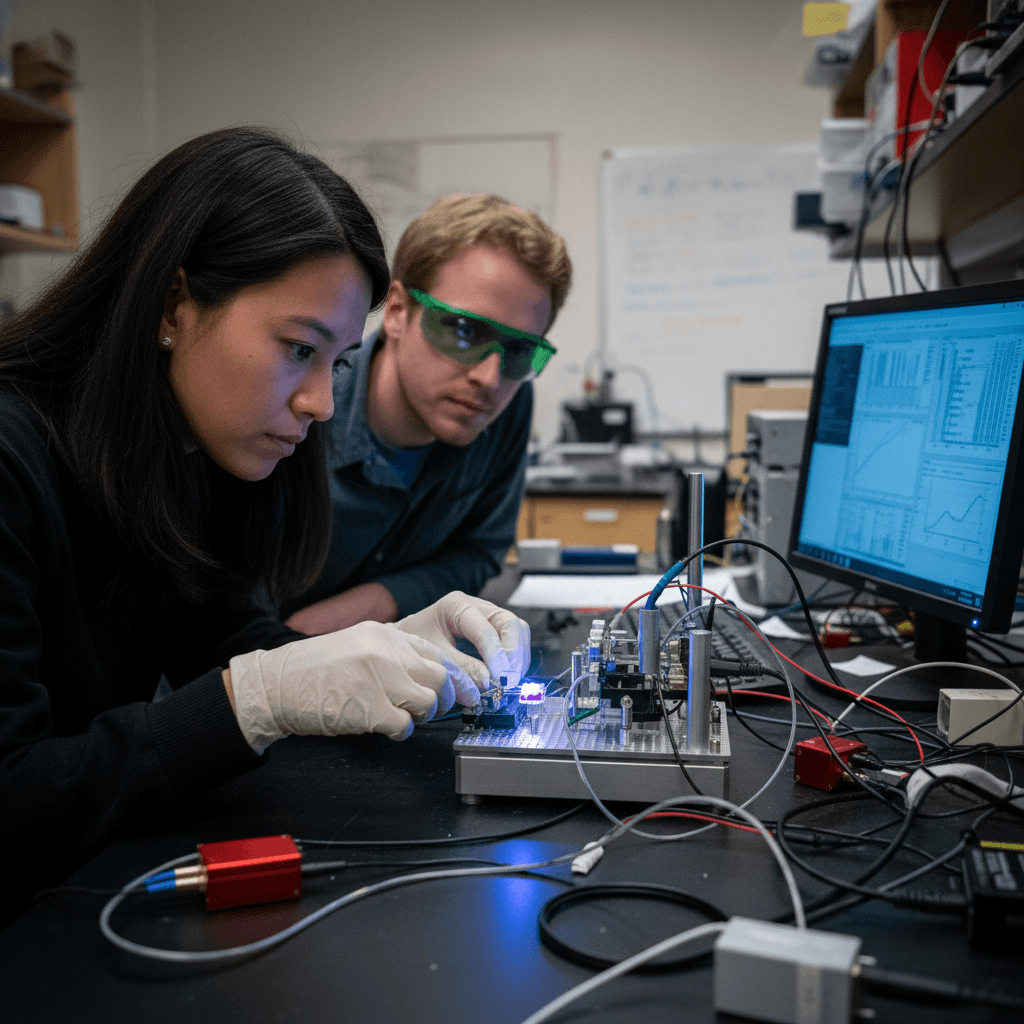
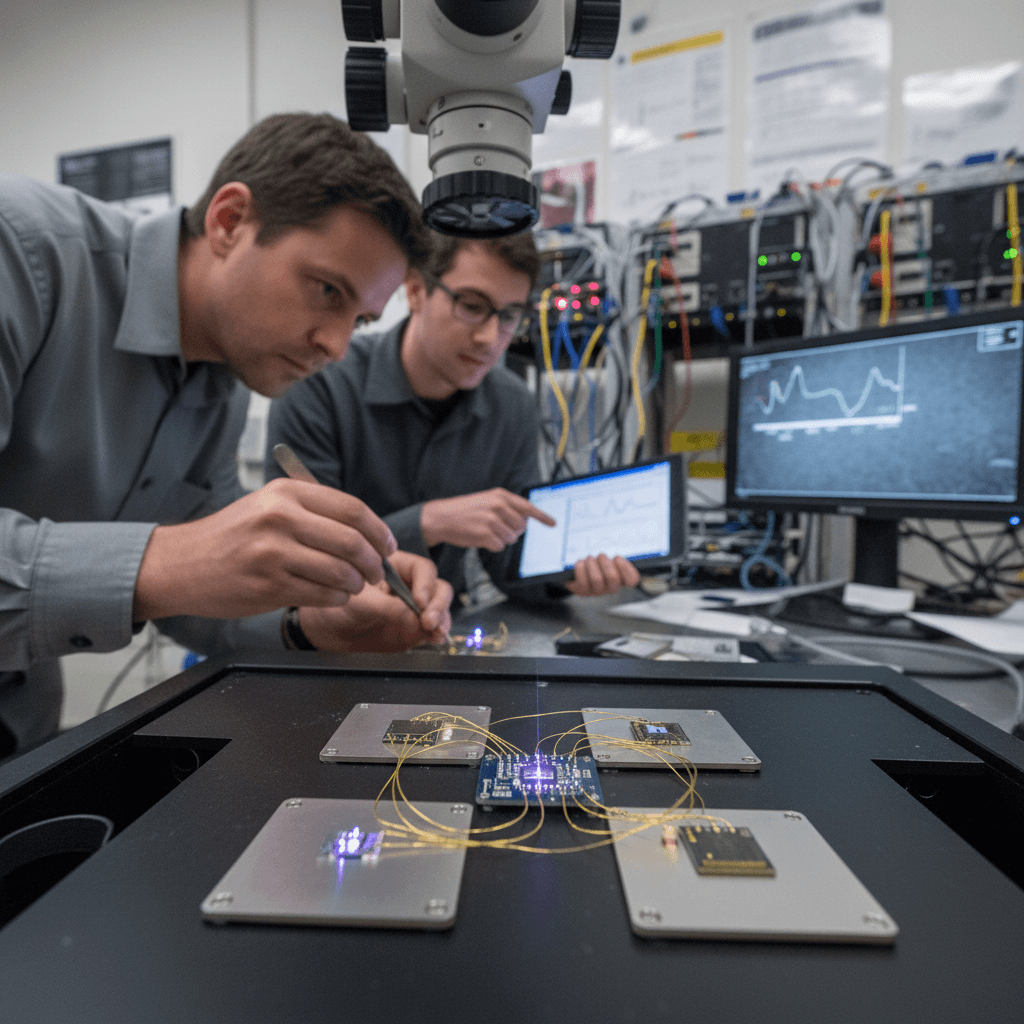
    Researchers have developed a new integrated photonics platform that miniaturizes the technology required for precision quantum experiments, which previously necessitated multiple table-top lasers and other bulky equipment. This innovative chip-scale device, created by teams from the University of California Santa Barbara (UCSB) and the University of Massachusetts Amherst, is expected to find applications in quantum computing and portable optical clocks that utilize trapped ions.

    Traditional quantum computers and optical clocks rely on extensive setups, including lasers, cryogenic coolers, vacuum chambers, and optical reference cavities. The latter can account for over half of a device’s total volume and are critical for stabilizing laser frequencies to the high precision needed for controlling the quantum states of trapped ions.

    The team, led by Daniel Blumenthal of UCSB and Robert Niffenegger at UMass Amherst, has successfully replaced these large, stabilized laser systems with small photonic chips. They demonstrated the chips’ ability to prepare and control the quantum state of strontium ions at room temperature and to drive the clock transition. While the system’s fidelity is not yet on par with the best traditionally constructed devices, Niffenegger considers it a crucial initial step towards developing next-generation clocks and future quantum computers capable of millions of qubits.

    The chip-based stabilized laser system comprises an integrated Brillouin laser with a 674 nm wavelength, connected to an integrated 674 nm, 3 m long coil resonator cavity. The stability of this laser and coil was assessed by measuring the 0.4 Hz quadrupole optical clock transition in strontium-88 ions, which were trapped at an electrode on a single surface electrode trap (SET) chip. This achievement at room temperature is particularly noteworthy given the precision of the transition.

    Beyond its smaller size, the chip’s 674-nm Brillouin laser eliminates the need for bulky frequency conversion equipment and offers reduced high-frequency noise, which is vital for clock acquisition and qubit state preparation fidelity. The coil further stabilizes the laser’s carrier frequency by reducing mid- and low-frequency noise, allowing it to be locked to the precise sub-Hz trapped-ion clock transition.

    These advancements enabled the team to achieve an unprecedented frequency noise profile and an Allen deviation of 8.8 × 10^-13^ for a room-temperature chip, facilitating high-fidelity qubit state preparation and clock transition interrogation essential for quantum computing.

    The increased portability and robustness of optical clocks could expand their applications, potentially replacing GPS-based navigation for space missions to the Moon and Mars. Such clocks could also contribute to fundamental science by mapping gravity, measuring orbit time for climate science, and detecting gravitational waves and dark matter/energy.

    To achieve a stability range of 10^-14^ to 10^-16^, the researchers aim to scale their integrated platform to a grid of 100 or more ions. They are currently working on integrating other experimental components, including the ion trap chip, optical cavity chip, and other photonics, onto a single, full-architecture chip. The research findings were published in *Nature Communications*.

    🎙️ Latest Podcast

    Always plays the latest podcast episode

  • Agentic AI: Manuel Killian at Festival of Innovation 2026

    Agentic AI: Manuel Killian at Festival of Innovation 2026

    In an interview conducted at the Festival of Innovation (FOI) 2026, Manuel Killian, the author of ‘The Agentic State’ white paper, explored the concept of Agentic AI. Killian identified Agentic AI as the next major frontier in the evolution of artificial intelligence.

    The discussion, which was initially featured on Civic Punks’ YouTube channel, delved into the specifics of Agentic AI, seeking to define its parameters and understand what preparations are necessary for its widespread adoption.

    The interview was a collaborative effort between GovInsider and Civic Punks during the Festival of Innovation (FOI) 2026, which took place from March 3-4, 2026.

    🎙️ Latest Podcast

    Always plays the latest podcast episode

  • CLA Enhances Digital Services with Answerport Acquisition

    CLA Enhances Digital Services with Answerport Acquisition

    CliftonLarsonAllen (CLA), a US-based accounting and professional services firm, has expanded its technology advisory capabilities by incorporating the Answerport team. Answerport, established in 1999 and located in Milwaukee, Wisconsin, specializes in managing technology-related changes during significant business transactions.

    Answerport’s primary focus involves assisting private equity firms and their portfolio companies with the technology challenges that arise from deals. This includes establishing new IT infrastructures post-acquisition, disentangling systems in carve-out scenarios, integrating platforms after mergers, and overseeing routine IT operations.

    CLA’s strategic move aims to strengthen its digital solutions portfolio and broaden the scope of technology-focused services available to clients undergoing complex transactions. John Cordio, Answerport’s founder and CEO, stated that technology often presents one of the most substantial obstacles during company sales, purchases, or combinations. He added that joining CLA will enable them to offer a more comprehensive suite of financial and business advisory services, facilitating smoother transitions for clients.

    Answerport will continue to serve its private equity clientele and their portfolio companies, collaborating with CLA professionals across the firm’s national network. The integration of Answerport’s technology proficiency with CLA’s existing capabilities in accounting, tax, consulting, and transaction advisory is expected to provide clients with a unified team to address both financial and IT concerns. James Watson, CLA’s chief solutions officer, highlighted that this addition will empower clients to manage intricate technology transitions more effectively.

    🎙️ Latest Podcast

    Always plays the latest podcast episode

  • Miniaturized Quantum Tech: Portable Clocks & Computers

    Miniaturized Quantum Tech: Portable Clocks & Computers

    Quantum experiments that once demanded extensive table-top equipment are now being miniaturized, thanks to the development of a new integrated photonics platform. Researchers at the University of California Santa Barbara (UCSB) and the University of Massachusetts Amherst, led by Daniel Blumenthal and Robert Niffenegger respectively, have created a chip-scale device capable of precision quantum experiments.

    The innovative device can prepare and control the quantum state of strontium ions at room temperature and drive the clock transition. This advancement is considered a crucial step toward developing portable optical clocks and quantum computers housing millions of qubits.

    Traditional quantum computers and optical clocks rely on bulky equipment, with optical reference cavities taking up a significant portion of the device’s volume. The new chip-based system replaces these large, stabilized laser systems with small photonic chips. The system features an integrated Brillouin laser with a 674 nm wavelength connected to an integrated 3-meter-long coil resonator cavity.

    The team demonstrated the system’s stability by measuring the 0.4 Hz quadrupole optical clock transition in strontium-88 ions trapped on a single surface electrode trap (SET) chip at room temperature. The 674-nm Brillouin laser eliminates the need for bulky frequency conversion equipment and reduces high-frequency noise, which is crucial for qubit state preparation fidelity. The coil further stabilizes the laser’s carrier frequency, reducing mid- and low-frequency noise.

    This combination achieved a frequency noise profile and Allen deviation of 8.8 × 10⁻¹³ for a room-temperature chip, enabling high-fidelity qubit state preparation and clock transition interrogation essential for quantum computing. The miniaturization enhances the portability and robustness of optical clocks, with potential applications in space navigation, gravity mapping, gravitational wave detection, dark matter/energy research, and general relativity measurements.

    The researchers are now focused on scaling the platform to a grid of 100 or more ions and integrating all experimental components onto a single, full-architecture chip, with the ultimate goal of reaching a stability range of 10-14 to 10-16.

    🎙️ Latest Podcast

    Always plays the latest podcast episode

  • Europe Data Centers: Energy Grid Evolution

    Europe Data Centers: Energy Grid Evolution

    Data centers in Europe are undergoing a significant transformation, shifting from passive energy consumers to active participants in the energy grid. This evolution is fueled by growing concerns over grid instability, rising energy demand, and the rapid expansion of AI infrastructure, according to Capacity Global.

    Key challenges include grid congestion and the intermittent nature of renewable energy sources. To address these issues, a multifaceted approach is being adopted, combining technologies such as gas turbines, battery storage for frequency response, and AI-enabled system management. This holistic strategy aims to create a more resilient and sustainable energy ecosystem.

    An ambitious vision is emerging for data centers to become integrated nodes within local energy ecosystems, capable of generating, storing, and redistributing energy. NTT’s project in Germany exemplifies this trend, focusing on green hydrogen production and heat distribution to municipal networks.

    Collaboration among regulators, policymakers, data center developers, and grid operators is crucial for building a sustainable digital infrastructure in Europe. This collaborative effort is essential to give Europe a competitive and moral edge in the global landscape.

    🎙️ Latest Podcast

    Always plays the latest podcast episode